
Industrial inspection is built around small observations made before they become larger problems.
At a refinery, that might mean noticing seepage around a flange. At an oil or gas facility, an operator may identify an abnormal valve condition. At a hydrogen station, a detector reading may require immediate escalation. In a chemical-storage area, personnel may need to report a damaged container or process abnormality.
These inspection points are often spread across large sites, remote pipeline corridors and separate process areas. Some are also classified hazardous locations where ordinary electronic equipment may not be permitted.
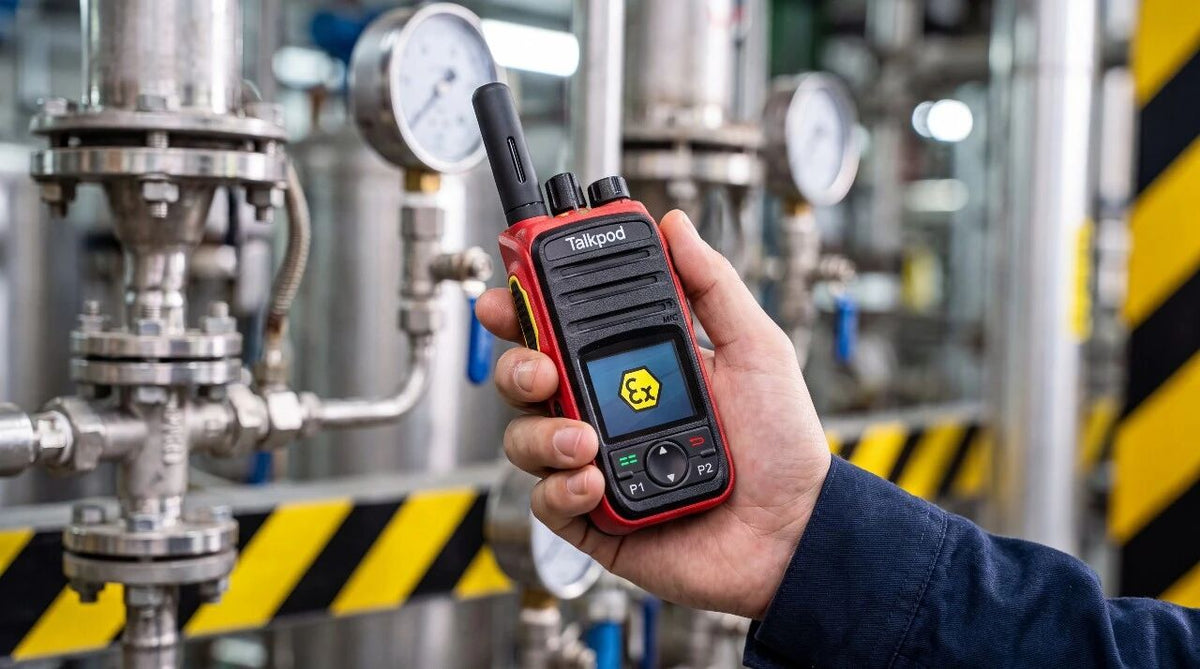
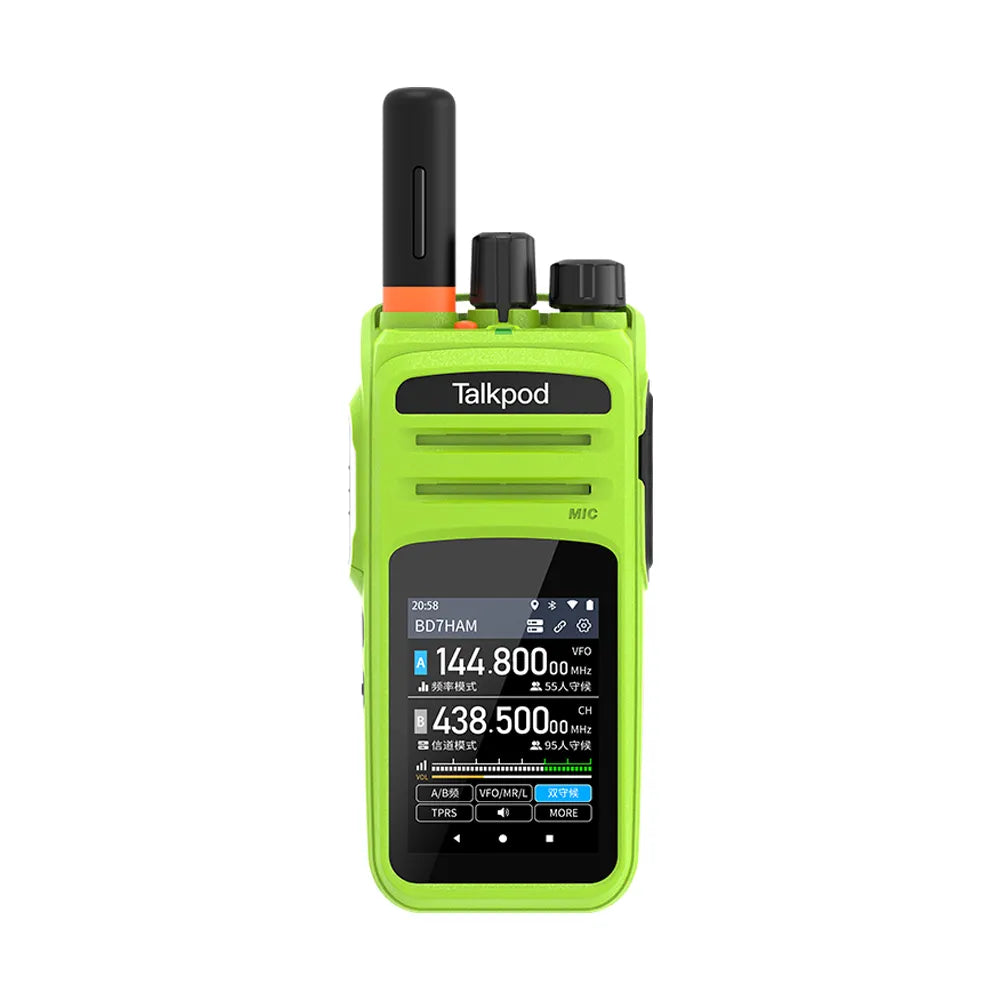
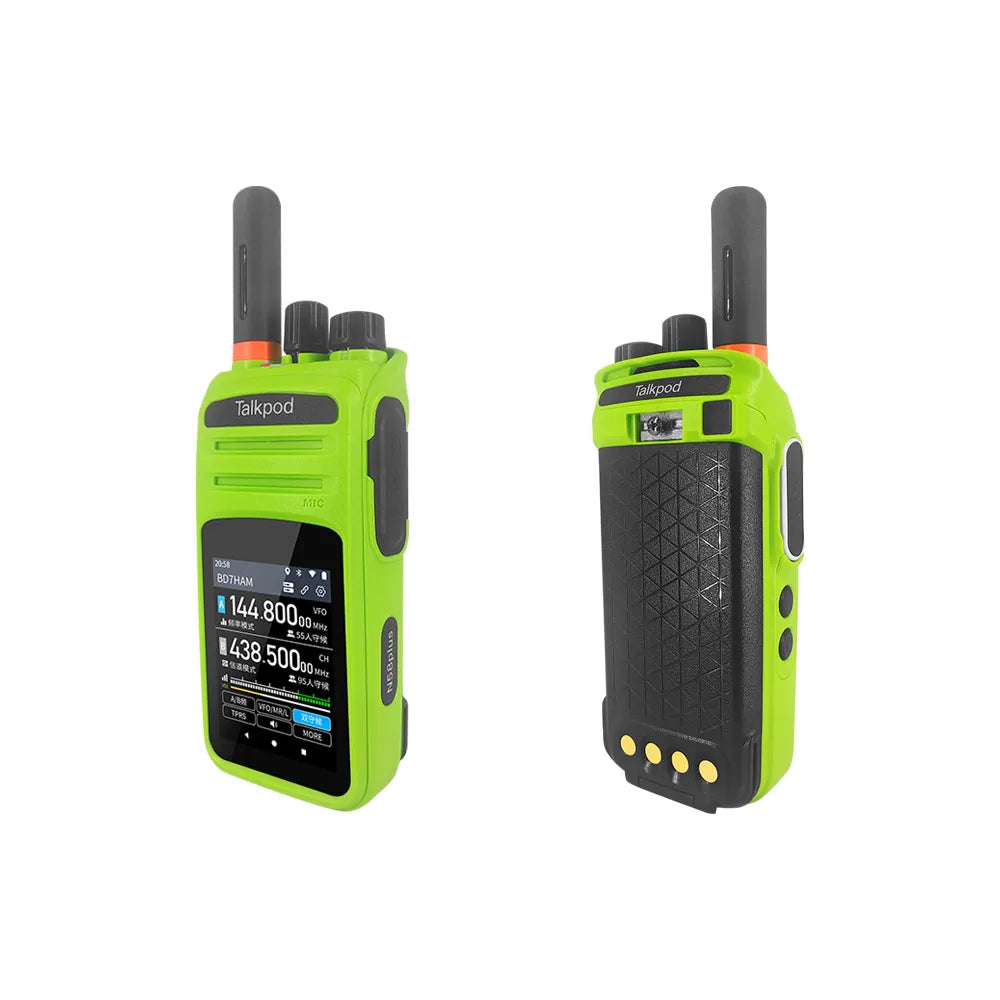
The Talkpod N56Ex explosion-protected public-network radio is designed to provide a wider-area push-to-talk communication layer for these operations where compatible mobile-network coverage is available and where the radio's exact hazardous-area certification matches the location in which it is used.
Inspection routes often extend beyond local radio range
Large industrial operations rarely fit inside one compact communication area.
A refinery may include process units, tank farms and loading areas separated by considerable distance. Pipeline inspection teams may travel far beyond the main plant. Chemical-storage facilities can include remote yards, while oil and gas operations may extend across several geographically separated locations.
Traditional direct handheld radios remain useful for local communication, but their range becomes restrictive once inspectors move beyond the same radio coverage area.
The N56Ex uses compatible public mobile networks to carry push-to-talk traffic over a much wider area.
Where suitable network service exists, an inspector working at a remote valve station or an outlying hazardous-material storage point can communicate with a central control or coordination team without depending on direct radio range back to the main facility.
That can reduce the delay between identifying an abnormal condition and informing the people responsible for responding.
The practical benefit is wider-area communication.
It is not genuinely unlimited communication.
Public-network coverage still has to be verified
Some of the locations most difficult to inspect are also the least predictable for cellular coverage.
Remote pipeline sections, mountainous terrain, tank farms, enclosed process buildings and heavy steel structures can all affect mobile-network performance.
A public-network radio does not remove those physical limitations.
The N56Ex can provide communication wherever the underlying network is usable, but organizations should test the actual inspection routes rather than assuming that every point shown on a coverage map will perform identically.
Particular attention should be given to valve chambers, enclosed equipment areas, remote outdoor routes and locations surrounded by large metal structures.
Where service is unreliable or unavailable, an alternative communication method should remain part of the inspection plan.
For hazardous industrial operations, resilience is more valuable than a promise of universal coverage.
“Explosion-protected” is not one universal classification
The phrase “hazardous area” covers very different environments.
A hydrogen refueling installation does not present exactly the same classification problem as a gasoline tank farm, a natural-gas facility or a chemical-processing unit.
Different gases and vapors may require different equipment groups, temperature classes and hazardous-area classifications.
For this reason, the N56Ex should not be described simply as suitable for every explosion-risk environment.
The source describes it as complying with explosion-protection requirements and using an intrinsically safe design. In practice, the exact certificate and product nameplate should determine whether it may legitimately be used in a particular location.
Before deployment, operators should verify the applicable zone or area classification, gas group, temperature class and permitted ambient operating conditions.
This is particularly important for hydrogen applications, where equipment suitability must explicitly match the relevant classification.
Explosion protection controls one risk—it does not remove the hazard
An explosion-protected radio is designed to control the ignition risk created by the device itself within its certified conditions.
That does not mean an inspector may remain indefinitely in an atmosphere containing dangerous concentrations of flammable gas or vapor.
If gas detection, process instrumentation or site procedures indicate that an area is unsafe, personnel should follow the applicable withdrawal, isolation or emergency-response procedure.
The radio does not make that atmosphere safe.
Likewise, only approved batteries and accessories should be used. Charging, repair and battery replacement should follow the manufacturer's instructions and the site's hazardous-area rules, normally in an approved safe location unless the certification specifically permits otherwise.
Equipment condition matters as well.
A damaged housing, compromised seal or unauthorized accessory can change the basis on which hazardous-area suitability was established.
Faster abnormality reporting during inspection
The most useful radio message during an inspection is often short.
An operator may report a suspected leak, unusual noise, abnormal gauge indication or equipment condition requiring closer attention.
The N56Ex can allow that information to reach the relevant control or maintenance team directly from the inspection point where network service is available.
This can shorten the first stage of the response.
It does not, however, turn the radio into a monitoring instrument.
The N56Ex does not measure gas concentration, pressure, temperature, vibration or process condition.
Those values must come from approved gas detectors, process instrumentation, SCADA, DCS or other monitoring systems.
The radio carries the inspector's report around those systems.
It does not replace the systems that establish what is actually happening in the process.
Central dispatch can make dispersed inspection easier to organize
When inspection personnel are distributed across a large operation, communication becomes easier to manage when users are organized centrally.
A dispatch platform can help supervisors structure work groups around facilities, areas or job roles rather than relying on one large communication channel for everyone.
Inspectors assigned to a tank farm may need different routine traffic from personnel checking an external pipeline or warehouse.
Supervisors can then coordinate across groups when an abnormal event requires several teams to respond.
This helps keep ordinary communication more focused.
The objective is not to make every worker hear every message.
It is to give each team a clearer route to the people who need the information.
Remote locations require a backup plan
For an inspector working several kilometers—or much farther—from the main facility, loss of communication should already be anticipated in the operating procedure.
If the N56Ex loses mobile-network service, personnel should know what happens next.
That may mean moving to a known coverage point, using another approved communication system or following a defined check-in procedure depending on the site.
For remote oil and gas or pipeline work, this is particularly important.
A public-network PoC system should not be the sole safety-critical communication method in locations where network availability is uncertain.
Other systems may include local professional radio, fixed communications, satellite links or site-specific emergency arrangements according to the risk assessment.
No single communication technology is ideal everywhere.
High-risk inspection still depends on the wider safety system
Communication can help an organization respond faster to an abnormal condition, but it does not control the process itself.
Refineries and chemical plants depend on gas detection, DCS and SIS functions, emergency shutdown, fixed alarms, fire protection and operating procedures.
Hydrogen facilities rely on detection, ventilation, pressure control and isolation systems.
Oil and gas operations may add SCADA, leak-detection systems and specialized emergency arrangements.
The N56Ex sits alongside those systems.
Its job is to help people exchange operational information when they need to coordinate around them.
If a significant leak or other emergency develops, the radio can support voice communication during the response, but personnel should continue to follow the site's alarm, evacuation, isolation and incident-command procedures.
Lightweight operation matters on long inspection routes
Inspection personnel may carry gas detectors, tools, paperwork and PPE for long periods.
The communication device should therefore add as little operating burden as possible.
The N56Ex is intended for straightforward handheld push-to-talk use, allowing inspectors to report a condition without repeatedly returning to a fixed communication point.
Simple operation becomes especially important when workers are wearing gloves or moving between multiple inspection locations.
In these environments, the most valuable radio function is often not the most sophisticated one.
It is the function the operator can reach quickly and correctly while concentrating on the equipment being inspected.
[Image]
A communication layer for hazardous-area inspection
The Talkpod N56Ex can address two recurring problems in industrial inspection.
The first is distance.
Where compatible mobile-network coverage exists, public-network push-to-talk can connect inspectors with central teams across locations far beyond the normal range of a direct handheld radio.
The second is equipment suitability.
Where the N56Ex's exact explosion-protection certification matches the specific hazardous-area classification, it can provide a communication option for appropriately controlled work locations.
Neither advantage should be overstated.
Public networks do not reach every remote route or penetrate every steel structure. One hazardous-area certificate does not automatically cover hydrogen, hydrocarbons and every chemical atmosphere. Explosion protection does not make a dangerous gas concentration safe.
Used within those limits, the N56Ex can provide something more practical: a common communication layer between dispersed inspection personnel and the teams responsible for interpreting, escalating and responding to the abnormalities they find.

Leave a comment
All comments are moderated before being published.
This site is protected by hCaptcha and the hCaptcha Privacy Policy and Terms of Service apply.