
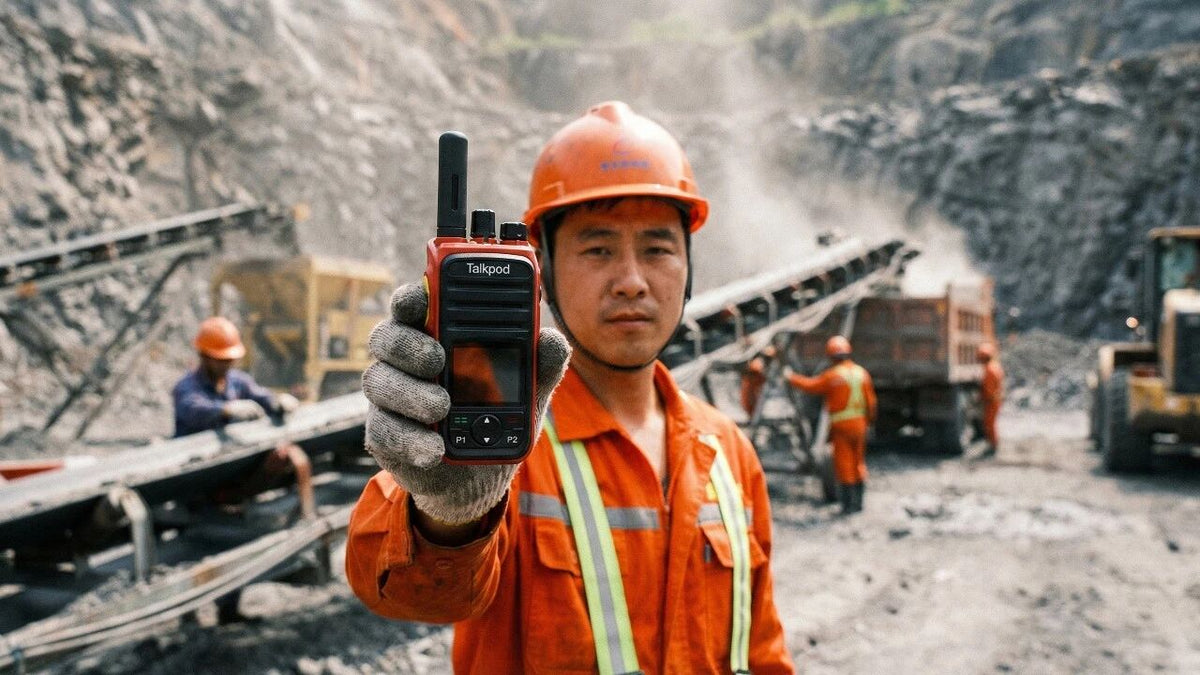
Underground mining turns communication into a problem of both geography and safety.
Workers may be distributed across long roadways, separate working faces and inspection routes several levels below the surface. Rock, bends, machinery and reinforced underground structures all weaken radio propagation, while abnormal gas conditions can make the choice of electronic equipment itself a safety consideration.
For Jiujiang Ruichang Mine, these challenges affect routine inspections as well as the reporting of equipment faults, gas abnormalities and other potential hazards.
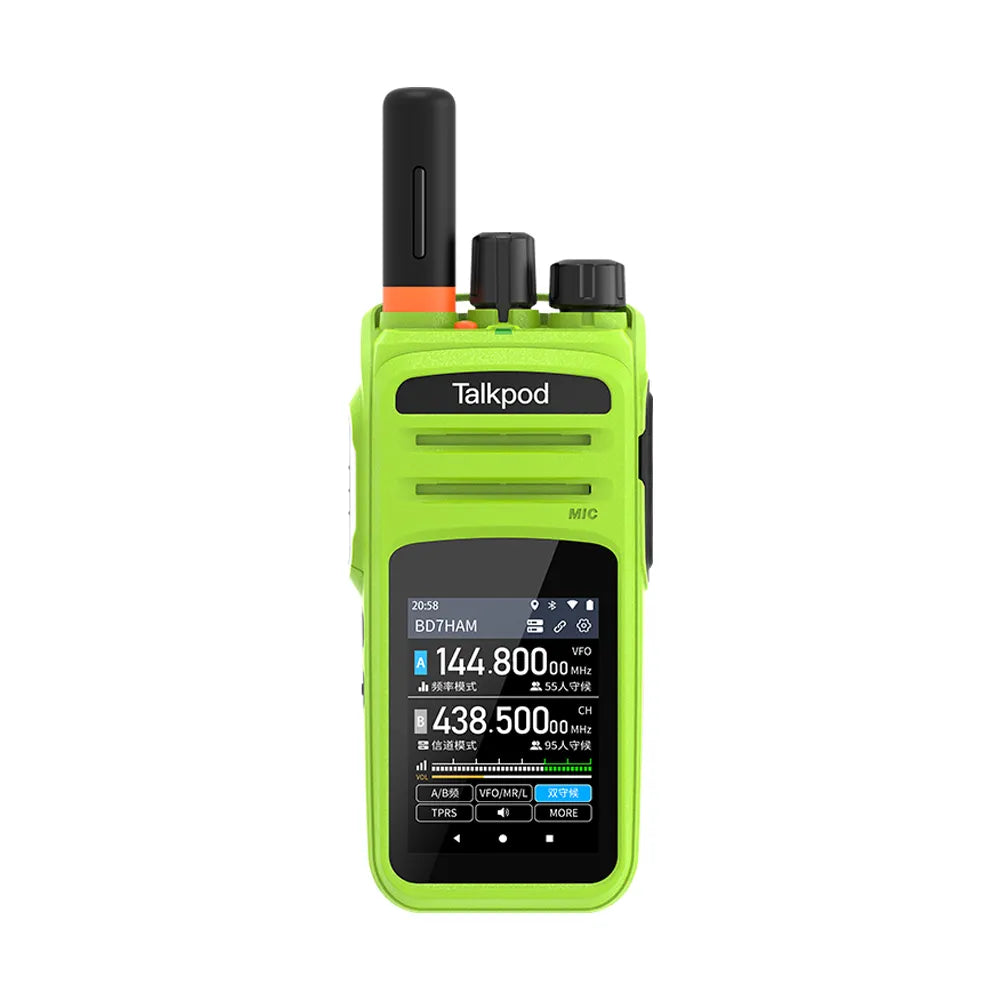
The Talkpod N56Ex explosion-protected public-network radio provides an additional push-to-talk and dispatch layer for these operations where suitable underground mobile-network infrastructure has been deployed. Combined with managed groups, emergency alerts and backend dispatch functions, it can help shorten the communication path between underground personnel and surface coordinators.
Underground coverage has to be engineered
A public-network radio does not automatically bring surface cellular coverage underground.
Mine roadways are difficult wireless environments. Rock, soil, tunnel bends, doors, machinery and changes in elevation can all attenuate signals, and ordinary outdoor mobile coverage may disappear rapidly after workers move below ground.
The N56Ex can use compatible public mobile networks, but underground operation depends on the mine having suitable network infrastructure in the areas where the radios are expected to work.
For the Ruichang deployment, the source describes a customized signal-coverage plan. In practice, that should be understood as a site-specific process of surveying underground routes, identifying weak areas and adding or adjusting coverage points where appropriate.
Coverage should then be tested along actual inspection routes and working areas.
The useful objective is not to promise “no dead zones.” It is to reduce known communication gaps through deliberate network planning.
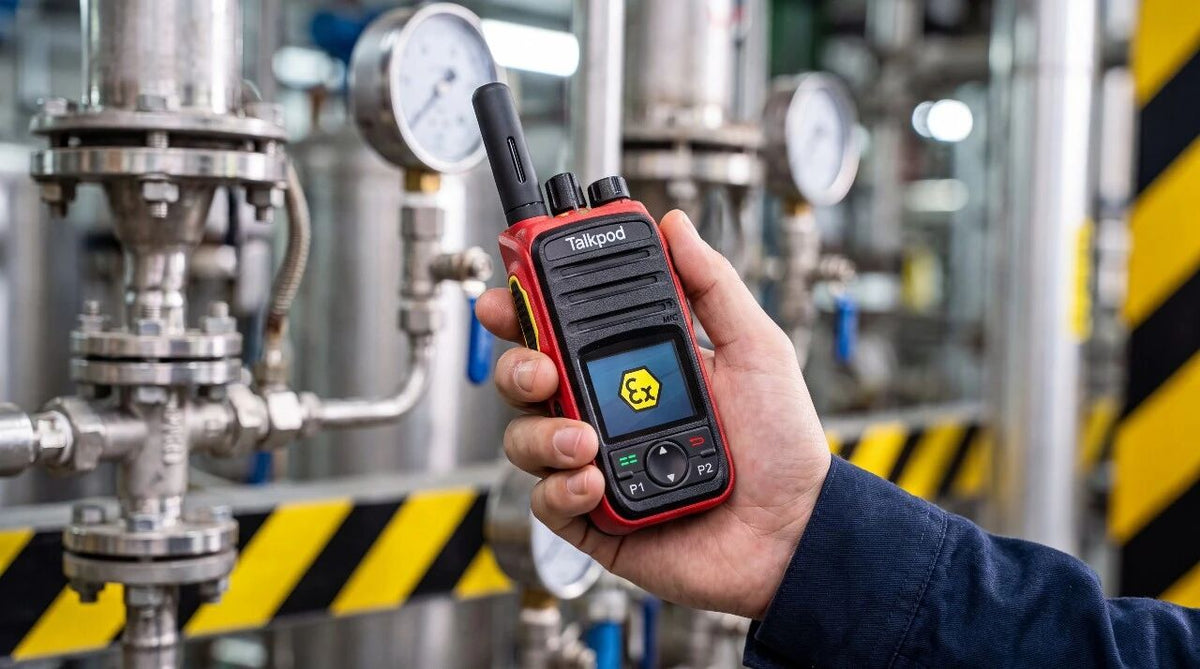
Explosion protection must match the mine environment
The source describes the N56Ex as having an intrinsically safe hydrogen-related explosion-protection qualification.
That is relevant information, but it should not be treated as universal proof that the radio is suitable for every underground mining location.
Methane, hydrogen and other hazardous gases can fall under different equipment classifications and operating requirements. Underground mines may also be governed by mine-specific certification and regulatory rules that go beyond general industrial hazardous-area approval.
Before deployment, the operator should verify the exact N56Ex certificate and nameplate against the intended underground environment, including the required equipment category, hazardous atmosphere, gas group, temperature class and permitted operating conditions.
Only approved batteries and accessories should be used, and charging, repair and battery replacement should follow both the manufacturer's instructions and the mine's hazardous-area procedures.
An explosion-protected radio does not make a methane-containing atmosphere safe.
Its purpose is to avoid introducing an unacceptable ignition risk when used within the limits specified by its certification.
Faster reporting from underground inspections
Mine safety personnel spend much of their time away from a fixed control room.
During inspections, they may encounter abnormal gas readings, damaged equipment, changes in ground conditions or personnel-management issues that need to be reported promptly.
The N56Ex allows these observations to be passed to the appropriate coordination team through push-to-talk communication where the underground network is available.
That can reduce the time between discovering an abnormal condition and notifying the people responsible for deciding what happens next.
The distinction between communication and detection is important.
The radio does not measure methane concentration, roof movement or equipment condition. Those readings must come from approved gas detectors, fixed monitoring systems, instrumentation and inspection procedures.
The N56Ex carries the worker's report.
It does not replace the systems that determine whether the underground environment is safe.
SOS alerts need a defined emergency procedure
The N56Ex includes a dedicated SOS control that can provide a faster way for an underground worker to send an alert to designated personnel or the dispatch platform.
That can be useful if a worker encounters a suspected gas release, roof-fall risk or another abnormal situation.
But an SOS button is only one step in the response process.
The mine should define who receives the alert, how it is acknowledged, what information is available to the dispatcher and what action follows.
The function also depends on the radio, underground network and platform remaining available.
It should therefore complement established mine alarms, evacuation procedures, personnel-accountability systems and emergency command arrangements rather than replace them.
BeiDou positioning has important underground limits
The source also refers to BeiDou positioning as a way to monitor personnel locations.
This requires careful qualification underground.
BeiDou, GPS and other GNSS systems depend on satellite signals, which generally do not penetrate deep underground roadways. A radio may provide useful positioning when personnel are on the surface or in areas with adequate satellite visibility, but that capability should not be assumed to provide continuous, precise location information inside underground workings.
If the mine requires real-time underground personnel positioning, that normally depends on dedicated underground positioning infrastructure or another mine-approved location system.
For this reason, the N56Ex's BeiDou capability should be treated as a supplementary location function where satellite reception is actually available.
It should not be presented as a substitute for a dedicated underground personnel-tracking system.
Blasting introduces a separate RF-safety question
Mining communication also needs special consideration around blasting operations.
Explosion protection and blasting RF safety are not the same thing.
Even if a radio is certified for a particular hazardous atmosphere, radio-frequency transmissions may still be restricted near certain detonators, initiation systems or blasting activities.
The mine should therefore follow its approved blast plan, applicable regulations and the detonator or initiation-system manufacturer's instructions.
Where required, procedures should specify the distance from blasting equipment at which radios must no longer transmit and the stage at which personnel must switch off or otherwise control radio use.
A hazardous-area certificate should never be interpreted as automatic permission to transmit next to every blasting system.
Training matters as much as the hardware
A radio system becomes useful underground only when workers know how to use it consistently.
Talkpod provided operational training for the mine's safety personnel, including shortcut functions intended for underground work.
That training can help users understand which group to select, how to send routine reports and how to trigger an emergency alert without navigating through unnecessary menus.
Just as importantly, workers need to understand the system's limits.
They should know where network coverage is weak, what backup communication method to use when the public-network connection is unavailable and which mine procedures take priority during an emergency.
The most reliable communication plan is one in which personnel already know what to do before the primary system fails.
A communication layer within the mine safety system
The Talkpod N56Ex can provide useful communication support in a mining environment, but its role should remain clearly defined.
Where suitable underground mobile-network infrastructure has been installed, it can connect underground personnel with surface coordinators through a managed push-to-talk system. Emergency alerts and backend dispatch can help organize reporting and response, while explosion-protected construction may support use in appropriately certified hazardous locations.
None of those functions removes the need for mine gas monitoring, ground-control systems, blasting procedures, dedicated personnel tracking, evacuation arrangements or other required safety systems.
Nor should underground coverage, positioning or explosion protection be assumed from general product descriptions alone.
For Jiujiang Ruichang Mine, the value of the N56Ex lies in a more practical objective: combining properly planned underground network coverage, suitable hazardous-area equipment and trained operating procedures to shorten the communication path between the people working below ground and those responsible for coordinating the response above it.

Leave a comment
All comments are moderated before being published.
This site is protected by hCaptcha and the hCaptcha Privacy Policy and Terms of Service apply.