
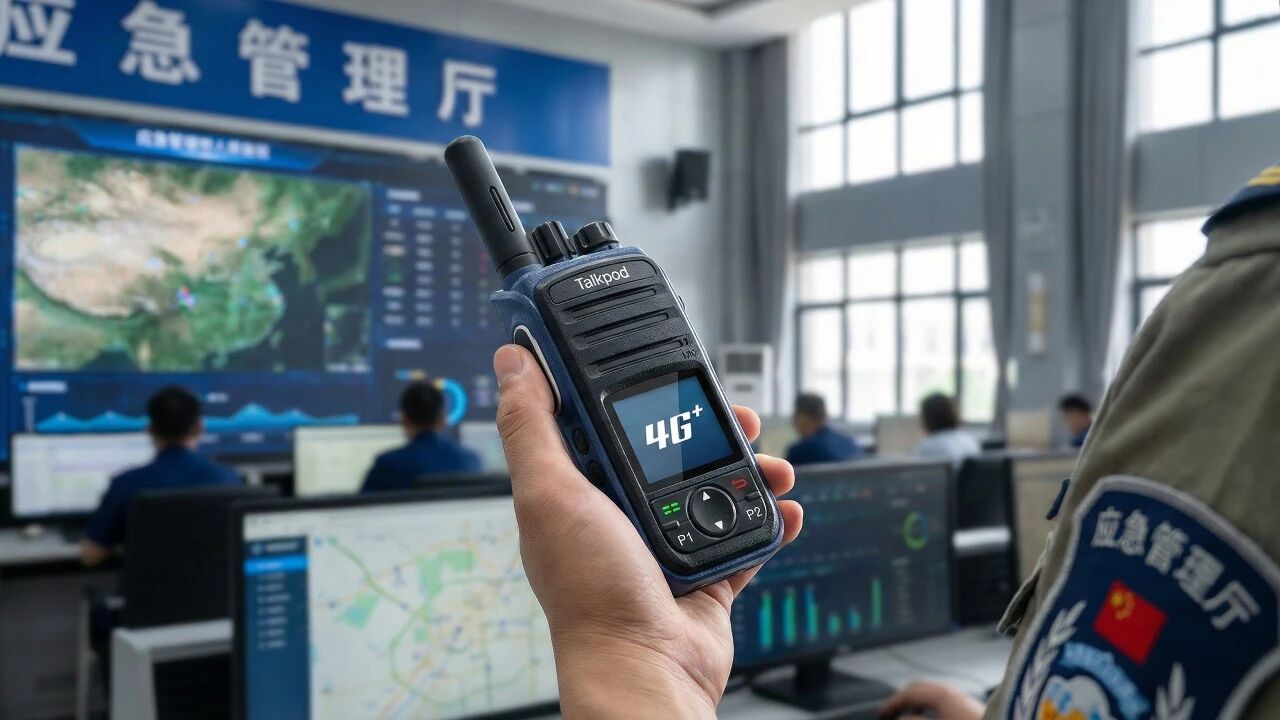
Emergency management in Shanxi is shaped by geography and industry. Mountain valleys, mining districts, industrial parks and widely dispersed counties create a difficult operating environment for emergency agencies.
The provincial authorities must prepare for several types of risk at once, including forest fires, mining accidents and flash floods during the rainy season. These incidents may involve different cities, departments and field teams, often working far from one another.
Communication is therefore not simply a matter of reaching the scene. It is about connecting several layers of government and directing the right information to the right response group without unnecessary delay.
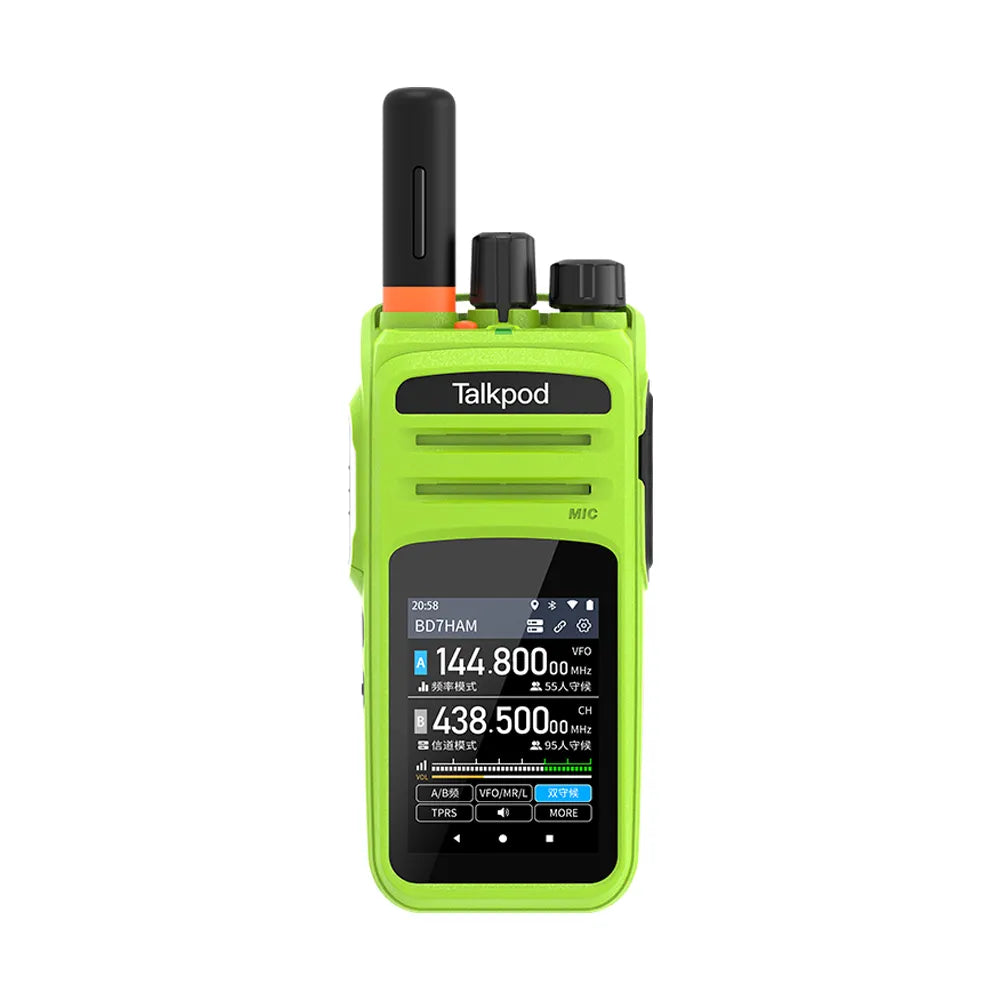
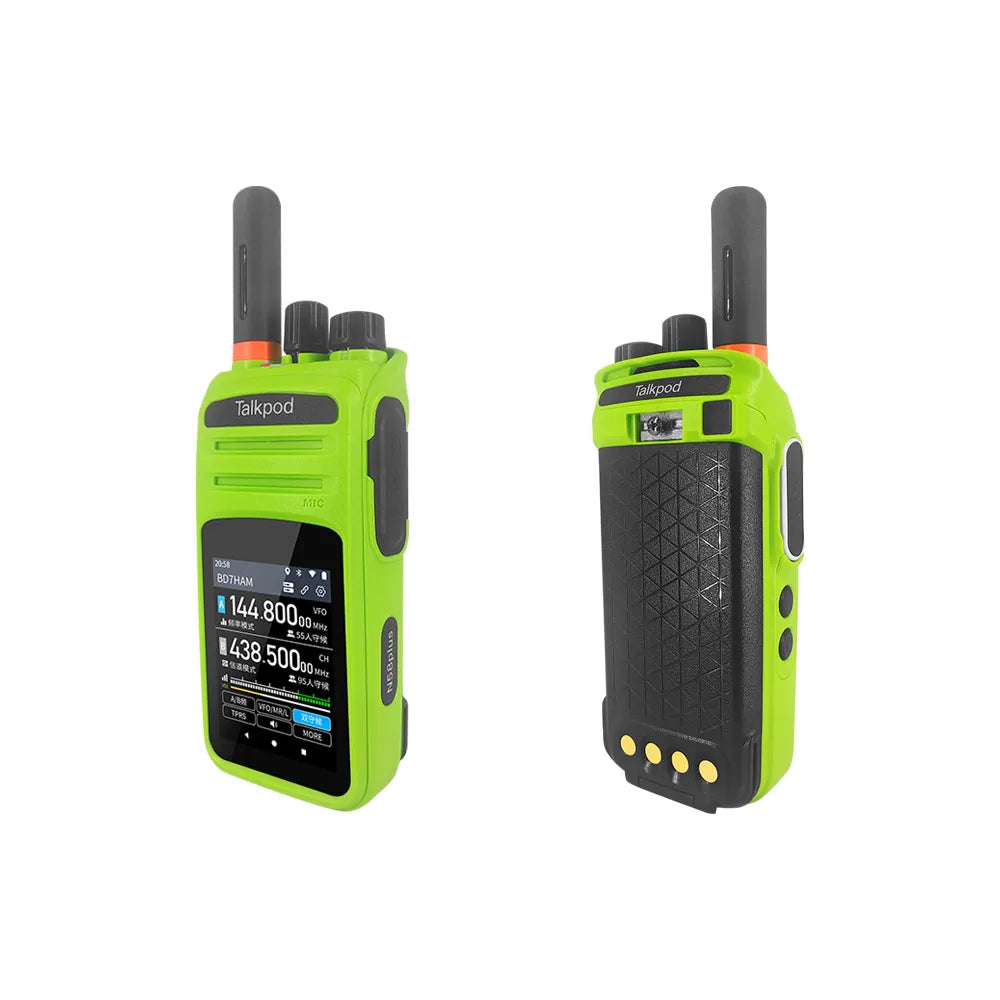
The Talkpod N56 public-network radio was introduced to support this task. Using compatible public mobile networks, it enables wide-area push-to-talk communication wherever suitable coverage is available. Combined with a visual dispatch platform and one-touch emergency alerts, the N56 helps connect the provincial command centre with emergency personnel across cities, counties and townships.
Coordinating several types of disaster
A forest fire, a mining accident and a flood do not require the same response structure.
During routine preparedness and active incidents, N56 users can switch between dedicated groups organised by city, administrative level or disaster type. Teams responsible for fire prevention, mine rescue, flood control and public evacuation can therefore remain within their own working groups while still being brought into a larger command structure when necessary.
Field personnel can report hazards, issue early warnings and coordinate evacuation guidance without sending every message to every user.
This group-based approach helps reduce unnecessary traffic and makes it easier for commanders to direct information towards the teams responsible for acting on it.
Connecting provincial and local command
Emergency information often has to travel through several administrative levels. A report may begin in a township, move through a county and city, and eventually reach the provincial command centre.
Each additional relay can create delay or introduce uncertainty.
The N56 and its dispatch platform help create a flatter communication structure. Authorised personnel at provincial, municipal, county and township levels can be organised within one managed system, allowing urgent information to reach higher-level commanders more directly.
The platform also gives dispatchers a clearer view of active groups, accounts and communication resources, supporting more structured coordination during incidents involving several regions.
Faster escalation in urgent situations
Field conditions can deteriorate quickly. A routine inspection may identify a landslide risk. A mine incident may require immediate reinforcement. A forest patrol may discover smoke before a formal alarm has been issued.
The N56 includes a one-touch emergency-alert function, giving frontline personnel a faster way to indicate that urgent attention is required. The alert can be passed through the platform to the relevant command group, helping shorten the first stage of escalation.
This function does not replace formal emergency-reporting procedures. Its value lies in helping personnel draw attention to a developing incident with fewer steps.
A structure designed around Shanxi’s risks
Talkpod worked with the provincial emergency-management authority to create a layered permission and communication structure suited to Shanxi’s operational needs.
Groups were organised according to administrative level, region and disaster responsibility. Devices for nearly 100 county- and district-level emergency locations were preconfigured and assigned to the appropriate groups before deployment.
This reduced the amount of setup required in the field and helped ensure that users entered the correct communication structure from the beginning.
For a large provincial system, such preparation matters. A radio is only useful if its accounts, permissions and groups reflect the organisation expected to use it.
From separate systems to coordinated response
The result is a more connected emergency communication framework across provincial, municipal, county and township levels.
Field information can move upward more quickly. Instructions can be directed towards the relevant region or disaster-response team. Cross-city resources can be coordinated with fewer intermediate steps, while the dispatch platform provides a more centralised view of the overall operation.
The Talkpod N56 cannot remove the difficulties created by mountains, industrial hazards or uneven mobile-network coverage. Its role is more practical: to help Shanxi’s emergency agencies make better use of available networks and organise dispersed personnel within one managed command structure.
For emergency management, speed matters. But structure matters too. A warning is most useful when it reaches the right people, at the right level, while there is still time to act.

Leave a comment
All comments are moderated before being published.
This site is protected by hCaptcha and the hCaptcha Privacy Policy and Terms of Service apply.