
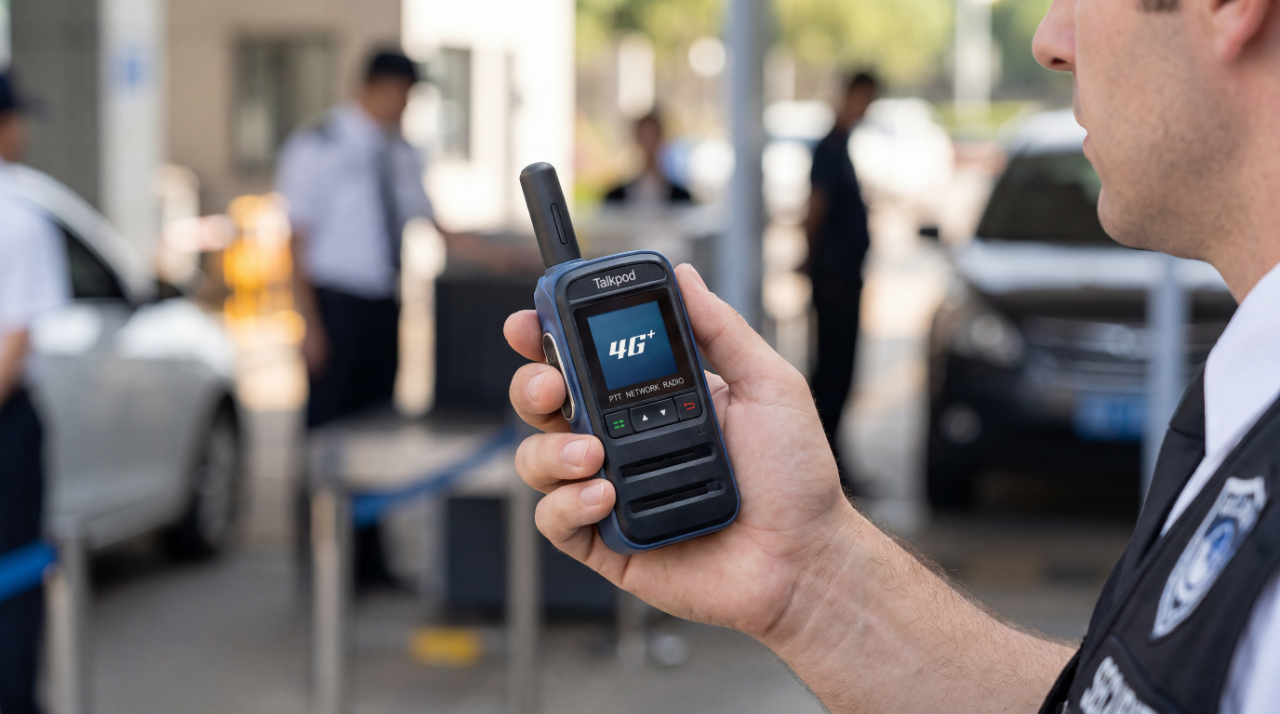
A police checkpoint is a small post with a wide responsibility.
Officers must inspect vehicles, verify information, identify potential risks and keep traffic moving. A routine stop can become an urgent incident within seconds, requiring support from nearby checkpoints, patrol teams or a central command unit.
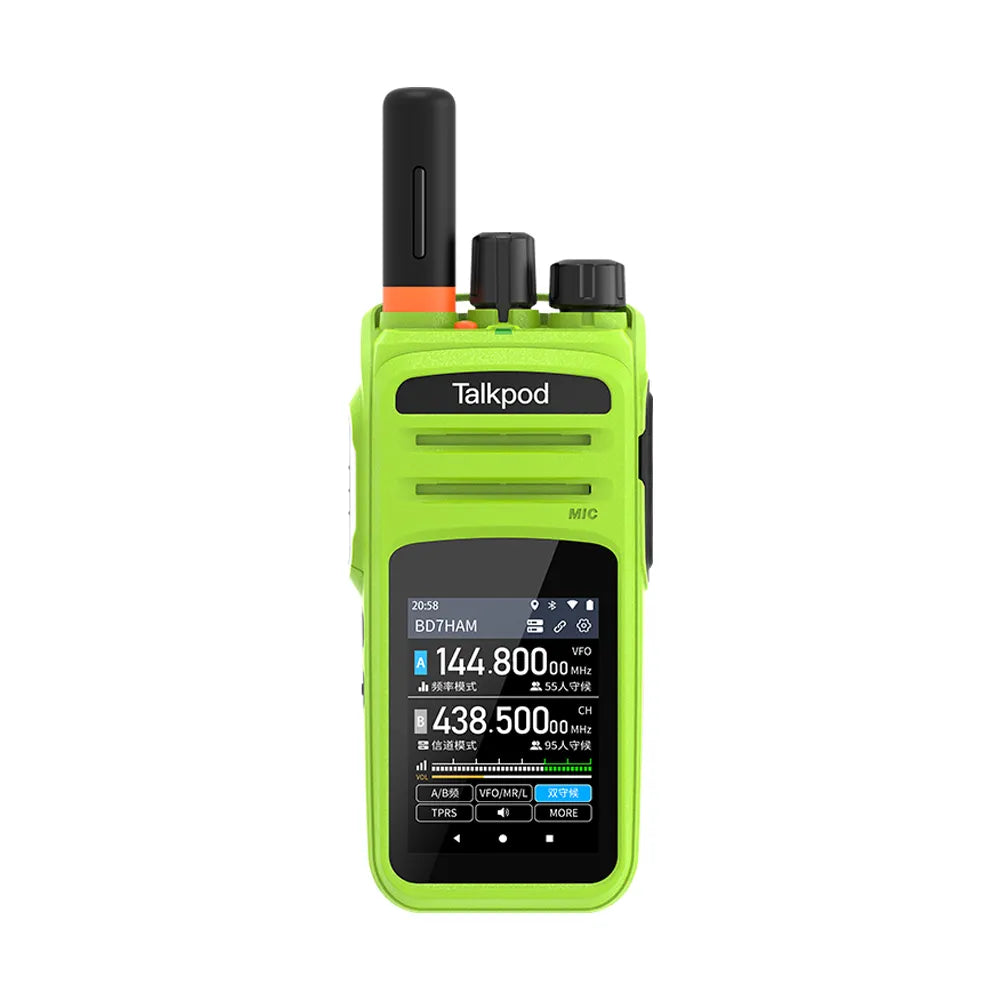
Conventional radios remain useful for local communication, but their range can become a constraint when an operation covers several roads, districts or administrative areas. The Talkpod N15 public-network radio is designed to connect these dispersed positions through compatible mobile networks.
Linking checkpoints across wider areas
Checkpoint operations may involve urban roads, motorway entrances and remote traffic routes. Officers at these locations must remain connected not only with colleagues at the same post, but also with command staff and supporting units elsewhere.
The N15 uses public mobile data networks to provide wide-area push-to-talk communication wherever compatible coverage is available. Unlike a conventional direct radio link, communication is not limited to the immediate range between two devices.
This allows commanders to place officers from different checkpoints, patrol units and operational departments into the same communication structure. Information about a suspicious vehicle, a developing incident or a request for support can therefore be shared across several locations without being passed through multiple intermediaries.
The system still depends on available mobile-network service. Its advantage lies not in removing that dependency, but in giving checkpoint teams access to a much wider operating area when suitable coverage is present.
Clearer instructions beside moving traffic
Roadside checkpoints are noisy places. Engines, horns, wind and rain can make weak audio difficult to understand.
The N15 is equipped with a 1W speaker and digital voice processing, helping provide louder and clearer speech in busy roadside environments. Officers can hear vehicle-inspection instructions, identification details and operational updates with less need for repetition.
Clear audio supports both efficiency and safety. An instruction that must be repeated takes longer to act upon; one that is misunderstood may affect how an incident is handled.
Faster access after deployment
Checkpoint duties may be established or moved at short notice. Communication equipment must therefore become operational quickly.
The N15 is designed to connect to its communication platform within a few seconds under suitable network conditions. This helps officers establish contact soon after powering on the device rather than waiting through a lengthy setup process.
Its dual-SIM design also allows two compatible operator cards to be installed. Where network conditions vary between operators, the device can use the available connection to help teams adapt to local coverage.
Dual-SIM capability does not guarantee uninterrupted service in every location. Both networks may be weak or unavailable in some areas. It does, however, provide an additional option when one operator’s coverage is less suitable than another’s.
Dispatching the right personnel
Through the web or client-based dispatch platform, authorised command staff can manage accounts, communication groups and field personnel remotely.
Different checkpoints and operational teams can be assigned to dedicated groups according to the task. A routine traffic post can remain within its own working group, while officers from several locations can be brought into a temporary command group during a wider operation.
Optional authorised remote monitoring can support command supervision where permitted by organisational policy and applicable law.
The N15 can also be configured with optional GPS positioning and route-history playback. These functions allow command staff to view the location and movement of equipped personnel, supporting more informed deployment and quicker identification of the nearest available unit.
A stronger link between the post and command
The N15 does not replace established police procedures, local radio systems or mobile-network contingency planning. Its role is to extend the command structure beyond the limits of a single checkpoint.
Wide-area push-to-talk connects dispersed positions. Stronger audio helps instructions rise above road noise. Dual-SIM support gives teams more flexibility under changing network conditions, while remote group management and optional GPS functions improve visibility over field operations.
For officers at a security checkpoint, the practical value is simple: a report can reach command faster, an instruction can reach several posts at once and additional personnel can be directed towards an incident with fewer delays.
A checkpoint may be fixed to one place. Its communication system need not be.

Leave a comment
All comments are moderated before being published.
This site is protected by hCaptcha and the hCaptcha Privacy Policy and Terms of Service apply.