
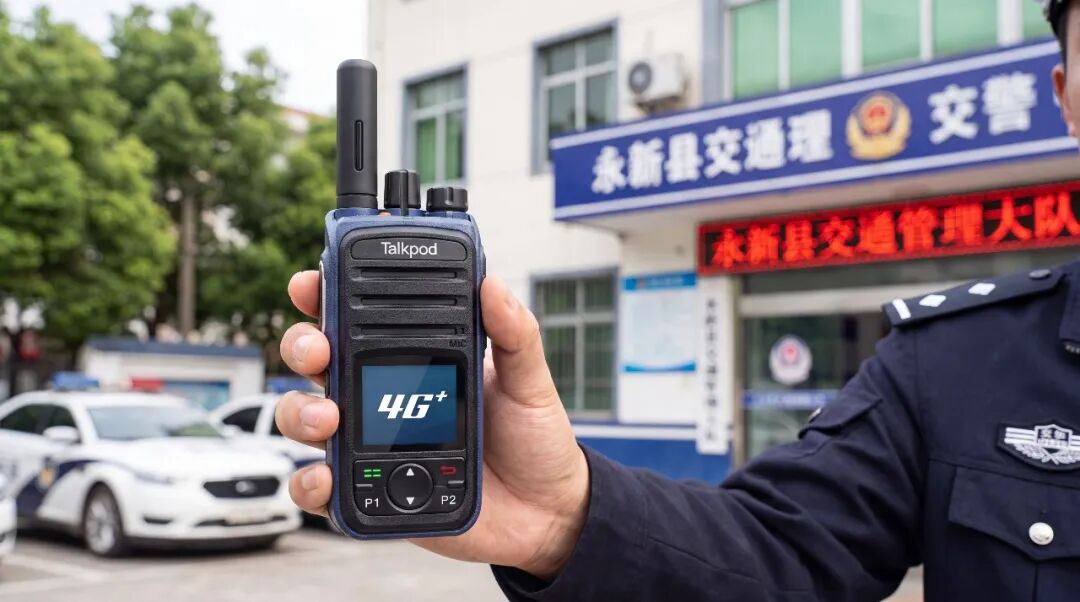
Traffic management is a job defined by movement.
Officers may begin a shift at an urban junction, move to a busy road section during the morning peak and later support an incident several kilometres away. Others may be stationed on rural roads or at temporary traffic-control points across the county.
For the Yongxin County traffic-management team, this distribution made communication increasingly important. Conventional handheld radios remained useful for local work, but direct radio range could become a limitation when officers were spread across a wider area.
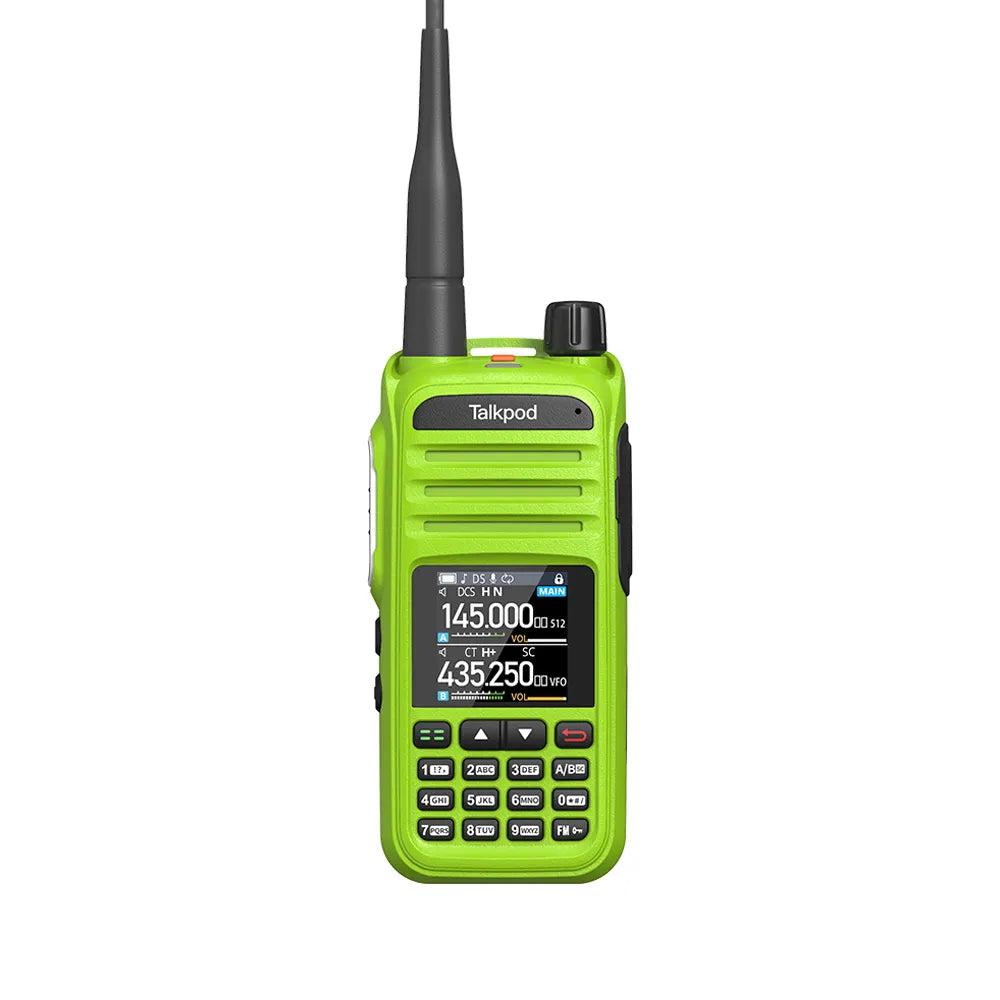
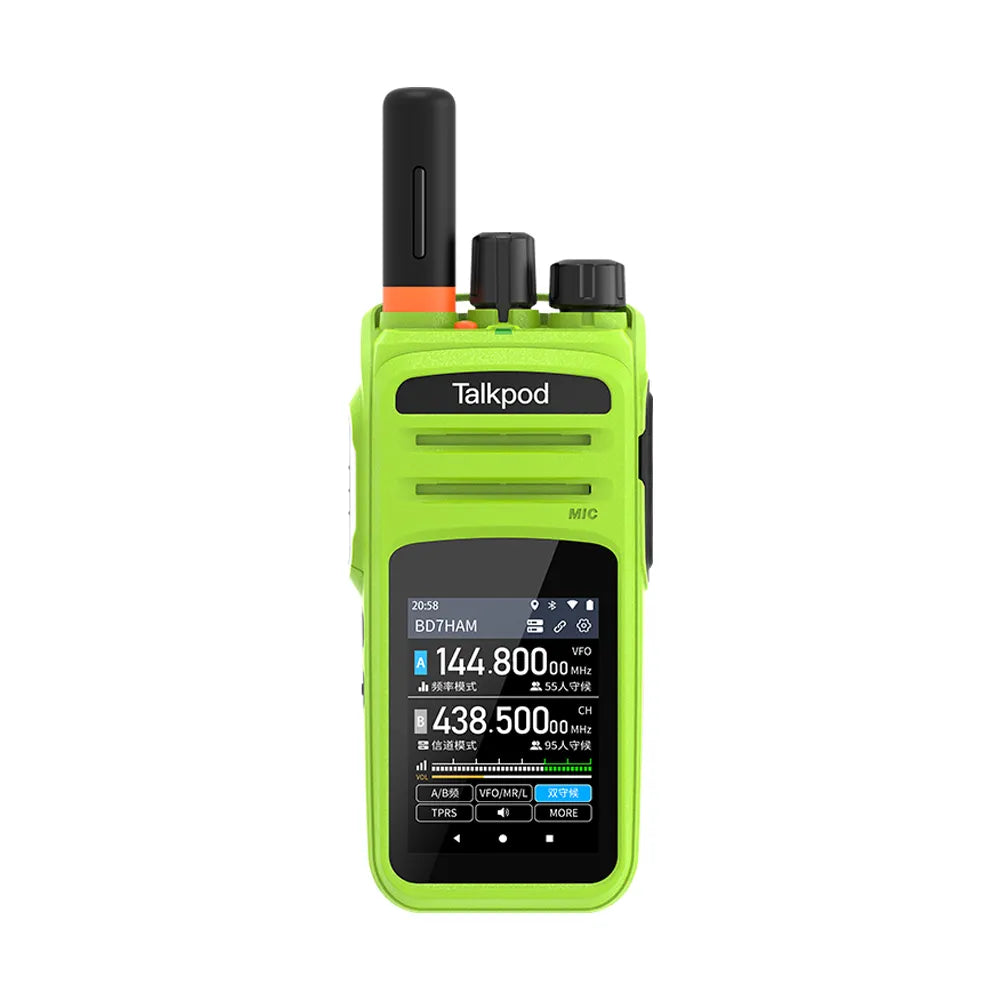
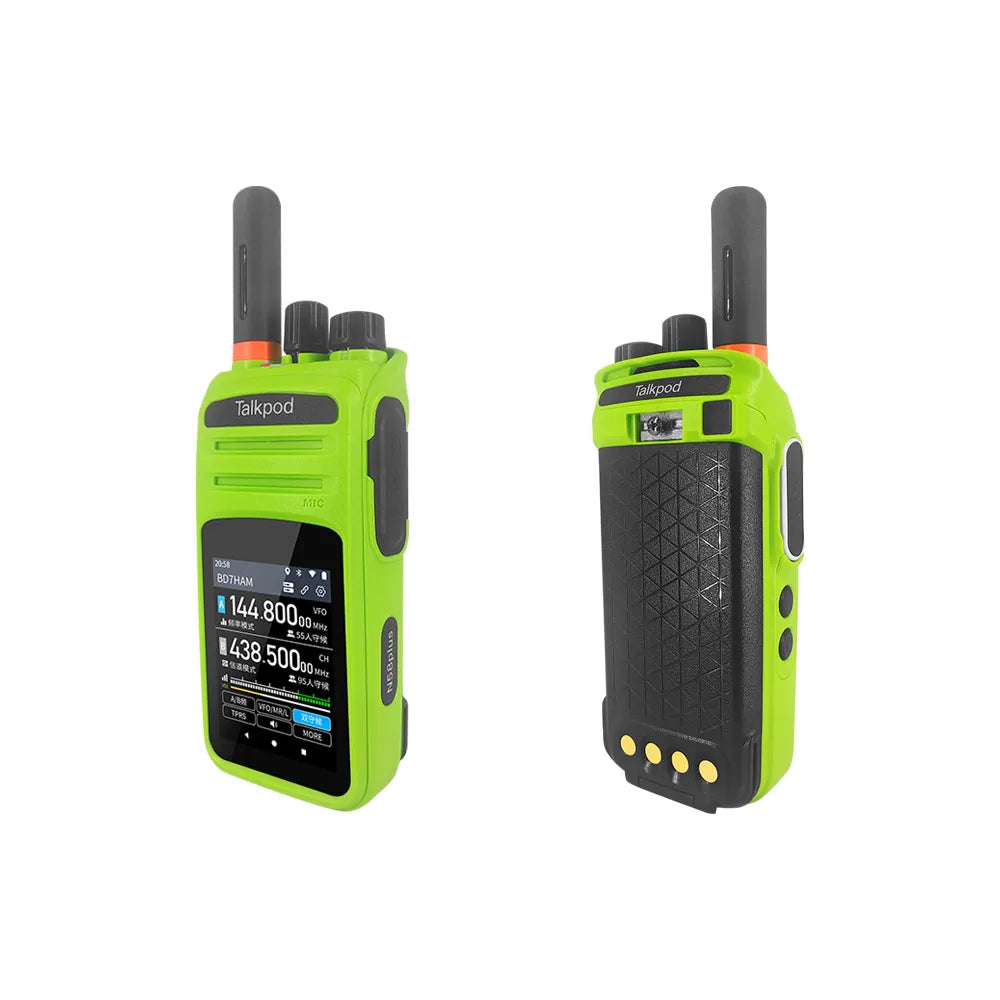
The Talkpod N56 public-network radio was introduced to provide an additional wide-area push-to-talk and dispatch link between roadside personnel and the command centre wherever suitable mobile-network coverage is available.
Connecting dispersed roadside teams
Traffic officers rarely work within one compact site.
Routine duties may include intersection management, road patrols, temporary checkpoints and support for incidents occurring elsewhere in the county. When personnel are separated by several kilometres, a direct handheld radio link may no longer be practical.
The N56 uses compatible public mobile networks to support wide-area push-to-talk communication. Officers working in different areas can remain connected with colleagues and the command centre without depending solely on the direct radio path between individual handhelds.
This makes it easier to pass short operational updates such as congestion conditions, road obstructions and requests for additional personnel.
The practical benefit is not unlimited distance. It is a communication system whose useful range is tied more closely to available network coverage than to the distance between two radios.
Responding when road conditions change
Traffic conditions can change quickly.
A minor collision may begin blocking a lane. Heavy congestion may form around a junction. Severe weather or a broken-down vehicle can suddenly create a new safety problem.
In these situations, an officer at the scene needs a quick way to inform both the command centre and nearby personnel.
With the N56, field staff can use push-to-talk communication to report the situation while remaining at their duty point. Supervisors can then coordinate additional personnel according to established procedures.
This reduces the need for a chain of individual telephone calls and helps the wider team become aware of developing conditions sooner.
The radio does not decide how resources should be deployed. That remains a command decision based on verified information and the traffic-management unit’s own procedures.
One-touch emergency alerts as an additional safeguard
The N56 also supports a one-touch SOS function.
For an officer working alone or at a dispersed roadside location, a dedicated emergency control can provide a faster way to raise an alert than navigating through menus or making a conventional phone call.
When correctly configured with the relevant platform, an SOS activation can notify designated personnel that the user requires attention.
The function should not be interpreted as automatically locating the officer or dispatching assistance in every circumstance. Its behaviour depends on system configuration, network connectivity and the organisation’s emergency procedures.
For that reason, SOS is most useful when it forms part of a clearly defined response process: personnel know what an alert means, who receives it and what action should follow.
Giving the command centre a broader operational view
Wide-area communication becomes more useful when it is connected to dispatch management.
The N56 can operate with a backend platform that allows authorised personnel to manage users, communication groups and related dispatch functions.
For a county-level traffic-management unit, this helps supervisors organise personnel around duty areas and operating requirements rather than relying only on separate individual calls.
Field teams can report conditions while the command side maintains a broader view of which groups are working in different parts of the jurisdiction.
This can make daily duty coordination more orderly, particularly during periods when several incidents or traffic-control tasks are taking place at once.
Public-network communication still depends on infrastructure. Mountain roads, tunnels, remote villages and other weak-coverage areas may affect connectivity, so critical routes should be tested and fallback communication procedures retained.
Reducing unnecessary movement
Poor communication often creates work that nobody planned.
An officer may have to leave a duty point simply to clarify instructions. Another team may travel farther than necessary because the situation at the scene was not updated in time.
Wide-area push-to-talk can reduce some of this unnecessary movement.
An officer can remain at the roadside while updating the command centre. Nearby personnel can receive information before being reassigned. Supervisors can coordinate support without requiring every team to return to a fixed location.
Across a county-wide road network, these small improvements can free up both personnel and vehicles for more useful work.
Training matters as much as the device
Introducing a new communication platform requires more than distributing radios.
Talkpod provided account configuration, platform setup and operating guidance to help personnel become familiar with the N56 and its dispatch functions.
Training is particularly important for features such as talk groups, emergency alerts and backend management. Users need to understand not only which button to press, but also which group should receive a message and how an emergency alert is handled.
A well-configured radio should fit the existing duty workflow rather than create an additional system officers must learn around.
The objective is simple: routine communication should become easier, while emergency communication should become clearer.
Public networks bring range—and dependency
The principal advantage of a public-network radio is its ability to connect users over much wider areas than a conventional direct handheld system.
That advantage comes with a trade-off.
The N56 relies on compatible mobile-network service. Where coverage is strong, officers in distant parts of the county can communicate through the same managed system. Where coverage is poor or unavailable, performance will be affected.
For traffic-management organisations, this means deployment should be based on real coverage surveys rather than broad claims of “no dead zones”.
Important intersections, rural roads, tunnels and known weak-signal areas should be tested in advance, and alternative communication methods should remain available for critical operations.
Making distance less disruptive to daily traffic management
After deployment, the Yongxin County traffic-management team gained another way to connect personnel spread across its road network.
Roadside officers could communicate with the command centre over wider areas, developing traffic conditions could be reported sooner, and dispatch functions could be organised through a common platform.
The N56 does not replace professional judgment, formal command procedures or dedicated mission-critical communication systems where those are required.
Its role is more practical.
It helps reduce the communication delay created when officers, incidents and supervisors are separated by distance.
For county-level traffic management, that is often where efficiency begins: not by putting more people on the road, but by helping the people already there work from the same information sooner.

Leave a comment
All comments are moderated before being published.
This site is protected by hCaptcha and the hCaptcha Privacy Policy and Terms of Service apply.