
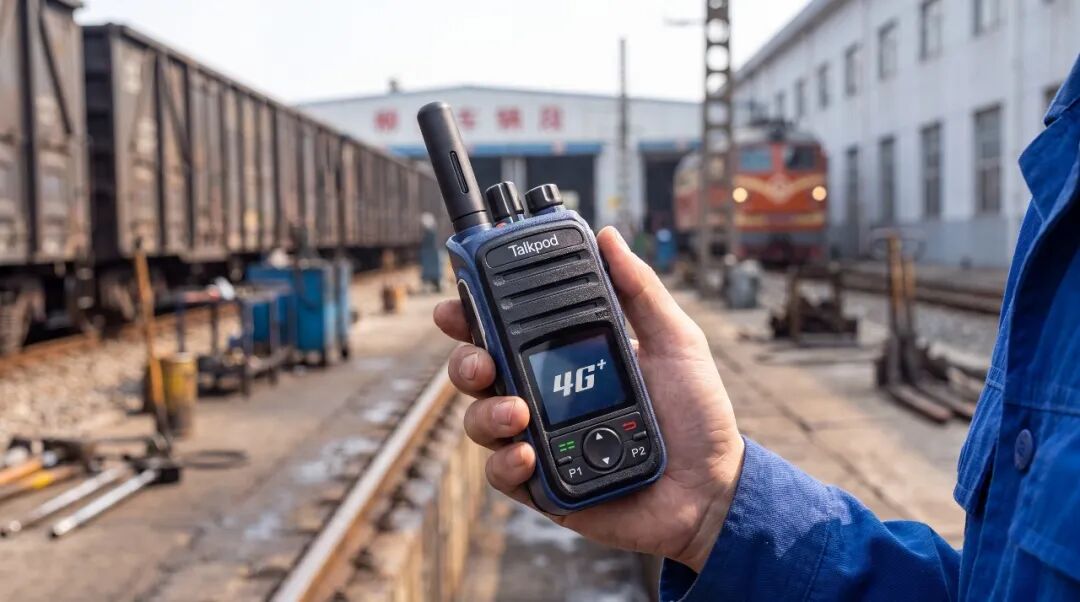
Railway vehicle maintenance depends on many small pieces of information moving quickly between people.
A defect found at one inspection point may require support from another team. A supervisor may need to reassign personnel while maintenance work continues elsewhere. Inside workshops, machinery and surrounding activity can make ordinary voice communication difficult, while teams working across different areas may be beyond the practical range of conventional handheld radios.
At Liuzhou Railway Depot, these conditions created a need for a more flexible communication layer between maintenance personnel and coordinators.
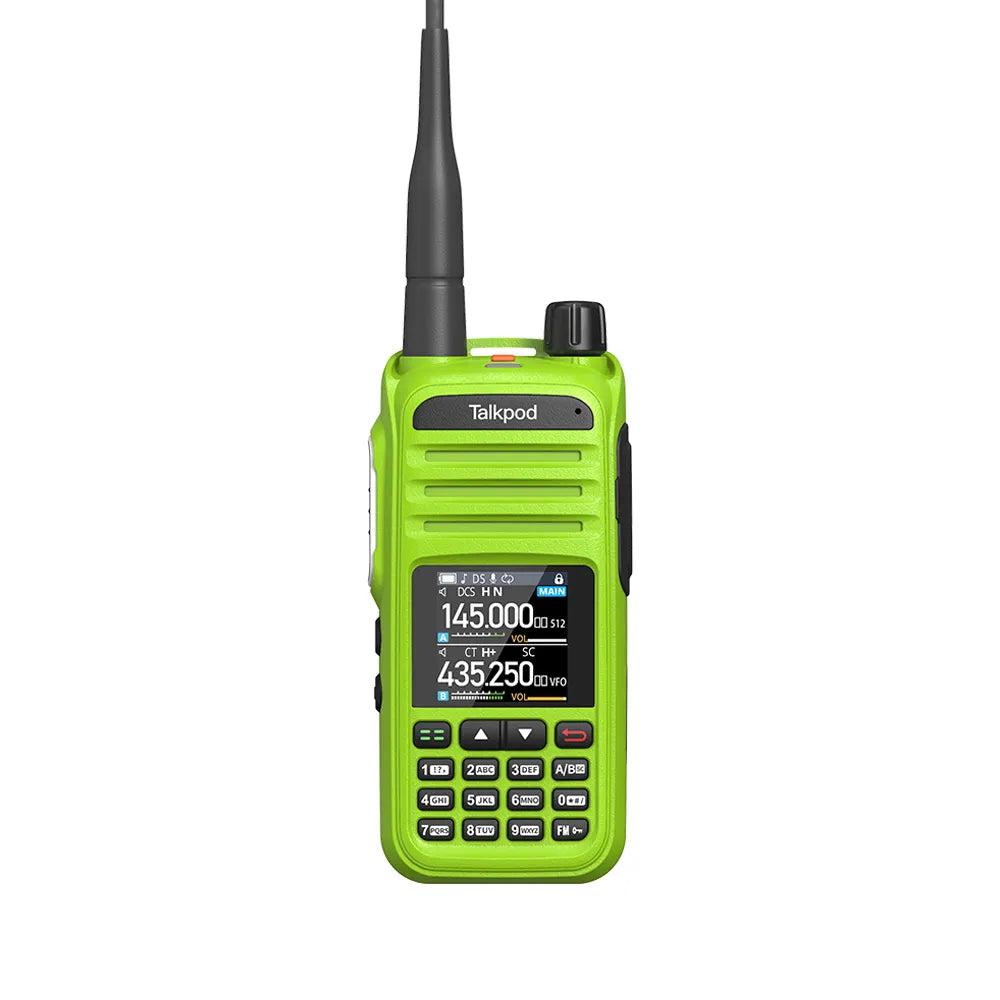
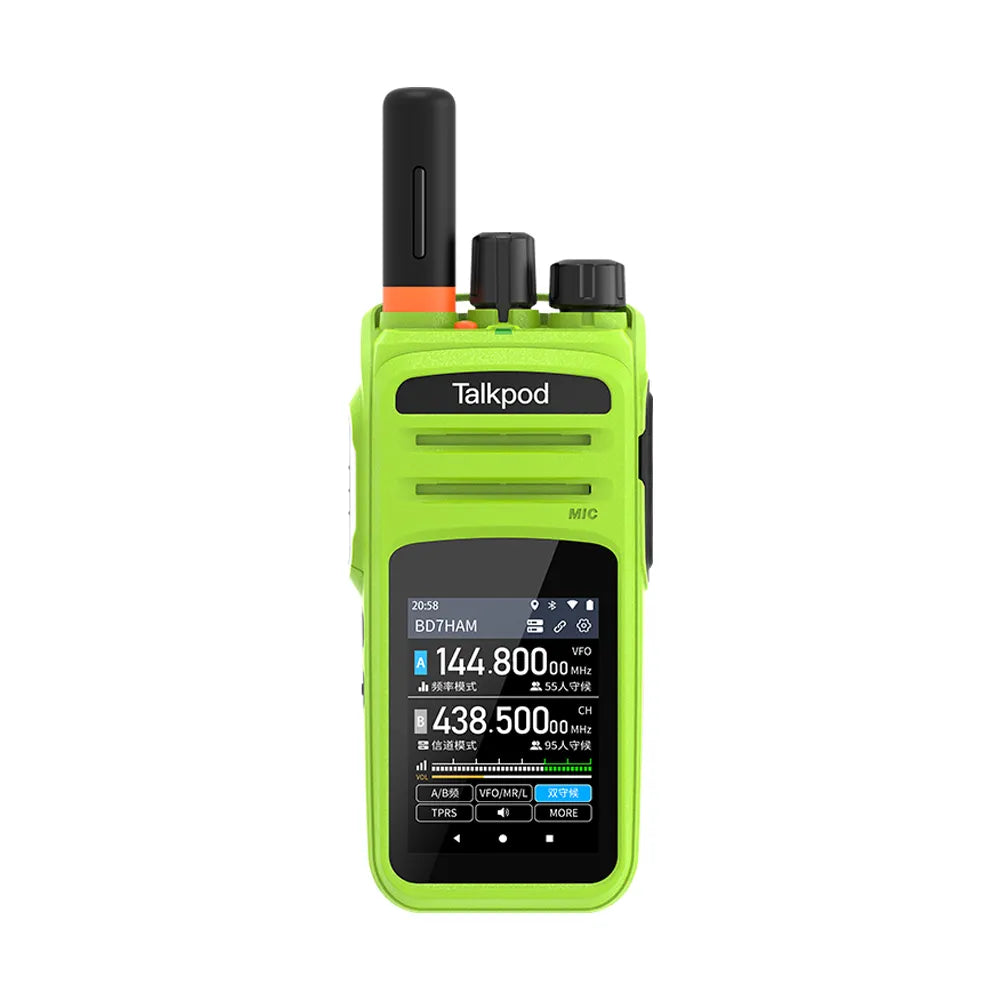
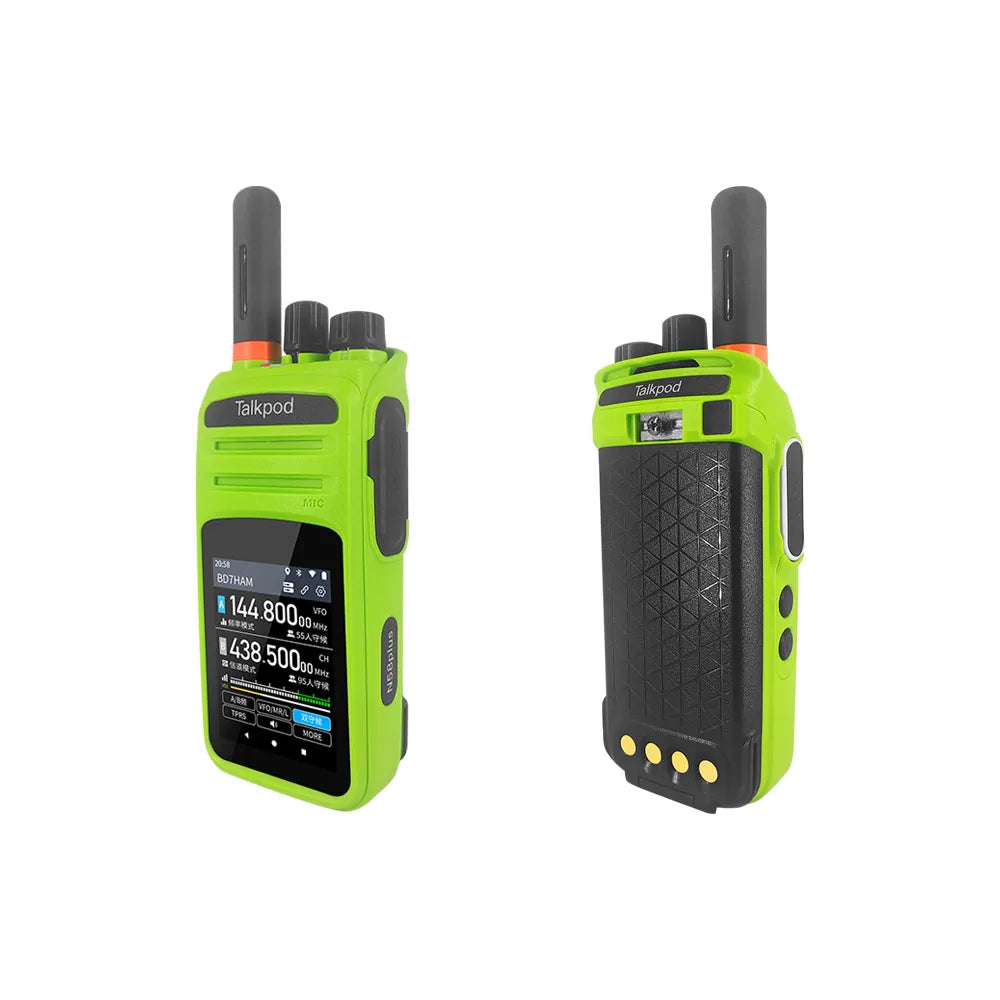
The Talkpod N56 public-network radio uses compatible mobile networks to provide wide-area push-to-talk communication, combined with digital voice, one-touch alerts and backend dispatch capabilities. Where suitable network coverage is available, it can help maintenance teams exchange routine operational information more efficiently across different work locations.
Extending communication beyond local radio range
Traditional handheld radios are effective when users remain within the coverage area of the same local system.
A railway depot, however, may involve several inspection zones, workshops and operating points spread across a larger area.
The N56 carries push-to-talk traffic through public mobile networks rather than depending entirely on direct radio-to-radio range. This allows personnel at separated locations to remain within the same managed communication system when compatible network service is available.
A freight-car maintenance worker can report an equipment issue from the inspection point, while supervisors or supporting teams elsewhere can receive the update without waiting for the worker to return to a fixed office.
The practical benefit is wider-area coordination.
It should not be understood as literally unlimited communication. Actual performance still depends on network coverage, building structure and local operating conditions.
Clearer communication in busy maintenance workshops
Railway workshops can be noisy places.
Tools, machinery, vehicle movement and maintenance equipment all compete with spoken instructions.
The N56 uses digital voice processing and speaker output designed to make short operational messages easier to understand in these environments.
For routine coordination, this can reduce repetition.
A technician can report that a component requires further inspection, request another team or confirm that a maintenance step has been completed without leaving the immediate work area.
Important instructions should still be repeated or acknowledged where required.
In railway maintenance, clear voice communication is useful, but it should not become the sole record for information that must be formally documented or confirmed through established procedures.
Faster coordination between work teams
A maintenance depot often has several teams working simultaneously.
If every user receives every conversation, radio traffic quickly becomes inefficient.
The N56 can be configured around defined communication groups so that routine messages remain focused on the personnel who actually need them.
Talkpod provided a dedicated deployment plan for Liuzhou Railway Depot, including device configuration and integration with the dispatch platform.
This allows supervisors to organize accounts and communication relationships more systematically while frontline users can access the appropriate group without repeatedly navigating complex menus.
For cross-team work, the backend dispatch system provides an additional coordination layer when several groups need to respond to the same maintenance issue.
One-touch alerts for abnormal situations
Unexpected situations occasionally require a worker to request help quickly.
The N56 includes a one-touch alert function that can provide an additional way to notify designated personnel or the dispatch side.
Its value depends on the response process behind it.
The depot should define who receives the alert, how it is acknowledged and what action follows.
An alert button does not automatically guarantee assistance, and its availability depends on the radio, platform configuration and network connection.
Used within a defined procedure, however, it can shorten the first step between detecting an abnormal situation and notifying the people responsible for responding.
Simple operation matters on the maintenance floor
A communication device is most useful when workers do not need to stop what they are doing in order to operate it.
Maintenance personnel may be carrying tools, wearing gloves or working beside vehicles and equipment. Complicated menus can slow down routine interaction.
The N56's shortcut controls and straightforward interface help reduce the number of steps needed for common communication tasks.
For frontline personnel, that can make adoption easier and reduce operating errors.
Talkpod also provided operational guidance to help maintenance staff become familiar with the radio and dispatch workflow after deployment.
A well-configured communication system is not simply a collection of devices.
It is a common operating method understood by everyone using them.
Public-network communication requires real coverage testing
Because the N56 is a public-network radio, its performance depends on compatible mobile-network availability.
Workshops, enclosed maintenance buildings and other heavily structured areas may not provide the same coverage as outdoor sections of the depot.
The actual operating locations should therefore be tested before the system is relied upon for routine work.
Weak areas should be identified, and alternative communication arrangements should remain available where public-network service is insufficient.
This is particularly important in railway environments, where communication resilience matters.
The N56 should also be treated as a supplementary coordination tool.
Formal railway dispatch instructions, movement authority, shunting procedures and other safety-critical communication must continue to use the designated railway systems and procedures required by the operator.
A shorter path between a problem and the people who can respond
The value of the N56 at Liuzhou Railway Depot is not that it replaces existing railway communication systems.
It is that it can reduce some of the delays around everyday maintenance coordination.
Where suitable network coverage exists, a technician can report a problem directly from the work location. Supervisors can organize communication through defined groups and backend dispatch. One-touch alerts provide an additional route for urgent notification, while digital voice helps routine messages remain understandable in noisy workshops.
Those are relatively simple improvements.
But railway maintenance is built from thousands of small interactions, and shortening the communication path between inspection, coordination and response can make the overall workflow easier to manage.
For Liuzhou Railway Depot, the N56 serves as an additional communication layer that helps dispersed maintenance teams stay connected without replacing the dedicated systems and formal procedures on which railway safety depends.

Leave a comment
All comments are moderated before being published.
This site is protected by hCaptcha and the hCaptcha Privacy Policy and Terms of Service apply.