
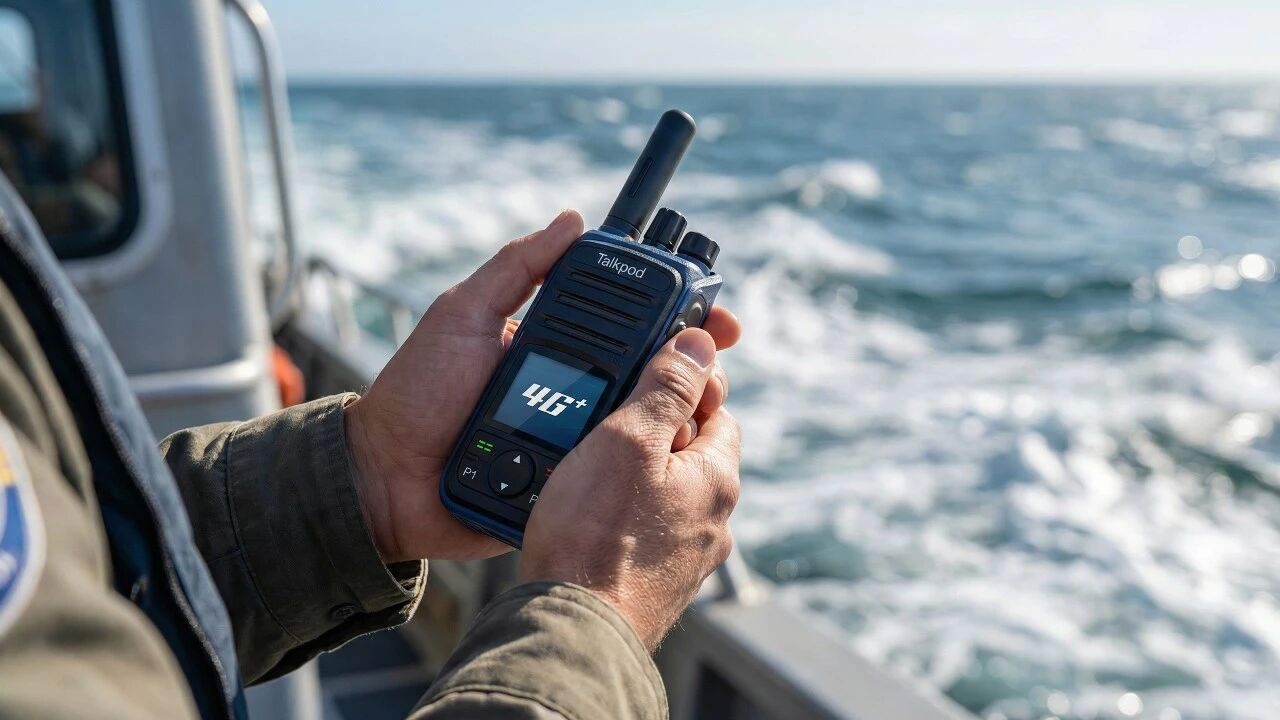
Maritime enforcement is a problem of distance, movement and incomplete information.
Along Fujian’s coastline, patrol teams may be conducting law-enforcement operations, assisting fishing vessels or investigating suspected smuggling activity. Vessels move between ports, coastal waters and island areas, while commanders on shore must keep track of personnel and adjust deployments as conditions change.
Conventional radios remain essential for local ship-to-ship and maritime communication. Their practical range, however, may make wider coordination more difficult when vessels and duty posts are spread across different areas.
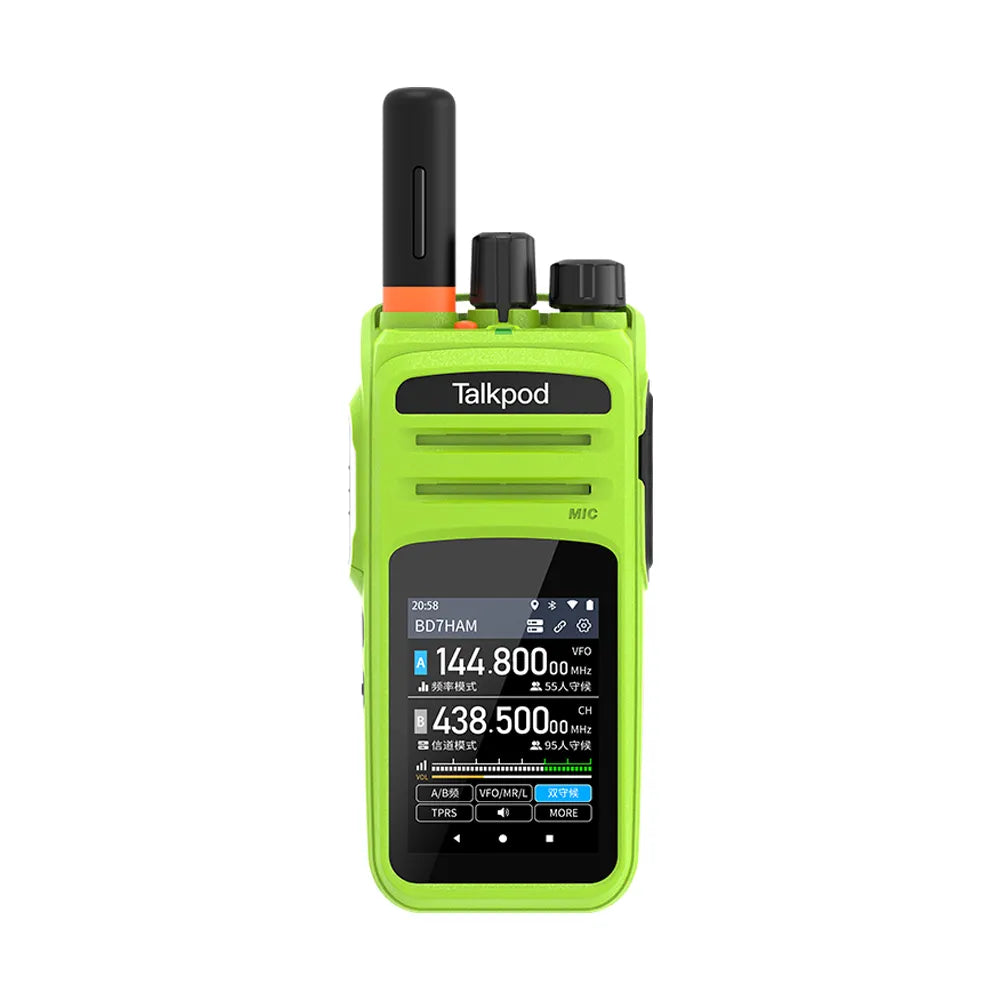
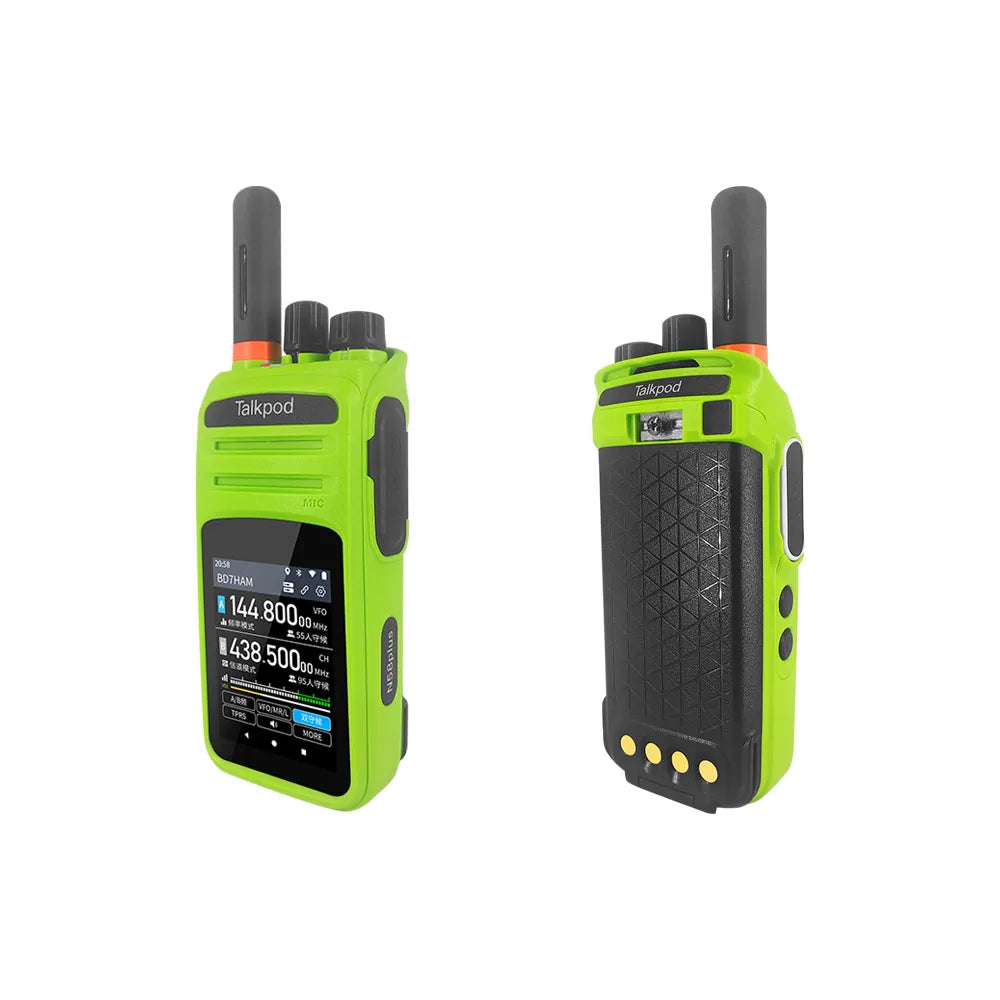
The Talkpod N56 public-network radio was introduced to provide an additional communication and dispatch channel between shore-based command personnel and equipped field units wherever compatible mobile-network coverage is available.
Extending command beyond the harbour
Coastal operations may involve patrol vessels, shore stations, island posts and mobile enforcement teams. Each may be operating at a different location, yet all may need access to the same operational update.
Using public mobile networks, the N56 supports wide-area push-to-talk communication without relying solely on a direct radio link between two devices. Shore-based commanders can contact selected vessels or operating groups through the dispatch platform, while field personnel can report changing conditions more directly.
This can be particularly useful near ports, populated coastlines and island areas served by compatible mobile networks.
Public-network communication should not be treated as a substitute for dedicated marine radio, satellite communication or other mission-critical systems. Mobile coverage can weaken or disappear farther offshore. The N56’s role is to add another practical layer to the wider communications structure.
Better visibility over moving units
At sea, knowing that a vessel has reported an incident is only part of the picture. Commanders must also understand where the unit is and which available team is best placed to respond.
GPS positioning allows authorised personnel to view the location of equipped devices through the dispatch platform. Operators can mark relevant positions, report target areas and support the coordination of several vessels from a shore-based command point.
This helps commanders make more informed decisions when reallocating patrol resources, arranging support or managing a developing incident across several locations.
Organising vessels into working groups
Not every patrol unit needs to hear every conversation. Routine harbour duties, island patrols, enforcement operations and rescue support may each require their own communication structure.
The N56 allows devices to be organised into groups according to vessel, patrol area, task or command level. Shore personnel can contact one unit, a defined formation or a wider operational group as required.
Talkpod worked with the organisation to develop a layered shore-to-sea group and permission structure. Devices were preconfigured and assigned to the relevant operating groups before deployment, reducing the need for crews to complete complex setup while on duty.
This approach helps keep routine communication orderly while allowing commanders to bring several units together when an operation expands.
A quicker way to raise an alert
Maritime conditions can change quickly. A patrol vessel may encounter hazardous weather, a crew may require assistance or an apparently routine inspection may develop into a more serious situation.
The N56 includes a one-touch emergency-alert function, giving personnel a direct way to indicate that urgent support is required. The alert can be passed through the platform to the relevant command personnel, helping shorten the first stage of escalation.
It does not replace established distress procedures. It provides an additional route for drawing attention to an incident when the device remains connected to the network.
Bringing shore, vessel and island posts closer together
The result is a more structured communication link across shore-based command, patrol vessels and island duty points. Commanders gain better visibility over participating units. Vessel groups can be adjusted according to the task, while urgent reports can reach supervisory personnel with fewer intermediate steps.
The Talkpod N56 cannot remove the limitations imposed by weather, geography or offshore mobile coverage. Its value lies in helping coastguard teams make better use of the networks that are available.
At sea, effective command depends on combining several communication systems rather than expecting one device to do everything. The N56 adds a flexible public-network channel to that mix—helping shore and field personnel remain better coordinated when operations extend along a long and complicated coastline.

Leave a comment
All comments are moderated before being published.
This site is protected by hCaptcha and the hCaptcha Privacy Policy and Terms of Service apply.