
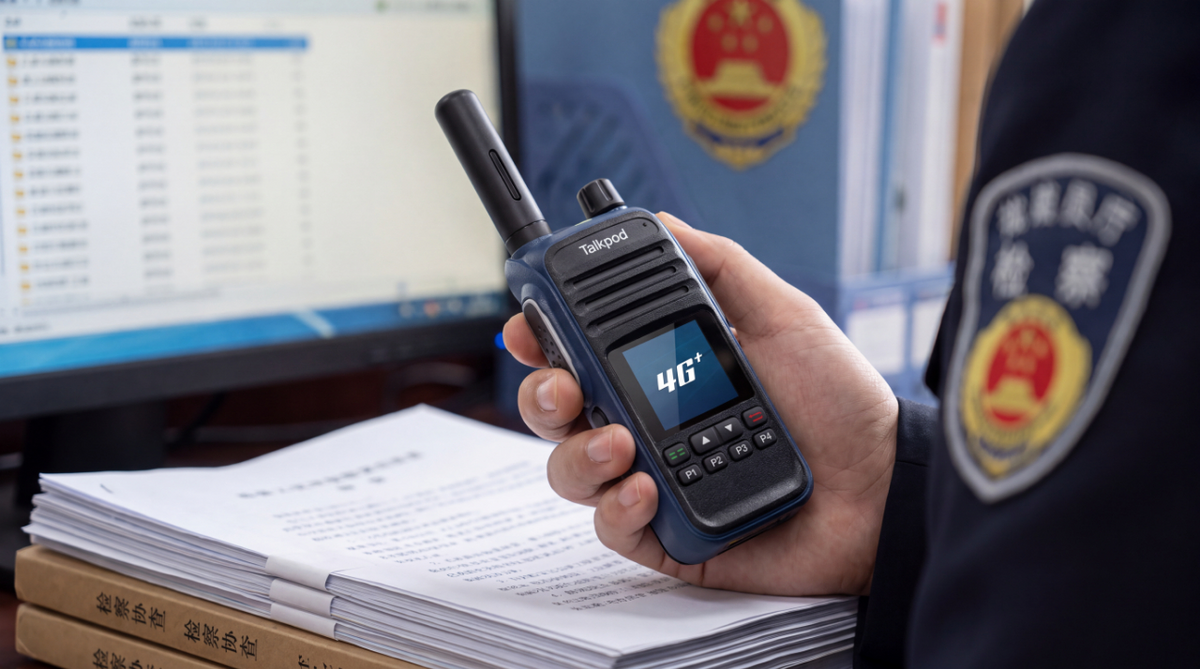
A cross-regional investigation rarely stays within one office.
Field personnel may be checking leads in one city while another team works in a different jurisdiction. Supervisors may need to coordinate several groups at once, and case-related information can move between investigators, prosecutors and supporting personnel over a relatively short period of time.
Conventional handheld radios are useful within a local coverage area, but they become less practical when personnel are separated by hundreds of kilometers.
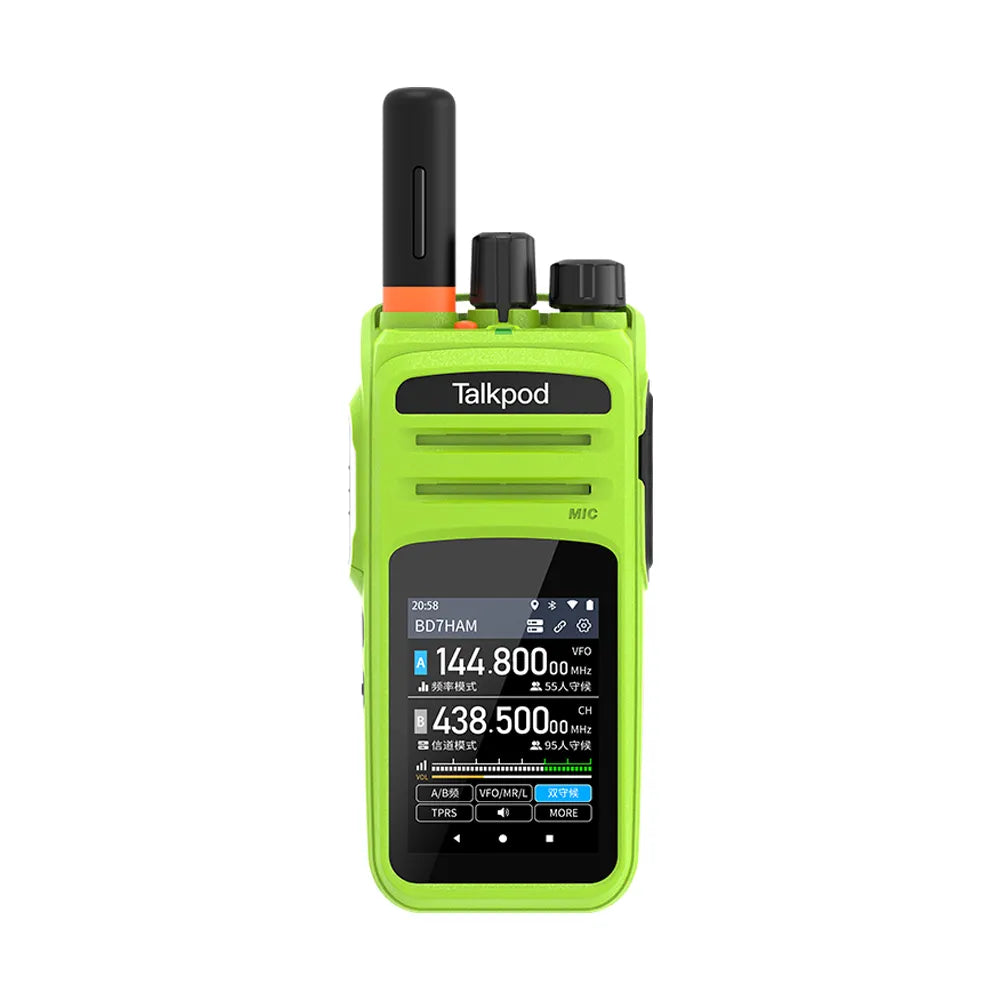
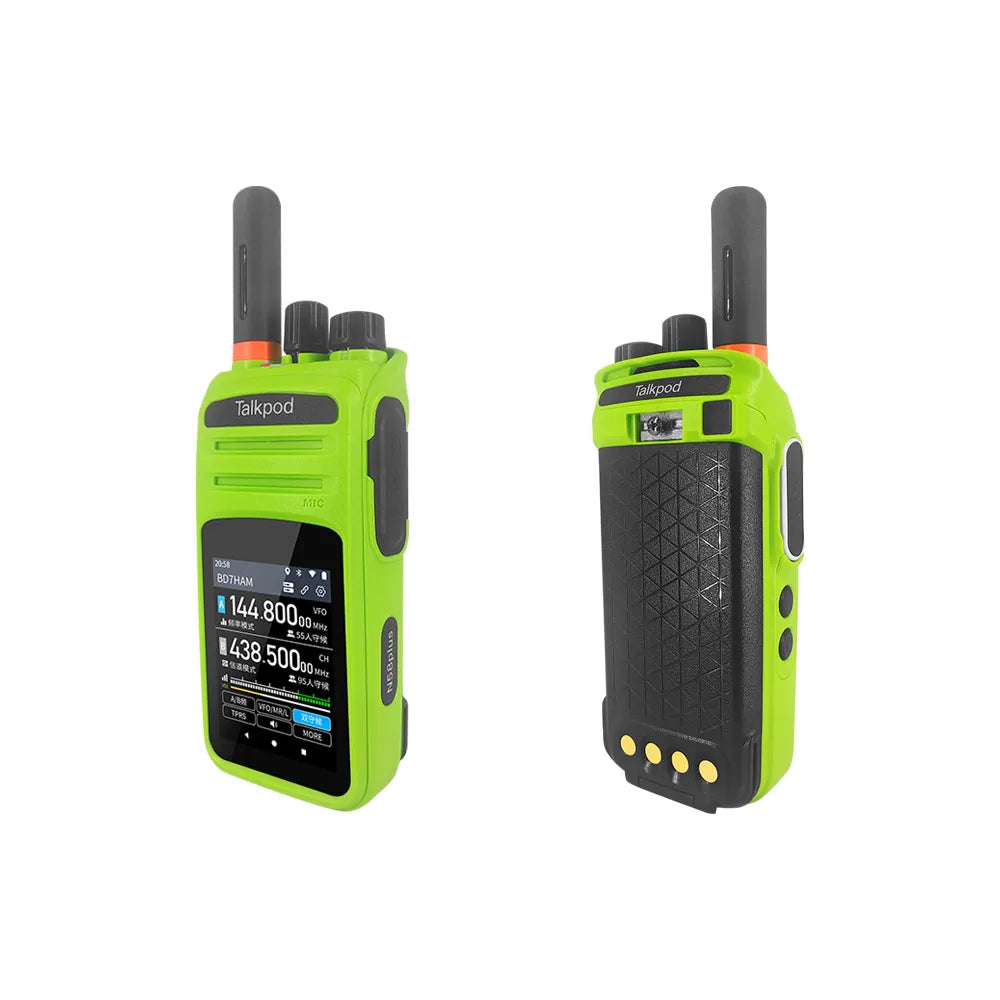
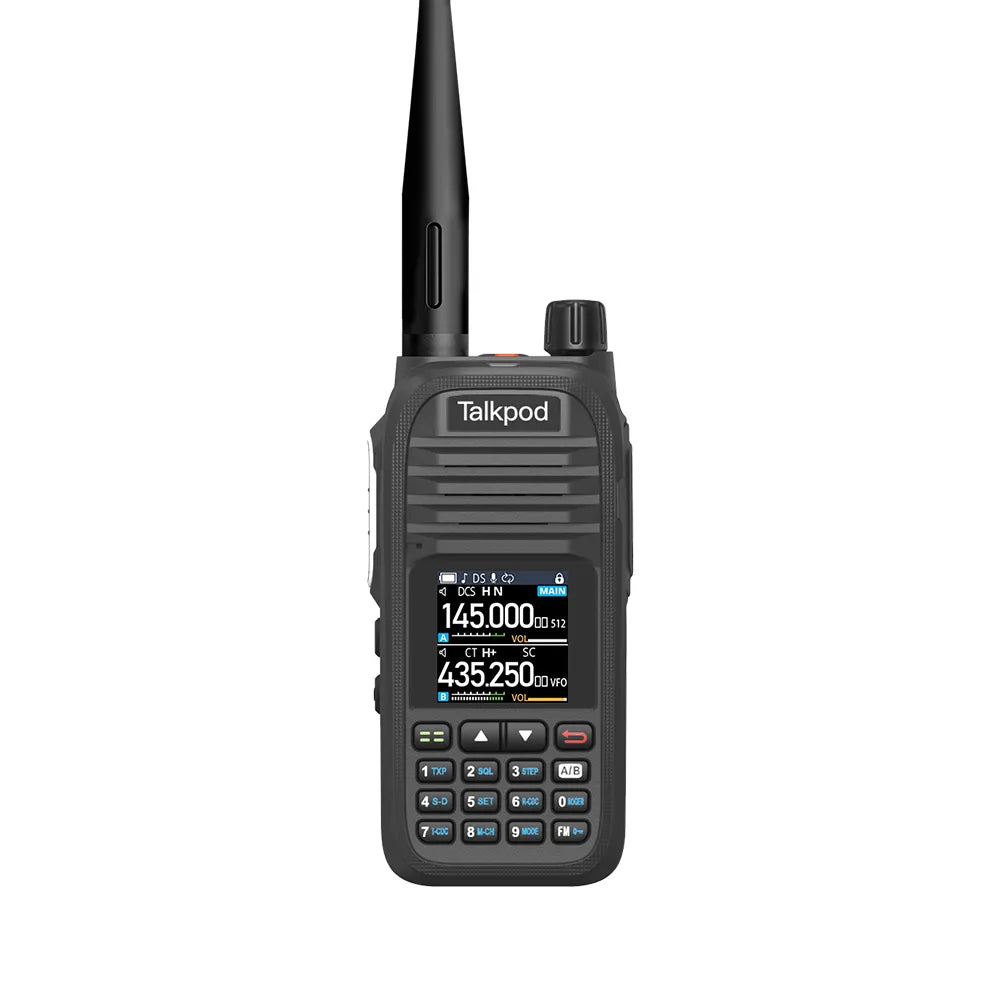
The Talkpod N37 public-network trunked radio provides a wide-area push-to-talk layer for these distributed teams where compatible mobile-network service is available. Managed groups, backend recording, nested group structures and automatic contact synchronization can help organize communication across multiple locations.
For prosecutorial work, however, operational convenience is only one requirement.
Case information can be sensitive, so communication architecture, access control, recording policy and data governance matter just as much as range.
Building temporary groups around an investigation
A complex investigation may involve personnel from several jurisdictions or departments.
Instead of asking every user to communicate through one large open group, the N37 platform can be configured with multiple task-specific groups.
A coordination team might create one group for a particular field operation, another for logistics and a separate group for supervisory communication.
The source describes the platform as supporting unrestricted numbers of groups, members and contacts. In practice, that is better understood as a scalable platform architecture rather than literally unlimited capacity.
Actual limits depend on the platform deployment, account structure, server resources, licensing and system configuration.
The operational advantage is still significant.
Teams do not need to share the same conventional radio frequency simply because they are working on the same investigation. Where compatible public-network coverage is available, users in different cities can be placed within the same managed push-to-talk environment.
Public-network communication removes distance limits—but not network limits
Compared with a conventional local radio, PoC communication changes the role of distance.
Two users can be far apart geographically and still communicate as long as both devices have suitable network connectivity and the platform is available.
That makes the N37 useful for cross-regional field coordination.
But it should not be described as universally available.
Remote rural areas, tunnels, shielded buildings and locations with weak operator coverage can still interrupt service.
For that reason, agencies should understand actual coverage conditions and maintain alternative communication arrangements where necessary.
For sensitive or mission-critical judicial and law-enforcement operations, a public-network radio should also be treated as an additional coordination layer rather than an automatic replacement for any dedicated secure communication systems required by policy or regulation.
Recording can support review—but it does not automatically create a legal record
The N37 platform supports backend call recording.
Where authorized by law, organizational policy and system configuration, group and individual calls can be stored on the designated server rather than relying only on local device storage.
That can be useful for operational review.
A supervisor may later examine communications from a particular period to understand how a field task developed or to check whether an instruction was communicated as expected.
But “recorded” does not automatically mean “legally compliant,” “official evidence” or “chain-of-custody preserved.”
Those questions depend on how the system is governed.
The organization should define who may record communications, who may access them, how long they are retained, whether alteration is technically controlled, how audit logs are maintained and whether the storage architecture satisfies applicable judicial and information-security requirements.
If a recording may later be used in a formal legal process, the evidentiary and archival requirements should be determined by the responsible authority rather than assumed from the existence of a cloud-recording function.
Sensitive case information needs more than group permissions
The N37 supports nested group structures and hierarchical communication arrangements.
That can help reduce unnecessary information exposure.
Personnel assigned to one task can remain within the relevant group, while supervisory users can be given broader access where operationally appropriate.
This is useful for organizational control, but nested groups should not be described as a complete confidentiality mechanism.
Access restrictions depend on account permissions, platform configuration and administrator discipline.
They do not by themselves establish that communications are end-to-end encrypted, classified for a particular security level or immune from unauthorized access.
For genuinely sensitive case information, prosecutors should use communication channels and systems approved by their organization for that type of data.
The radio can help control who normally hears which conversations.
It should not become the sole security boundary protecting confidential investigative material.
Automatic contact synchronization can simplify temporary deployments
Cross-regional investigations often involve temporary personnel assignments.
A new team member may be added shortly before fieldwork begins, and manually programming every contact into every radio can slow deployment.
The N37 supports automatic synchronization of predefined contacts and groups after the device connects to the corresponding platform account.
That can make temporary assignments easier to manage.
Instead of manually entering a long list of contacts, a properly configured device can receive the communication structure associated with its account.
The benefit is administrative consistency.
Users are less likely to carry outdated contact lists, and administrators can update the structure centrally when personnel assignments change.
The organization should still maintain account-management discipline.
When a user leaves a task, changes role or no longer requires access, permissions should be updated promptly rather than relying only on the physical return of the radio.
Field equipment still has to survive ordinary operational use
The source describes the N37 as having an IP54 rating and having undergone a range of MIL-STD-related environmental reliability tests.
That makes it better suited to field use than a device designed only for an office environment.
IP54 indicates a defined level of protection against dust ingress and splashing water, but it does not mean the radio is waterproof or suitable for immersion.
Likewise, environmental testing should be understood according to the specific tests actually performed rather than as a blanket guarantee against every kind of impact, weather or field condition.
For investigators working in rural areas or moving frequently between vehicles and outdoor locations, that distinction matters.
Ruggedness helps.
It does not eliminate the need to inspect and maintain equipment.
Clear communication needs information discipline
A wide-area radio can make it easier for field personnel to share updates quickly, but that convenience can also encourage users to say too much over voice.
Not every case detail needs to be transmitted verbally.
Sensitive identities, evidence details, personal data and confidential investigative material may be better handled through the organization's approved case-management or secure information systems.
The radio should carry the operational message necessary to coordinate the next action.
It should not become the default repository for every piece of case information simply because it is fast.
This is particularly important when call recording is enabled.
A communication system that records everything also creates a larger body of sensitive data that must be protected, retained and eventually disposed of correctly.
A coordination layer for cross-regional fieldwork
The Talkpod N37 is most useful in prosecutorial field operations when it is treated as a managed communication layer rather than a complete secure-investigation system.
Public-network push-to-talk can connect personnel across jurisdictions where suitable mobile coverage exists. Scalable groups make it easier to organize temporary task teams. Nested structures help reduce unnecessary communication exposure, while automatic contact synchronization can simplify deployment when personnel change.
Backend recording can also support operational review when it is legally and administratively governed.
Its value should not be overstated.
Group permissions are not the same as classified communication security. Cloud recording does not automatically satisfy evidentiary requirements. Public-network service does not guarantee availability everywhere.
Used within those limits—and alongside approved judicial information systems, access controls and formal investigation procedures—the N37 can provide prosecutors with a practical way to keep widely distributed field teams coordinated without confusing faster communication with the broader requirements of confidentiality, evidence management and legal compliance.



Leave a comment
All comments are moderated before being published.
This site is protected by hCaptcha and the hCaptcha Privacy Policy and Terms of Service apply.