
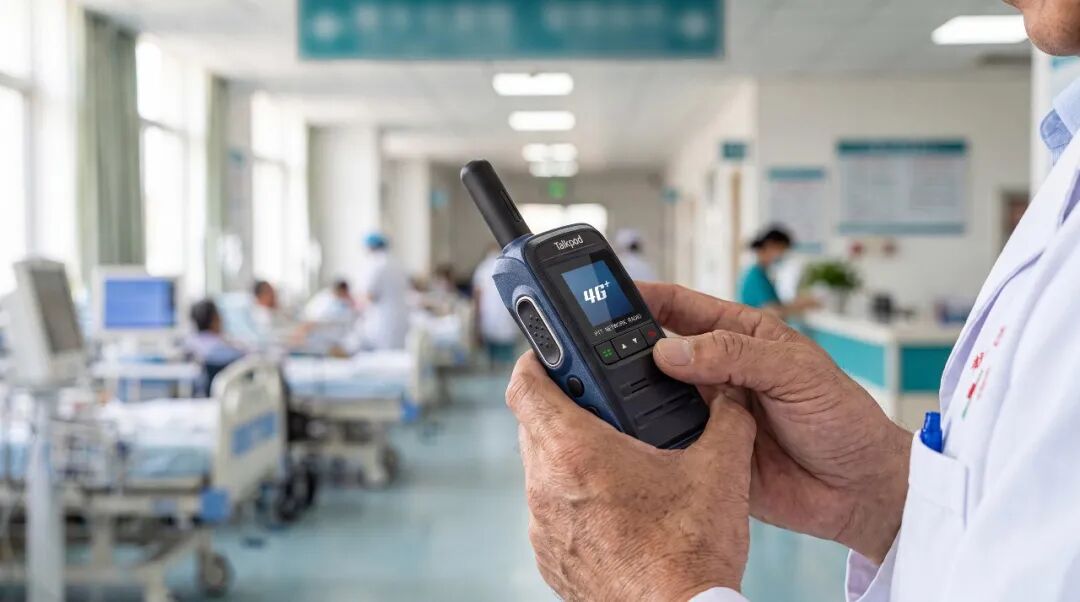
Hospital communication is rarely confined to one department.
Doctors move between clinics, wards and consultation areas. Nurses coordinate patient care across different floors. Support teams may be working in underground diagnostic or technical spaces, while emergency and administrative personnel need to reach several departments at once.
At Yudongbei Hospital, those teams operate across multiple buildings and reinforced indoor environments where conventional handheld-radio coverage can become uneven.
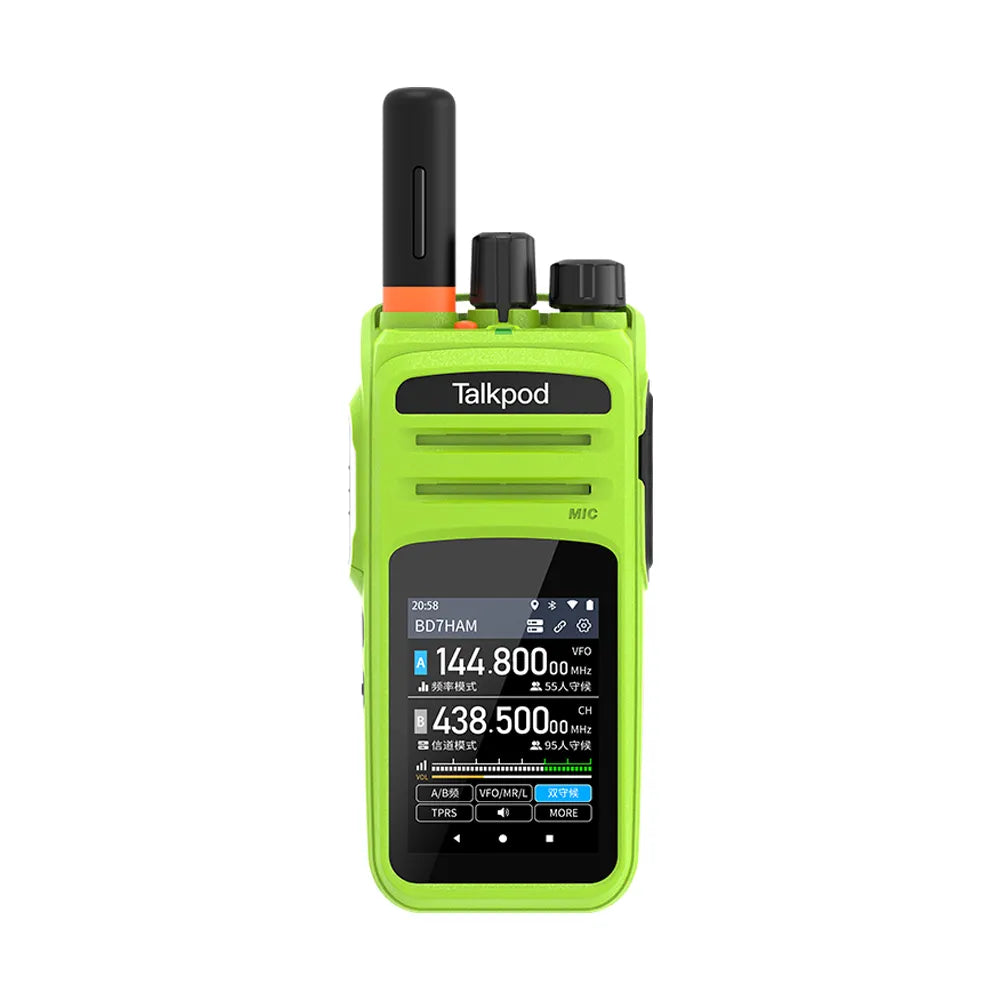
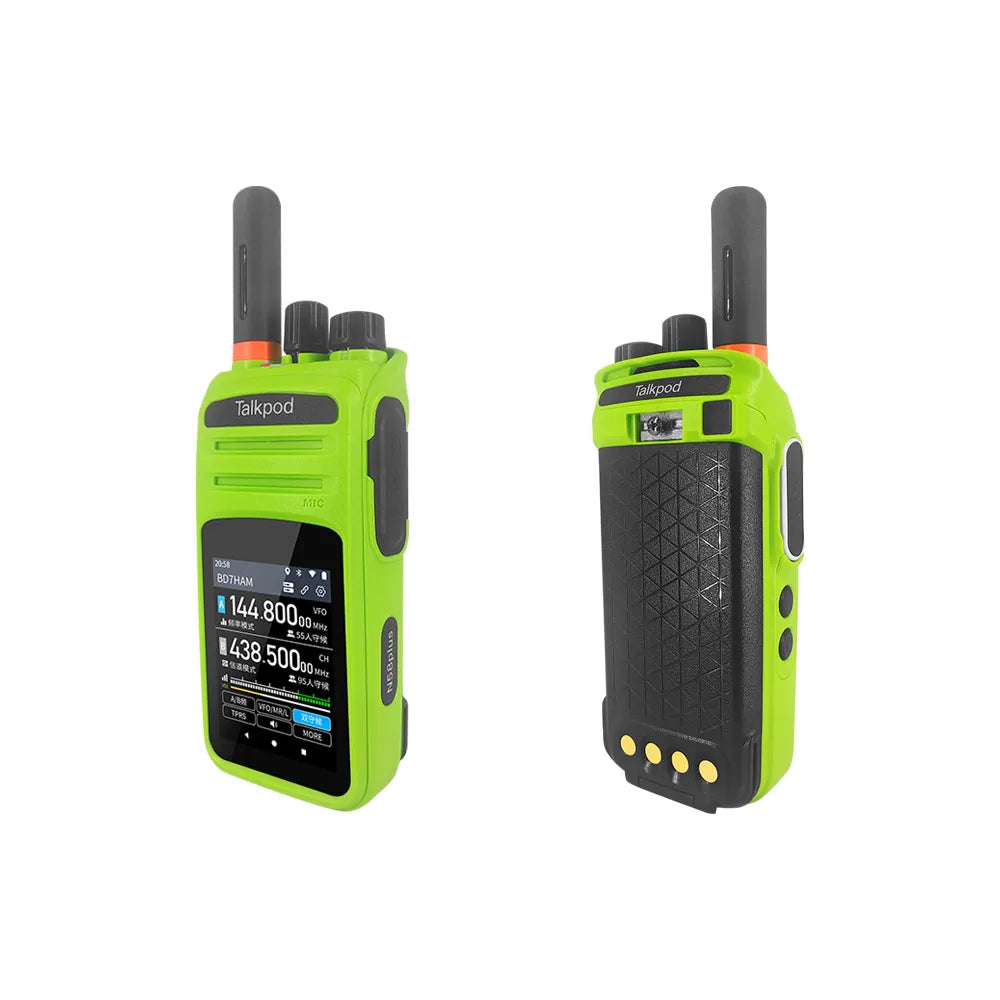
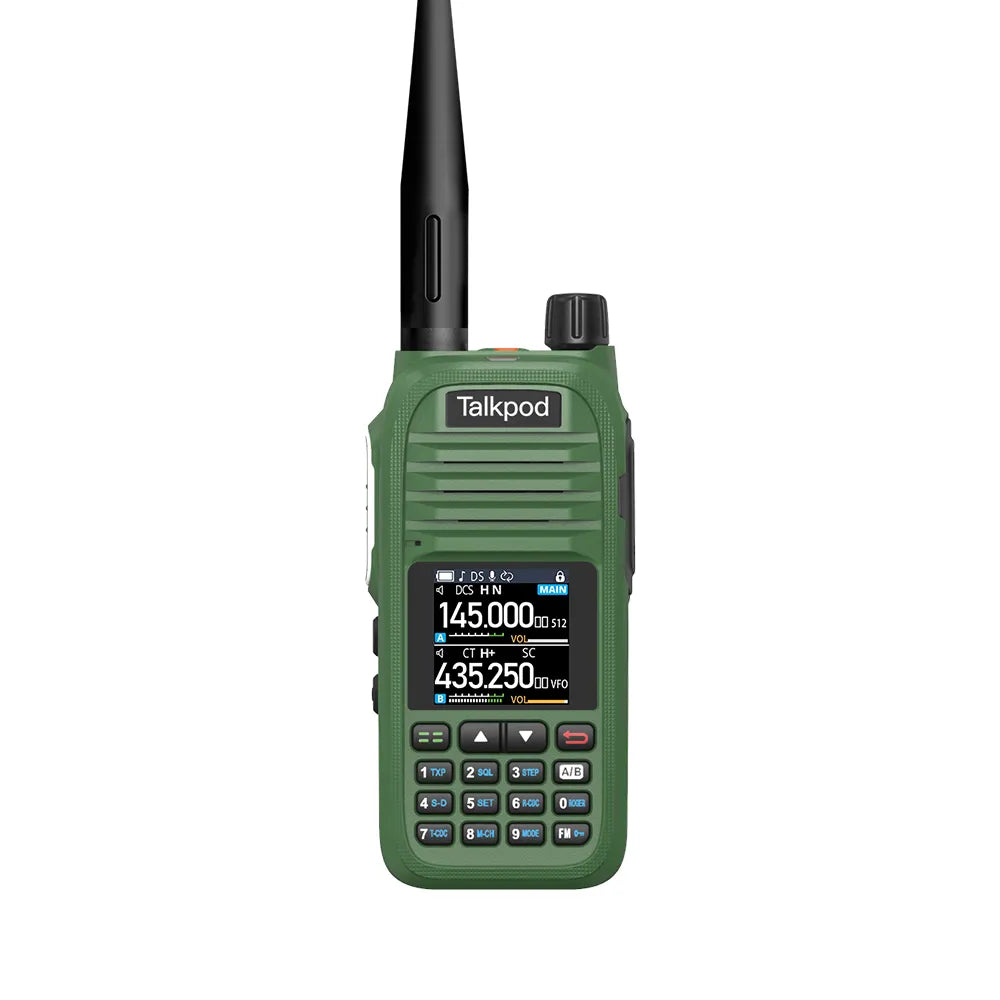
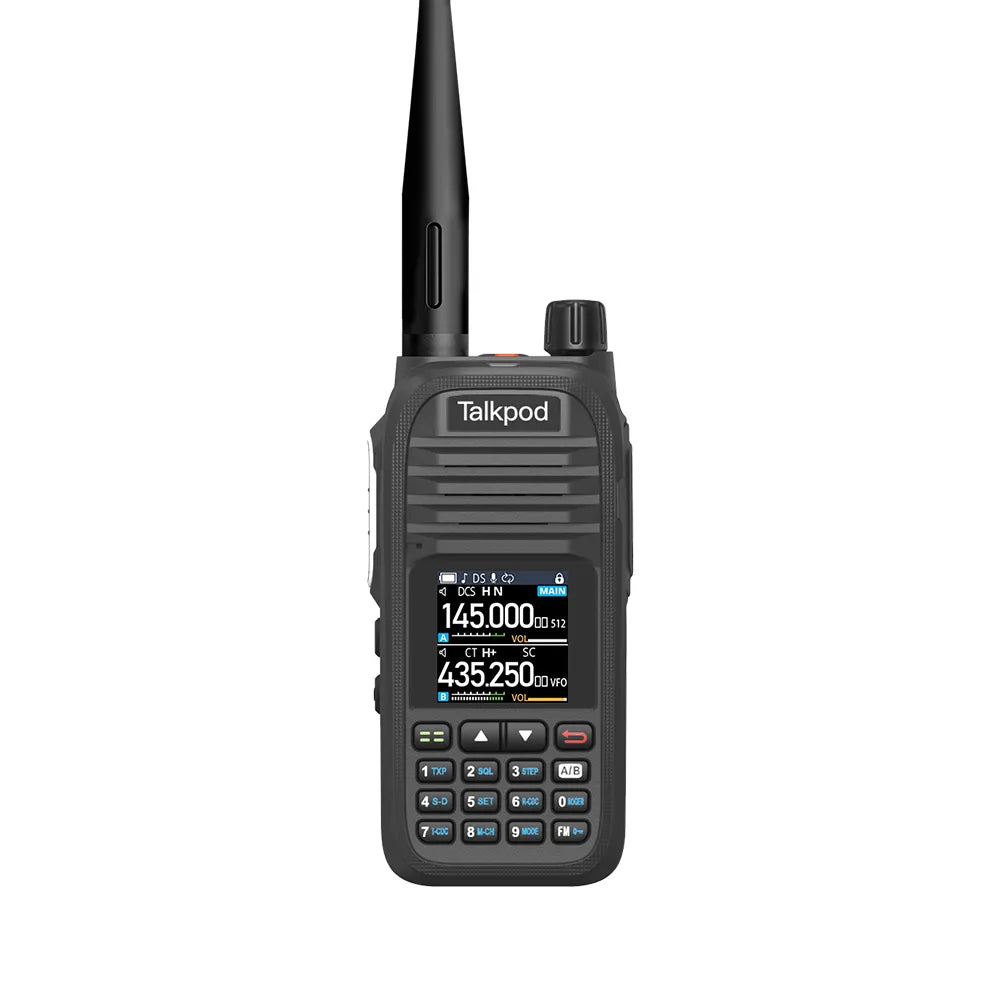
The Talkpod N15 public-network trunked radio provides a wider-area push-to-talk layer using compatible mobile networks. Its compact body, dual-SIM capability, managed communication groups and lightweight dispatch backend can help hospital personnel coordinate routine operational tasks without relying entirely on the direct range of conventional handheld radios.
Hospital buildings create difficult communication conditions
Hospitals contain many structures that affect local radio propagation.
Reinforced concrete floors, diagnostic rooms, elevators, fire doors and underground technical areas can all weaken direct RF communication.
A conventional handheld radio may work well within one floor but become less reliable after users move into another building section or several floors away.
The N15 approaches the problem through public mobile networks.
Where suitable network service is available, staff in different parts of the hospital can communicate through the same managed push-to-talk system without remaining within direct radio range of one another.
That can broaden the practical communication area.
It should not be described as guaranteeing complete hospital coverage.
Underground and shielded areas still need testing
A public-network radio remains dependent on the mobile network beneath it.
Basements, underground diagnostic areas, shielded rooms and heavily reinforced sections of a hospital may have weaker cellular service.
For that reason, the actual clinical environment should be tested before deployment is considered complete.
Outpatient floors, inpatient wards, emergency areas, underground spaces, service corridors and other frequently used staff locations should all be checked.
If a weak area remains, the hospital should define an alternative communication method or network solution appropriate to that location.
Reliable hospital communication begins with identifying where a system does not work as well as where it does.
Dual SIM provides additional network flexibility
The N15 supports dual-SIM operation.
In a public-network radio, this can give administrators more flexibility when selecting or configuring compatible mobile-network services.
If one carrier performs better in one part of the hospital while another has stronger coverage elsewhere, dual-SIM capability may provide useful deployment options.
It can also add a degree of network redundancy depending on the device configuration and available services.
But dual SIM should not be described as guaranteeing uninterrupted communication.
Network switching, signal availability, operator coverage and platform behavior can all affect continuity.
Two SIM cards provide more options.
They do not make a mobile network immune to failure.
Cross-department consultation becomes easier to coordinate
Urgent care often requires several departments to respond in sequence.
A clinician may need another department to prepare for a consultation. Nursing staff may need support from another floor. A duty manager may need to coordinate equipment or personnel while the clinical team remains with the patient.
Push-to-talk communication can shorten the first operational handoff.
Instead of leaving the current location or making several individual phone calls, a staff member can contact the relevant group and confirm that the request has been received.
That can be particularly useful when the message is simple and time-sensitive.
The radio does not replace clinical consultation records or formal medical handover.
Those should remain within the hospital's approved clinical systems and procedures.
Patient deterioration requires more than a radio call
A patient's condition can change suddenly.
In that situation, the N15 can help staff alert nearby colleagues or coordinate support across departments.
But the radio should remain an additional communication layer rather than the hospital's sole emergency mechanism.
Clinical emergency calls, rapid-response procedures, emergency numbers, nurse-call systems and other established hospital processes remain primary.
The radio helps people communicate around those systems.
It should not replace the systems that formally initiate, document or govern the clinical response.
Communication groups can reflect hospital responsibilities
Hospitals generate a large amount of operational traffic.
If every doctor, nurse, engineering employee and administrative user hears every call, the radio system quickly becomes difficult to use.
The N15 platform can be configured with separate communication groups around departments or operational responsibilities.
For Yudongbei Hospital, the source describes dedicated departmental groups intended to reduce unrelated traffic and support more focused communication.
That can make routine coordination easier.
But a communication group should not be treated as a privacy boundary by itself.
Group membership and access controls can reduce unnecessary exposure, while actual information security depends on the complete platform architecture, authentication, account management and organizational procedures.
Medical information should remain in approved clinical systems
Hospital radio communication creates a particular privacy responsibility.
Patient names, diagnoses, medical histories, laboratory results and other sensitive information should not be broadcast unnecessarily over shared voice groups.
In many cases, a short operational message is enough.
A staff member can request clinical support at a location without describing the patient's full medical history over radio.
Detailed information should remain in the hospital's approved EMR, HIS or other authorized clinical systems.
The principle is simple: transmit only what the receiving team needs for the immediate coordination task.
The radio connects the people.
The clinical system holds the medical record.
Public-health incidents require a formal command structure
The source also refers to scenarios involving sudden public-health events.
In such situations, fast cross-department communication can be useful because emergency, clinical, logistics and administrative teams may all need to coordinate.
The N15 can provide an additional voice layer for those operational exchanges.
It should not replace the hospital's formal public-health command process, reporting systems or emergency-management structure.
Epidemiological information, patient lists, laboratory results and other sensitive public-health data should remain in approved systems.
If an incident involves hazardous chemicals, toxic gases or a potentially flammable atmosphere, an ordinary N15 should also not be assumed suitable unless the environment is confirmed safe for the equipment being used.
Compact equipment is easier to carry through a shift
Clinical and support staff already carry multiple items during their work.
A bulky communication device can quickly become inconvenient.
The source describes the N15 as using a mini, slim and lightweight body, making it easier to carry during rounds, ward work and movement between departments.
That matters because a communication device only helps if staff actually keep it available.
For doctors, nurses and duty personnel who move frequently, portability becomes part of practical reliability.
The radio should remain accessible without interfering with normal clinical work.
Account-based provisioning simplifies deployment
The source describes Talkpod as assisting with device onboarding without traditional frequency programming.
That reflects the operating model of public-network radios.
Once mobile-network access, user accounts and platform settings are configured, communication groups can be managed centrally rather than programming conventional RF channels into every device individually.
This can reduce the technical burden on hospital administrators.
But “no frequency programming” does not mean zero setup.
SIM service, account activation, group assignment, permissions and platform configuration still need to be completed correctly.
The benefit is centralized provisioning rather than the absence of provisioning.
Backend management can reduce fleet-maintenance work
The source also describes access to a lightweight dispatch backend and ongoing account-maintenance support.
For a hospital operating multiple devices, centralized administration can help keep user assignments and communication groups consistent.
Accounts can be added, changed or suspended according to staff and operational requirements, depending on the platform configuration.
That can be useful when personnel rotate between departments or temporary users require access.
Backend administration, however, should follow the hospital's own access-control procedures.
Administrator privileges should be limited to authorized personnel, particularly where the system handles operationally sensitive communication.
Hospital communication still needs a fallback
The N15 depends on mobile-network and push-to-talk platform availability.
If either becomes unavailable, communication may be interrupted.
Hospitals therefore need backup methods appropriate to the importance of each workflow.
Routine service coordination may fall back to phones or internal systems.
Emergency and clinical functions should already have established alternatives that do not depend on a single public-network service.
This is especially important in underground or shielded locations where mobile reception is known to vary.
A hospital communication plan should assume that every technology has limits.
Helping departments reach one another more quickly
The communication challenge at Yudongbei Hospital is not simply distance.
It is the need to connect people working in different clinical and operational environments while preserving the formal systems that govern patient care.
Where suitable mobile-network coverage is available, the Talkpod N15 can provide a common push-to-talk layer across outpatient areas, inpatient wards and support departments.
Its compact form makes it easier for staff to carry, dual-SIM capability provides additional network flexibility, and centrally managed communication groups can reduce unnecessary traffic between departments.
The value should not be expressed as perfect coverage, guaranteed uninterrupted connectivity or completely private medical communication.
A more realistic benefit is reducing the time it takes for one department to reach another when operational support is needed—while clinical decisions, patient information and emergency procedures remain within the hospital systems designed to manage them.


Leave a comment
All comments are moderated before being published.
This site is protected by hCaptcha and the hCaptcha Privacy Policy and Terms of Service apply.