
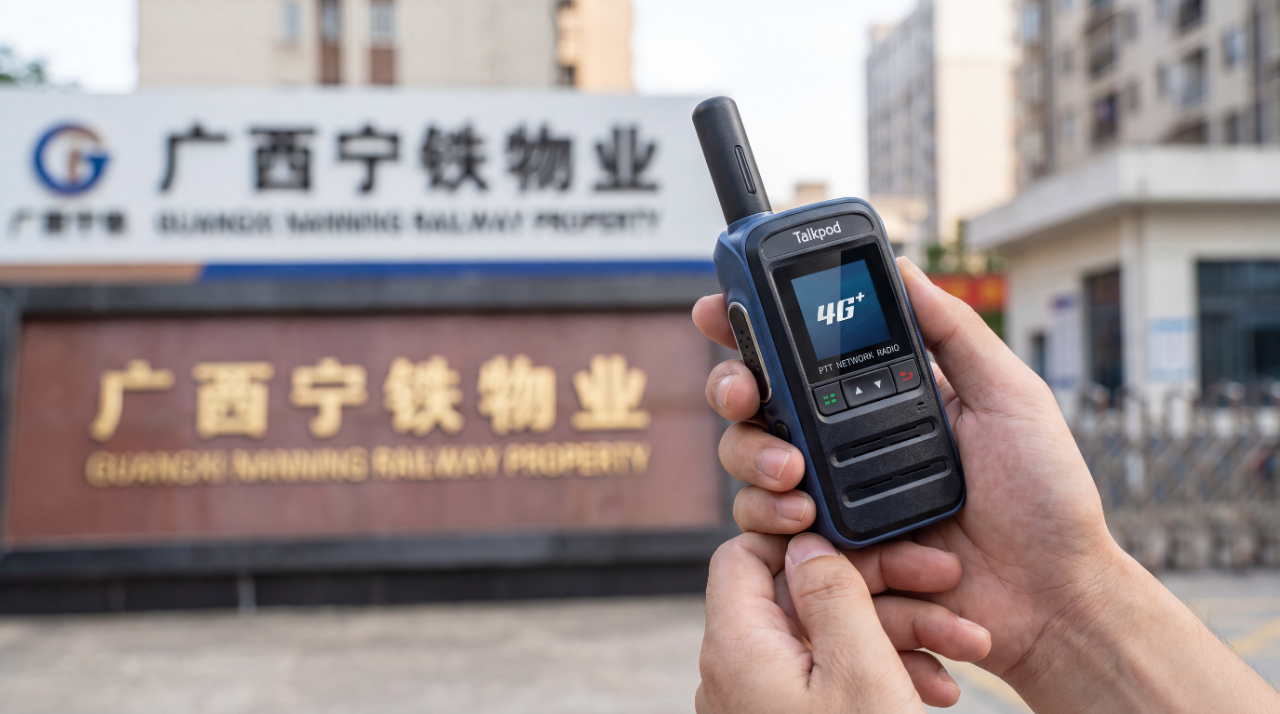
Property maintenance becomes more difficult when the properties themselves are spread across a railway network.
Guangxi Ningtie Property Management serves stations, offices and residential communities located across different areas. A failed pump may be reported at one site while an electrical fault appears at another. Maintenance technicians are often already travelling, inspecting equipment or handling a previous work order when the next request arrives.
Conventional radios are effective within a local operating area, but their limited range makes them less suitable for teams distributed across several stations and property zones. Dispatchers may struggle to reach the nearest available technician, while field staff may need to return to a control room simply to report progress.
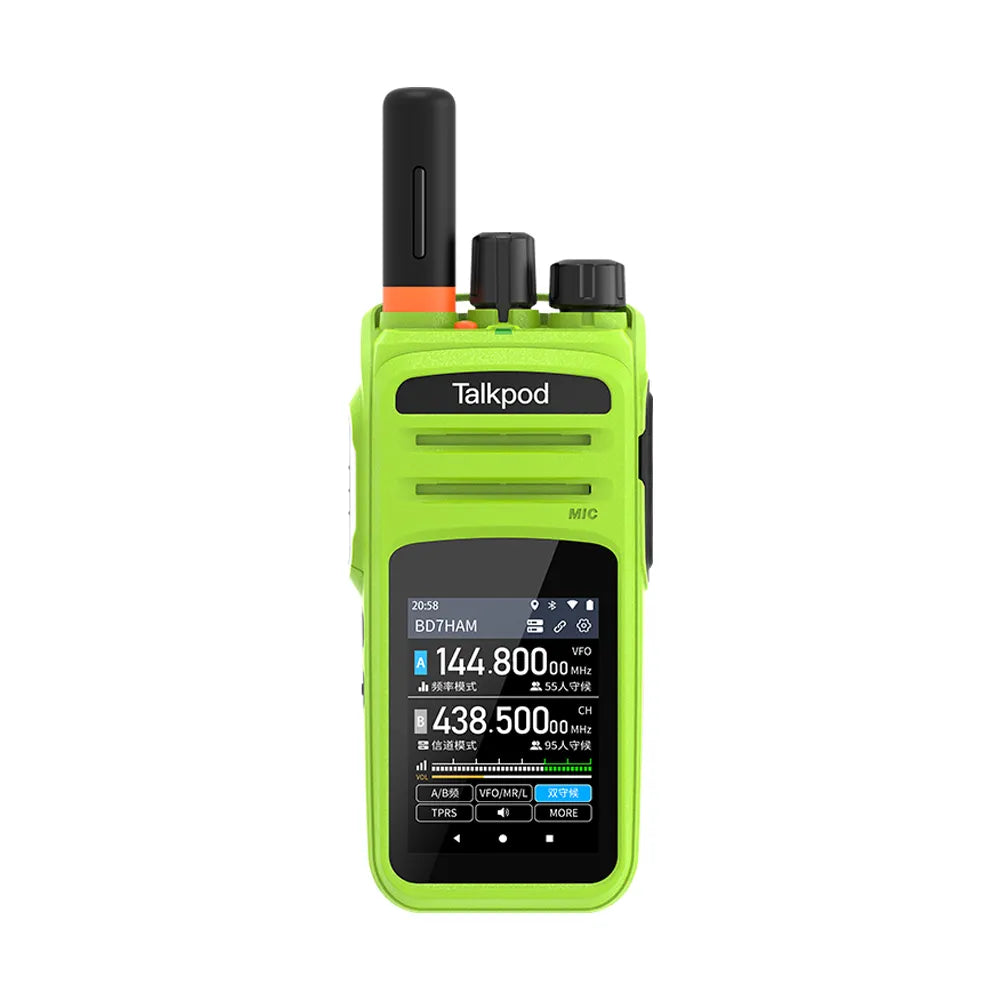
The Talkpod N15 public-network radio was introduced to provide a wider communication link between dispatchers, technical teams and mobile maintenance personnel.
[Image]
Connecting technicians across separate sites
Railway property operations rarely take place within one building. Staff may be working at a station, an equipment room, an office complex or a residential property several kilometres away.
Using compatible public mobile networks, the N15 supports wide-area push-to-talk communication wherever suitable coverage is available. Technicians at different sites can therefore remain within the same managed communication system without depending solely on the direct range of a conventional radio.
A dispatcher can contact a maintenance group working in another area, while technicians can report work-order progress without returning to the central office. This reduces unnecessary travel and allows information to move more directly between the person assigning the task and the person carrying it out.
The system remains dependent on mobile-network service. Coverage may vary along railway routes, inside equipment rooms and in underground or heavily shielded areas. Its value lies in extending communication across separated properties when a compatible connection is available.
Faster diagnosis through direct technical support
Not every fault can be resolved from a written description.
A technician inspecting unfamiliar equipment may need to confirm a wiring detail, describe an abnormal sound or ask a specialist whether a component should be replaced. Without immediate communication, work may stop while the employee searches for documentation or returns to the office.
With the N15, field technicians can contact the relevant technical group directly. They can describe the fault, confirm the next step and update the dispatcher while remaining at the worksite.
This does not replace diagnostic procedures or maintenance records. It shortens the human exchange around them, helping teams move from inspection to action with fewer delays.
Clearer instructions in noisy equipment areas
Property-maintenance teams often work in places where ordinary speech is difficult to hear. Pump rooms, electrical rooms, ventilation areas and railway-adjacent facilities may contain machinery, alarms and continuous background noise.
The N15 uses digital voice processing and a high-output speaker to provide louder and clearer communication. This helps technicians understand locations, equipment references and operating instructions without repeatedly asking for clarification.
Clear audio is particularly important when a message includes a room number, component code or safety warning. A small misunderstanding may send a technician to the wrong site or delay the isolation of faulty equipment.
[Image]
Greater flexibility through dual SIM support
Mobile-network performance is not uniform across a railway property portfolio. One operator may provide stronger service near a station, while another performs better in a residential or industrial area.
The N15 supports two SIM cards, allowing compatible services from different operators to be configured. Where one connection is weak or unavailable, the alternative network may offer a more suitable link, depending on device settings and local service conditions.
This provides additional flexibility for teams moving between sites. It does not guarantee uninterrupted communication, since both networks may be weak inside certain structures or remote areas. Alternative procedures should therefore remain available for locations with limited public-network coverage.
Organizing a dispersed maintenance workforce
A large property organization may include regional supervisors, station-based maintenance staff, mobile technical teams and specialist engineers. Sending every message to every user would make communication difficult to manage.
Talkpod developed a layered, nested contact and group structure based on Ningtie Property Management’s cross-station operating model. Users could be organized by region, site, responsibility or technical specialty.
Routine communication could remain within the relevant maintenance team, while supervisors retained access to broader coordination groups. When support was required from another area, the appropriate personnel could be brought into the conversation without disrupting unrelated teams.
Talkpod also continued to assist with configuration and operational adjustments as the radios were deployed at different sites. This was important because each station and property area had its own staffing structure and network conditions.
Shortening the work-order cycle
A maintenance work order passes through several stages: reporting, assignment, inspection, repair, confirmation and closure. Communication delays at any one of these points can extend the entire process.
With the N15, dispatchers can assign work more directly, technicians can report progress from the field and specialist support can be requested without unnecessary travel. This helps the organization maintain a clearer view of active tasks and reduces the time between identifying a fault and completing the response.
The radio does not replace maintenance-management software or formal work-order records. It connects the people responsible for keeping those records accurate and the work moving.
For railway property services, that connection matters. Stations, offices and residential sites may be separated geographically, but the maintenance operation must still function as one system.
The practical value of the Talkpod N15 is therefore straightforward: it helps a dispersed technical workforce remain easier to reach, easier to organize and better able to respond when equipment fails.

Leave a comment
All comments are moderated before being published.
This site is protected by hCaptcha and the hCaptcha Privacy Policy and Terms of Service apply.