
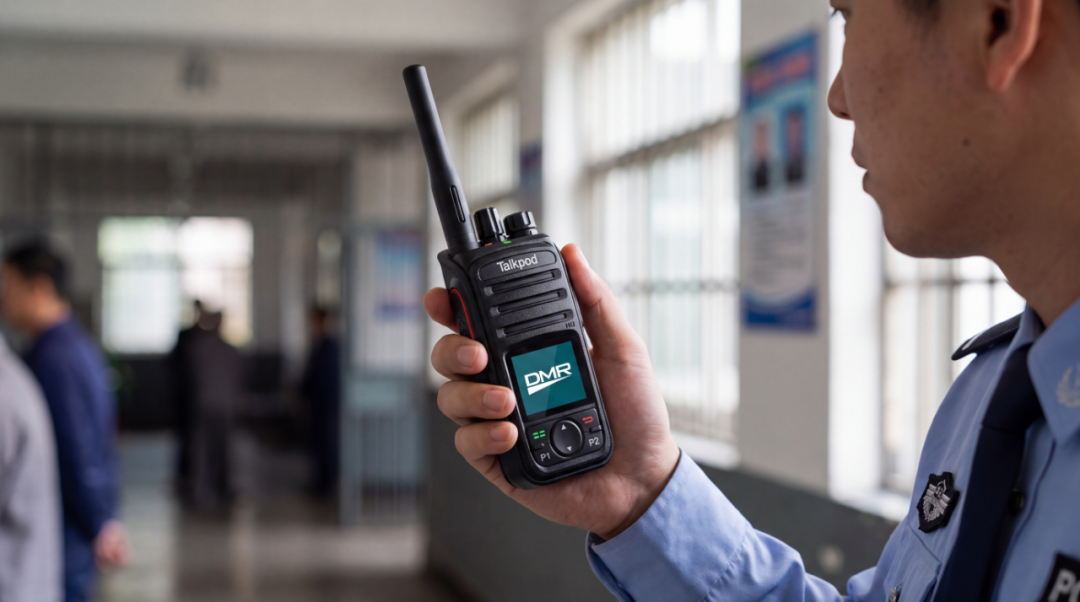
A secure rehabilitation facility depends on communication that is local, structured and predictable.
Duty officers, patrol personnel, medical teams and maintenance staff may work in different buildings, floors and controlled areas, each with different responsibilities. Routine operations generate a constant flow of short messages, while an incident may require several teams to coordinate within seconds.
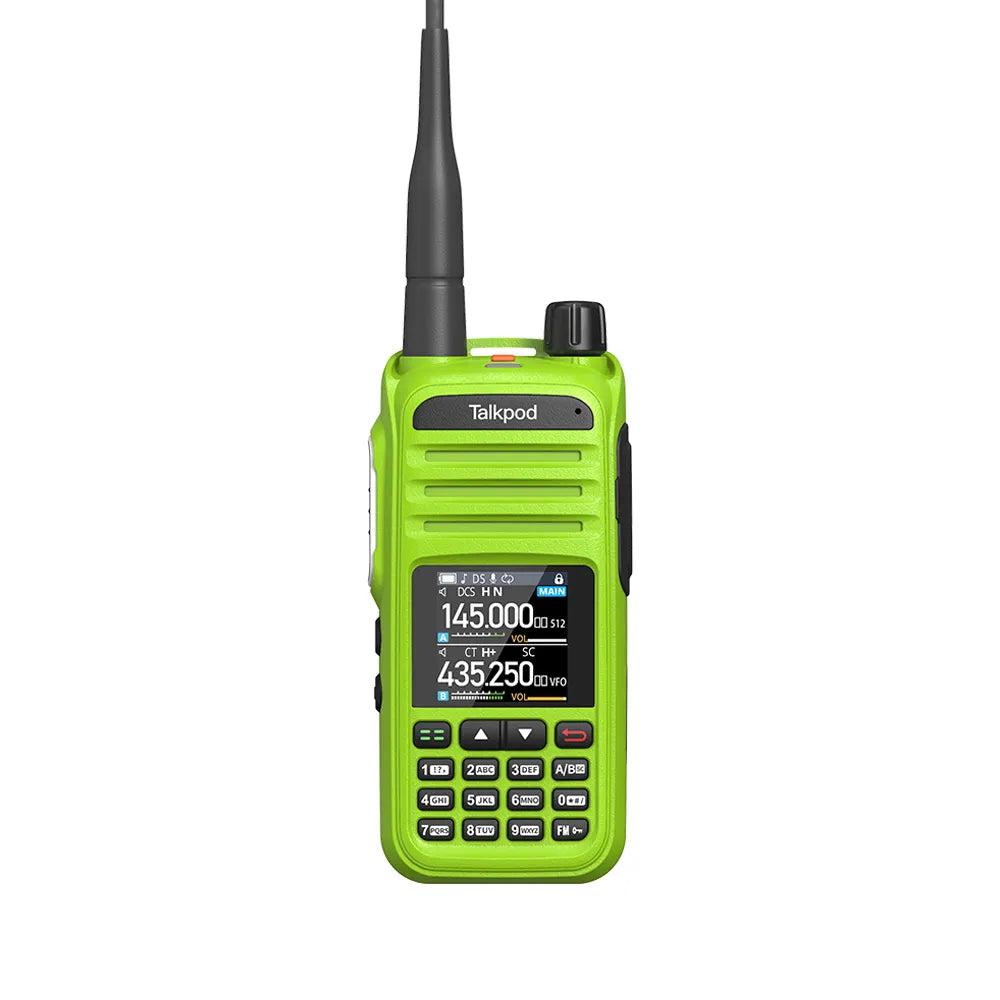
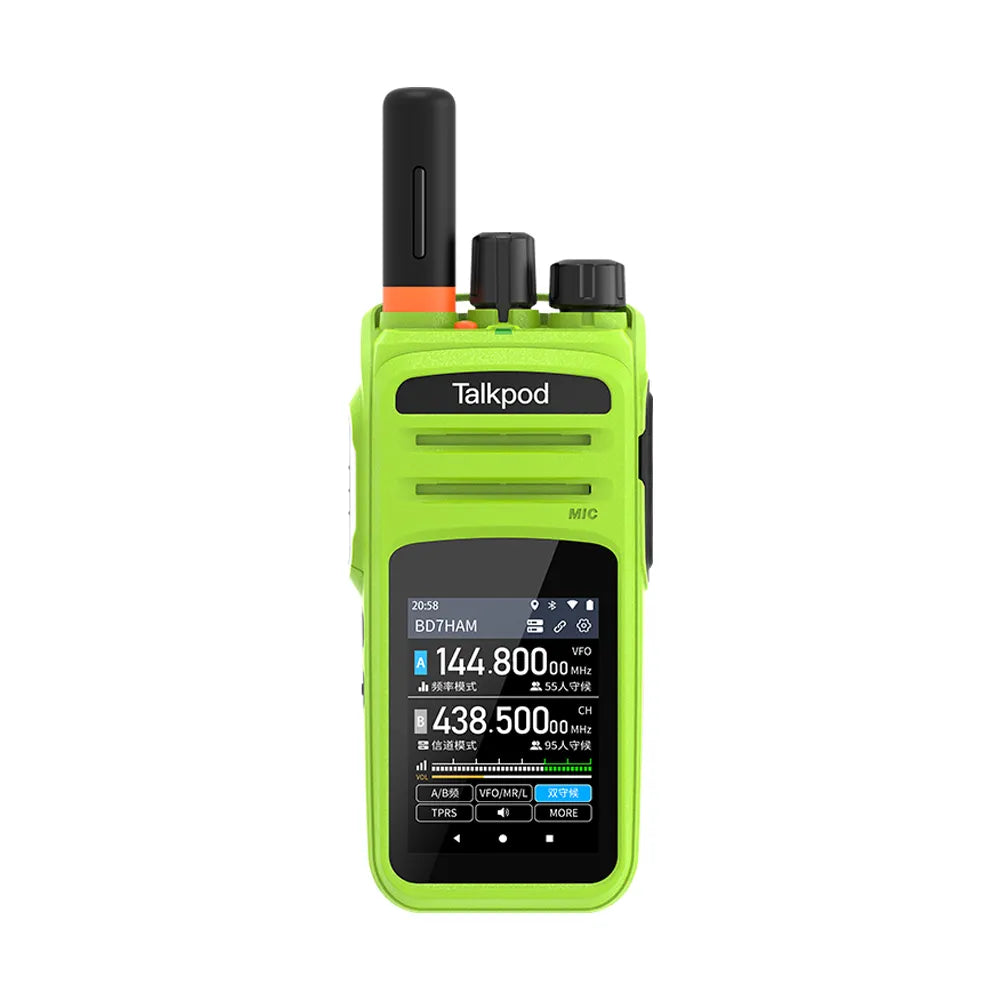
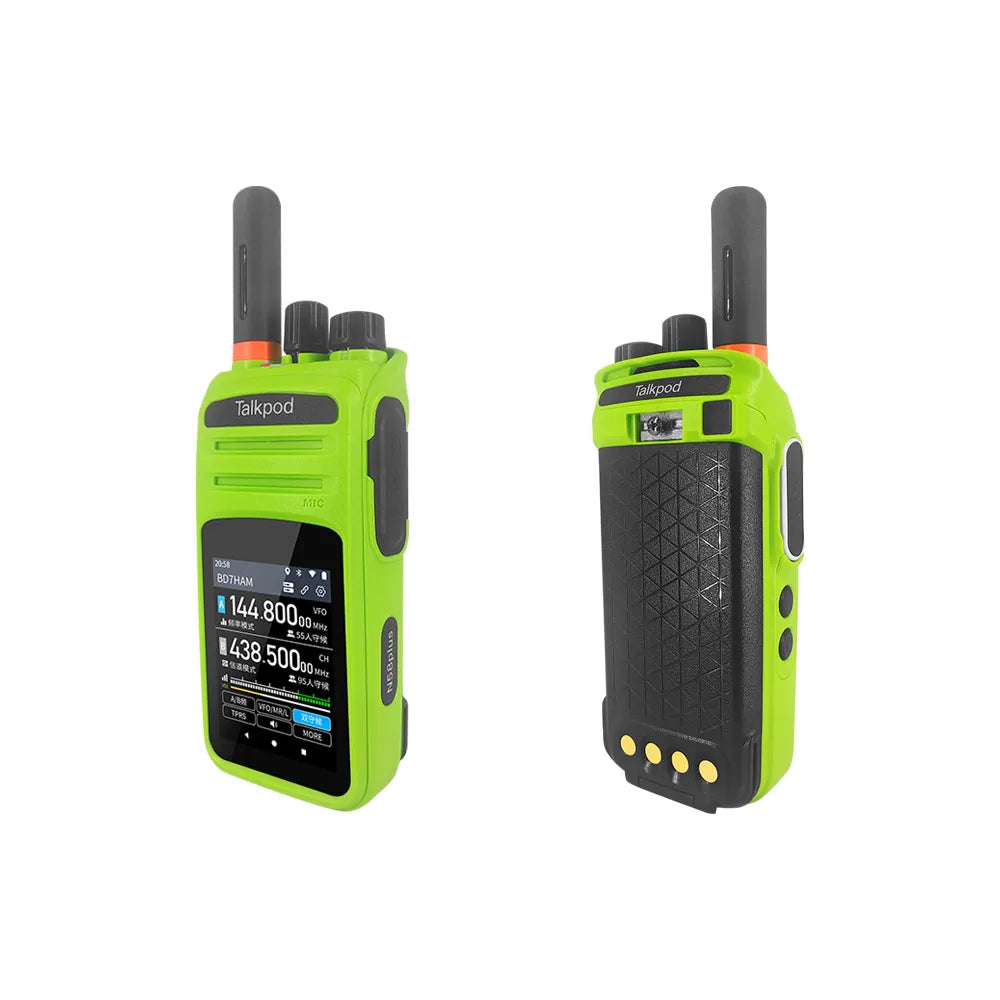
The Talkpod D56 digital radio is designed for this type of local site communication, offering a large channel capacity, configurable digital receive groups, DMR repeater compatibility and administrator-controlled programming.
Used with a properly engineered radio plan, those functions can help a judicial drug rehabilitation facility organize internal communication without putting every user on the same channel.
A large channel capacity gives administrators more room to organize the system
The D56 supports up to 1,024 programmable channels.
For a facility with multiple buildings, duty posts and work groups, that provides administrators with considerable flexibility when building the radio plan.
Channels can be programmed around different operational needs, such as patrol, medical support, maintenance or specific controlled areas.
This can reduce unnecessary traffic and make it easier for users to remain on the communication path relevant to their work.
But 1,024 programmed channels should not be interpreted as 1,024 simultaneous conversations or proof that thousands of radios can all transmit independently at once.
Actual system capacity depends on the available frequencies, repeater resources, timeslots, talkgroup configuration and traffic load.
The value of a large channel memory is organizational flexibility—not unlimited radio capacity.
Separate work groups can reduce unnecessary communication
A secure facility does not benefit from every employee hearing every routine message.
Medical personnel may need communication related to clinical support. Maintenance teams may be handling building faults. Patrol and duty personnel may need a different set of operational calls.
The D56 supports up to 250 digital receive group lists, allowing administrators to define which programmed group calls a radio should monitor under particular channel configurations.
This can help organize communication around job roles and reduce irrelevant traffic.
A receive group list, however, is not the same as a physically isolated or confidential network.
In a DMR system, communication separation depends on the complete configuration, including frequencies, Color Codes, timeslots, talkgroup IDs and any security functions actually deployed.
Group programming improves communication discipline.
It should not be presented as a guarantee that sensitive information is technically inaccessible to every other radio.
Targeted communication is more useful than facility-wide broadcasting
Large institutions generate enough radio traffic that constant all-user broadcasting quickly becomes disruptive.
A more effective structure is to direct routine communication toward the team responsible for the task.
If a maintenance issue occurs in one building, engineering personnel may need the message while unrelated staff do not. A medical response may require medical and designated duty personnel, but not every department.
Properly programmed DMR contacts, talkgroups and receive lists can support that structure.
This allows the radio system to reflect the facility's actual operating hierarchy.
The goal is not to eliminate broad calls entirely.
It is to reserve them for situations where broad notification is genuinely required.
DMR dual-timeslot repeaters can increase system capacity
The D56 is compatible with DMR dual-timeslot repeater operation.
That can be useful in a large closed facility because a repeater can improve radio coverage while DMR's two-timeslot architecture allows two logical communication paths to share one 12.5 kHz repeater carrier when the system is properly configured.
This provides a more efficient way to organize local traffic than relying only on simplex handheld-to-handheld communication.
The result, however, depends heavily on system engineering.
Repeater location, antenna placement, feeder loss, building materials and RF conditions all affect performance.
A repeater does not make radio signals pass through reinforced concrete without loss.
Thick walls and underground rooms still require a radio survey
Secure facilities often contain some of the most difficult indoor RF environments.
Reinforced walls, steel doors, stairwells, underground storage rooms and enclosed medical spaces can all create weak-signal areas.
For this reason, claims of “100% coverage” should be avoided unless they are supported by actual site measurements.
A more reliable deployment starts with a radio survey.
Administrators should test the locations where communication matters most: duty posts, patrol routes, stairwells, medical areas, service rooms, perimeter points and underground spaces.
If weak areas remain, the system may require a different repeater location, distributed antenna arrangements or additional infrastructure.
Reliable institutional communication is engineered.
It is not created by the handheld radio alone.
Programming locks can reduce unauthorized changes
The D56 supports programmable password protection for configuration access.
This can be useful in a managed fleet where frontline users are expected to operate predefined channels and functions rather than change system parameters.
Restricting programming access reduces the likelihood that a user will accidentally alter channel settings or other configuration required for normal operation.
That is particularly useful in a facility where many radios need to remain consistent across shifts.
But an administrator password is only one control.
The organization should also manage programming software, configuration files, physical device access and administrator credentials according to its internal security procedures.
Password protection can reduce unauthorized reprogramming.
It does not by itself secure the entire communication system.
Sensitive operational information still requires discipline
A secure rehabilitation facility handles information that may be operationally or personally sensitive.
Even when radios are organized into separate groups, users should avoid transmitting more information than the receiving team needs.
Detailed medical information, personal records, case information or other protected data should remain in the organization's approved information systems whenever possible.
Radio traffic is best used for the immediate operational message.
For example, a user may request medical assistance at a particular location without broadcasting unnecessary clinical details to a wider audience.
Technical controls help.
Communication discipline remains just as important.
Faster coordination between patrol, medical and maintenance teams
The practical value of an internal radio system appears in ordinary work.
A patrol officer can report a damaged door or equipment fault without leaving the assigned area. Medical personnel can request assistance from designated staff. Maintenance teams can coordinate access to a controlled location before arriving.
During a more urgent incident, predefined communication groups can help the appropriate teams coordinate more quickly.
The radio does not replace the facility's formal security procedures, medical protocols or incident-command process.
It provides a voice layer around them.
That distinction matters because the most important decisions in a secure facility should remain governed by established procedures rather than improvised over radio.
Capacity should be planned around traffic, not specification numbers
A specification such as “1,024 channels” can look impressive, but the more important question is how many conversations the facility actually needs to support at the same time.
A well-designed radio plan might use far fewer programmed channels while making better use of DMR talkgroups, timeslots and repeater resources.
Too many channels can also make the system harder for frontline personnel to use.
The most effective configuration usually balances capacity with simplicity.
Users should be able to reach the correct group quickly without searching through hundreds of options during routine work or an emergency.
A structured local communication system for a controlled environment
The Talkpod D56 offers several features that can be useful in a judicial drug rehabilitation facility: a large programmable channel capacity, extensive digital receive group lists, DMR dual-timeslot repeater compatibility and password-protected configuration.
Together, these functions give administrators more flexibility to organize radios around different buildings, roles and duty requirements.
Their value should remain realistic.
A large channel count does not create unlimited simultaneous capacity. Receive groups do not physically isolate communications. Repeaters do not guarantee coverage through every reinforced wall, and an administrator password does not replace broader information-security controls.
When combined with a properly surveyed RF system, disciplined group planning and controlled device administration, the D56 can provide a practical internal communication layer—helping duty, patrol, medical and support personnel coordinate more consistently across a complex closed facility.

Leave a comment
All comments are moderated before being published.
This site is protected by hCaptcha and the hCaptcha Privacy Policy and Terms of Service apply.