
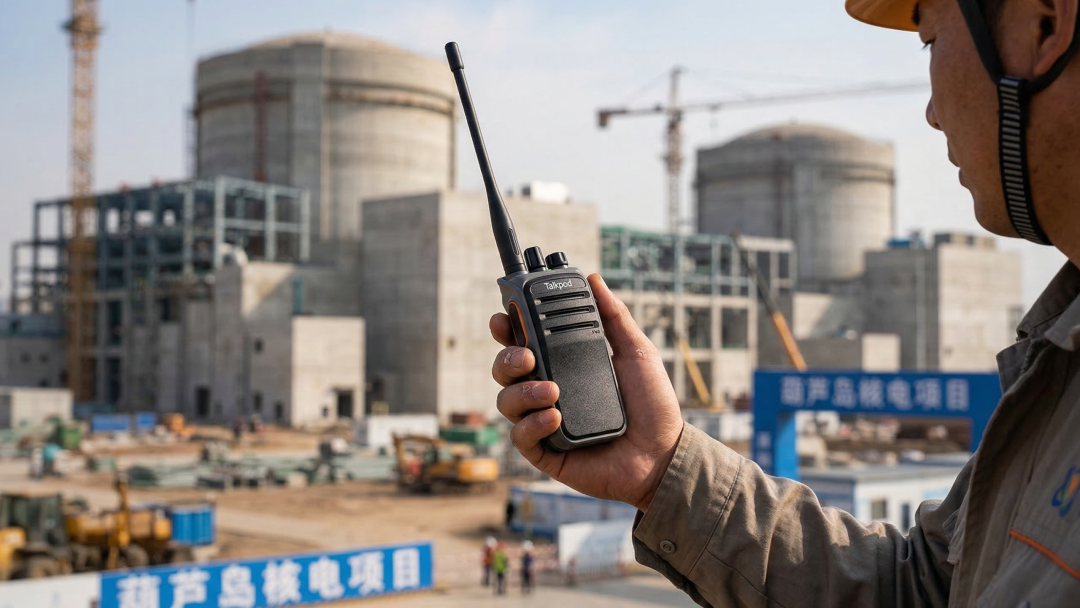
Underground construction creates a communication problem that becomes more difficult with every meter of excavation.
Shafts, tunnels and underground working faces can extend deep into rock formations where public mobile networks are unavailable. Concrete structures, steel reinforcement, machinery and changes in tunnel direction further weaken direct radio propagation.
For the Huludao nuclear-industry shaft and tunnel construction project, personnel may be distributed between different underground levels and working faces while geological technicians, construction crews and supervisors still need to exchange information about rock conditions, groundwater and ongoing excavation.
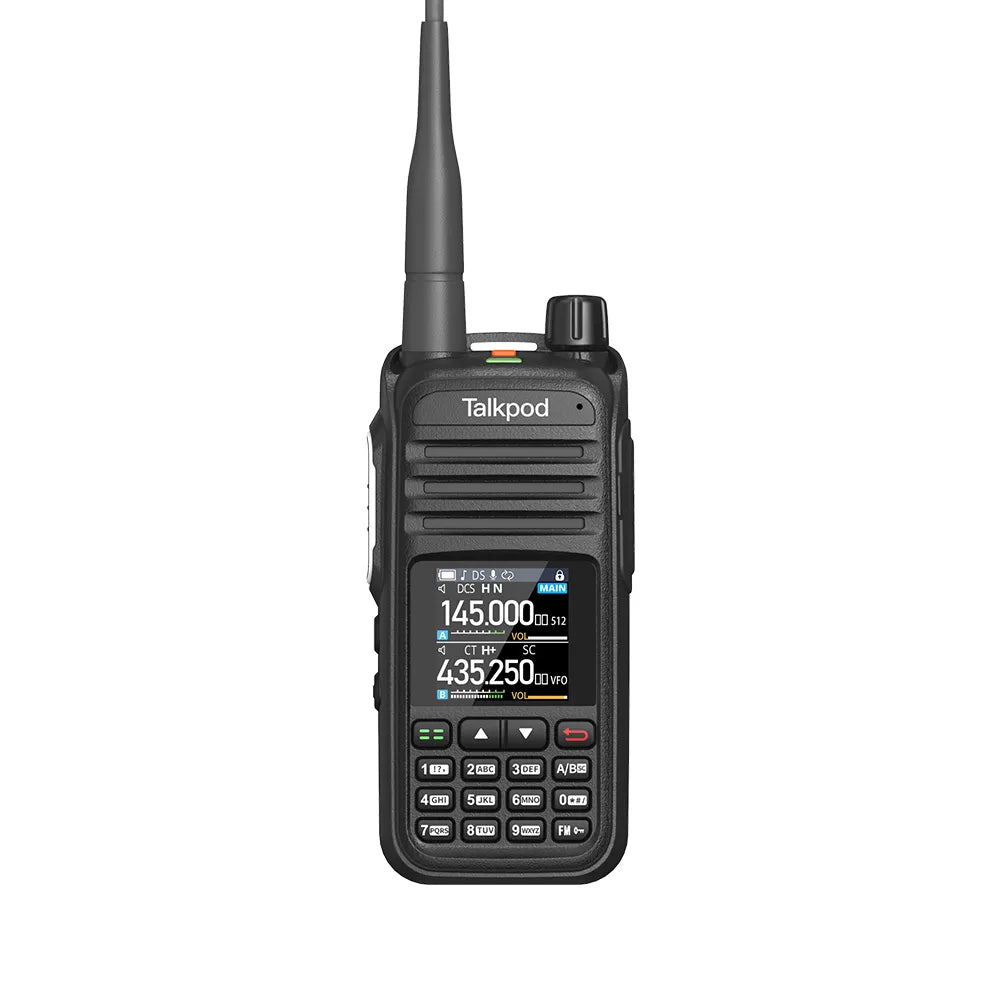
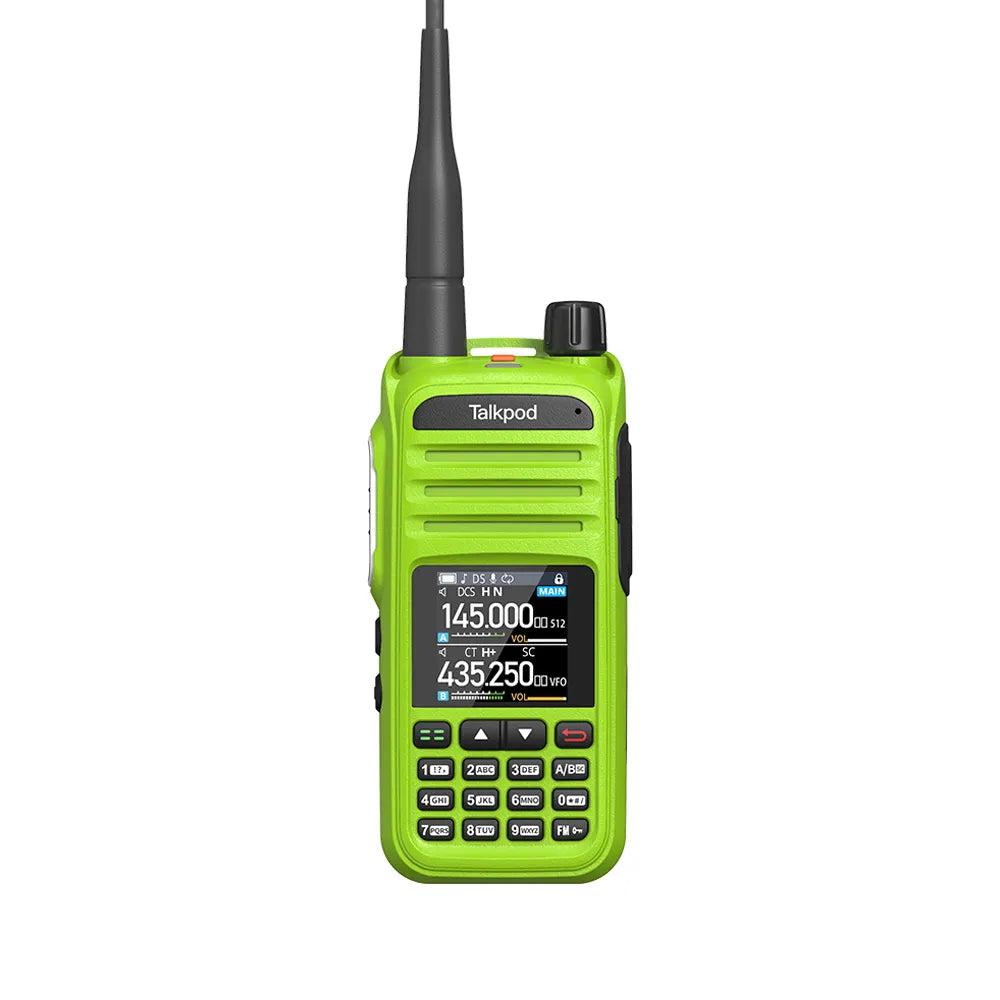
The Talkpod A50P digital ad hoc networking radio is designed for this type of infrastructure-poor environment. It can automatically form a local communication network without relying on a public mobile network or conventional fixed base station, while multi-hop relay allows voice traffic to be carried through other reachable A50P units.
Deep underground work removes public-network coverage
Once construction moves sufficiently far underground, mobile-network service may weaken or disappear entirely.
Rock formations, shaft geometry and reinforced structures can prevent ordinary cellular signals from reaching working areas, making public-network radios unsuitable as the only communication method.
The A50P approaches the problem locally.
Compatible units can establish their own radio network after startup, allowing underground teams to communicate without depending on external cellular infrastructure.
That is particularly useful for temporary and continuously changing construction environments, where installing conventional fixed communications infrastructure at every new working face may be impractical.
The advantage is independence from public networks.
It should not be interpreted as unlimited underground coverage.
Multi-hop relay can extend communication through long tunnels
A direct handheld-radio link becomes increasingly difficult as personnel move deeper into a tunnel.
The A50P supports multi-hop communication, allowing intermediate radios to relay traffic toward users farther along the underground route.
Depending on the layout, chain, tree or mesh networking structures can be used to organize these relay paths.
In a long tunnel, for example, radios positioned at suitable intermediate locations can help connect a working face with personnel closer to the shaft entrance or surface coordination point.
This can reduce the need for every user to maintain a direct RF path over the entire distance.
But each hop still has to work.
If one relay position is too far from the next—or if a major rock mass, steel structure or tunnel geometry blocks the link—the communication path can still fail.
Tunnel bends and shaft geometry matter
Underground propagation is highly dependent on physical layout.
A long, relatively straight tunnel can behave very differently from one containing multiple bends, intersections, elevation changes or large pieces of excavation equipment.
Steel supports, doors and machinery can further alter the radio environment.
For this reason, the most reliable A50P deployment is based on site testing rather than theoretical distance.
Relay positions can be tested at shaft landings, tunnel junctions, work faces and intermediate sections until a practical communication path is established.
As excavation progresses, those positions may need to move.
That flexibility is one of the advantages of an ad hoc network: the communication layout can be adjusted as the underground project changes.
[Image]
Geological technicians can report from the working face
Geological inspection is a continuous part of underground construction.
Technicians may need to observe fractures in the rock mass, groundwater conditions, deformation or changes in surrounding-rock stability.
Without a reliable communication link, those observations may have to be carried physically back to another part of the site before they can be discussed.
With an appropriately planned A50P network, technicians can report an abnormal condition directly from the inspection area.
That can shorten the time between observation and coordination.
The radio, however, does not become the engineering record.
Measurements, photographs, geological logs, monitoring data and formal assessments should continue to be entered into the project's approved engineering and quality-management systems.
The A50P carries the initial field report.
It does not replace the technical documentation behind the engineering decision.
Faster coordination between separate working faces
Underground projects often operate at several points simultaneously.
One team may be excavating while another is installing support structures, inspecting geological conditions or moving heavy equipment.
These activities can affect one another.
A change in surrounding-rock conditions may require another team to pause. Equipment movement through a shared access route may need to be coordinated with personnel farther ahead.
The A50P can provide a common local voice channel between these separated work areas.
That can reduce unnecessary travel between underground sections and help supervisors coordinate work sequencing more quickly.
Critical instructions should still be acknowledged and documented according to the project's operating procedures.
A radio message can accelerate the workflow.
It should not become the only record of an important engineering decision.
Communication groups can reflect different site roles
Not every underground worker needs to hear every conversation.
Geological technicians, excavation crews, equipment operators, safety personnel and supervisors may require different routine communication.
The A50P can be configured with separate groups around those responsibilities.
For the Huludao project, the source describes customized communication groups for geological and construction-related tasks.
This can help reduce unnecessary radio traffic and make relevant messages easier to notice.
Supervisors can then use the agreed communication structure to coordinate across work groups when several teams need to respond to the same issue.
The purpose is not simply to create more groups.
It is to make the communication structure reflect the construction structure.
Sensitive project information still requires formal security controls
The source describes the project as having confidentiality requirements.
Operating a local ad hoc radio network can reduce dependence on public communication infrastructure, but that alone does not establish that the system meets every information-security requirement of a nuclear-industry project.
Detailed geological data, engineering drawings, construction records and other sensitive project information should remain within the organization's approved information systems.
If voice encryption or other communication-security functions are used, their suitability should be evaluated according to the project's actual security requirements, configuration and key-management procedures.
The radio should carry the operational message required to coordinate the work.
It should not automatically become the channel for every category of sensitive technical information.
Geological warnings still depend on monitoring and engineering judgment
A radio can help a technician report a crack, water inflow or unexpected rock condition quickly.
It does not itself detect geological instability.
Formal monitoring instruments, convergence measurements, groundwater observations, support inspections and engineering analysis remain responsible for evaluating underground stability.
If a significant abnormality is identified, personnel should follow the project's approved stop-work, evacuation, inspection or reinforcement procedures.
Communication is valuable because it can shorten the time required to alert other teams.
It does not replace the engineering systems that determine whether continued work is safe.
Underground communication needs a fallback plan
Even a carefully planned multi-hop network can be disrupted.
A relay radio may lose power. Construction equipment may move into the radio path. A tunnel section may change as excavation advances.
If voice communication is essential to a particular high-risk activity, the project should define what happens when a link is lost.
That may involve designated relay positions, spare radios, fixed underground communication infrastructure or another approved communication method depending on the work area.
Personnel should know the fallback procedure before communication fails.
A robust underground communication plan is one that assumes failure is possible and prepares for it.
A network that can advance with the excavation
The communication challenge in deep underground construction is not static.
Every new section changes the geometry of the site.
The Talkpod A50P can be useful in this environment because its ad hoc network can be reorganized as working faces move deeper underground.
Automatic networking reduces dependence on outside infrastructure, while multi-hop relay can extend communication through long tunnels and separated shaft levels when suitable intermediate links are available.
For the Huludao nuclear-industry shaft and tunnel project, the practical value lies in combining those capabilities with on-site network planning, role-based communication groups and user training.
The goal should not be described as “zero-delay communication at any underground depth.”
A more credible objective is to build a flexible local radio network that can advance with the project—helping geological technicians, construction teams and supervisors remain connected while formal engineering, safety and information-security systems continue to govern the work itself.

Leave a comment
All comments are moderated before being published.
This site is protected by hCaptcha and the hCaptcha Privacy Policy and Terms of Service apply.