
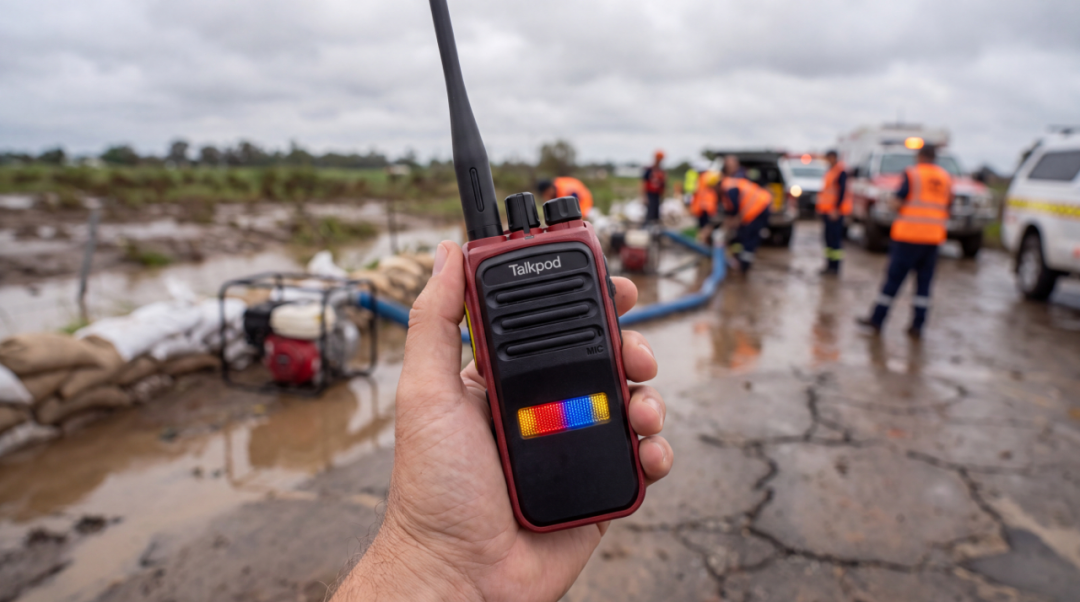
Floods and drought-related emergencies often damage the very infrastructure responders normally depend on.
Power failures can take mobile base stations offline. Floodwater may isolate villages or cut roads. Rescue personnel can be distributed between pumping sites, temporary shelters, riverbanks, damaged infrastructure and areas beyond reliable public-network coverage.
In these conditions, communication has to work locally even when the wider network does not.
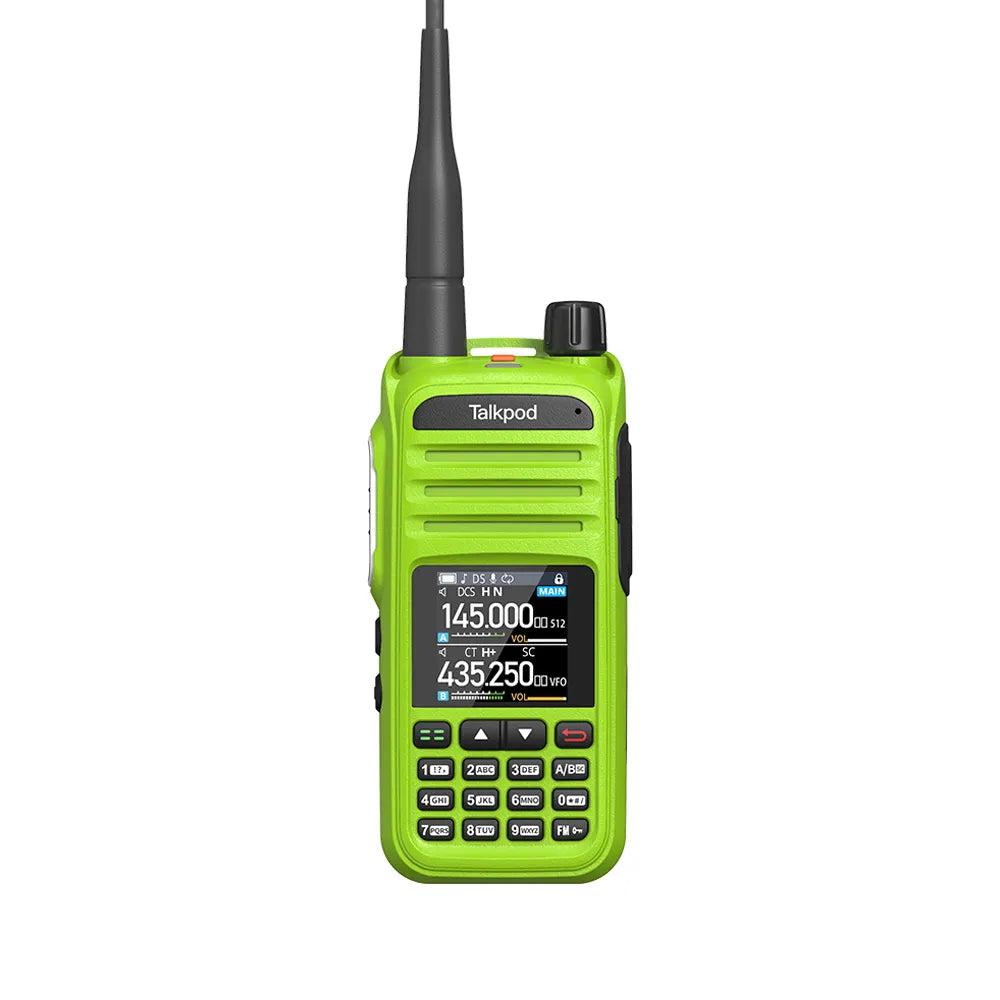
The Talkpod A50Ex explosion-protected digital ad hoc networking radio is designed to provide a local communication layer without relying on public cellular service or a conventional fixed repeater. Its chain, tree and mesh networking modes allow compatible radios to relay traffic through one another, while digital voice processing, rugged construction and hazardous-area certification can support deployment in demanding emergency environments when the equipment is used within its documented limits.
Communication when public networks are unavailable
A major flood can disrupt both electricity and telecommunications.
Even when mobile infrastructure remains physically intact, backhaul failure, power loss or heavy demand can reduce service just when emergency teams need it most.
A public-network radio cannot solve that problem if the underlying network has already failed.
The A50Ex takes a different approach.
Compatible units can automatically form a local radio network and relay voice traffic between reachable devices without depending on an external mobile network.
That allows teams operating deeper inside an affected area to remain connected with personnel closer to the command point, provided that a viable sequence of radio links can be maintained.
The source describes support for chain, tree and mesh networking with up to 32 relay levels.
That provides considerable flexibility in network design, but it should not be interpreted as unlimited range.
Every hop still needs a usable RF path to the next radio.
Multi-hop networking can extend coverage—but not remove terrain
Flooded villages, embankments, tunnels and mountainous areas can all interrupt direct radio propagation.
Multi-hop relay can help work around some of those obstacles by allowing intermediate radios to carry the signal farther.
For example, responders moving along a damaged access route can establish a sequence of reachable radio positions between the field team and the rear coordination point.
In favorable open terrain, the source cites direct communication distances of approximately 3–5 km under suitable conditions.
Actual range will vary significantly with terrain, buildings, vegetation, water, antenna position and surrounding RF activity.
As additional relay hops are introduced, overall system performance can also be affected by network topology, traffic load and the quality of each individual link.
The practical objective is therefore not “full coverage everywhere.”
It is to build the most reliable communication path possible with the radios and terrain available.
[Image]
Flooded underground spaces are especially difficult
Flood response sometimes involves basements, tunnels, culverts or other partially flooded structures.
These are challenging environments for both people and radio signals.
Concrete, rock, steel reinforcement and bends can weaken RF propagation, while water itself can severely attenuate radio signals.
A responder entering a below-ground or enclosed area should therefore not assume that an ad hoc network will automatically maintain communication simply because several relay radios are available.
Actual entry routes need to be tested, and relay positions may have to be established outside or along accessible sections of the structure.
More importantly, communication is only one part of the safety decision.
Flooded enclosed spaces can involve electrical hazards, contaminated water, structural instability, oxygen deficiency and other confined-space risks.
The radio supports the team operating under an approved rescue plan.
It does not make an unsafe entry acceptable.
Digital voice can improve intelligibility in noisy rescue sites
Emergency scenes are rarely quiet.
Drainage pumps, generators, heavy vehicles, wind and rain can all compete with radio audio.
The A50Ex uses digital voice processing and noise-reduction functions intended to improve speech intelligibility under these conditions.
That can make short operational messages easier to understand near pumping stations or other noisy work areas.
But “digital noise reduction” should not be translated into claims of completely clean audio.
Microphone position, speaker level, environmental noise and RF quality all still influence what the user hears.
Likewise, encryption and noise reduction serve different purposes.
Encryption can provide additional protection for voice traffic when properly configured, while noise-reduction functions are more directly related to intelligibility.
Encryption also does not eliminate co-channel interference or guarantee confidentiality under every circumstance.
Hazardous-area certification matters after secondary incidents
Floods can create secondary industrial hazards.
A damaged fuel station, chemical-storage area or submerged industrial facility may release flammable gases or vapors. Some locations may also contain combustible dusts.
If responders need communication equipment inside a classified hazardous area, the exact device certification becomes important.
The source describes the A50Ex as holding both gas and dust explosion-protection certifications.
That can make it suitable for some hazardous environments, but gas and dust certification should never be treated as a universal approval.
Before use, responders or the responsible industrial operator should verify the exact certificate and nameplate against the required zone or division, gas or dust group, temperature class and permitted ambient operating range.
The source also cites a maximum surface-temperature figure of 135°C under the relevant certification conditions.
That value only has meaning as part of the complete certification marking.
It does not by itself establish suitability for every flammable material.
Explosion protection is not fire resistance
The source also describes flame-resistant construction.
That should not be interpreted as permission to expose the radio directly to open flame.
Explosion protection, flame-retardant materials and structural heat resistance are different concepts.
A radio may be designed to avoid becoming an ignition source within a certified hazardous atmosphere without being intended for direct flame exposure or prolonged high-temperature conditions.
This distinction is particularly important in wildfire or vegetation-fire response.
A gas- or dust-certified radio is not automatically a firefighting device suitable for unrestricted exposure to flames or extreme radiant heat.
Responders should follow the product's documented temperature limits and the operational procedures established for the incident.
IP66 is useful in heavy rain—but not for immersion
Flood response naturally places equipment around large amounts of water.
The A50Ex is described as carrying an IP66 rating.
IP66 provides defined protection against dust ingress and powerful water jets.
That is useful in heavy rain, spray and wet rescue environments.
It does not mean the radio is rated for immersion.
A radio should therefore not be described as capable of remaining submerged in floodwater simply because it is IP66.
If a deployment requires equipment to tolerate temporary immersion, that capability would need to be supported by a different documented ingress-protection rating.
Ports, accessory covers and seals should also be checked before field deployment because damage or improper closure can reduce water resistance.
Long endurance helps—but power planning still matters
Emergency operations often continue through several shifts.
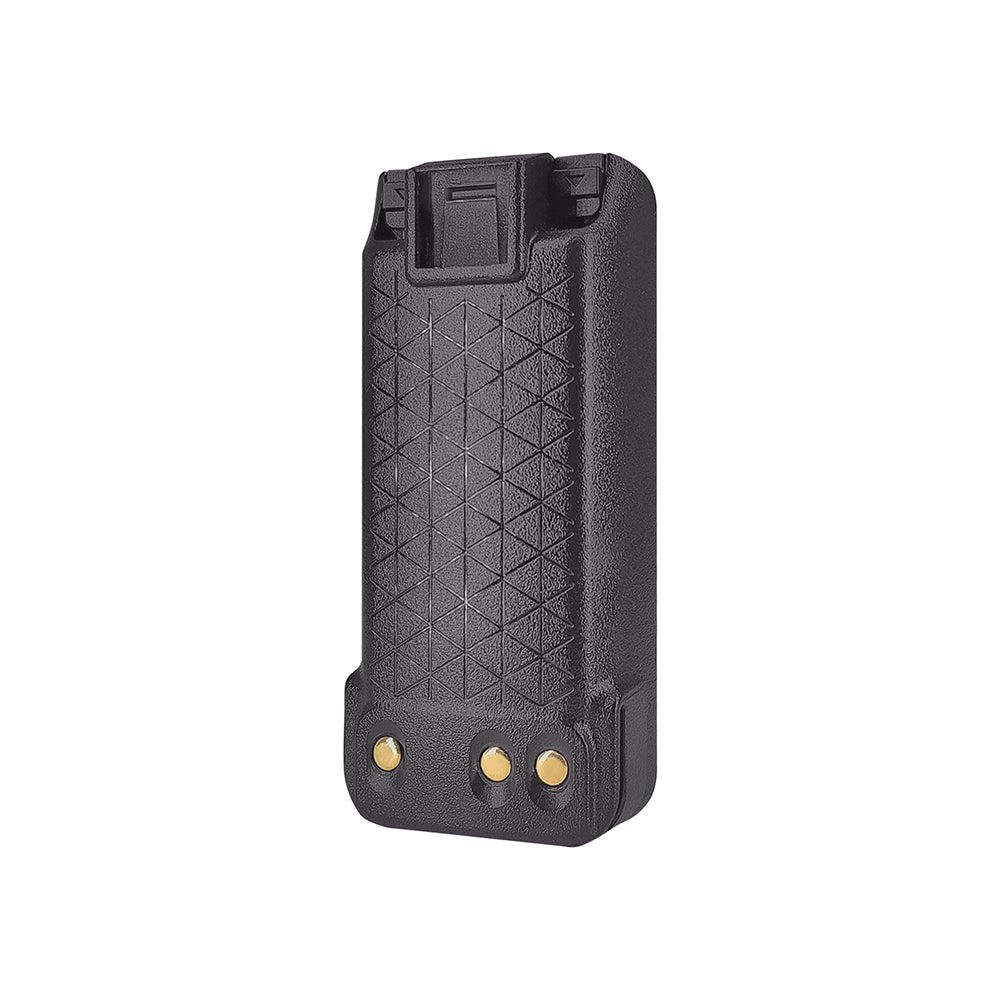
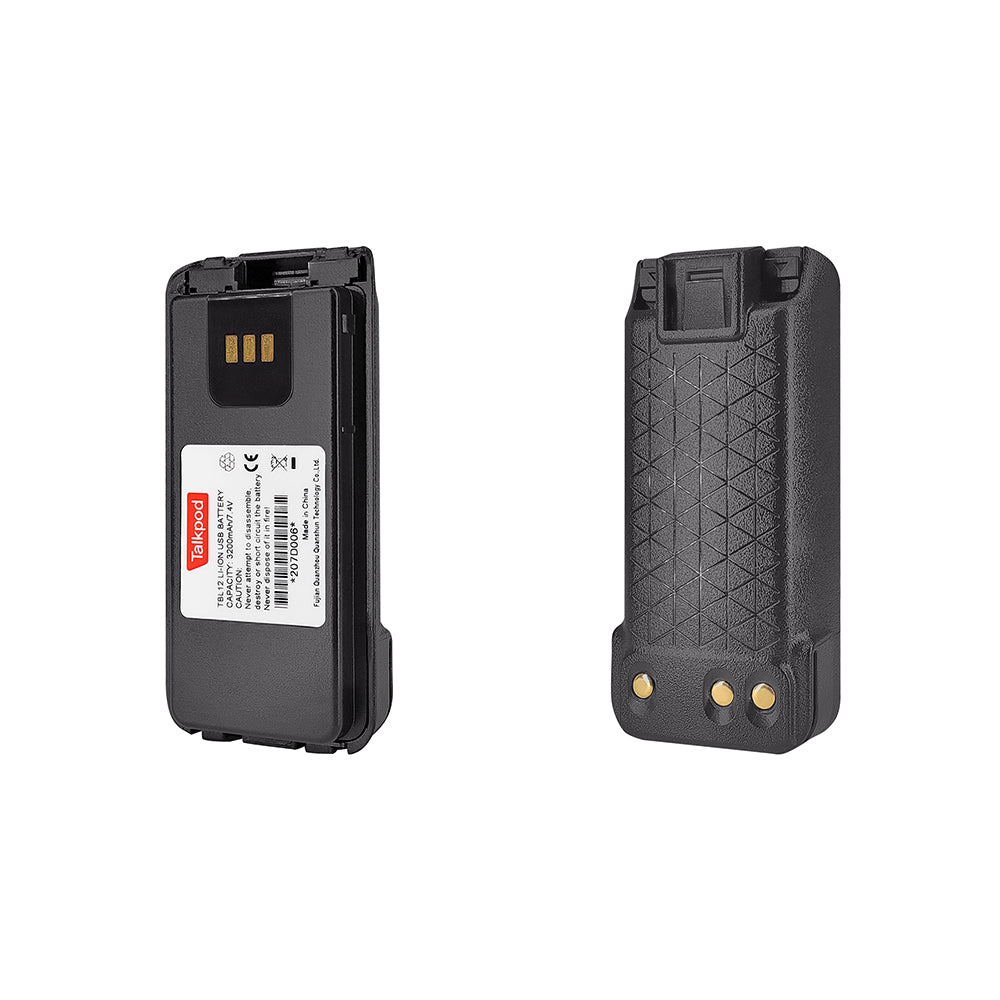
The source specifies a 7.4 V, 3200 mAh battery, with operating time of up to approximately 36 hours and standby time of up to six days under the referenced conditions.
Those figures can be useful for planning extended deployments.
Actual endurance will depend on transmit duty cycle, network relay activity, speaker volume, temperature, battery age and other operating conditions.
A radio that is acting frequently as a relay node may not consume power in exactly the same way as one used only occasionally for voice calls.
For extended emergency operations, batteries should therefore be treated as part of the logistics plan.
Radios should begin deployment fully charged, approved spare batteries should be available where necessary, and charging arrangements should be established away from hazardous areas unless the equipment instructions explicitly allow otherwise.
MIL-STD testing should be interpreted by the tests performed
The source also references MIL-STD-810-series environmental reliability testing.
Such testing can provide useful evidence of performance under specified environmental conditions.
It should not, however, be reduced to a blanket claim that the radio can survive every extreme environment.
Temperature shock, vibration, impact, humidity or salt-fog performance should each be described according to the specific test methods actually completed.
If salt-fog resistance is important for coastal flood response, for example, that claim should be supported by the relevant documented test rather than inferred from the phrase “MIL-STD tested.”
Ruggedness is valuable.
It is still bounded by the conditions under which the product was designed and tested.
Communication is only one layer of flood-response safety
A radio network can help teams report rising water, damaged infrastructure, equipment problems or requests for additional personnel.
It cannot assess whether a structure is safe to enter, determine electrical isolation, measure water contamination or replace flood forecasting and hydrological monitoring.
Those decisions depend on the appropriate engineering, rescue and emergency-management systems.
The same applies in drought response.
At pumping stations or water-supply sites, the radio can help teams coordinate equipment and personnel, while flow, pressure, water quality and equipment condition remain the responsibility of the relevant monitoring and control systems.
The A50Ex supports the operational conversation around those systems.
It does not replace them.
A local network that can be rebuilt as the incident changes
Flood and drought emergencies are dynamic.
Roads close. Rescue teams move. Pumping points are relocated. Areas that were accessible in the morning may be isolated later in the day.
That makes a flexible local radio network valuable.
The Talkpod A50Ex can form chain, tree or mesh structures without depending on public mobile coverage, allowing relay positions to be adjusted as teams move through the incident area.
Digital voice functions can improve intelligibility in noisy environments, while explosion-protected construction may support operations in appropriately classified secondary hazardous areas.
Those capabilities should remain within realistic limits.
Multi-hop networking cannot relay through an impossible RF path. IP66 does not permit submersion. Explosion protection does not make every chemical leak or fire environment safe, and long battery-life figures depend on actual use.
Used with site-specific radio planning, backup communications and established emergency procedures, the A50Ex can provide a resilient local communication layer for response teams working where ordinary infrastructure has become unreliable.

Leave a comment
All comments are moderated before being published.
This site is protected by hCaptcha and the hCaptcha Privacy Policy and Terms of Service apply.