
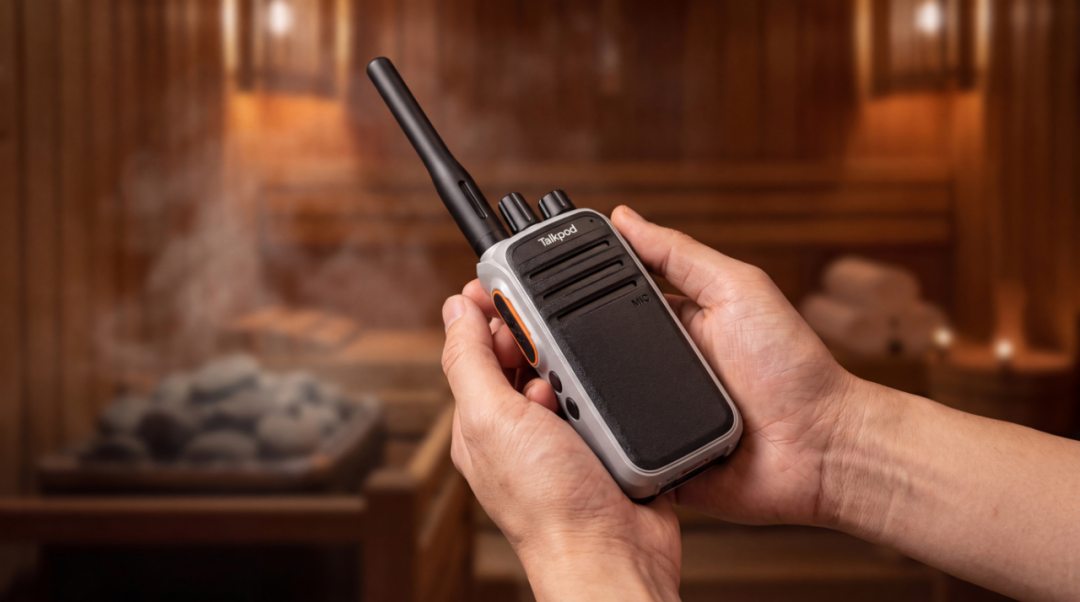
A sauna or foot-spa business depends on a large number of small handoffs.
Front-desk staff receive guests and arrange services. Therapists move between rooms. Supplies need to be delivered without interrupting appointments, while security and maintenance personnel may be working elsewhere in the building.
These teams are often separated by corridors, private rooms, wet areas and acoustic partitions. When employees have to walk back to the front desk simply to pass a message, service slows down quickly.
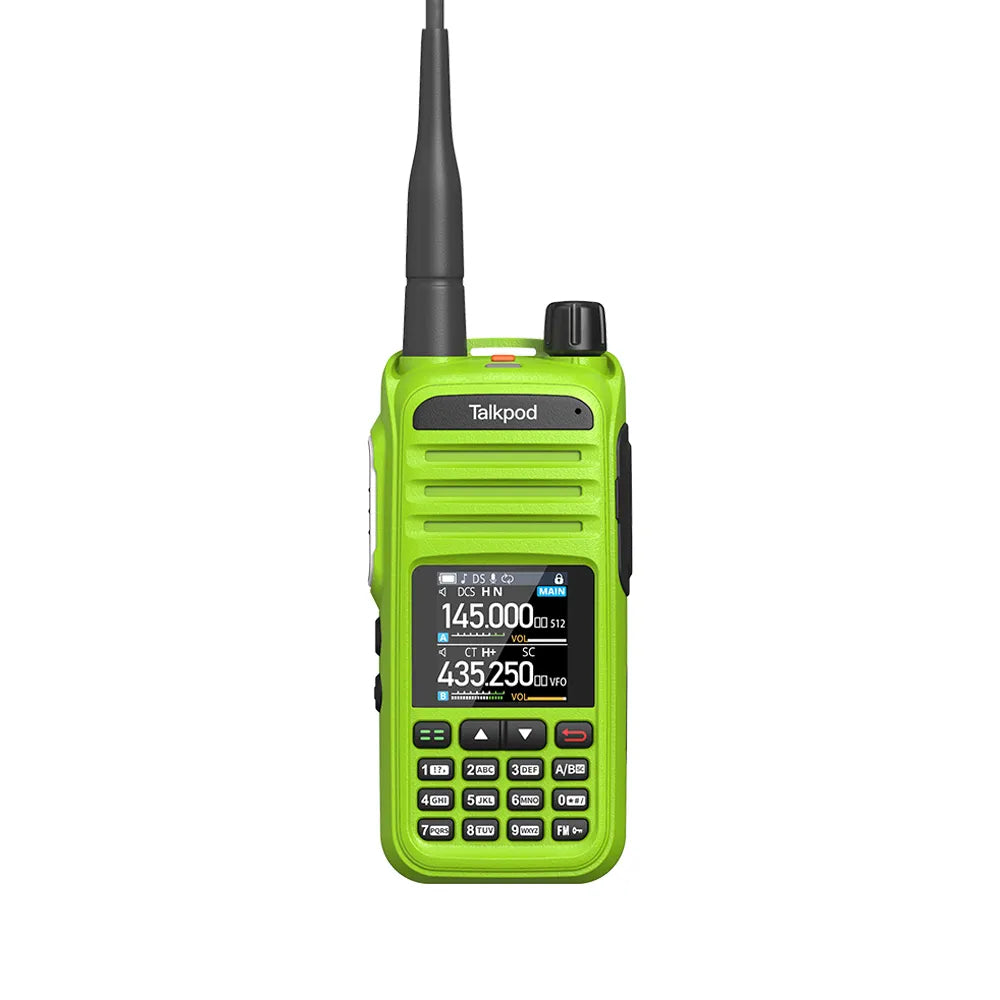
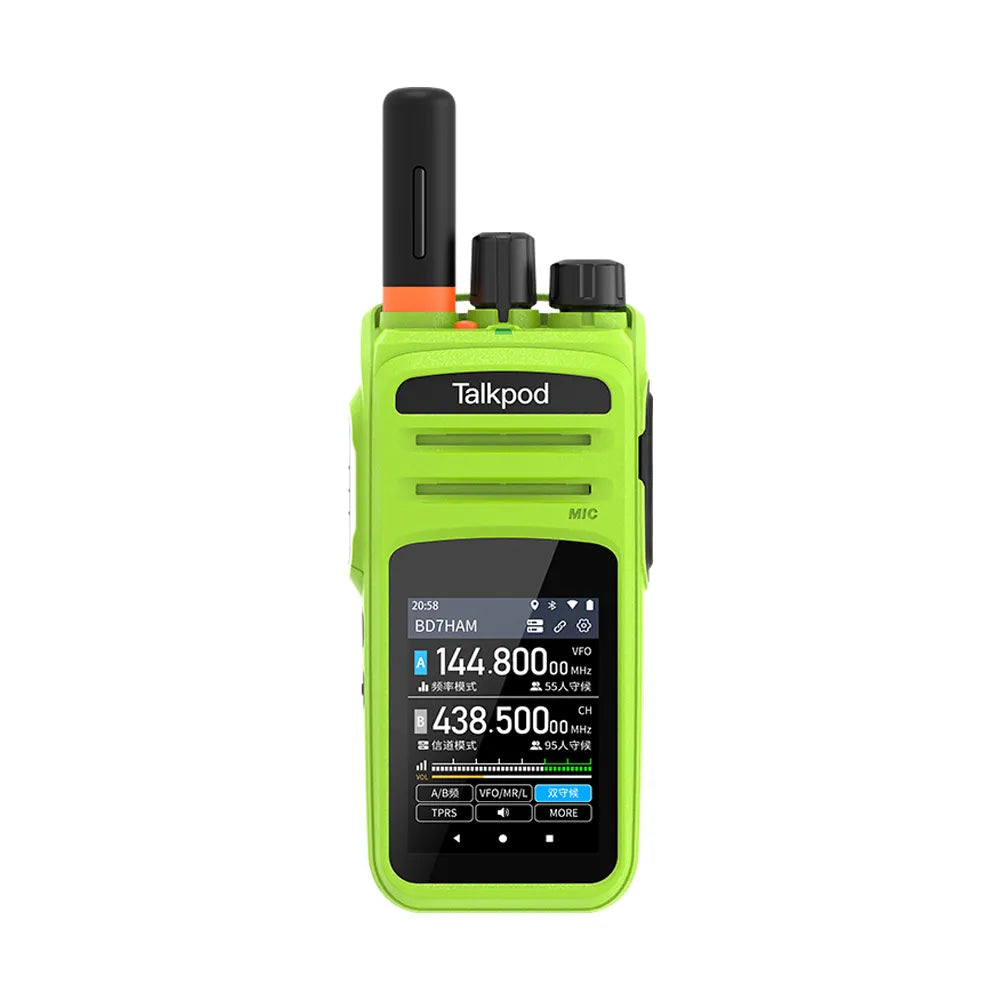
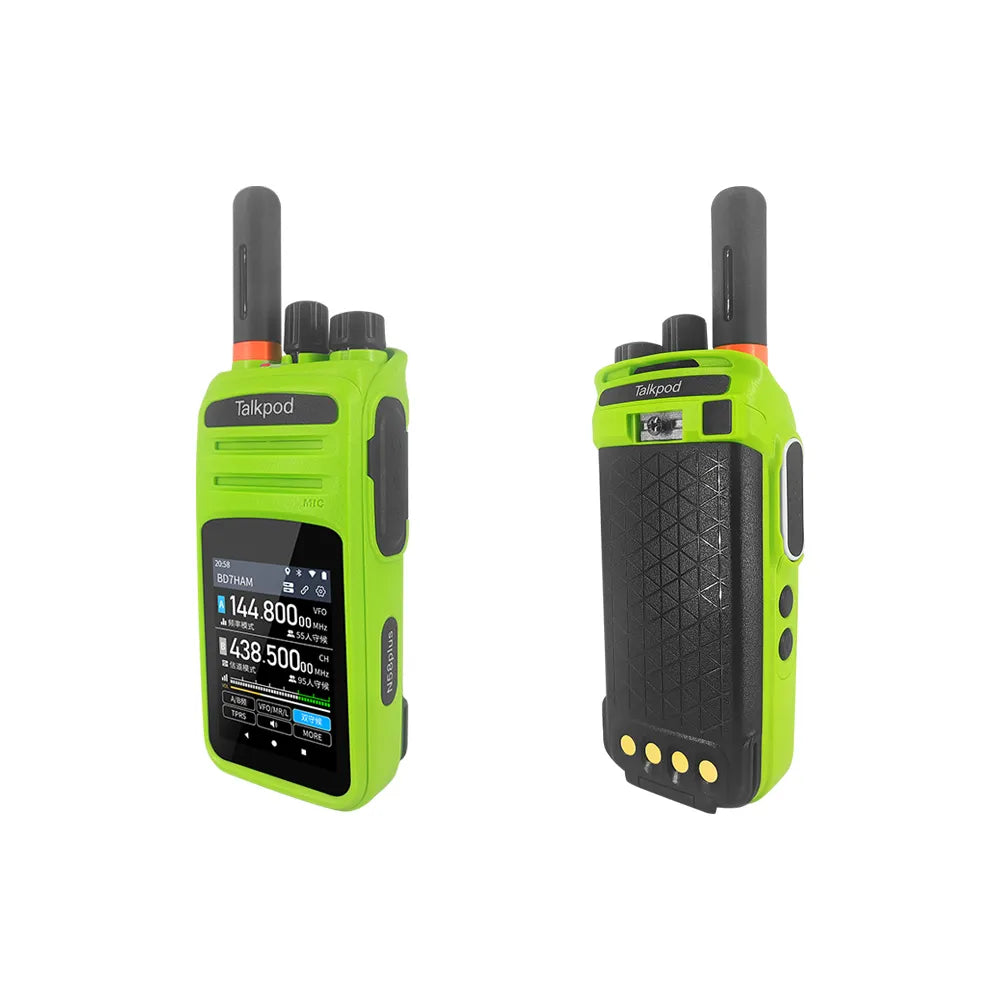
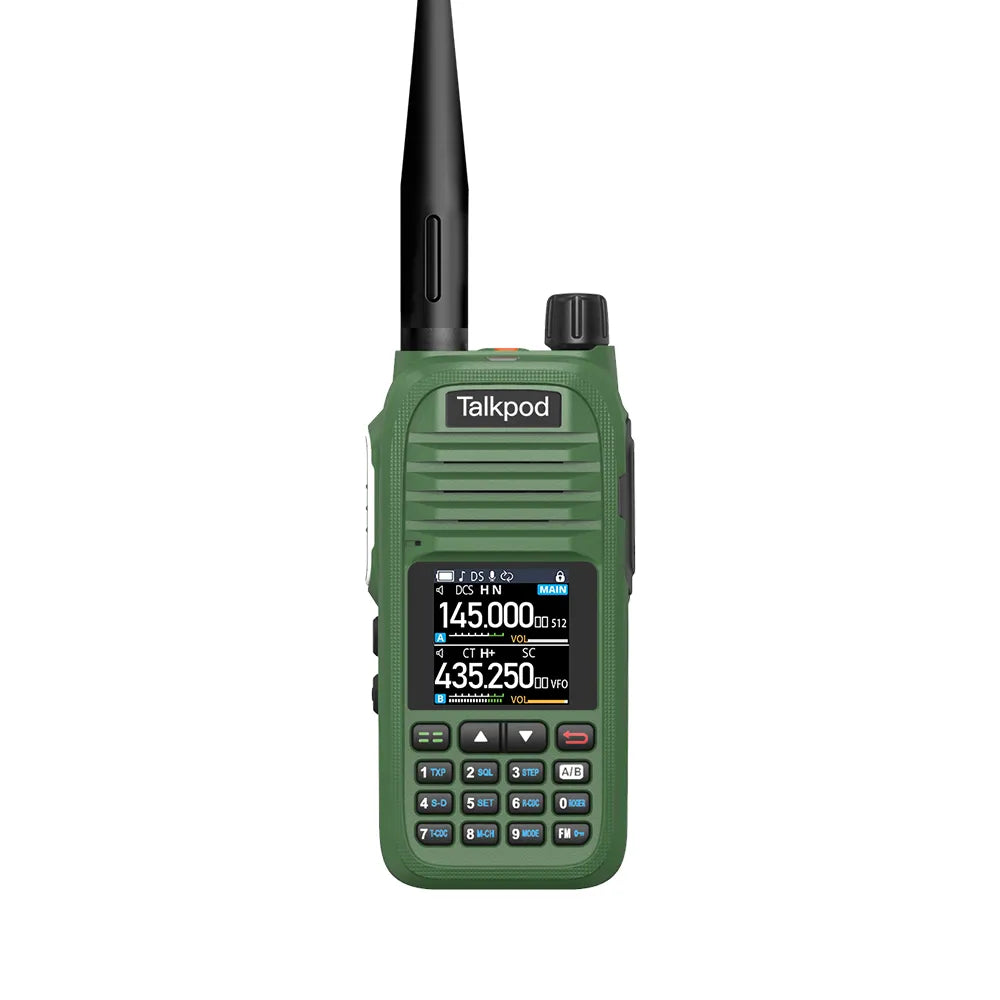
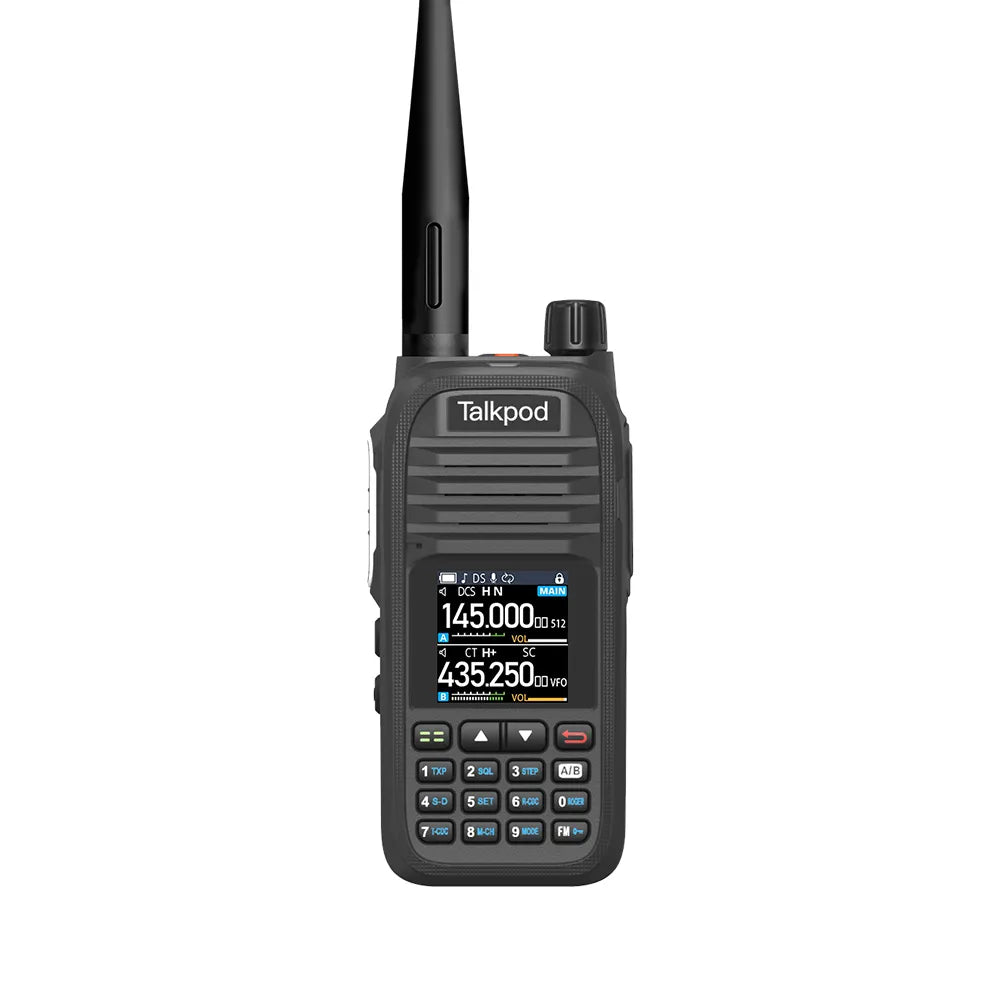
The Talkpod B30 analog radio provides a straightforward local communication tool for this type of operation, combining adjustable squelch, programmable side keys, selectable transmit power and battery-status alerts in a handheld device intended for frequent daily use.
Adjustable squelch helps manage unwanted receiver noise
The B30 provides 10 adjustable squelch levels.
Squelch determines how strong a received signal must be before the radio opens its speaker. This can help reduce background hiss or weak unwanted signals when the channel is idle.
In an area with more RF noise, a higher squelch setting may keep the speaker closed until a stronger signal is received.
In a cleaner environment, a lower setting may allow weaker legitimate signals to be heard.
The trade-off matters.
Setting squelch too high can also suppress a wanted signal from a colleague farther away.
For that reason, the best setting is not simply “the highest level in the wet area.” It should be adjusted according to actual RF conditions and tested across the locations where staff work.
Steam itself does not create radio noise in the same way an electrical interferer does. Metal piping, building structure and nearby electronic equipment may have a greater effect on communication performance.
Local coverage should be tested room by room
Sauna and foot-spa venues often contain challenging building layouts.
Private treatment rooms, acoustic partitions, reinforced walls, stairwells and metal service installations can all weaken radio signals.
A radio that works well at reception may perform differently several rooms away or on another floor.
The B30 supports higher transmit power—described in the source as up to 8 W—which can improve usable range in some environments.
But transmit power alone does not guarantee coverage through every room.
The most reliable approach is to test reception at the front desk, treatment rooms, staff areas, wet zones, corridors and any basement or upper-floor spaces before finalizing the radio plan.
[Image]
Two programmable side keys can simplify routine tasks
Service personnel rarely have time to navigate through complicated menus.
The B30 provides two programmable side keys that can be configured for frequently used supported functions.
This allows a business to adapt the radio around its workflow rather than asking every employee to remember several button sequences.
A commonly used function can be assigned to a side key so staff can reach it by touch more quickly.
That becomes useful when employees are wearing gloves or are occupied with service materials.
The exact shortcut assignment should still be based on the functions supported by the radio's programming configuration.
The value of programmable controls is not adding more features.
It is reducing the number of steps required to reach the features staff already use.
High and low power serve different operating needs
The B30 supports selectable high- and low-power operation.
For a compact single-floor store, lower transmit power may be sufficient and can help reduce battery consumption.
A larger venue with longer corridors or more separation between users may benefit from higher power where regulations and system configuration permit it.
But lower power should not be described as preventing neighboring businesses from hearing or interfering with the channel.
Likewise, higher power does not make a radio immune to walls or guarantee complete building coverage.
Interference management depends on frequency coordination, channel settings, sub-audio signaling and the surrounding RF environment.
Transmit power is only one part of the design.
Privacy tones are not encryption
If CTCSS or DCS-style sub-audio signaling is used, it can help staff avoid hearing unrelated users on the same frequency.
That improves channel organization.
It does not make the conversation private.
Another compatible radio using the same frequency and appropriate settings may still receive the transmission.
For a hospitality or wellness business, sensitive customer information should therefore stay in the appropriate booking, customer-management or payment system rather than being spoken openly over radio whenever possible.
A short operational message is usually enough.
Faster coordination between reception and service staff
The practical value of a radio system becomes clear during ordinary service.
Reception may need to tell a therapist that the next guest has arrived. A room may need fresh towels or consumables. A maintenance issue may need attention without interrupting other appointments.
With the B30, staff can pass these updates directly instead of walking back and forth between service areas.
That can reduce unnecessary movement and help the front desk keep appointments moving more smoothly.
The radio does not replace the booking or queue-management system.
It simply helps the people using those systems coordinate more quickly.
Low-battery alerts help prevent avoidable interruptions
Long opening hours place a different demand on radio fleets.
A device may work through several employee shifts before anyone remembers to check its battery.
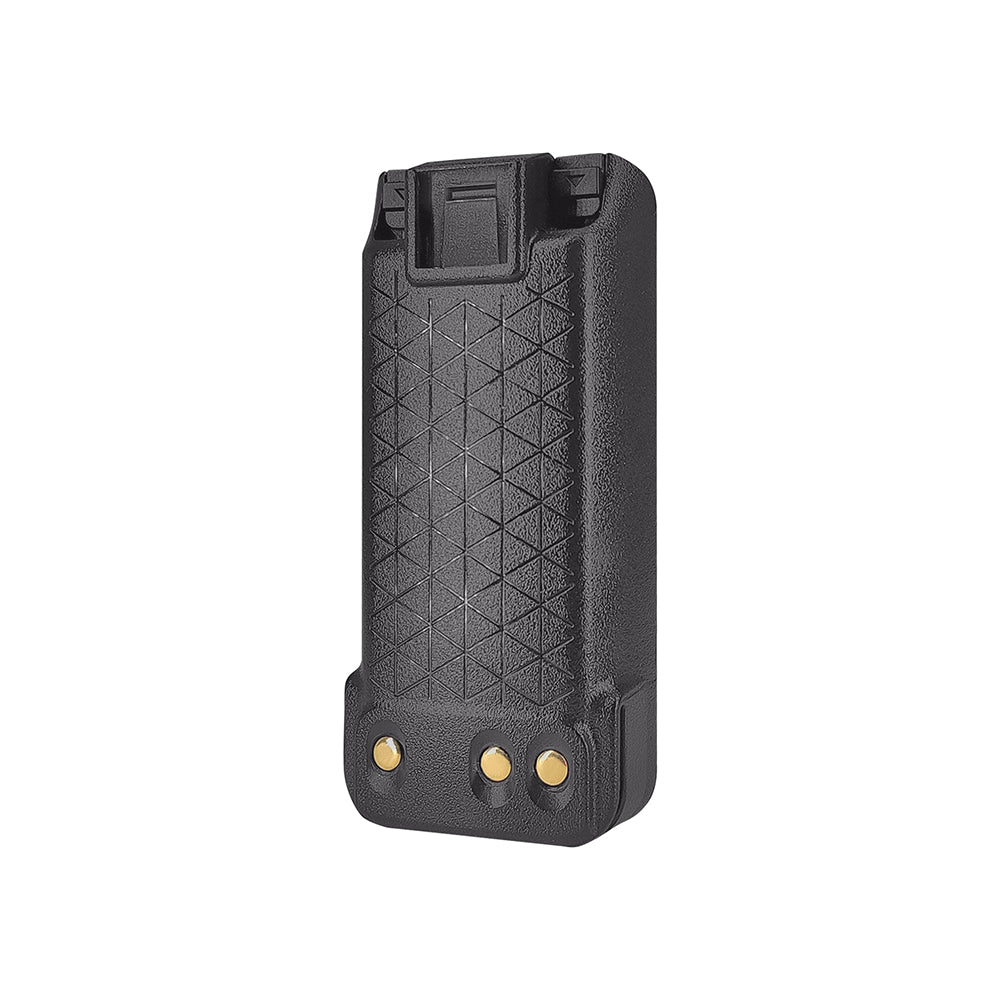
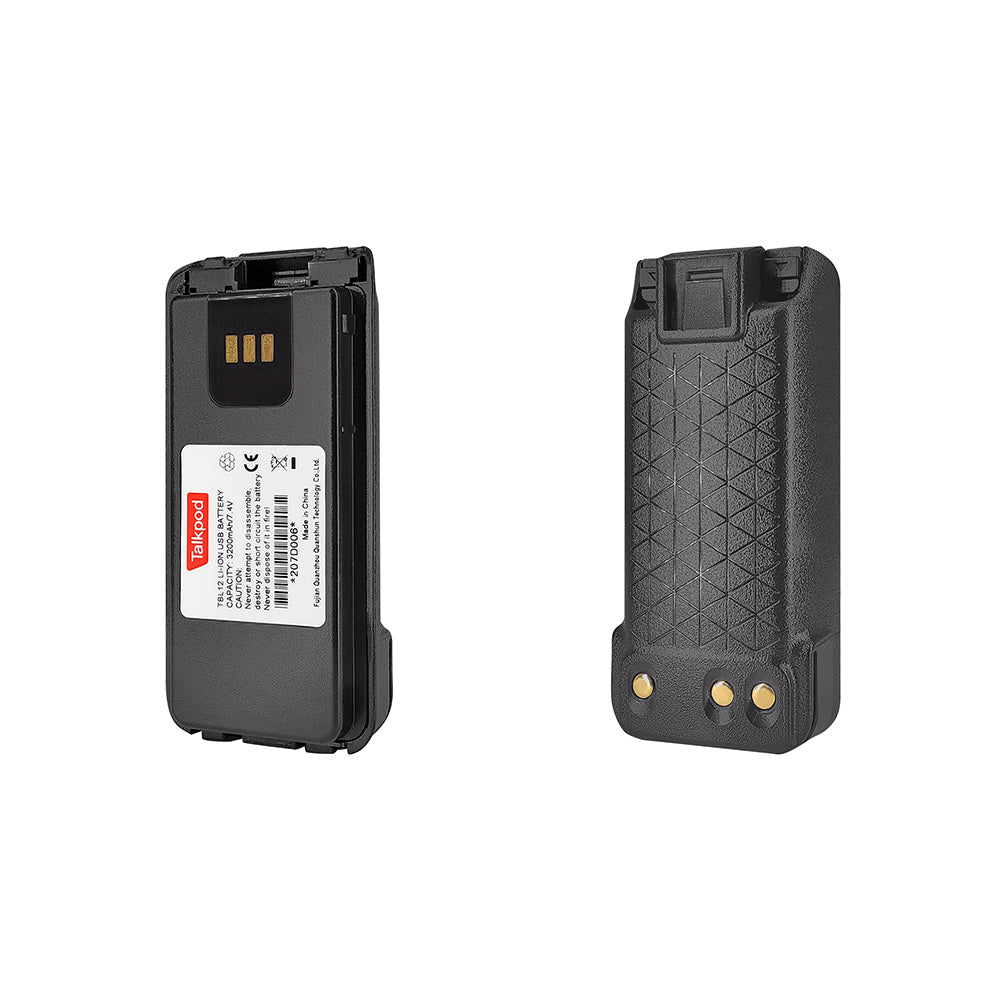
The B30 includes battery-status and low-battery alert functions intended to warn users before the device loses power.
That can reduce unexpected communication interruptions during busy service periods.
It should not be treated as a substitute for normal charging discipline.
Radios should be checked at shift changes, charged before peak periods and rotated through a consistent charging routine.
If communication is important to daily operations, spare charged equipment should also be available.
Battery management is most reliable when it becomes part of the store's opening and closing checklist.
Wet environments require careful equipment handling
A sauna or spa naturally includes humidity, water and cleaning products.
That does not mean an ordinary commercial radio should be treated as waterproof or chemically resistant unless the product specifications explicitly say so.
If the B30's ingress-protection or chemical-resistance rating is not documented for the intended environment, staff should avoid exposing it directly to water, oils or disinfectants.
Likewise, a radio should not be handled with heavily wet or contaminated hands simply because it has physical side buttons.
The operating procedure should reflect the device's documented environmental limits.
Convenient controls make the radio easier to use.
They do not change its protection rating.
Communication should remain simple for frontline staff
The best radio setup for a service business is usually not the most complicated one.
A small number of clearly assigned channels, sensible squelch settings and a few useful shortcuts are often more effective than giving every employee access to every possible feature.
Staff should know which channel to use, how to request assistance and what to do if the radio connection becomes unreliable.
That consistency reduces training time and helps temporary or rotating employees begin using the system more quickly.
A practical tool for day-to-day service coordination
The Talkpod B30 fits naturally into sauna and foot-spa operations because its role is simple.
Adjustable squelch can help manage idle-channel noise. Programmable side keys reduce operating steps. High- and low-power modes allow the radio setup to be adapted to different venue sizes, while low-battery alerts support longer daily operating schedules.
Those functions should not be overstated.
Squelch cannot remove every form of interference. Low power does not provide privacy, and high power does not guarantee communication through every wall.
Used with realistic coverage testing and straightforward staff procedures, however, the B30 can do something more useful: reduce the amount of time employees spend walking around simply to find one another.
In a service business built around quick handoffs, that can make daily operations noticeably smoother.

Leave a comment
All comments are moderated before being published.
This site is protected by hCaptcha and the hCaptcha Privacy Policy and Terms of Service apply.