
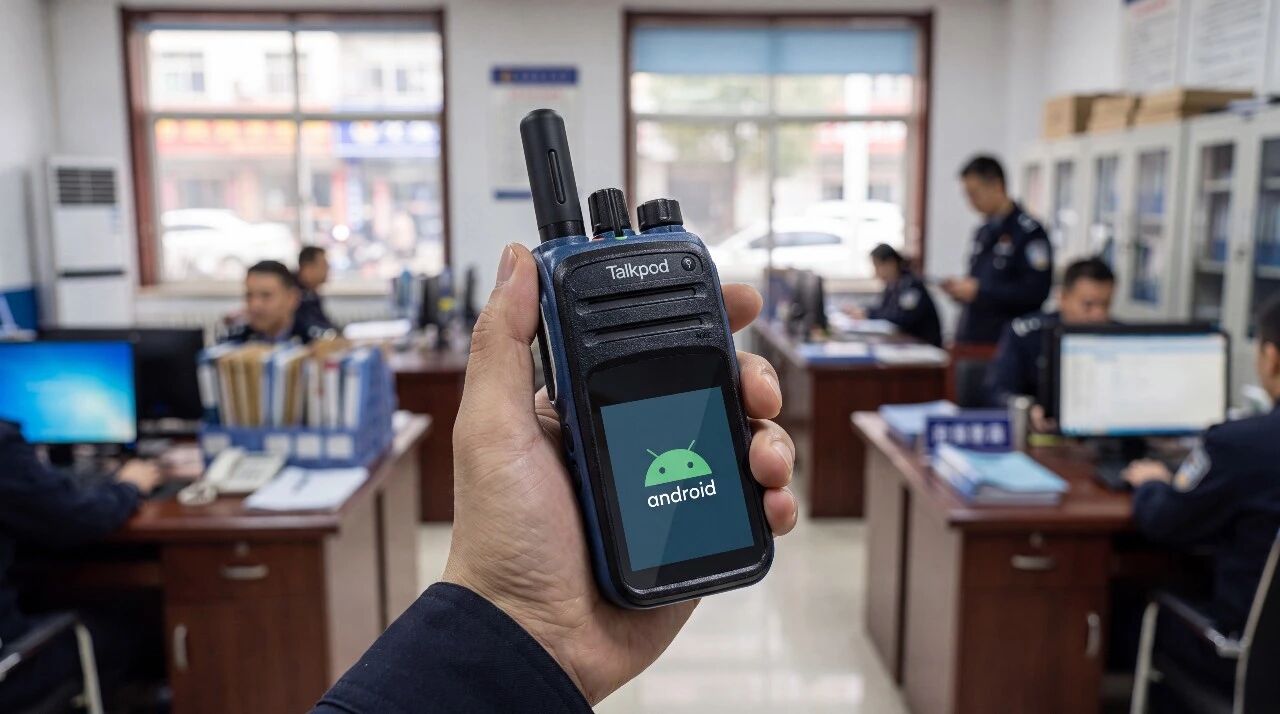
Police work increasingly extends beyond the range of a single local radio network.
Officers may patrol residential neighborhoods, respond to disputes in another part of the city and later support an incident in a more remote township. As the distance between teams grows, so does the difficulty of keeping field personnel and the command center working from the same information.
For Hanchuan Public Security Bureau, conventional radios remained useful for local communication but offered limited support for wider-area coordination and real-time visual reporting from the field.
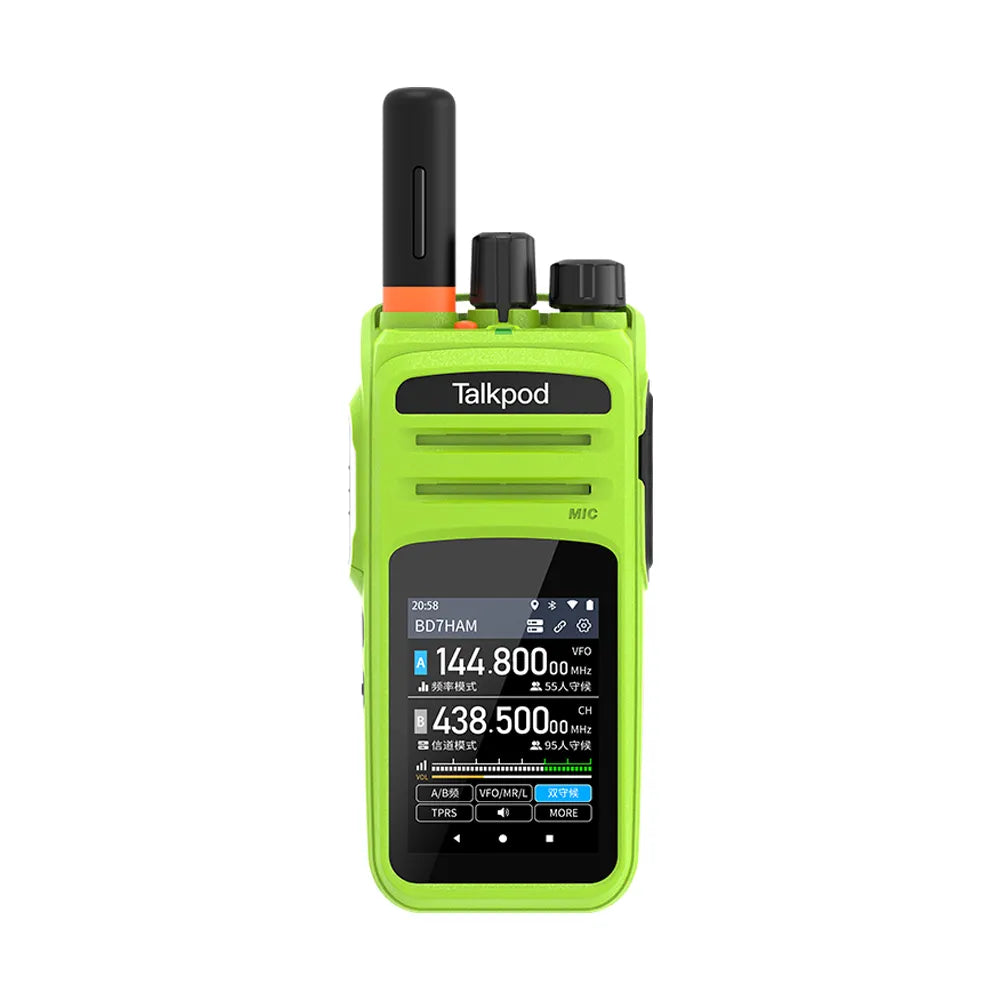
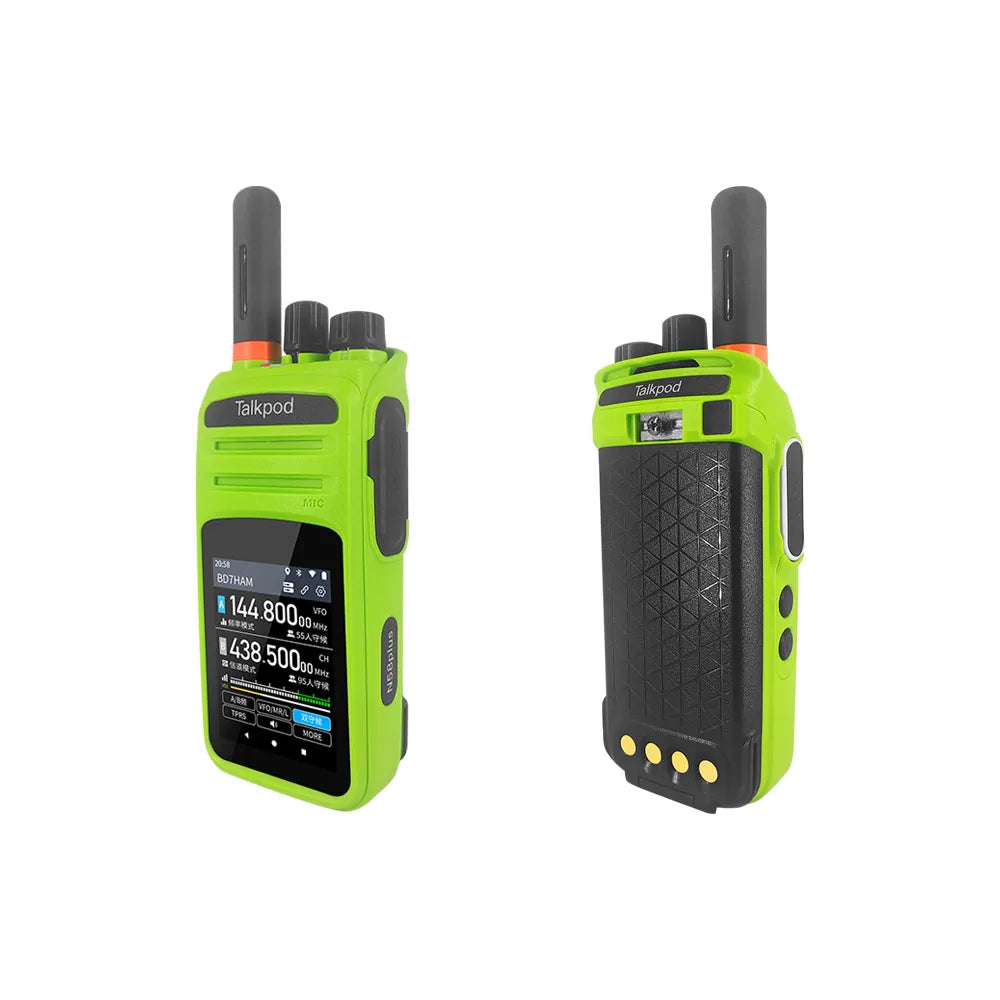
The Talkpod N59 smart public-network radio was introduced as an additional communication tool, combining wide-area push-to-talk, digital voice and front and rear cameras with platform-based dispatch functions wherever suitable mobile-network coverage is available.
Extending communication beyond a local radio area
Traditional handheld radios are designed primarily for communication within an effective local range. That can become restrictive when officers are distributed across different districts or working in more distant rural areas.
The N59 uses compatible public mobile networks to support wide-area push-to-talk communication. Authorized users can remain within managed communication groups even when they are operating far apart.
A community officer on patrol can report a developing situation to colleagues or the command side without first returning to a station. Personnel elsewhere in the jurisdiction can receive operational updates through the relevant group and prepare to support the response.
The system still depends on network availability. Remote countryside, basements, tunnels or heavily shielded buildings may have weak or unavailable service.
For that reason, the N59 should complement existing police communication systems and contingency procedures rather than be treated as the only communication channel for critical operations.
Giving the command center more than a voice report
A radio call can describe what an officer sees. Visual information can sometimes give supervisors a clearer picture.
The N59 incorporates front and rear cameras that can support authorized image and video capture during field duties. Where network conditions, platform configuration and departmental policy permit, field personnel can share relevant visual information with the command side.
During a patrol, dispute response or other incident, this may help supervisors understand the scale and context of what is happening before additional personnel arrive.
A crowded location, blocked access route or developing public-order situation can often be assessed more effectively when a verbal report is accompanied by visual context.
This capability must nevertheless be managed carefully.
Police video may contain identifiable individuals, vehicle information, private premises or other sensitive material. Capture, transmission, storage and access should therefore follow applicable law, evidence rules, data-protection requirements and internal authorization procedures.
The camera is a field-information tool. Whether any recording becomes formal evidence depends on the organisation's approved evidence-management process.
Faster coordination during routine patrols and incidents
Much of frontline policing consists of ordinary work rather than major emergencies.
Community visits, street patrols, dispute mediation and public-service calls all require officers to remain in contact while moving between locations.
With the N59, personnel can use group push-to-talk to share operational updates without repeatedly making individual phone calls.
If a routine situation begins to escalate, an officer can notify the relevant group and request support while remaining at the scene. The command center can receive available information and coordinate additional resources according to established procedures.
This can reduce the communication delay between an officer recognizing that assistance is needed and the rest of the organization becoming aware of it.
The technology does not decide how police resources should be deployed. Those decisions remain with authorized personnel using verified operational information.
Clearer audio in outdoor policing
Police communication often takes place in noisy environments.
Traffic, crowds, wind and nearby machinery can make weak audio difficult to understand. Yet operational messages frequently depend on short, precise information such as a location, direction of travel or request for support.
The N59 uses digital voice processing and a high-output speaker to improve speech clarity in suitable conditions.
This can reduce repeated calls and help field personnel understand short instructions more easily.
Critical information should still be confirmed according to departmental procedures. A smart radio can improve the delivery of a message, but it does not remove the need for verification when decisions affect public or officer safety.
Connecting the device with existing police workflows
A new handheld terminal is most useful when it fits the systems officers already use.
Talkpod assisted Hanchuan Public Security Bureau with configuration and integration work so that the N59 could operate alongside the existing police dispatch platform.
This allowed field communication and available multimedia information to enter a more familiar command structure rather than creating a separate standalone workflow.
Communication groups and permissions can be configured according to jurisdiction, duty or operational role. Routine traffic can remain within appropriate teams, while supervisors retain access to broader coordination groups where required.
This helps reduce unnecessary radio traffic and gives users a clearer understanding of whom they are contacting.
Training around real police scenarios
Hardware deployment is only one part of a communications project.
Officers must know which group to use, when multimedia information should be transmitted, how to escalate an incident and what information should not be shared over an ordinary operational channel.
Talkpod provided practical guidance and training based on policing scenarios, helping users become familiar with push-to-talk, multimedia functions and interaction with the dispatch platform.
This type of training matters because the N59 combines several capabilities within one device.
The objective is not to encourage officers to use every feature in every situation. It is to make the appropriate function easy to use when the situation calls for it.
Ongoing technical support can also help adjust configurations as operating requirements change.
Designed for regular field use
Police handheld equipment may be used in rain, carried in vehicles and exposed to repeated handling during long shifts.
The N59 is designed for demanding field environments and has undergone environmental-reliability testing associated with conditions such as drops, vibration and temperature variation.
Such testing supports everyday durability, but expressions such as “military-grade” should not be taken to mean that the radio is indestructible.
Actual protection depends on the device's specified ratings, operating conditions and maintenance. A unit that has suffered serious impact, water ingress or enclosure damage should be inspected before returning to operational use.
Reducing the distance between the field and command
The practical challenge for a police organization covering a wide jurisdiction is not merely physical distance. It is the information delay that distance can create.
The N59 helps reduce that delay by linking wide-area voice communication with authorized visual reporting and platform-based coordination.
An officer can remain at the scene while updating the command side. Supervisors can receive more context before assigning support. Other units can be informed without waiting for a sequence of individual calls.
The N59 does not replace professional judgment, dedicated mission-critical police communications or formal evidence systems.
Its role is to bring the officer in the field and the people coordinating the response closer together in informational terms.
For Hanchuan Public Security Bureau, that is the more meaningful form of range: not simply how far a radio can reach, but how quickly the situation on the ground can become part of a coordinated response.


Leave a comment
All comments are moderated before being published.
This site is protected by hCaptcha and the hCaptcha Privacy Policy and Terms of Service apply.