
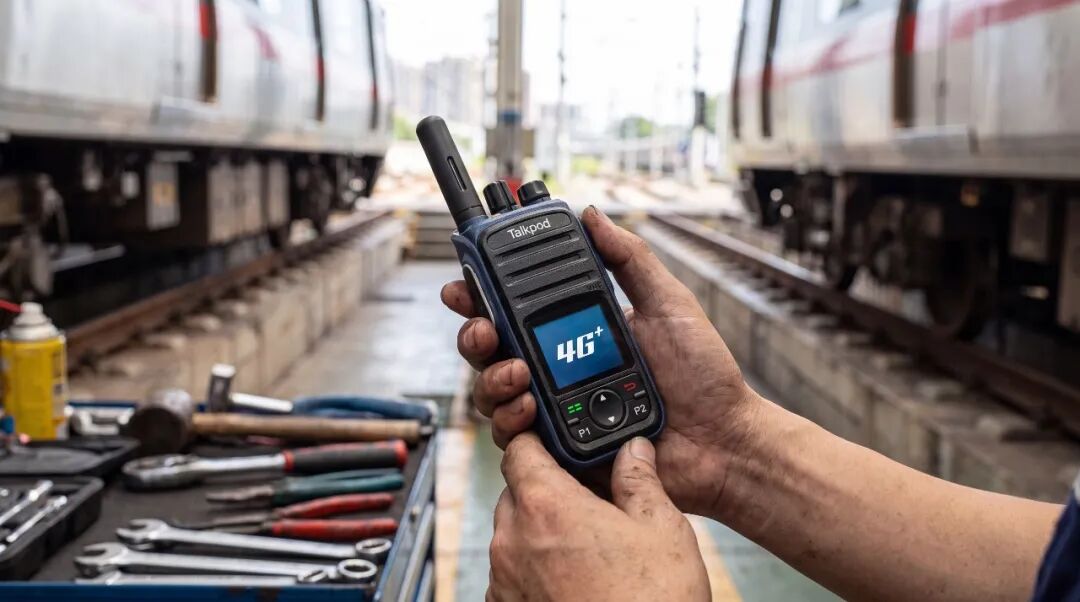
A metro depot brings very different working environments together within one operating site.
Maintenance technicians may be working inside enclosed inspection workshops, while other crews are stationed in outdoor storage yards. Supervisors, engineering personnel and support teams can be distributed across separate operating zones, yet a fault discovered in one area may quickly require assistance from another.
In that environment, communication delays are rarely just inconvenient. They can slow maintenance work, complicate team coordination and make it harder for supervisors to maintain a clear picture of what is happening across the depot.
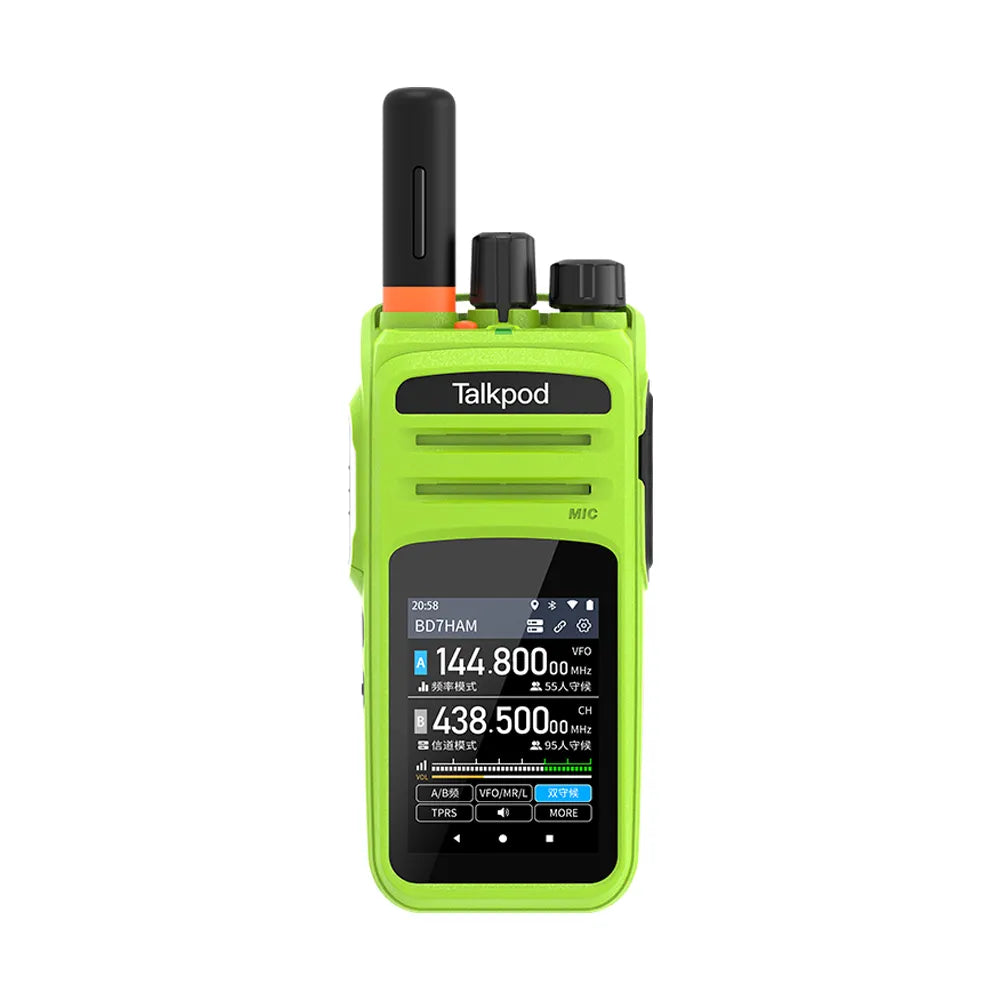
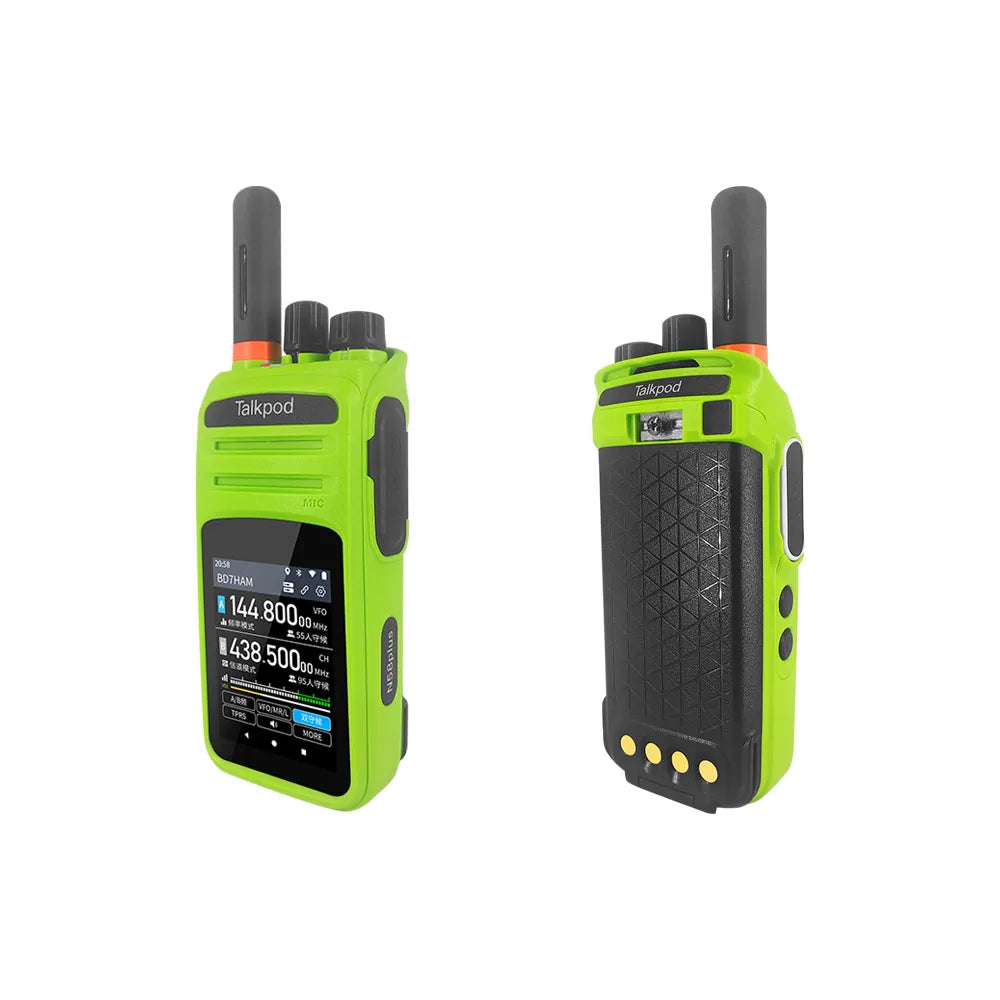
The Talkpod N56 public-network radio provides an additional wide-area push-to-talk communication layer for depot personnel wherever compatible mobile-network coverage is available. With digital voice, a color display, shortcut controls and backend dispatch capabilities, it can help maintenance teams exchange operational information more efficiently across separated work areas.
Connecting indoor workshops and outdoor yards
A vehicle depot is not a single open workspace.
Inspection halls may contain reinforced concrete walls, steel structures and large maintenance equipment, while outdoor storage yards can extend across a much wider area. Personnel regularly move between these environments during inspections, repairs and vehicle preparation.
Conventional direct radio communication can become more difficult once teams are separated by distance or building structures.
The N56 uses compatible public mobile networks to extend push-to-talk communication beyond the normal range of direct handheld radios.
A technician in a maintenance workshop can report a component problem to a supervisor elsewhere in the depot, while personnel in an outdoor yard can remain within the same managed communication structure.
The practical advantage is wider-area coordination—not guaranteed coverage in every location.
Underground workshops, enclosed technical rooms and heavily shielded areas may still experience weak mobile-network service, so actual communication performance should be verified throughout the depot before operational deployment.
Faster reporting from maintenance personnel
Vehicle maintenance depends on information moving quickly from the person who finds a problem to the people who can respond to it.
Using the N56, technicians can report component abnormalities, maintenance progress and requests for assistance directly from their work location.
Short operational updates can be passed to the relevant team without requiring repeated phone calls or waiting for a supervisor to arrive in person.
Digital voice processing and speaker output can also help improve speech intelligibility around workshop machinery and other sources of background noise.
That is particularly useful for routine information such as whether a repair team is needed, whether a component has been removed for inspection or whether additional support should be sent to a particular work area.
For information that affects train movement or other safety-critical operations, however, a radio message should not become the sole authority.
Formal shunting instructions, movement authority and other safety-critical commands must continue to follow the metro operator's designated railway communication systems, signaling arrangements and operating procedures.
Organizing communication by work group
When every employee hears every message, a radio system can quickly become noisy.
A depot may have different maintenance teams, inspection personnel and operational support staff working simultaneously. Most of them only need a portion of the site's communication traffic.
Talkpod configured dedicated communication groups around the depot's operating structure.
This allows personnel to remain primarily within the group relevant to their work while supervisors can coordinate across several groups when a task requires multiple teams.
A maintenance technician can communicate with the appropriate work group without listening to unrelated conversations from another section of the depot.
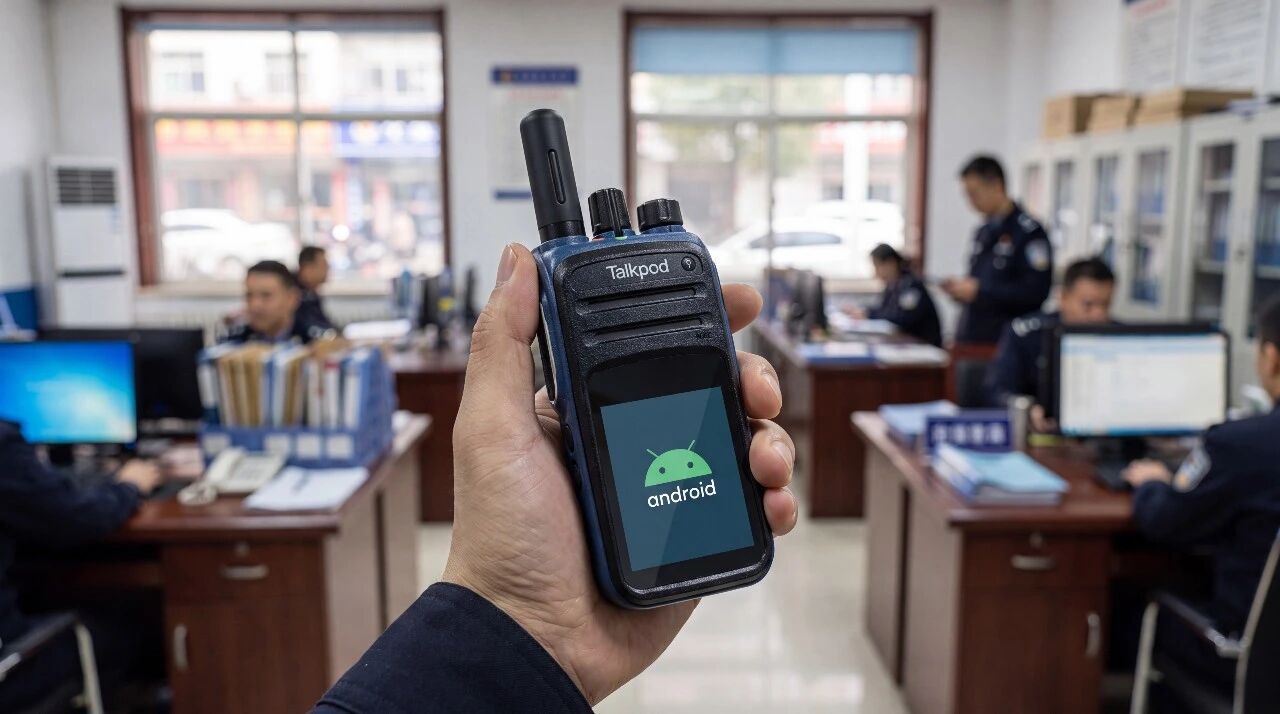
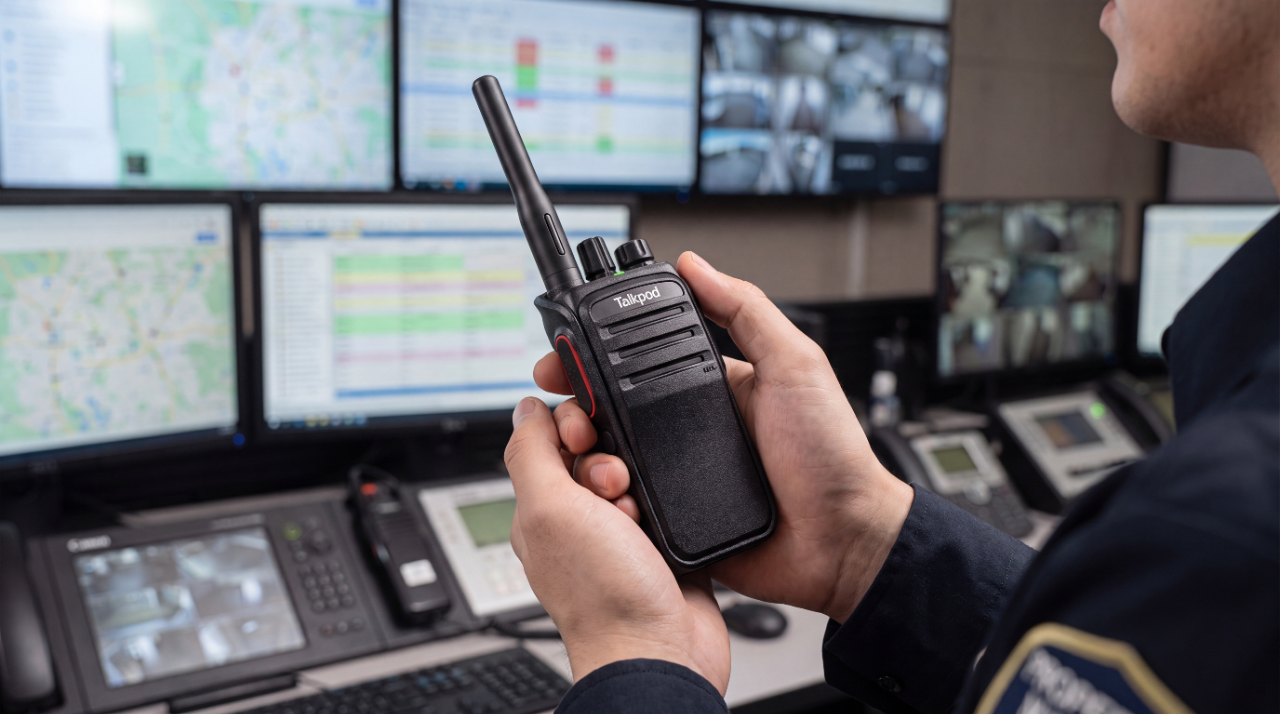
For supervisors, the backend system also provides a more structured way to manage accounts and communication relationships across the radio fleet.
The value is not simply more communication.
It is more organized communication.
One-touch alerts for abnormal situations
Maintenance environments occasionally produce situations in which a worker needs assistance quickly.
The N56's SOS function can provide an additional alert channel, allowing a user to notify designated personnel without navigating through several menus.
Its effectiveness depends on how the system is configured.
The depot should define who receives an alert, how the recipient acknowledges it and what action follows.
An SOS button should not be understood as an automatic rescue or train-protection system. It depends on device availability, platform configuration and network connectivity, and should operate alongside established depot emergency procedures.
Used this way, the function can shorten the first communication step when an abnormal situation develops.
Clear controls for personnel moving between tasks
Maintenance technicians often operate radios while carrying tools, wearing work gloves or moving around vehicles and workshop equipment.
Complex menus add little value in those conditions.
The N56 combines a color display with straightforward controls and shortcut access to commonly used communication functions.
Its ergonomic matte-finish housing is also intended to make the device easier to carry during routine work.
The purpose is not cosmetic.
A radio that can be operated quickly with minimal attention allows technicians to spend more time focused on the maintenance task itself.
Equipment should still be used within its specified environmental limits, and radios that suffer significant damage should be inspected before returning to service.
Public-network communication needs coverage planning
Because the N56 is a public-network radio, its communication performance depends on the availability of compatible mobile-network service.
That matters particularly in a metro depot.
Outdoor storage yards may have strong coverage, while underground maintenance areas, enclosed equipment rooms or reinforced structures can produce very different results.
Before deployment, the operator should test the actual locations where personnel will use the radios, including inspection workshops, storage tracks, maintenance rooms and transition areas between indoor and outdoor sections.
Any weak zones should be documented, and alternative communication procedures should remain available where public-network coverage is insufficient.
A useful wide-area system is built around known coverage rather than assumed coverage.
Training and support are part of the deployment
A radio fleet becomes more useful when every user understands the same operating logic.
For the Ang'e depot deployment, Talkpod provided device configuration, communication-group setup, on-site operational training and continuing backend support.
This helps new users understand how to select the correct group, initiate routine communication and use the alert function appropriately.
It also gives administrators a clearer process for managing accounts and adjusting the communication structure as operational requirements change.
For a metro maintenance depot, the N56 is therefore best viewed as an additional coordination tool rather than a replacement for dedicated railway communication and control systems.
Where suitable mobile-network coverage is available, it can help shorten the communication path between a technician in one part of the depot and the people responsible for responding elsewhere.
That is a modest role, but in a maintenance environment built around many small, time-sensitive interactions, it can make daily operations noticeably easier to coordinate.

Leave a comment
All comments are moderated before being published.
This site is protected by hCaptcha and the hCaptcha Privacy Policy and Terms of Service apply.