
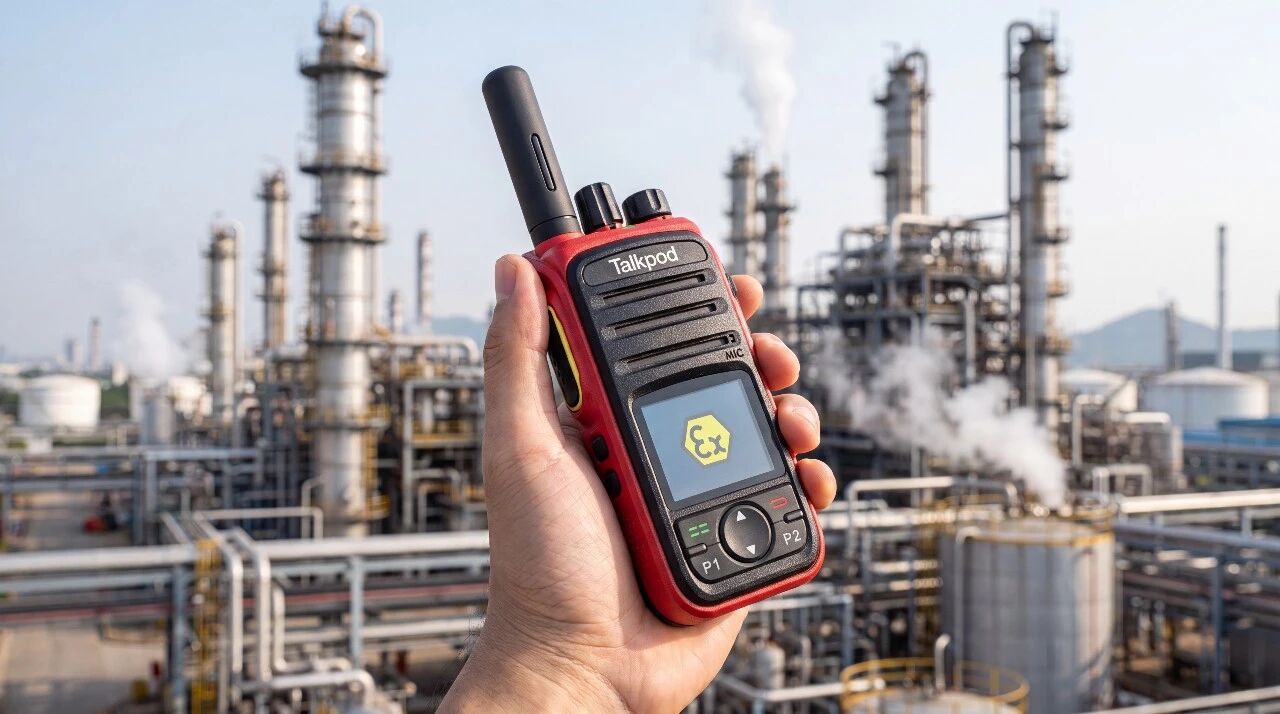
A refinery is not one workplace. It is a network of them.
Distillation units, processing areas, chemical-storage zones, tank farms, loading facilities and product-transfer points may be spread across a large industrial site. Personnel move between them throughout the day, while contractors, maintenance teams and control-room staff operate under different responsibilities.
Many of these areas may also contain flammable gases or vapours. That creates a demanding combination: communication must work across distance, but the handheld device itself must also be suitable for the hazardous area in which it is carried.
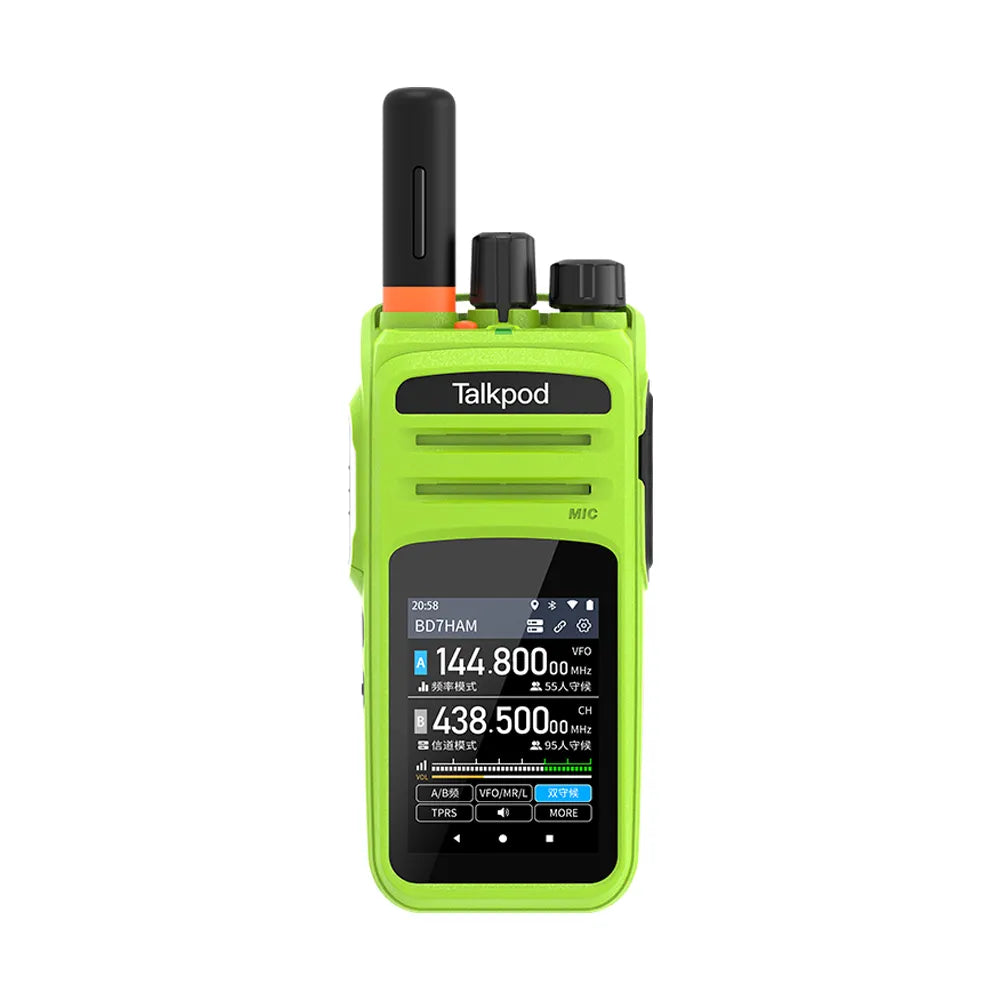
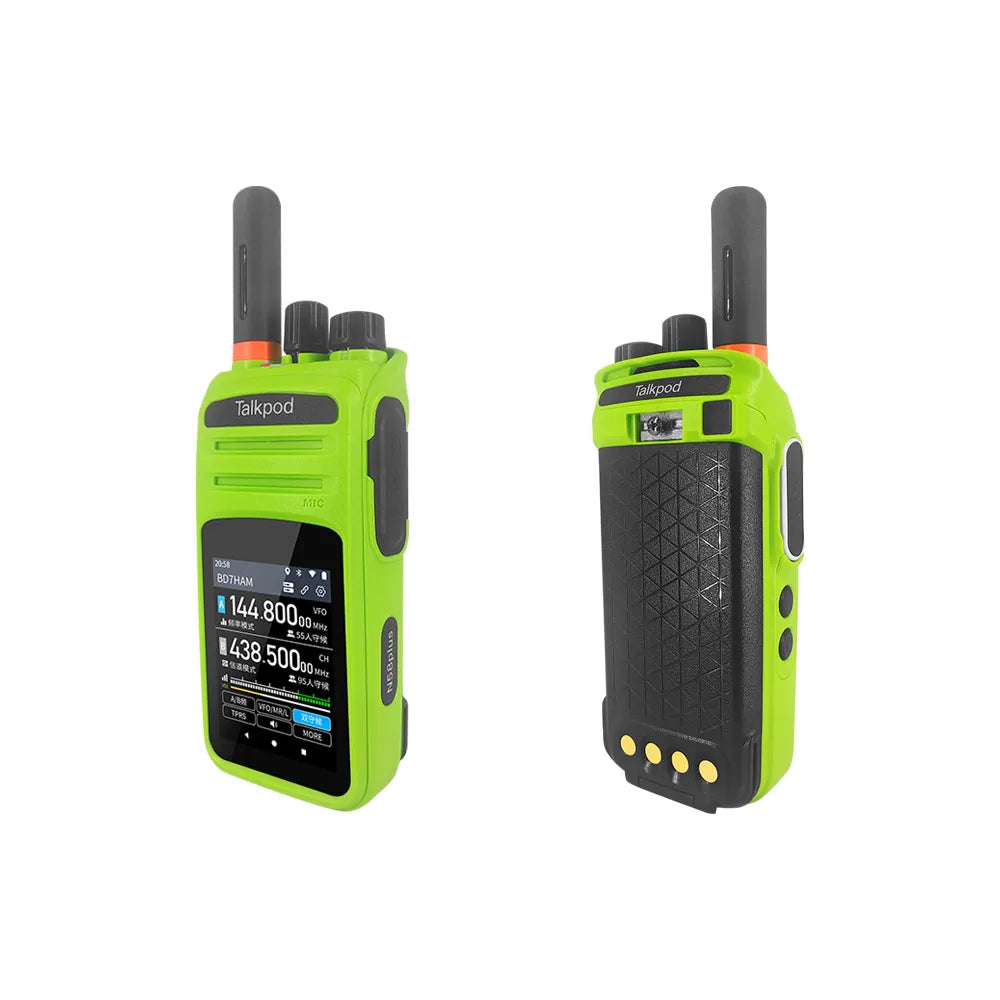
The Talkpod N56Ex is a public-network explosion-protected radio designed to combine wide-area push-to-talk and dispatch functions with protection measures intended for specified hazardous industrial environments.
For refinery operators, the first question is therefore not simply whether the radio can reach another part of the plant. It is whether the device is approved for the area in which it will be used.
Hazardous-area protection around process units
Distillation and processing areas can contain flammable hydrocarbon vapours, particularly during abnormal operation, maintenance or leakage.
In a classified hazardous area, ordinary consumer electronics may introduce unacceptable ignition risks through electrical faults, sparks or excessive surface temperatures.
The N56Ex incorporates explosion-protection measures designed to limit these risks within the conditions specified by its certification.
That qualification is important.
A refinery should verify the device’s exact explosion-protection marking against its own hazardous-area classification before deployment. Gas group, equipment protection level, temperature class, permitted zone and ambient operating range all matter.
Approved batteries and accessories are part of the same safety assessment. Unauthorized components, physical modification or damage to the enclosure may affect the protection concept on which certification depends.
The N56Ex can therefore be incorporated into hazardous-area communication procedures when its certification matches the location. It cannot make a flammable atmosphere safe, nor should it be assumed suitable for every process area simply because it is described as explosion-protected.
Connecting teams across a large refinery
Conventional direct radios can become less convenient when personnel are distributed across a large industrial complex.
A process operator may be inspecting one unit while maintenance personnel work elsewhere and supervisors coordinate from another part of the plant.
The N56Ex uses compatible public mobile networks to support wide-area push-to-talk communication. Authorized users can remain within managed communication groups even when they are separated by substantial distances.
This can make it easier for operations, maintenance, logistics and support teams to exchange short operational updates without relying solely on a direct radio path.
Public-network communication still depends on infrastructure.
Dense steel structures, basements, enclosed process buildings and remote parts of a site may have weak or unavailable cellular coverage. Refineries should therefore carry out coverage surveys and maintain alternative communication procedures for critical locations.
For safety-critical operations, public-network radios should complement rather than replace dedicated mission-critical, emergency or plant communication systems required by the facility.
Supporting emergency coordination across several teams
A refinery incident can involve many departments at once.
A process deviation, suspected leak or abnormal pressure condition may require operators, safety personnel, maintenance teams, fire response and logistics support to coordinate quickly.
The N56Ex can support managed group communication so that users are organised according to plant area, responsibility or emergency role.
Nested group structures allow communication to be divided more precisely. Routine traffic can remain within a specific unit or department, while supervisors can reach wider groups when an incident requires broader coordination.
This helps reduce unnecessary radio traffic and gives personnel a clearer understanding of which messages require their attention.
The radio itself does not determine the incident response. Emergency command decisions remain with authorised personnel operating under the refinery’s established procedures.
[Image]
Using location information as a dispatch aid
The N56Ex can support BeiDou/GNSS-based positioning where the device, platform and deployment configuration permit.
Location information can give dispatch personnel an additional view of where equipped field units are operating across a large site. This may help when supervisors need to identify personnel near a particular unit or understand how teams are distributed during an incident.
Positioning should nevertheless be treated as an operational aid rather than an infallible source of truth.
Satellite positioning may be degraded indoors, beneath dense steel structures or inside process buildings. Location reporting also depends on the communication link between the handheld and the backend platform.
For that reason, a displayed position should be confirmed through appropriate operational procedures when personnel safety depends on it.
A radio tracks the device carrying it. It does not automatically establish the exact status, task or safety condition of the person associated with that device.
Recording operational communications where authorised
The N56Ex platform can also support remote call recording where permitted by configuration, law and organisational policy.
Recording may help authorised supervisors review operational communication, reconstruct the sequence of an incident or support internal training and quality control.
In an industrial environment, however, recordings may contain sensitive operational information.
Access, retention, storage and review should therefore be governed by clear permissions and company policy. Platform security, user accounts, network configuration and organisational procedures all contribute to the protection of recorded information.
The presence of a recording function should not be taken to mean that all conversations must or should be recorded.
Faster communication without abandoning established procedures
One of the practical advantages of a wide-area handheld radio is that personnel can report conditions from the worksite.
An operator inspecting equipment can notify the control side of an abnormal observation. Maintenance personnel can confirm progress. A supervisor can contact several teams without physically moving between widely separated units.
That can reduce communication delays and unnecessary movement.
But radio communication should not become a substitute for formal process-control and safety systems.
Alarm systems, distributed control systems, gas detection, emergency shutdown procedures, work permits and formal incident command structures retain their designated functions.
The N56Ex provides a communication layer between the people operating those systems.
[Image]
Designing the group structure around refinery operations
A large refinery can generate a great deal of radio traffic.
If every employee is placed in one communication group, routine messages can overwhelm users and make urgent calls harder to identify.
Nested groups allow the communication structure to follow the facility’s organisation.
Operations personnel may have groups by unit. Maintenance teams can use their own channels. Safety and emergency personnel may have broader coordination groups, while authorised supervisors retain the ability to communicate across organisational boundaries when necessary.
This makes the system more useful during ordinary operations as well as abnormal events.
A good group structure does not simply connect more people. It reduces the number of people who need to hear each message.
A communication layer within refinery safety management
The Talkpod N56Ex does not prevent leaks, control process pressure or replace the refinery’s fixed emergency systems.
Nor does public-network communication guarantee service in every corner of a large industrial site.
Its role is more specific.
When its certification matches the hazardous area, the N56Ex provides an explosion-protected handheld communication option for personnel working around refinery operations. Wide-area push-to-talk can connect dispersed teams, nested groups can make communication more orderly, and authorised positioning and recording functions can provide additional information to dispatch personnel.
For a refinery, these capabilities are most valuable when they are integrated into the existing safety and command structure rather than treated as a standalone solution.
In hazardous industry, better communication is not defined by reaching everyone at all times. It is defined by getting the right information to the right people without adding a new risk to the process.

Leave a comment
All comments are moderated before being published.
This site is protected by hCaptcha and the hCaptcha Privacy Policy and Terms of Service apply.