
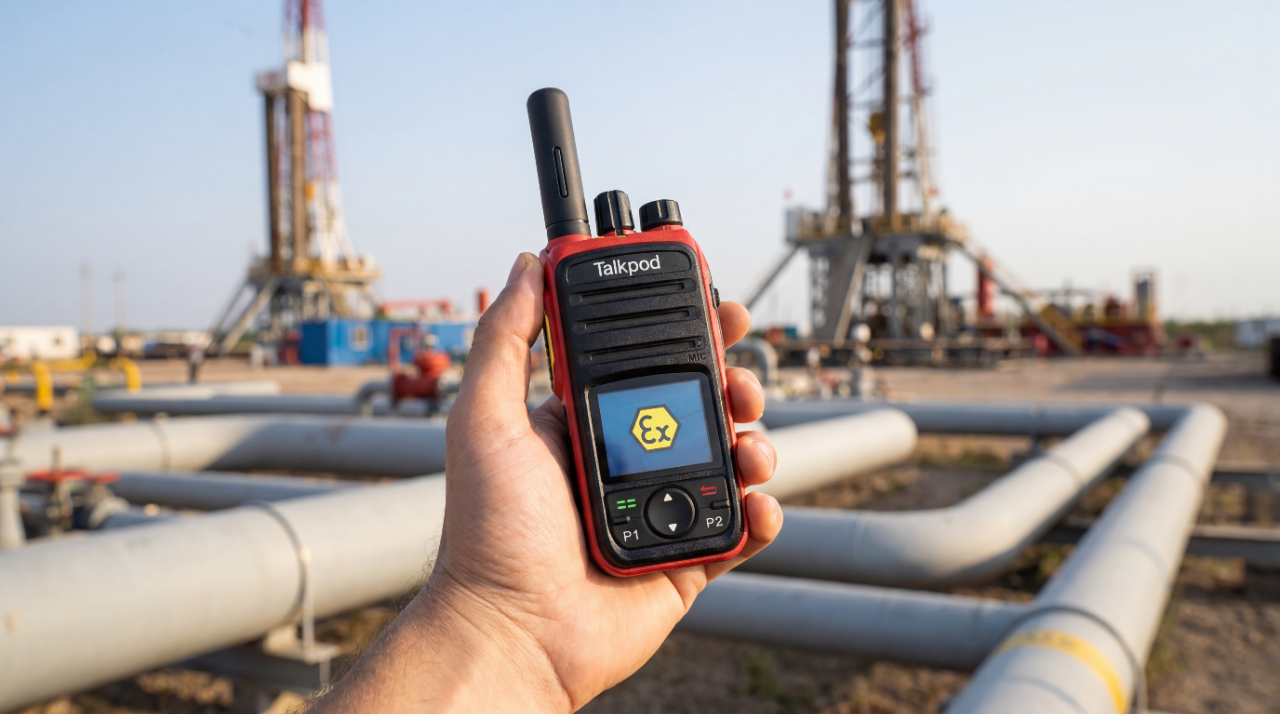
A natural gas field is rarely a single site.
Wellheads may sit in remote valleys or desert terrain. Pipeline valve stations can be separated by many kilometers. Processing facilities, maintenance teams and field inspectors may all operate within the same production system while remaining geographically far apart.
That distance creates a communication problem.
Traditional handheld radios are effective within their designed local coverage, but they become less practical when personnel travel beyond that area. At the same time, some parts of a gas field may be classified as hazardous because flammable gas can be released during normal or abnormal operations.
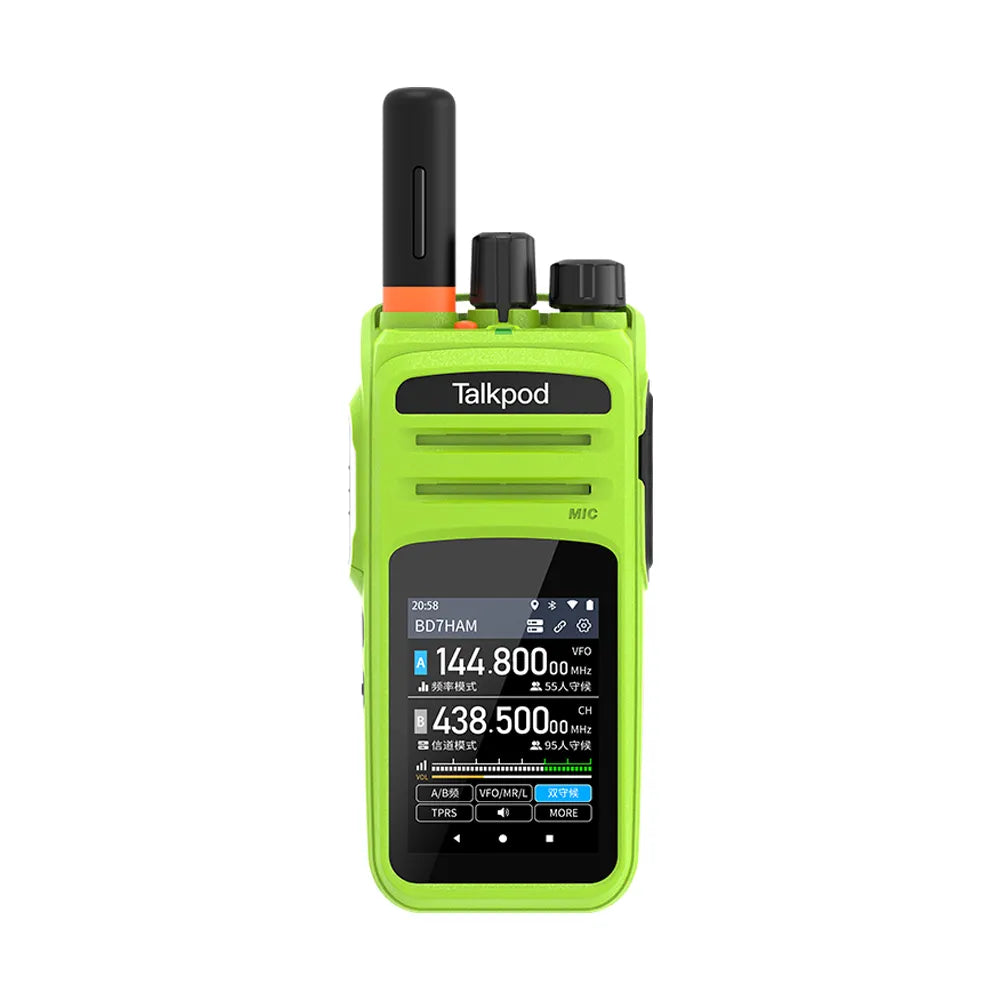
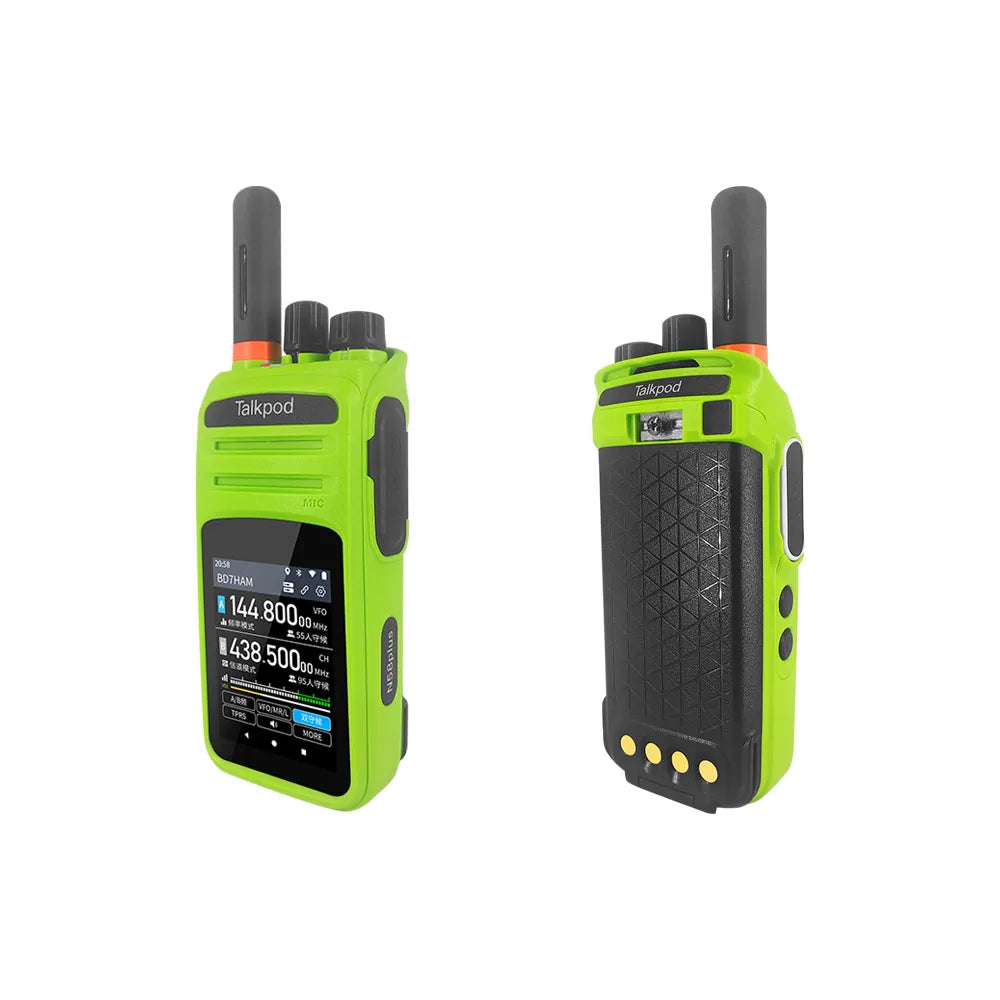
The Talkpod N56Ex explosion-protected public-network radio combines wide-area push-to-talk communication with functions such as positioning, managed groups and backend dispatch. Where compatible mobile-network service is available—and where the radio's exact hazardous-area certification matches the intended location—it can provide an additional communication layer between dispersed gas-field teams.
Extending communication along long pipeline routes
Pipeline inspection is one of the clearest examples of why gas-field communication becomes a geographical problem.
Transmission lines may extend for tens of kilometers, connecting well sites, valve stations and processing facilities. Inspection personnel can spend much of the day moving between isolated locations that are well beyond the practical range of conventional direct handheld communication.
The N56Ex uses compatible public mobile networks to carry push-to-talk traffic over much longer distances.
Where suitable network coverage exists, an inspector working at a remote valve station can communicate with a control or coordination team without relying on direct radio range to the base location.
The important limitation is the network itself.
Mountainous terrain, desert regions and remote pipeline corridors may contain weak or unavailable mobile coverage. The N56Ex therefore should not be described as completely independent of distance or terrain.
Its advantage is that communication range is no longer defined primarily by radio-to-radio distance. It is defined by the availability and quality of the supporting public network.
Operators should test actual pipeline routes and retain alternative communication methods for locations where public-network service is insufficient.
Hazardous-area certification still determines where it can be used
Wide-area communication does not remove the requirements associated with hazardous locations.
Natural gas facilities can include different hazardous zones around wellheads, separators, pressure-control equipment, valve installations and processing areas.
Before deployment, operators should verify the N56Ex certification marking against the classification of every intended location, including the applicable zone, gas group, temperature class and ambient operating range.
The source describes the N56Ex as using an intrinsically safe explosion-protection design. In practice, the exact certification and nameplate should determine whether it may legitimately be described as intrinsically safe for a particular location and jurisdiction.
Only approved batteries and accessories should be used, and charging, maintenance and battery replacement should follow both the manufacturer's instructions and site hazardous-area procedures.
Explosion protection does not make a leaking gas atmosphere safe.
It is intended to prevent the communication device from introducing an unacceptable ignition risk when used within the conditions defined by its certification.
Remote dispatch across dispersed field teams
Once personnel are spread across many kilometers, communication becomes a dispatch-management problem as well as a voice problem.
The N56Ex supports managed communication groups and nested group structures, allowing personnel to be organized by operating area, responsibility or task.
A field operator may remain within a normal work group, while a supervisor can coordinate several groups when maintenance, safety and logistical support need to work together.
This can be especially useful during abnormal conditions.
Instead of building communication manually after an incident begins, the organization can establish its group structure in advance and define which teams need to hear which information.
The result is not simply more communication.
It is a clearer communication structure across a geographically dispersed operation.
Positioning as a dispatch aid
The N56Ex also supports BeiDou positioning, giving authorized dispatch personnel an additional way to view the approximate location of field radios through the management platform.
In a large gas field, this can help a coordinator understand which equipped personnel are closest to a valve station, inspection point or reported abnormality.
The distinction is important: the system is locating the radio carrying the positioning receiver.
It is not independently tracking a worker, vehicle or pipeline asset if the device is no longer with that person or object.
Positioning performance can also vary with satellite visibility. Open outdoor areas may provide good results, while covered process structures, enclosed buildings or other obstructed locations can reduce accuracy or availability.
For this reason, location information is best treated as a dispatch aid rather than the sole basis for personnel accountability or emergency rescue decisions.
One-touch alerts need a defined response process
The N56Ex includes a prominent SOS control that can provide a fast way for personnel to send an alert to designated users or the dispatch platform.
That can be valuable when an inspector encounters a leak, abnormal pressure condition or another situation requiring assistance.
But the button itself does not create an emergency response system.
Operators should define who receives the SOS, how it is acknowledged, what information is displayed and what action follows.
Its availability also depends on device status, platform configuration and network connectivity.
The function should therefore complement established gas-field emergency procedures, fixed alarm systems, gas detection and other required safety systems rather than replace them.
Recording can support review—when properly governed
The source also describes backend communication recording.
Where platform configuration, organizational policy and applicable law permit it, authorized recording can help supervisors review operational communications after an event, support training or clarify the sequence of routine coordination.
That does not mean every conversation should automatically be recorded or broadly accessible.
Access permissions, retention periods and privacy requirements should be defined by the operator.
In industrial communication systems, recording is most useful when it is governed as part of the organization's information-management process rather than treated simply as another device feature.
Public-network communication needs a backup plan
A natural gas field may cover precisely the sort of terrain where public-network coverage is least predictable.
That makes resilience important.
The N56Ex can significantly extend communication between covered locations, but a public-network radio should not become the only communication method for safety-critical field operations.
Remote well sites and pipeline corridors may require other solutions depending on risk and infrastructure, including local professional radio systems, fixed communication equipment or satellite-based alternatives.
The appropriate combination depends on the field's geography, network coverage and emergency-response requirements.
A practical communications plan begins by mapping where each system works—and what happens when it does not.
[Image]
A wider communication layer for gas-field operations
The Talkpod N56Ex brings together two requirements that often meet in natural gas production: geographically dispersed work and hazardous operating areas.
Its public-network architecture can connect teams across long distances where suitable mobile coverage exists. Managed groups, BeiDou positioning, SOS alerts and backend dispatch provide additional tools for coordinating personnel across well sites, pipelines and processing facilities.
Its explosion-protected design addresses a different requirement entirely: whether the device is suitable for use in a classified hazardous location.
Both matter, but neither should be overstated.
The network does not guarantee coverage everywhere, and explosion protection does not eliminate the danger of a flammable atmosphere.
Used within its certified limits and as part of a broader communication and safety system, the N56Ex can provide a practical wide-area coordination layer for natural gas field operations—helping dispersed teams exchange information more quickly while working in environments where the communication device itself must also be carefully controlled.

Leave a comment
All comments are moderated before being published.
This site is protected by hCaptcha and the hCaptcha Privacy Policy and Terms of Service apply.