
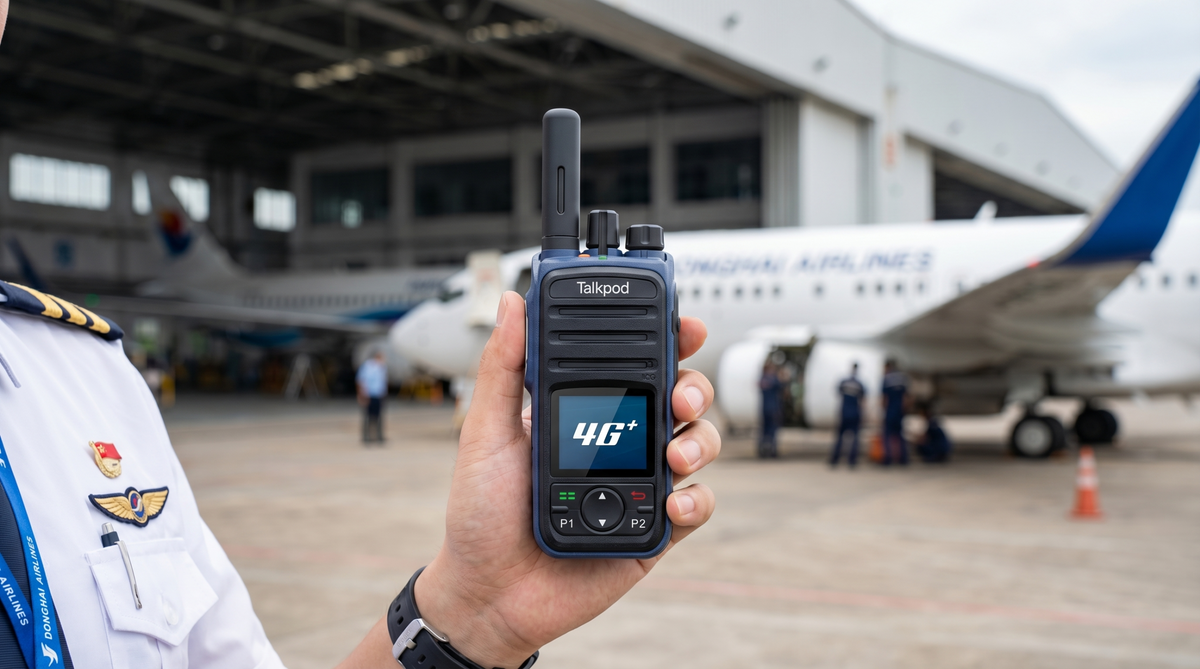
An airport is one workplace spread across many different environments.
Passenger-service teams may be working inside a multilevel terminal while colleagues are assisting travelers at remote stands hundreds of meters away. Cargo personnel operate in warehouse areas, support teams move between service buildings, and flight disruptions can require several departments to coordinate at the same time.
For China Southern Airlines' ground-service operation in Hainan, this creates a communication challenge that conventional local handheld radios do not always solve easily.
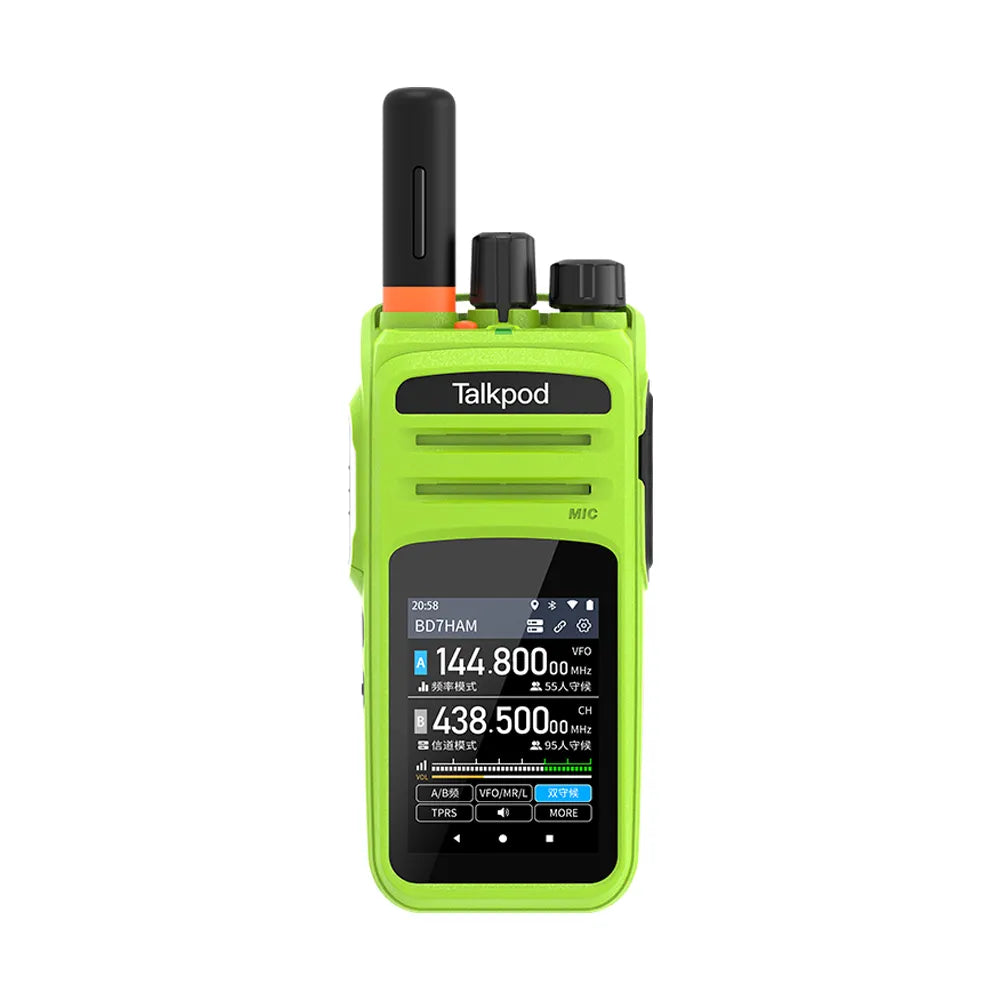
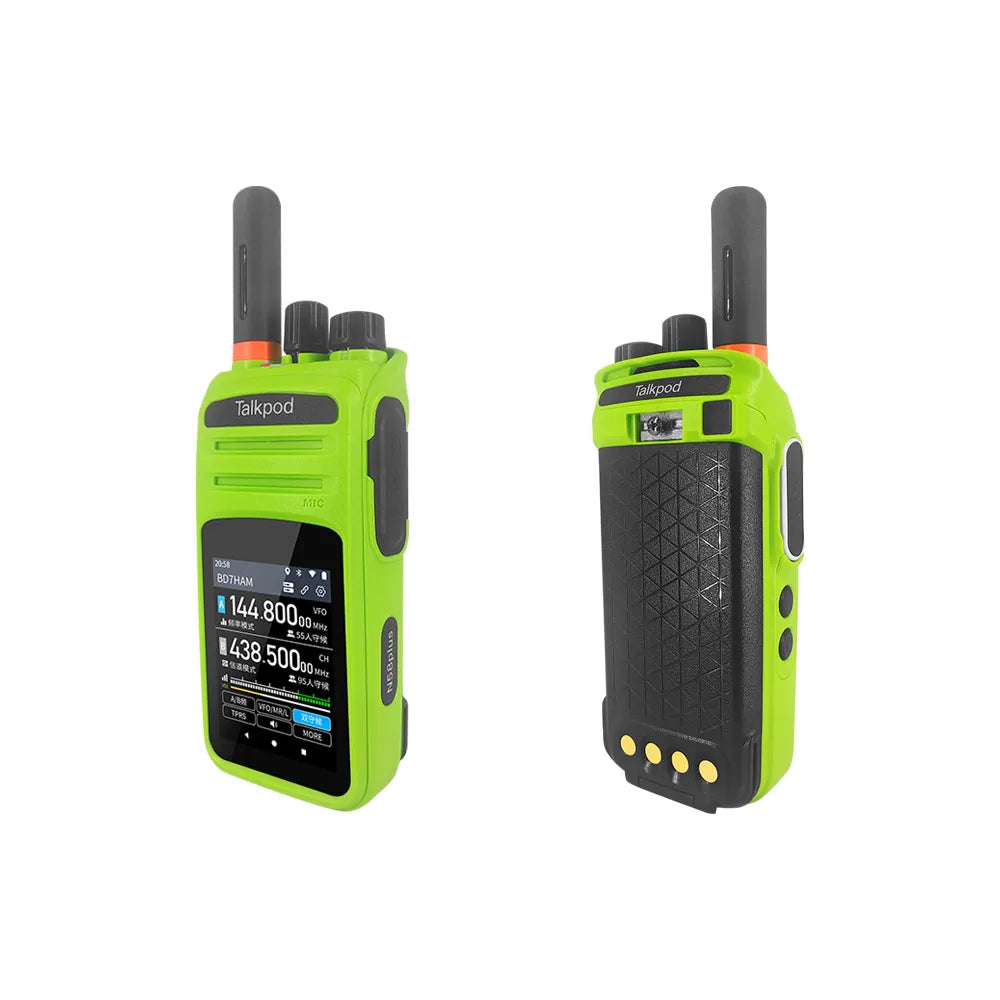
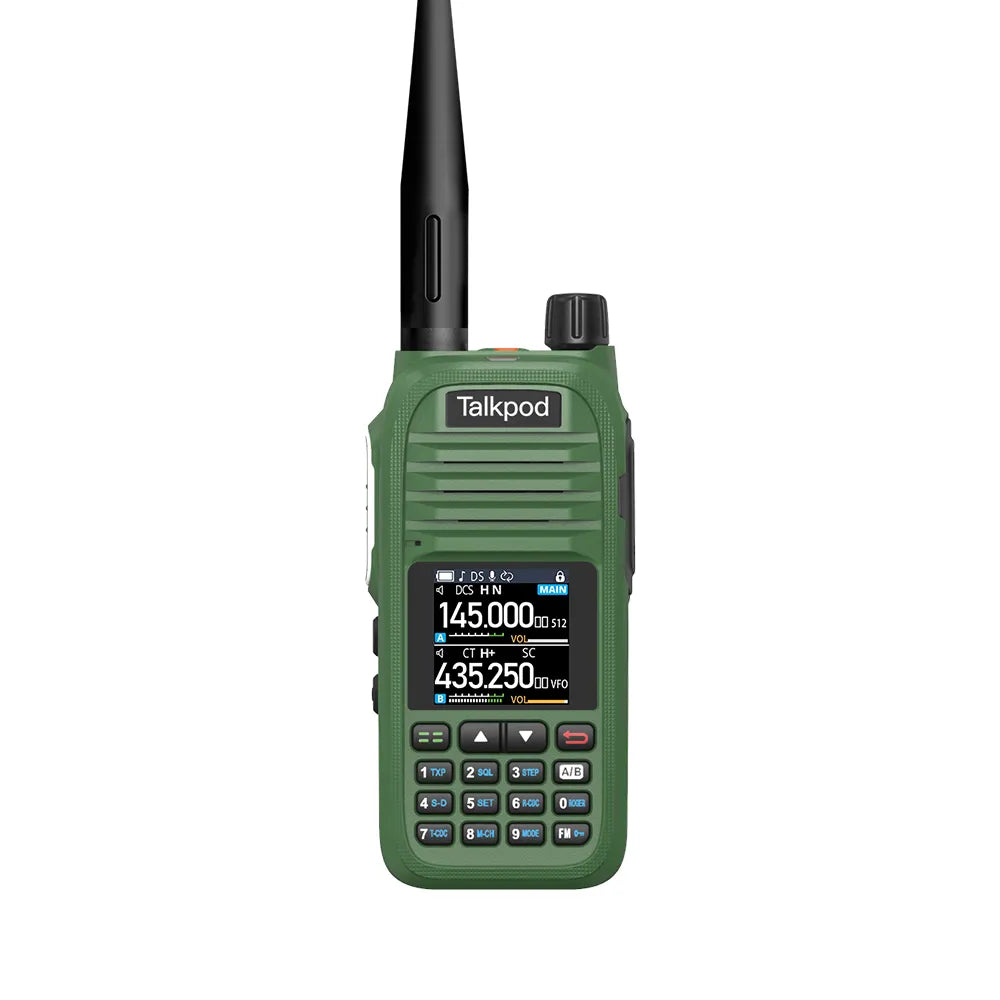
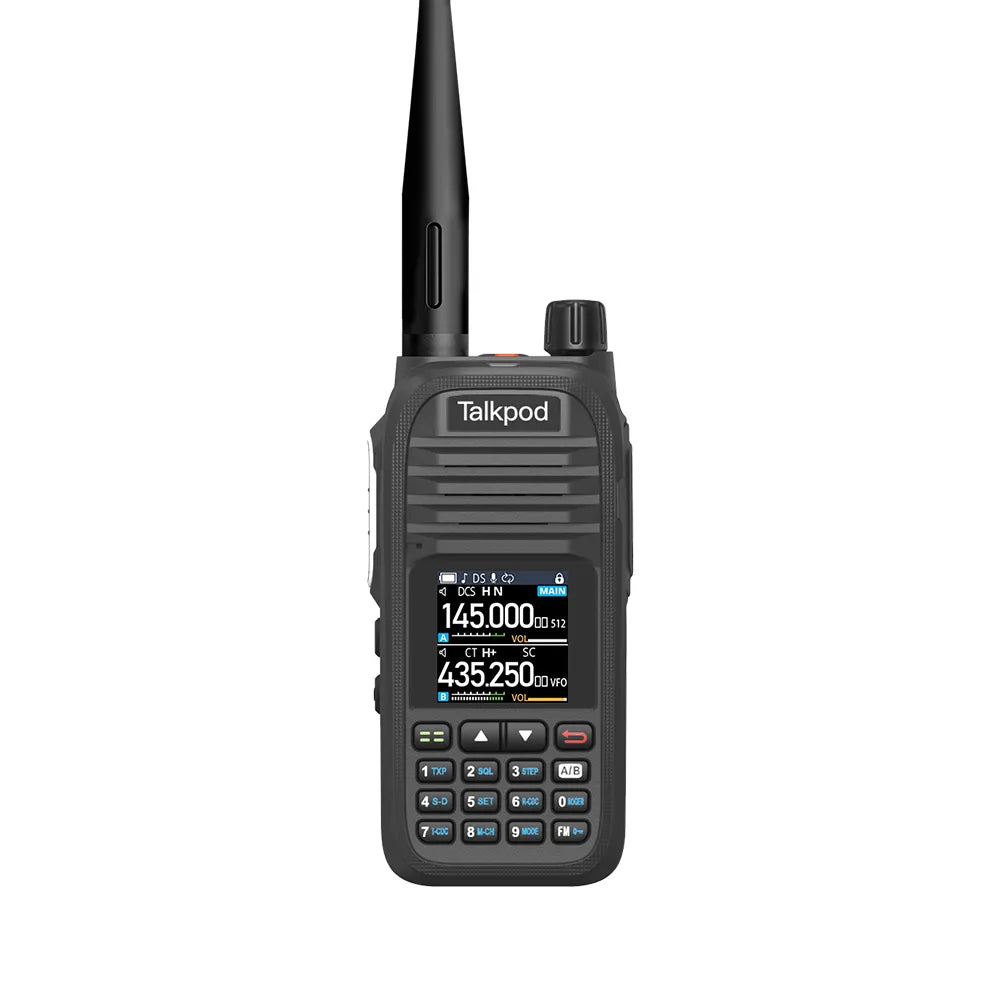
Terminal walls, metal structures and the physical distance between airport zones can all affect direct radio coverage. The Talkpod N56 public-network trunked radio uses compatible mobile networks to provide a wider-area push-to-talk layer, allowing appropriately configured teams to communicate across dispersed airport locations where suitable network service is available.
Connecting terminal teams with remote stands
Remote-stand operations depend heavily on timing.
Passengers may need to be guided from the terminal to buses, boarding may change at short notice, and ground-service personnel at the aircraft position need to remain coordinated with gate and terminal teams.
A conventional handheld radio can become less practical when users are separated by large terminal buildings or distant apron positions.
The N56 carries push-to-talk communication through compatible public mobile networks rather than relying entirely on direct radio range.
Where airport mobile coverage is available, staff at a remote stand can remain in the same managed communication environment as colleagues elsewhere in the terminal.
The useful advantage is broader operational reach.
It should not be described as guaranteed airport-wide coverage.
Airports still require real coverage testing
Airports are challenging radio environments.
Terminal structures, underground areas, baggage facilities, cargo warehouses, jet bridges and metal-roofed service buildings can all affect mobile-network performance.
An N56 that works well on an open apron may behave differently inside a basement corridor or enclosed cargo area.
For this reason, deployment should include testing in the places where personnel actually work.
Remote stands, boarding gates, baggage areas, cargo zones, staff corridors and support buildings should all be checked rather than assuming that a public network removes every coverage gap.
Where connectivity is weak, the airline or airport should maintain an appropriate alternative communication method.
Faster coordination when a flight is disrupted
A delayed or changed flight creates a chain of small operational tasks.
Gate staff need updated information. Passenger-service teams may need to redirect travelers. Ground staff may need to adjust boarding arrangements, while other departments prepare for the revised schedule.
The N56 allows these teams to exchange short operational updates without requiring repeated phone calls or physical trips between locations.
That can shorten the time between a change being identified and the appropriate staff receiving it.
The radio should not, however, become the authoritative source for flight status.
Official schedule changes, gate assignments, load information and other operational data should continue to come from the airline's approved operational and airport systems.
Push-to-talk helps people coordinate around that information.
It does not replace the systems that generate it.
Special-passenger assistance benefits from quicker handoffs
Passengers requiring additional assistance often move through several service points.
A traveler with reduced mobility may need coordination between check-in, the gate, ground transport and the aircraft position. Families, elderly passengers or other travelers may also require support that involves more than one team.
A managed radio group can make these handoffs faster.
Instead of relying on one employee to locate another physically, staff can notify the relevant service group and confirm that assistance is being arranged.
The communication should remain concise.
Personal or medical details should not be broadcast unnecessarily over a shared voice group. Sensitive passenger information should stay within the airline's approved passenger-service systems wherever possible.
The radio's role is to coordinate the task, not carry the passenger's complete personal record.
Group structures can reflect airport roles
A large ground-service operation produces too much communication for one common group to be useful.
Gate personnel, remote-stand teams, cargo staff, passenger assistance and supervisors have different responsibilities.
The N56 platform can be configured with separate communication groups around those functions.
This allows routine traffic to remain more focused while authorized supervisors retain access to the groups required for broader coordination.
For the Hainan deployment, the source describes customized dispatch groups for cabin-service and ground-service personnel.
In practice, the most useful configuration is one that mirrors the airline's real operating structure.
The goal is not to let everyone hear everything.
It is to make sure the right team receives the relevant message quickly.
Centralized provisioning can simplify fleet deployment
Public-network radios are managed differently from conventional channel-programmed handhelds.
The source describes the N56 deployment as supporting rapid account-based network configuration without requiring each user to carry out traditional frequency programming.
That can simplify large fleet rollouts.
Once a device is associated with the appropriate platform account and configuration, predefined contacts and groups can be delivered through the management system according to the deployment setup.
This reduces repetitive manual configuration and makes later changes easier to administer centrally.
It should not be interpreted as literally “zero configuration.”
SIM or network access, account authorization, platform settings and device provisioning still need to be completed correctly before the radio can join the operational system.
Backend management becomes important at scale
When dozens or hundreds of radios are in service, the handheld devices are only one part of the system.
Account management, group permissions and data synchronization become equally important.
The source describes ongoing account maintenance and backend data-support services for the deployment.
That can help the operator keep user structures aligned with changing shifts, roles and service requirements.
When an employee moves to another team or no longer needs access, the corresponding account permissions should be updated rather than relying solely on possession of the physical radio.
Central management is most useful when it reduces administrative drift over time.
SOS is an additional alert path, not the airport emergency system
The N56 includes a prominent SOS control that can provide a rapid way to initiate an alert according to the configured platform workflow.
That can be useful if a frontline employee encounters a situation requiring immediate assistance.
But the button itself should not be treated as the airport's primary emergency system.
Airports and airlines already operate formal procedures for medical events, security incidents, apron emergencies and operational disruptions.
The SOS function should fit into those procedures, with a defined recipient, acknowledgement process and response path.
A quick alert is useful only when everyone knows what happens after it is sent.
Public-network radio should remain separate from safety-critical aviation communication
The N56 can support airline ground-service coordination, but its role needs to remain clearly defined.
It should not replace air traffic control communications, aircraft operational radios, airport movement-control systems or any dedicated safety-critical communication specified by the airline, airport or aviation authority.
The same applies to apron vehicle movements and aircraft servicing.
Personnel should continue to follow approved ramp procedures, visual signals, headset communication and other designated systems where required.
Public-network push-to-talk is best used for the surrounding service workflow: passenger assistance, team coordination, resource requests and general operational communication.
Making airport service easier to coordinate
The communication challenge in airport ground service is rarely about one dramatic message.
It is about hundreds of small handoffs that need to happen on time.
A remote-stand team needs updated boarding information. Passenger-service staff need assistance at another location. A delay requires several departments to adjust their work simultaneously.
Where suitable mobile-network coverage exists, the Talkpod N56 can help connect those dispersed teams through a common managed communication platform.
Group-based communication, centralized account management and wide-area push-to-talk can reduce unnecessary movement and make operational updates easier to share.
That does not make the N56 an aviation-control system, nor does it guarantee connectivity in every corner of an airport.
Its role is more practical: helping the people around the flight stay connected so that ground service can move more smoothly while the formal aviation systems continue to govern the operation itself.


Leave a comment
All comments are moderated before being published.
This site is protected by hCaptcha and the hCaptcha Privacy Policy and Terms of Service apply.