
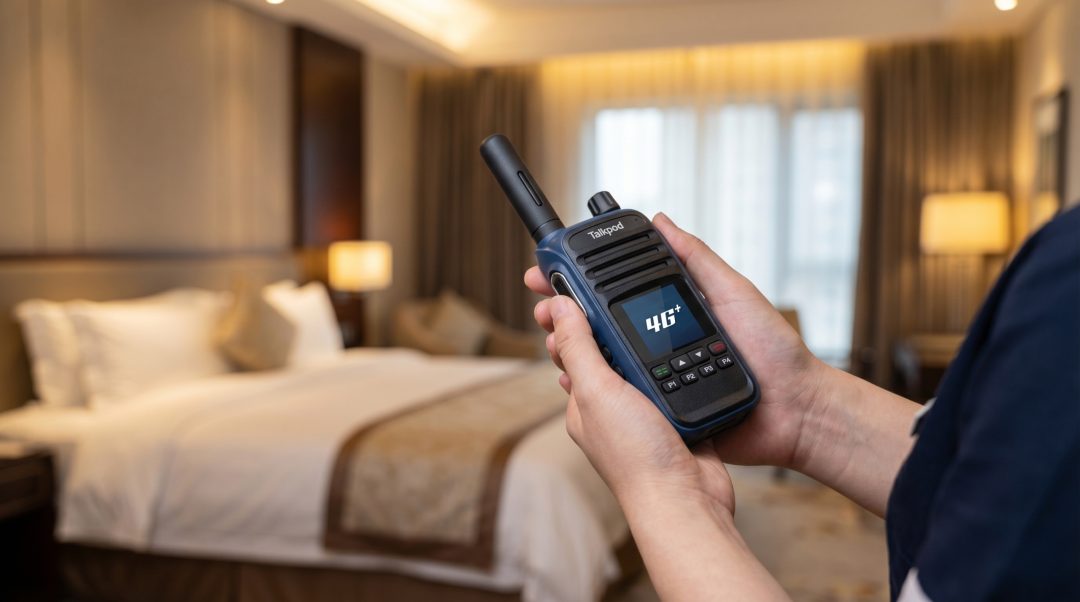
A hotel runs on dozens of small communications that guests rarely notice.
Housekeeping teams move between guest floors. Engineering staff respond to equipment faults. Security personnel cover entrances, public areas and underground parking, while managers coordinate all of these functions during periods of high occupancy.
At JI Hotel, that means employees can be separated by several floors, reinforced walls and basement structures at the same time.
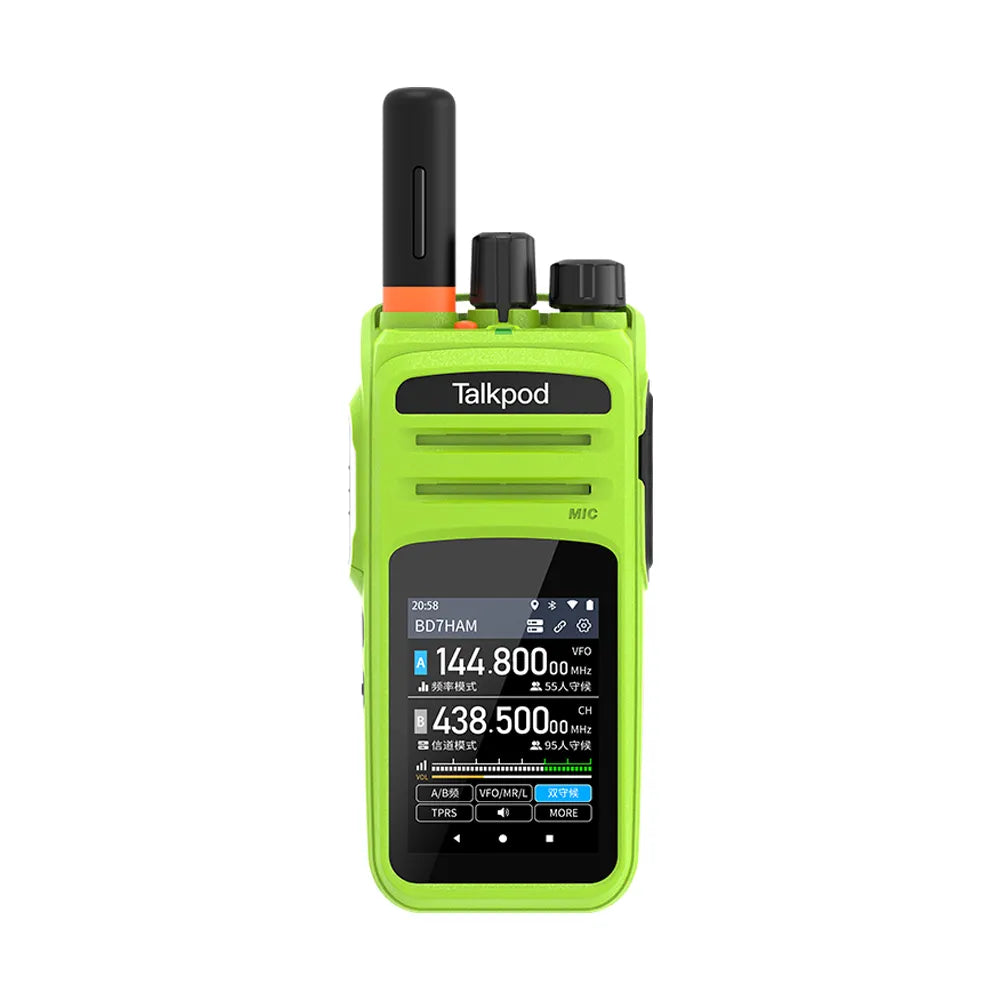
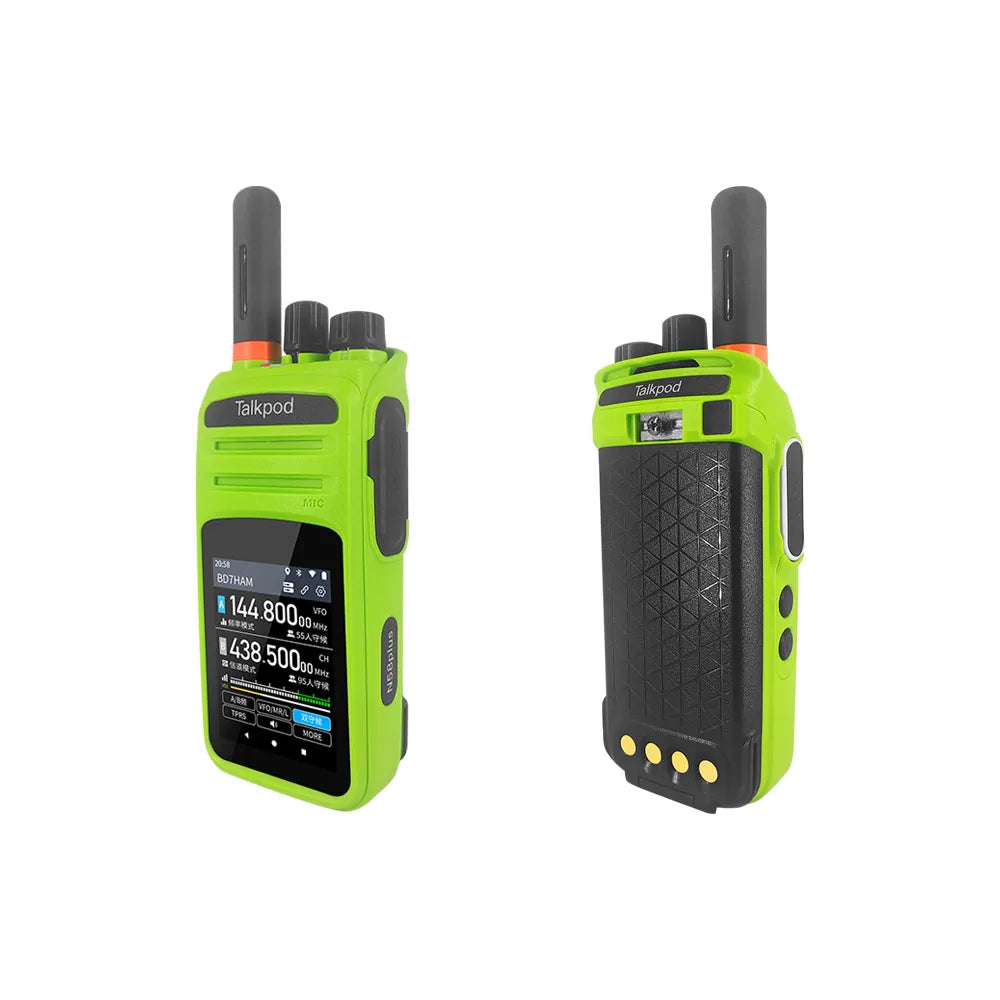
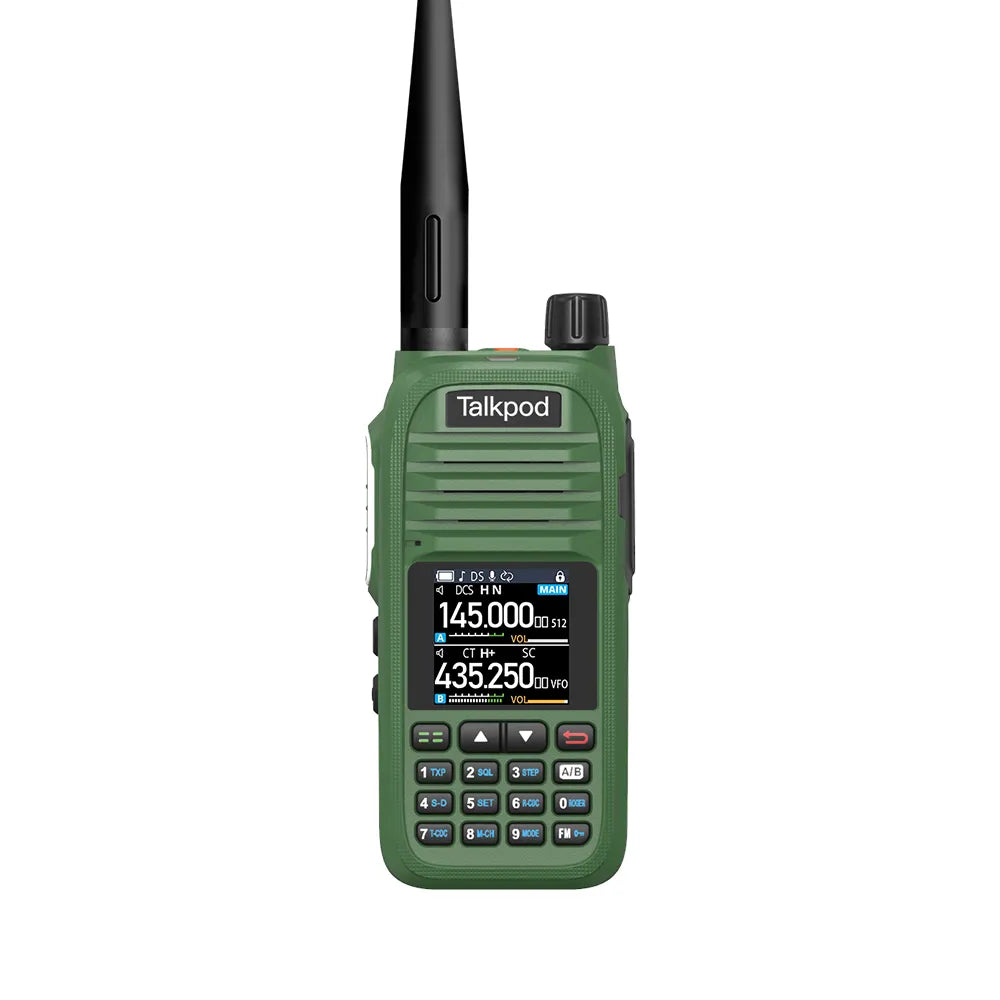
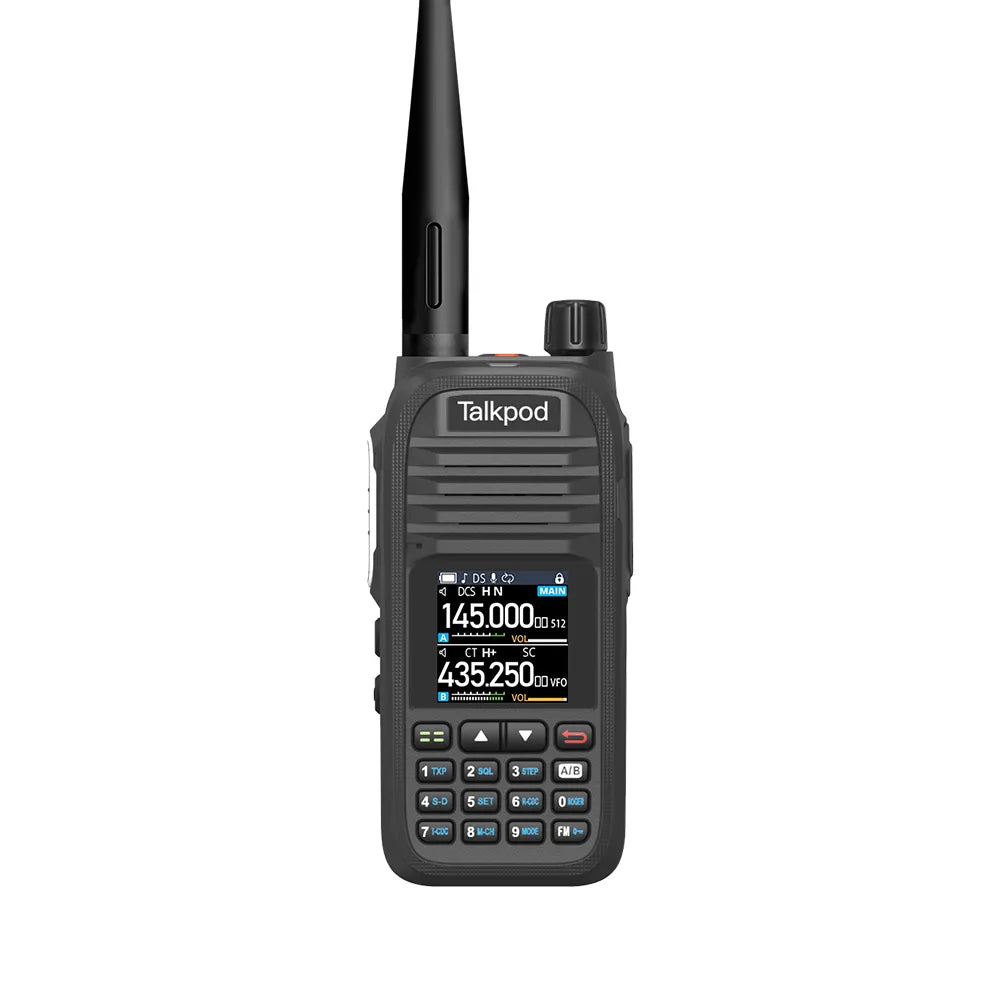
The Talkpod N37 public-network trunked radio provides a wider-area push-to-talk layer using compatible mobile networks. With a Chinese-language color display, configurable shortcut keys, a lightweight handheld design and centralized backend management, it can help hotel teams coordinate across different parts of the property without depending entirely on the direct range of conventional handheld radios.
Multi-floor hotels create uneven communication conditions
A hotel building contains many obstacles to local radio propagation.
Concrete floors, elevator shafts, service rooms, underground parking and fire-rated walls can all weaken direct handheld-radio signals.
A conventional radio may work reliably on one floor but become less predictable after a user moves several levels away or enters the basement.
The N37 approaches the problem through public-network communication.
Instead of requiring every user to remain within the same direct RF coverage area, the radio carries push-to-talk traffic through compatible mobile networks.
Where suitable service is available, staff working in guest rooms, public areas and parking facilities can remain within the same managed communication environment.
This broadens operational reach.
It should not be described as guaranteeing coverage in every location.
Underground garages still need coverage testing
Public-network communication does not remove the physical limitations of the underlying cellular network.
Underground parking areas, enclosed equipment rooms and heavily reinforced sections of a hotel can still have weak or inconsistent reception.
For that reason, the actual property should be tested before deployment is considered complete.
Guest corridors, lift lobbies, housekeeping areas, engineering rooms, front desk, public spaces and each underground parking level should all be checked.
If a weak area remains, the hotel can determine whether a different communication method or network improvement is needed.
A realistic communication plan identifies those weak points rather than assuming that a public-network radio automatically removes them.
Faster coordination during peak check-in periods
Hotel operations become more demanding when many guests arrive at once.
A large tour group may create simultaneous pressure on the front desk, housekeeping, luggage handling and security.
Some rooms may still be undergoing final cleaning. Additional amenities may be required, while engineering could be responding to an unrelated equipment issue elsewhere in the property.
The N37 gives the duty manager a direct push-to-talk path to the relevant teams.
Instead of making several separate phone calls or walking between floors, the manager can pass short operational updates to housekeeping, engineering or security while remaining at the current location.
That can shorten the time between identifying a problem and getting the appropriate team involved.
Housekeeping status becomes easier to coordinate
Room readiness is one of the most frequent internal communications in a hotel.
Housekeeping personnel may need to confirm that a room has been cleaned, report that additional time is required or request replacement supplies.
With the N37, those updates can be communicated from the floor rather than waiting for staff to return to a housekeeping office or front desk.
For the manager, this creates a faster operational picture during high-occupancy periods.
The radio does not replace the hotel's room-management or property-management system.
Official room status should still remain in the approved hotel system.
Push-to-talk simply helps employees coordinate around that workflow more quickly.
Groups can reflect actual hotel responsibilities
One shared communication group for the entire hotel can quickly become noisy.
Housekeeping does not need to hear every engineering conversation. Security personnel do not need routine room-cleaning updates.
The N37 platform can be configured with separate communication groups according to job function.
Housekeeping, engineering, security and management can each have a clearer routine communication path, while authorized managers can coordinate between teams when a guest issue requires more than one department.
For the JI Hotel deployment, the source describes customized communication groups covering the hotel's different operational roles.
The objective is not to create as many groups as possible.
It is to make sure the right employees hear the right messages.
Shortcut keys reduce unnecessary operating steps
Hotel employees frequently use radios while carrying linen, tools, paperwork or guest-service equipment.
Complex menu navigation can become an unnecessary distraction.
The N37 supports configurable shortcut keys that can be assigned to frequently used supported functions.
That allows the radio to be programmed around the hotel's normal workflow.
A duty manager may need quick access to a particular work group, while another role may use a different shortcut more often.
Combined with the Chinese-language color display, this can make routine operation more intuitive for frontline employees who are not radio specialists.
The most effective configuration is usually simple: a small number of useful shortcuts that staff can remember without thinking about them.
A lightweight radio is more likely to remain with the user
Portability matters when employees carry a radio for an entire shift.
The source describes the N37 as using a lightweight, ergonomically shaped matte body intended for frequent handheld use.
That can be particularly useful for housekeeping staff, security personnel and managers who move continuously through the hotel.
A radio only improves coordination if employees actually keep it with them.
In hospitality, comfortable everyday use is therefore not merely a design detail.
It is part of operational reliability.
Backend dispatch can simplify fleet administration
Public-network radios can be managed centrally through a backend platform.
For a chain hotel, this can reduce the administrative burden of maintaining multiple devices across several departments.
The source describes Talkpod as helping complete device onboarding, configuring communication groups and providing access to the backend dispatch platform.
That gives authorized hotel managers a central point for managing users, accounts and communication structures according to the actual deployment.
Changes can be made more consistently than reprogramming each radio individually.
This should not be interpreted as unlimited real-time monitoring of hotel operations.
The backend provides management and dispatch functions within the capabilities of the configured platform.
Its role is to make the communication fleet easier to administer.
“No frequency programming” still requires provisioning
The source describes the N37 devices as being brought online without traditional frequency programming.
That reflects an important difference between public-network radios and conventional handheld systems.
Once network access, the device account and platform configuration are established, groups and contacts can be managed centrally rather than requiring every unit to be manually programmed with a conventional radio-frequency channel plan.
That can simplify deployment.
But it is not literally zero configuration.
Network access, account activation, group assignment and device provisioning still need to be completed correctly before the radio becomes part of the hotel's operational system.
The advantage is centralized setup—not the absence of setup.
Guest complaints benefit from quicker handoffs
A guest complaint often requires more than one department.
A noise issue may involve security. A faulty air conditioner needs engineering. A room-service concern may require both housekeeping and the front desk.
The N37 can shorten the handoff between these teams.
A manager receiving the complaint can immediately contact the appropriate group and confirm that someone is responding.
That reduces the need to locate employees individually.
The radio does not resolve the complaint by itself.
Its value is reducing the time between the guest reporting a problem and the responsible team beginning to address it.
Guest information should remain outside general radio traffic
Hotels routinely handle personal information.
Room numbers, names, payment details and other sensitive guest information should not automatically be broadcast over a shared communication group.
In many cases, a short message such as “engineering assistance required on the fifth floor” is sufficient.
Detailed guest records should remain within the hotel's authorized property-management or service systems whenever possible.
The radio coordinates staff.
The hotel system should continue to hold the guest information.
Public-network communication needs a fallback
The N37 depends on both the mobile network and the push-to-talk platform.
If either becomes temporarily unavailable, communication may be interrupted.
Hotels should therefore define a fallback method, especially for underground or otherwise weak-signal areas already identified during coverage testing.
For ordinary service, that may involve phones or another available communication method.
For security or emergency-related functions, the hotel should maintain procedures appropriate to the importance of the task.
A resilient communication plan assumes that no single technology will work perfectly at every moment.
A more structured communication layer for standardized hotel operations
The communication challenge at JI Hotel comes from the number of small tasks happening at the same time.
Rooms need to be cleaned. Large groups arrive. Equipment occasionally fails. Guest requests need to move between departments quickly.
Where suitable mobile-network coverage exists, the Talkpod N37 can provide a common push-to-talk layer across those teams.
The Chinese-language color display and shortcut controls make daily operation easier for frontline staff, while centralized group and account management can support the standardized operating approach expected from a chain hotel.
Its value should not be expressed as perfect building coverage or literally unlimited communication.
A more useful measure is simpler: when a guest needs something, how quickly can the employee who receives the request reach the person who can solve it?
That is where a well-configured hotel radio system earns its place.

Leave a comment
All comments are moderated before being published.
This site is protected by hCaptcha and the hCaptcha Privacy Policy and Terms of Service apply.