
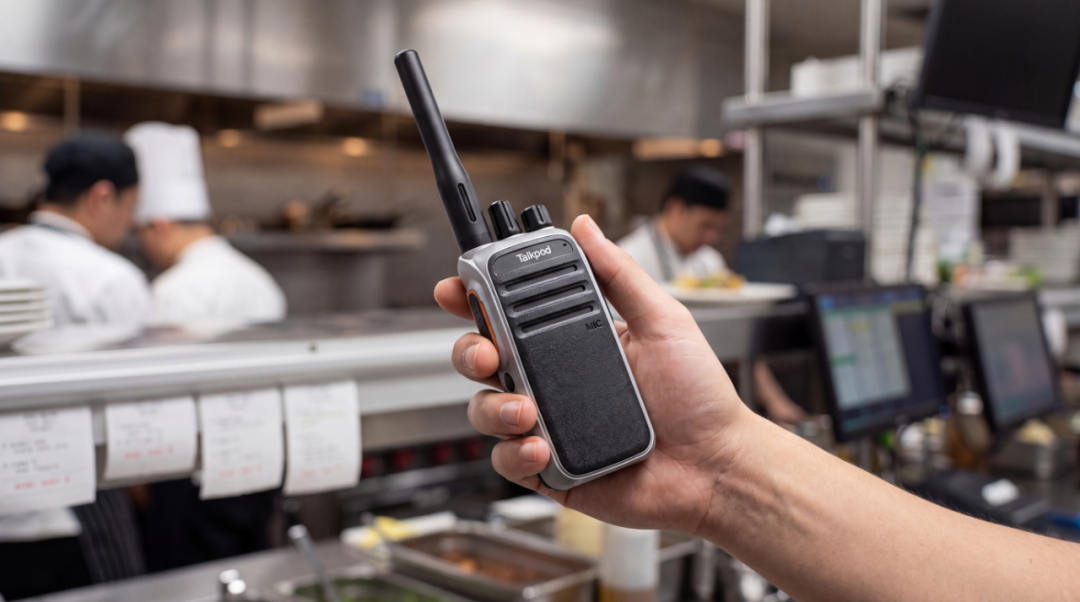
A commercial kitchen runs on timing.
Prep staff need to know what is running low. Cooking stations need to coordinate with plating and pass teams. Front-of-house staff may need an update on a delayed dish, while supervisors are simultaneously dealing with equipment, staffing and safety issues.
When communication relies only on shouting across the kitchen, information can easily be missed in the noise.
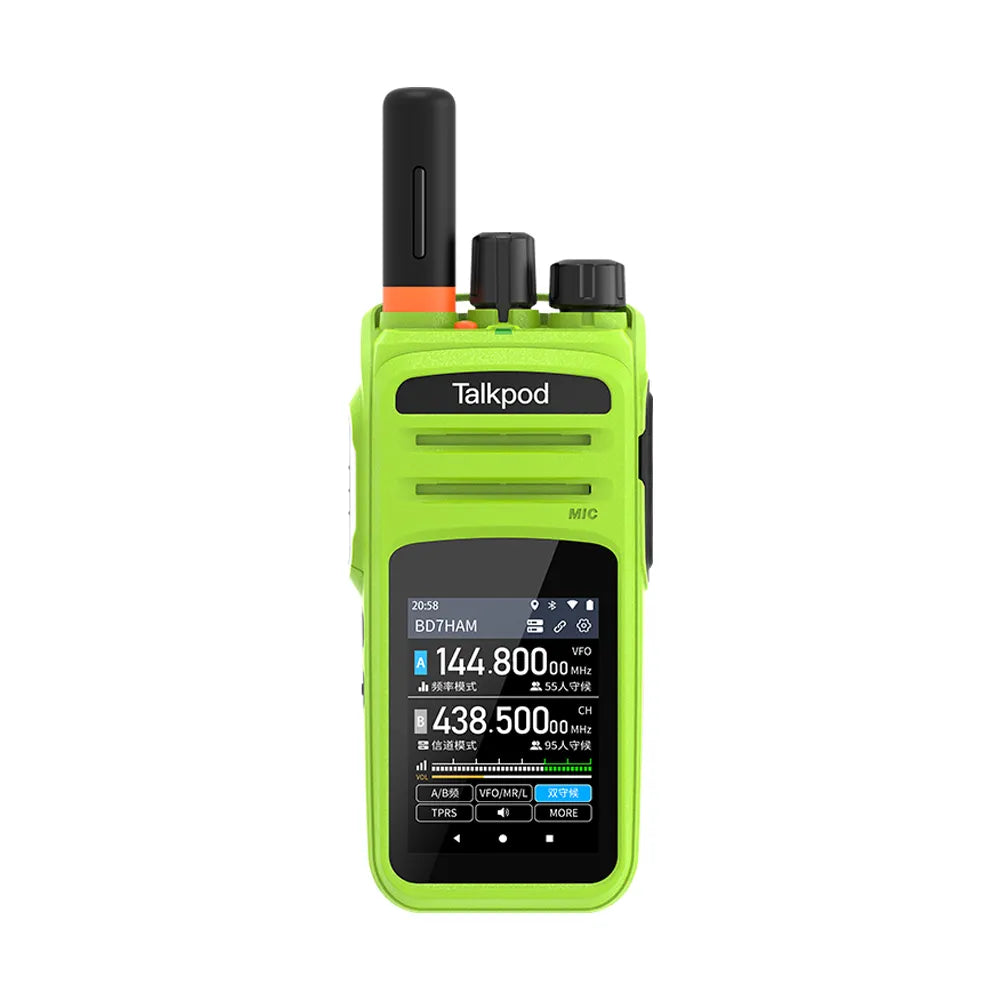
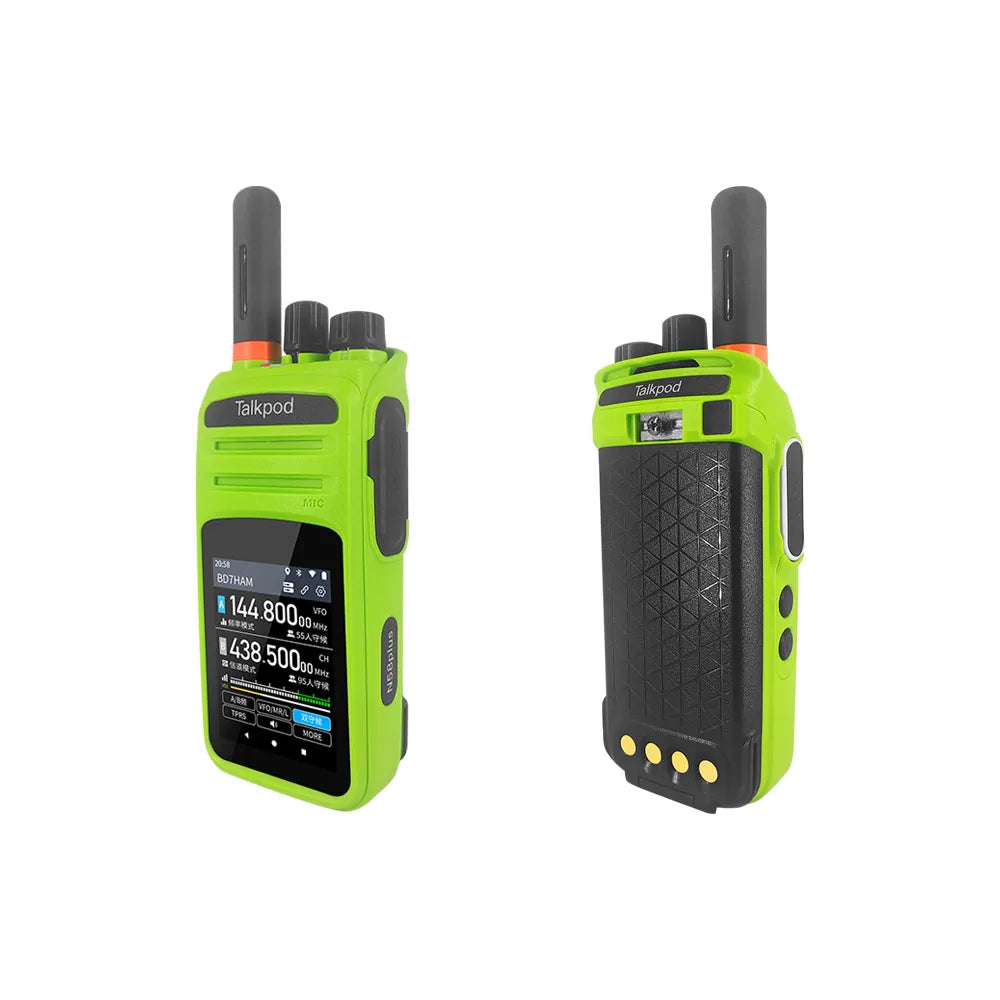
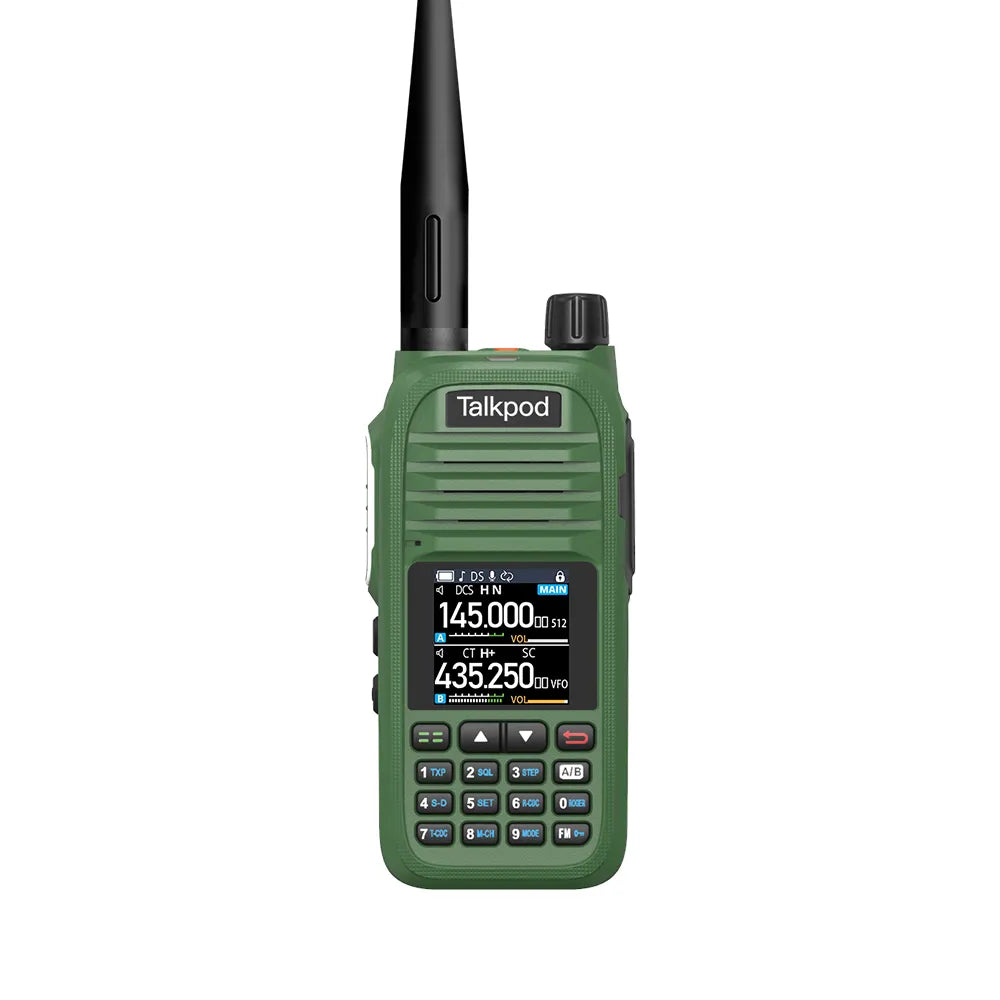
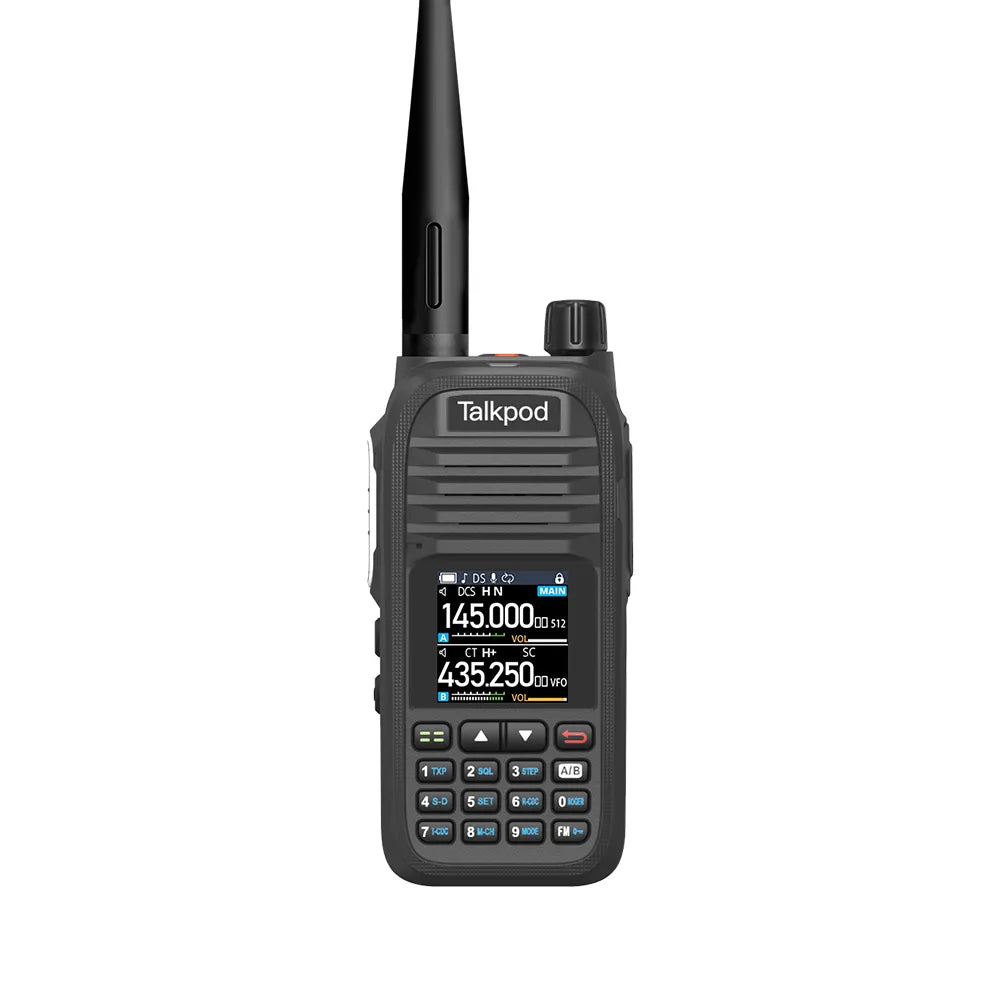
The Talkpod B30 analog radio provides a local push-to-talk layer for these short operational exchanges, combining an emergency-alert function, selectable channels, busy-channel controls, high-power operation and a compact handheld design intended for frequent daily use.
A kitchen radio needs to cut through operational noise
Commercial kitchens are acoustically demanding.
Extraction fans, refrigeration equipment, steam, cookware and staff movement can all make spoken instructions harder to hear.
A handheld radio gives teams a direct communication path without requiring employees to leave their stations.
A prep team can report that an ingredient is running low. The pass can check the status of a dish. A supervisor can contact another work area without shouting through several rooms.
The benefit is not replacing the kitchen's order-management process.
It is reducing the number of small verbal handoffs that depend on one person being close enough to hear another.
One-button alerts can provide an additional way to request help
The source describes the B30 as supporting a dedicated side-key emergency alert.
When configured appropriately, activating the alert can send an emergency indication to other compatible radios on the configured channel or system.
That can be useful in a kitchen where a worker may need assistance after a slip, burn or other unexpected event.
The source also describes the local radio as indicating the alert through its LED rather than producing an additional loud local alarm, while other receiving radios can provide an audible notification.
This can give supervisors and nearby staff another way to recognize that assistance is required.
It should not, however, be treated as an automatic emergency-response system.
Kitchen safety systems remain primary
A radio alert does not replace established emergency procedures.
Commercial kitchens should continue to rely on appropriate fire detection, suppression equipment, first-aid procedures, emergency exits and staff training.
If equipment catches fire, a worker suffers a serious burn or another significant incident occurs, the response should follow the restaurant's formal safety process.
The radio can help employees tell one another that something has happened.
It does not determine the correct medical or fire response.
That distinction is important in an environment containing hot oil, open heat sources and powered equipment.
Metal equipment makes radio coverage less predictable
Commercial kitchens contain many materials that affect radio propagation.
Stainless-steel refrigerators, ovens, steamers, shelving, extraction ducts and structural walls can reflect or attenuate RF signals.
The source describes the B30 as using a longer, loaded antenna together with transmit power of up to 8 W.
Those characteristics can support stronger local radio performance in some environments.
But they should not be described as allowing signals to pass effortlessly through every metal obstacle.
A radio link that works across an open preparation area may behave differently behind several refrigerators or through a reinforced wall.
The most reliable approach is to test the actual kitchen.
Coverage should follow the workflow
Radio testing should include the locations where communication matters most.
That may include the cooking line, preparation area, dishwashing area, walk-in or storage approaches, pass, service corridor and connection to the front of house.
If a particular area produces weak reception, the operator can adjust radio placement, user positions or the wider communication plan.
High transmit power can help in some situations.
It cannot overcome every building or equipment obstacle.
A commercial kitchen should therefore be treated as an RF environment to measure rather than a space that can be assumed to have uniform coverage.
Sixteen channels give operators room to organize traffic
The B30 provides 16 selectable channels.
For a smaller restaurant, one common operational channel may be enough.
A larger operation may choose to separate particular functions if radio traffic becomes too busy.
For example, kitchen coordination may use one channel while another is reserved for a different team or operating area.
The exact plan should remain simple.
Giving every station its own channel can make coordination harder if employees constantly need to switch between them.
The value of 16 channels is flexibility.
It does not mean that all 16 should necessarily be used.
Different channels do not automatically mean complete isolation
Separate programmed channels can reduce unrelated traffic, but they should not be described as physically isolated communication networks.
Actual separation depends on the assigned frequencies and signaling configuration.
If channels are poorly coordinated, outside users or neighboring businesses may still create interference.
Likewise, privacy tones can help users avoid hearing unrelated transmissions, but they do not encrypt analog voice.
A sensible channel plan should therefore be based on the permitted frequencies and the RF environment around the restaurant.
Busy-channel controls can reduce accidental talk-over
The source describes the B30 as supporting busy-channel and carrier-related lockout functions.
These controls can prevent a radio from transmitting when the configured channel is already in use.
That can reduce one common form of accidental talk-over.
If one employee is already speaking, another radio can be prevented from immediately transmitting over the same occupied channel, depending on the programmed setting.
This can make shared-channel operation more orderly.
It does not guarantee that every instruction will be heard correctly.
Users still need basic radio discipline: short messages, clear acknowledgements and a consistent vocabulary.
Radio communication should support—not replace—the order system
A kitchen radio can make immediate coordination faster, but it should not become the primary record of customer orders.
Order details, modifiers, allergies and table information should remain in the restaurant's approved POS or kitchen-display system.
The radio is better suited to short operational updates.
For example, staff can report that a station needs assistance or that a dish is temporarily delayed.
Detailed allergy instructions should not depend solely on a spoken radio message that can be misunderstood or missed.
For food-safety-critical information, the formal ordering and kitchen workflow remains the authoritative system.
A compact radio is easier to wear during a long shift
Kitchen staff move continuously.
They turn, bend, carry trays and work in narrow spaces where bulky equipment can become inconvenient.
The source lists the B30 at approximately 210 g with its standard battery and about 28 mm thick.
That makes it relatively compact for continuous belt-mounted use.
The textured body and belt clip can help staff keep the radio accessible while moving between stations.
The practical advantage is straightforward.
A radio that is comfortable enough to remain attached to the user is more useful than one that gets left on a counter.
Heat, grease and cleaning products still require care
A kitchen is also a difficult environment for electronics.
Steam, grease, water, cleaning agents and high-temperature surfaces can all expose equipment to conditions beyond ordinary office use.
Unless a documented ingress-protection or chemical-resistance rating specifically supports those conditions, the B30 should not be treated as waterproof, grease-proof or resistant to kitchen chemicals.
Radios should be kept away from direct heat sources and open flames.
Cleaning should follow the manufacturer's instructions, particularly where equipment is used near food-preparation areas.
Good hygiene and equipment protection need to be considered together.
Simple communication usually works best
The most effective kitchen radio system is rarely the most complicated.
A small number of clearly assigned channels, short messages and agreed terminology are generally more useful than giving staff a large number of settings to remember.
Employees should know who responds to an emergency alert, which channel is used for routine kitchen coordination and what to do if the radio link becomes unreliable.
Those procedures matter just as much as transmit power or antenna design.
Reducing the small delays that slow a kitchen down
The Talkpod B30 can provide a practical communication layer between prep, cooking, plating, pass and support personnel.
Its emergency-alert function can provide an additional way to request assistance. Sixteen channels provide room for a structured radio plan, while busy-channel controls can reduce accidental overlapping transmissions.
The source's high-power configuration and antenna design may also support communication across challenging kitchen layouts, although actual coverage should always be verified on site.
The benefit should not be expressed as eliminating every communication blind spot or preventing every wrong order.
A more realistic goal is reducing the small delays between one station identifying a problem and another station responding to it.
In a busy kitchen, those seconds accumulate quickly.


Leave a comment
All comments are moderated before being published.
This site is protected by hCaptcha and the hCaptcha Privacy Policy and Terms of Service apply.