
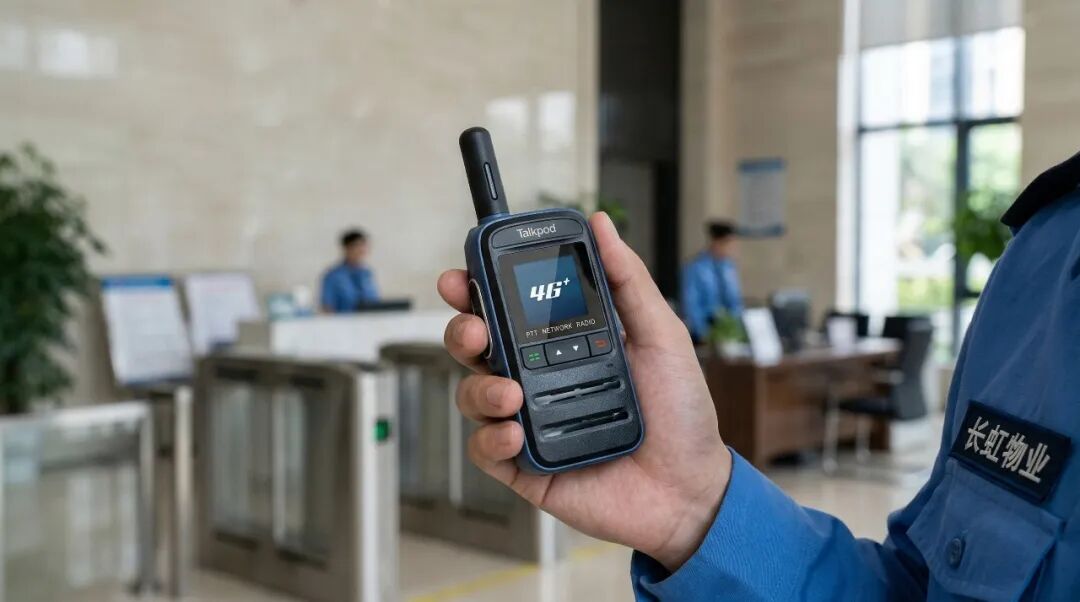
Large commercial-property operations are rarely contained within one building.
Security personnel may be patrolling entrances and surrounding retail streets while engineering staff work in plant rooms, customer-service teams handle tenant requests, and managers move between several office towers and underground parking areas.
At properties managed by Shenzhen Changhong Property, this dispersed operating model creates a communication challenge. Conventional handheld radios can become less reliable when users are separated by multiple buildings, reinforced concrete structures and basement levels.
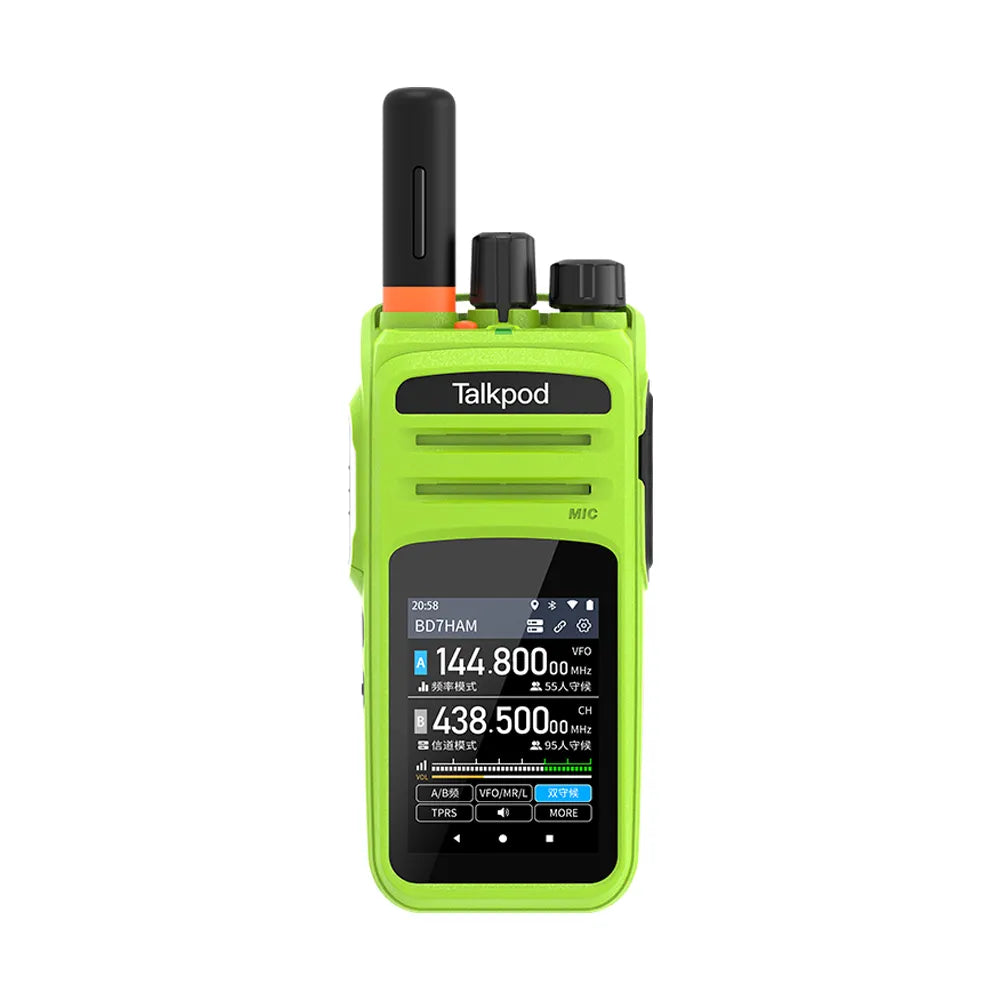
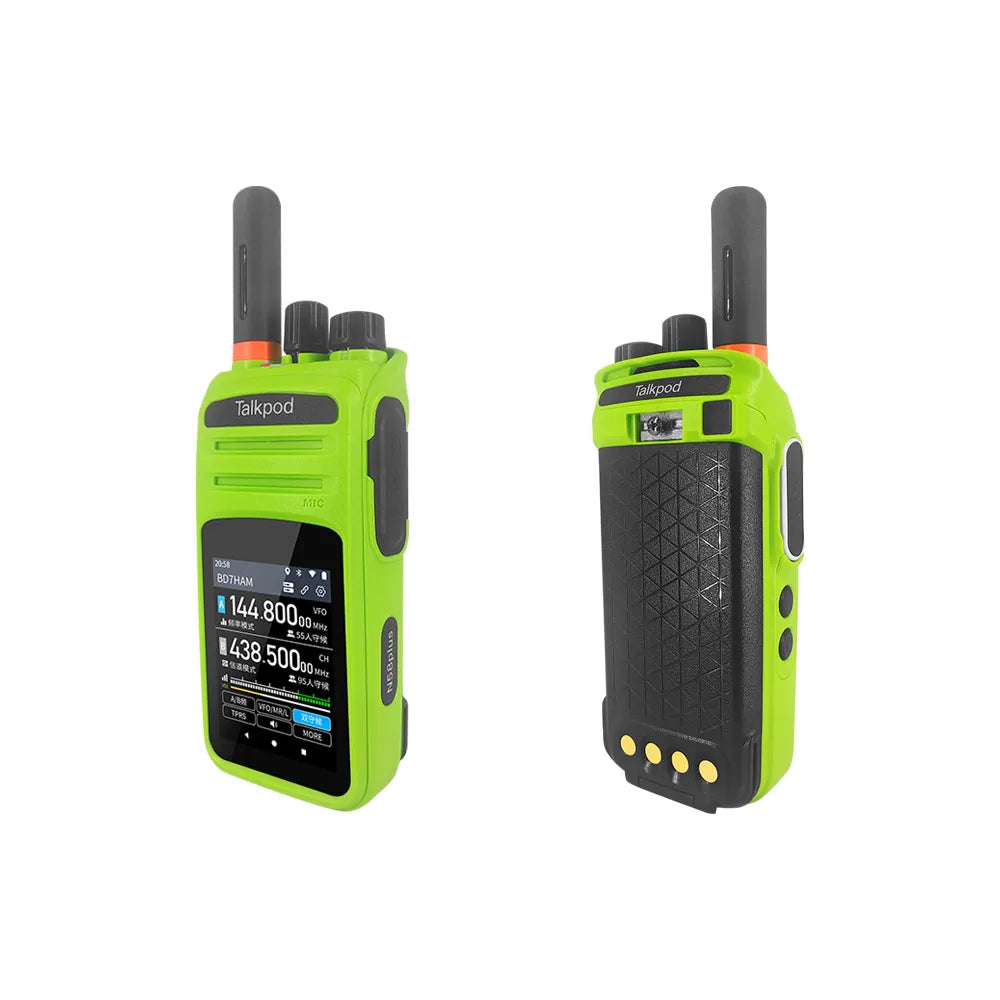
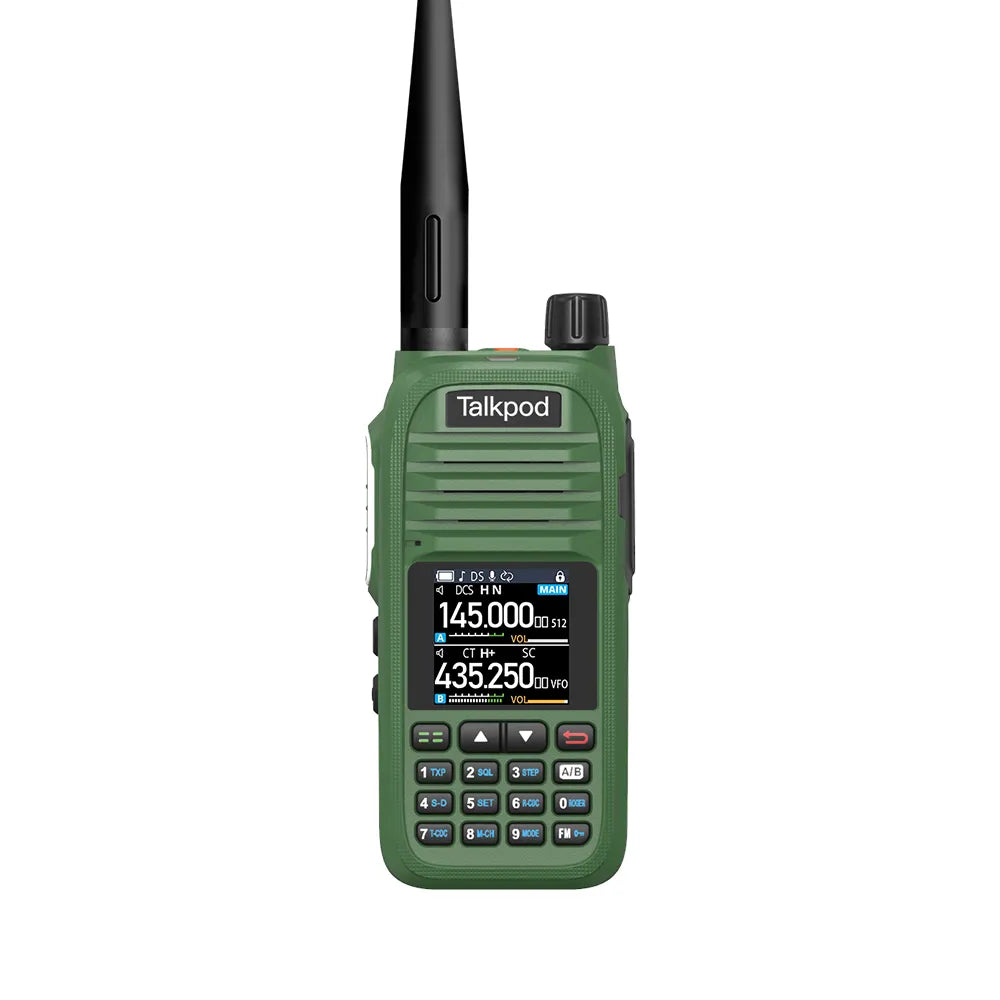
The Talkpod N15 public-network trunked radio provides a wider-area push-to-talk layer using compatible mobile networks. Its compact body, dual-SIM capability, centrally managed communication groups and lightweight dispatch backend can help security, engineering, customer-service and management teams coordinate without depending entirely on direct radio-to-radio range.
[Image]
Multiple office towers create a fragmented communication environment
A high-rise property portfolio contains many different RF environments.
Open entrances, underground garages, equipment rooms, elevators and surrounding commercial streets all behave differently.
A conventional local radio may perform well inside one tower but become less reliable once personnel move to another building or a basement parking area.
The N15 approaches the problem through public-network communication.
Where suitable mobile service is available, personnel in different buildings or outdoor areas can remain within the same managed push-to-talk system.
That gives property managers more flexibility when coordinating teams across a larger estate.
It should not be described as eliminating every coverage limitation.
Basements and reinforced structures still need testing
Public-network radios depend on the mobile network beneath them.
Underground garages, enclosed mechanical rooms, elevator cores and heavily reinforced parts of a building may still have weaker reception.
For that reason, each property should be tested where communication actually matters.
Security posts, parking levels, loading areas, plant rooms, retail streets, service corridors and key public spaces should all be checked.
If a weak area remains, the property operator can define an alternative communication method or consider network improvements.
A reliable deployment starts with a realistic coverage map rather than an assumption of universal connectivity.
Dual SIM adds flexibility across a mixed property environment
The N15 supports dual-SIM operation.
For a public-network radio, that can provide additional flexibility when more than one compatible mobile operator is available.
One network may perform better in a basement or commercial street while another provides stronger coverage elsewhere.
Depending on device and network configuration, dual-SIM capability can give administrators more options when planning connectivity across several buildings.
It may also provide a degree of redundancy.
But it should not be described as guaranteeing uninterrupted service.
Signal availability, switching behavior, operator coverage and platform status can all affect communication continuity.
Two SIM cards provide more choices.
They do not remove the possibility of a network interruption.
[Image]
Faster handoffs between customer service, engineering and security
Property operations generate a continuous stream of small tasks.
A tenant reports a lighting problem. Security notices a damaged access point. Customer service receives a request that needs engineering support.
Without a shared communication layer, those requests may pass through several phone calls before reaching the person responsible.
With the N15, the first employee receiving the issue can contact the relevant operational group directly.
That can reduce the time between identifying a problem and assigning someone to respond.
The benefit is especially useful in a multi-building site, where physically finding another employee may take far longer than the task itself.
Managers can coordinate without constantly moving between buildings
A property manager does not need to stand beside every team to understand routine operating conditions.
Short radio updates can provide immediate information about patrol findings, service requests or maintenance tasks while the manager remains elsewhere on the property.
That can reduce unnecessary travel between buildings and allow managers to focus on issues that actually require an on-site presence.
The radio should not replace formal inspection records, maintenance tickets or service-management systems.
Those systems remain responsible for documenting the work.
Push-to-talk helps coordinate the people carrying it out.
Communication groups can reflect different building and job functions
A large property does not benefit from putting every employee into one constantly busy communication group.
Security, engineering and customer service often have different routine traffic.
The source describes customized group structures for different buildings, floors and operational roles.
That can help keep everyday communication focused.
Security staff can handle patrol issues within the appropriate group, while engineering teams manage technical tasks without filling unrelated users' radios with unnecessary traffic.
When an issue crosses departments, authorized managers can coordinate between the relevant teams.
The purpose of group management is operational clarity.
It should not be presented as an absolute security boundary.
Private groups are not the same as guaranteed confidentiality
A managed communication group can reduce unnecessary exposure by limiting routine traffic to selected users.
But group membership alone does not make the system completely confidential.
Actual information security depends on the platform architecture, authentication, account control, device management and any security functions that are properly configured.
Property teams should also avoid transmitting unnecessary personal or access-related information over shared voice groups.
Tenant names, contact details, access credentials and other sensitive records should remain in approved property-management systems whenever possible.
The radio should carry the immediate operational message.
It does not need to carry the entire service record.
Rapid sign-in can simplify shift changes
The source describes the N15 as supporting fast login.
That can be useful in property environments where devices are reassigned between shifts or operating teams.
A simpler login and account process can reduce the amount of time employees spend preparing equipment before beginning patrol or maintenance work.
This is particularly useful when a property operator manages many radios across several buildings.
Fast access, however, should still be combined with proper account control.
Shared credentials or poorly managed accounts can create administrative problems even if the device itself is quick to log in.
Convenience and access control need to be managed together.
Centralized provisioning reduces the burden of individual programming
The source describes the N15 deployment as being completed without traditional frequency programming.
That reflects the operating model of public-network radios.
Once mobile-network access, device accounts and backend settings are configured, users and communication groups can be managed centrally rather than programming conventional radio channels into every unit individually.
This can simplify deployment for a property company operating multiple buildings.
It should not be interpreted as requiring no setup.
SIM service, account activation, group assignment and platform configuration still need to be completed correctly.
The advantage is centralized provisioning rather than zero configuration.
Backend dispatch supports a larger radio fleet
The source also describes access to a lightweight dispatch backend and ongoing account-maintenance support.
For property managers, that can make it easier to administer a fleet as staffing and site responsibilities change.
Accounts can be added, reassigned or suspended according to operational needs, depending on the platform configuration.
Communication groups can also be adjusted centrally when a new building or team is added.
That reduces the need to treat each handheld as an isolated device.
A centrally managed system is particularly useful when the physical property is already spread across several locations.
Fire hazards require formal emergency systems
Property teams may use the radio to report smoke, unusual smells, electrical faults or other potential fire hazards.
That can help security, engineering and management personnel coordinate an initial response.
But the N15 should not be treated as a replacement for building fire alarms, fire-control systems, evacuation procedures or contact with emergency services.
If a fire-related condition is identified, personnel should follow the property's established emergency procedures.
The radio can help connect the people carrying out those procedures.
It does not replace the systems designed to detect, alarm and manage the emergency itself.
Emergency calls should remain concise and structured
During a developing incident, radio traffic can become crowded quickly.
Property teams should therefore define who speaks, which group is used and what information must be transmitted first.
A short message containing the location and nature of the problem is usually more useful than a long description.
The receiving team should acknowledge critical instructions.
This kind of radio discipline becomes especially important when several buildings or departments are involved in the same incident.
Technology provides the communication path.
Clear procedures determine whether that path remains usable under pressure.
Public-network communication needs a fallback
The N15 depends on both mobile-network availability and the push-to-talk platform.
If either becomes unavailable, communication may be interrupted.
Property operators should therefore define an appropriate fallback method for known weak-signal areas or temporary outages.
Routine coordination may fall back to phones or internal systems.
Security and emergency-related workflows should have alternatives appropriate to the importance of the task.
A resilient communication plan assumes that no single technology is available everywhere at all times.
Making a dispersed property easier to coordinate
The communication challenge at Shenzhen Changhong Property comes from operating many different spaces as one service environment.
Office towers, underground parking, surrounding retail areas and support locations all require security, engineering and customer-service teams to remain coordinated even when they are physically separated.
Where suitable mobile-network coverage is available, the Talkpod N15 can provide a common push-to-talk layer across those teams.
Its compact body makes it easier for mobile personnel to carry, dual-SIM capability adds network flexibility, and centrally managed groups and accounts can reduce the administrative burden of operating a larger radio fleet.
Its value should not be expressed as perfect coverage, guaranteed uninterrupted connectivity or absolute confidentiality.
A more useful measure is whether the correct property team can be reached quickly when a tenant, building system or patrol officer needs assistance.
For a large commercial property, that is often what makes day-to-day operations feel more responsive.

Leave a comment
All comments are moderated before being published.
This site is protected by hCaptcha and the hCaptcha Privacy Policy and Terms of Service apply.