

Narcotics-enforcement work places unusual demands on a handheld radio.
Personnel may spend hours in low-light observation positions, move between urban buildings and rural terrain, or work in environments where speaking openly is undesirable. During other stages of an operation, officers may need both hands free while still maintaining contact with colleagues.
In these situations, communication is not only about range.
Visibility, operating noise, control simplicity and environmental reliability all matter.
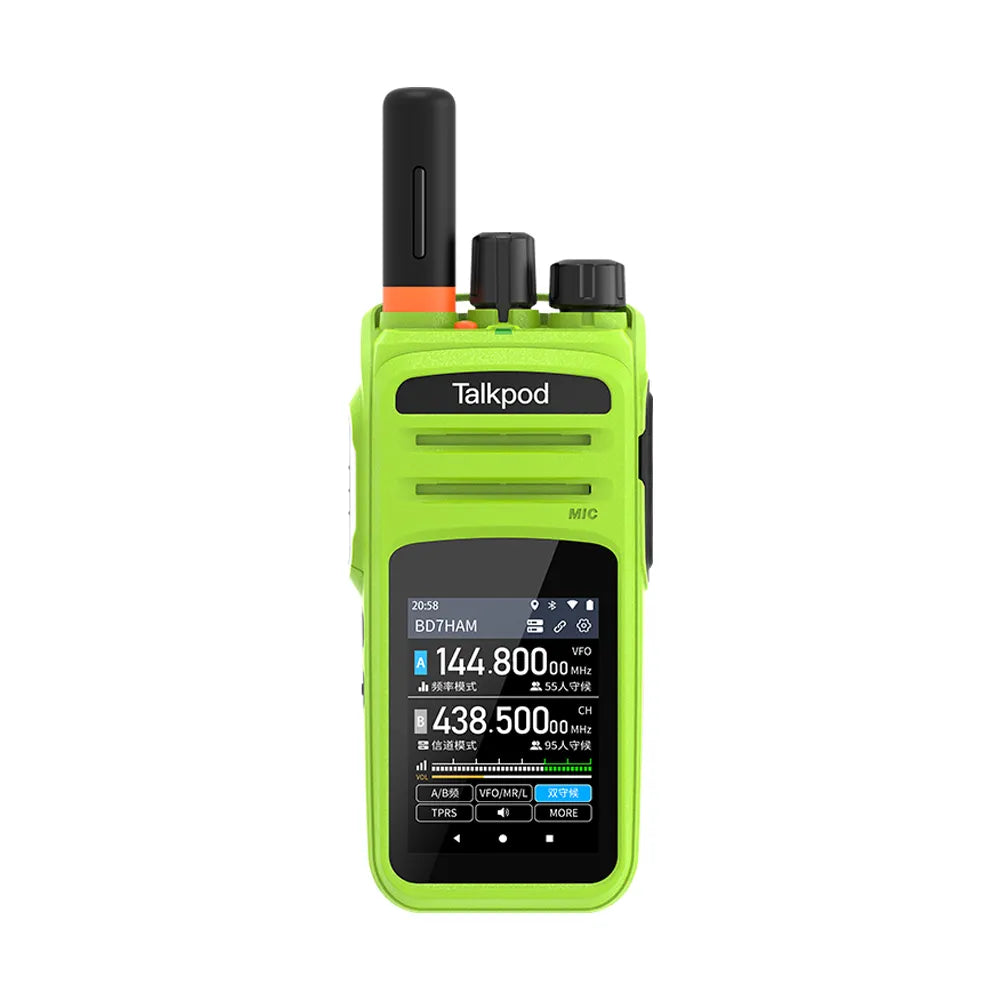
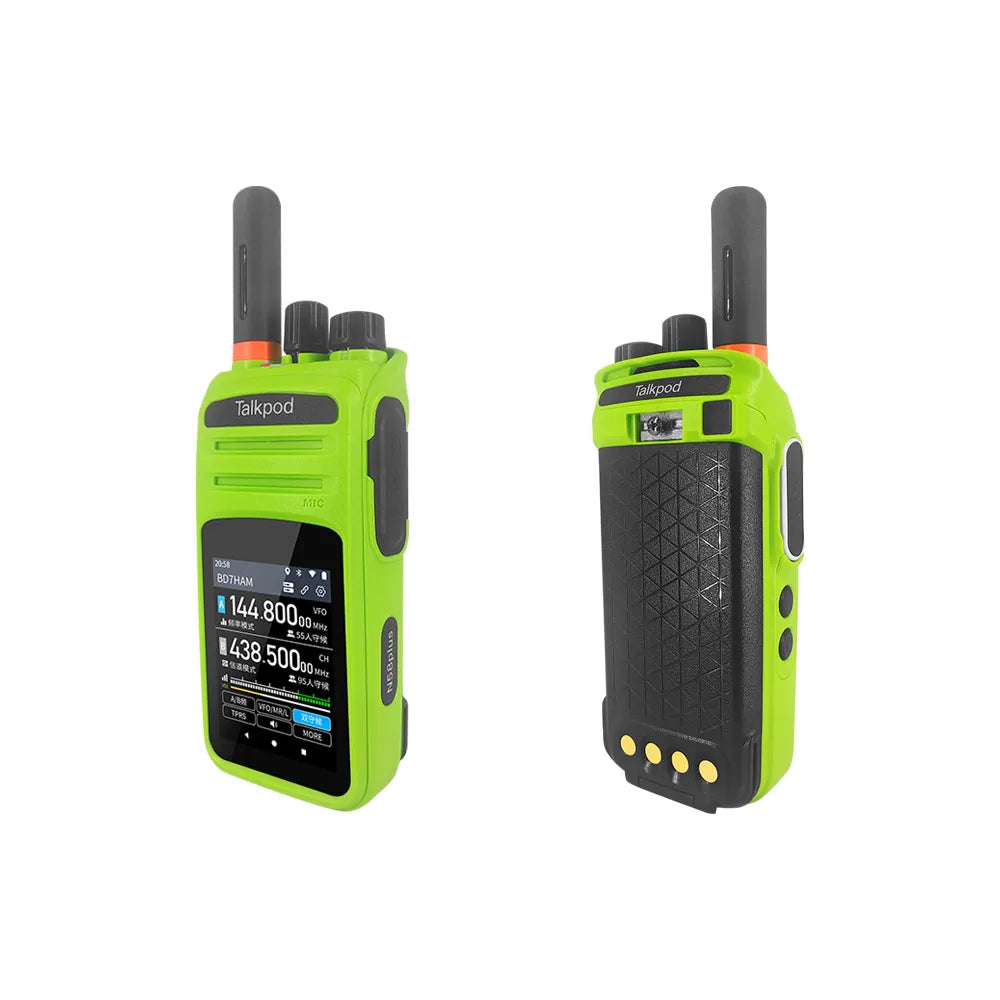
The Talkpod D56 digital radio combines configurable indicator behavior, preset text messaging, voice-operated transmission and a ruggedized design intended for demanding field use. Properly configured, these functions can help teams reduce unnecessary operational distractions while maintaining a local digital communication link.
Turning off indicator lights can reduce visible cues
Electronic equipment that is unobtrusive during the day can become much more noticeable at night.
A status LED that is barely visible in an office may stand out in a dark vehicle, corridor or outdoor observation position.
The D56 allows the LED indicator to be manually disabled, reducing visible status indications during operations where light discipline matters.
That can be useful for personnel who do not want routine receive, channel or status indications drawing unnecessary attention.
It should not, however, be described as providing “zero optical exposure.”
The user still needs to consider the display, keypad backlight, accessory indicators and any other visual or audible notifications enabled in the current configuration.
Discreet operation depends on the complete device setup—not one LED setting alone.
Preset text messages provide an alternative to voice
There are situations in which speaking into a radio is inconvenient or undesirable.
The D56 supports up to 50 customizable preset text messages, allowing frequently used short messages to be prepared before deployment.
A team might configure standardized messages for status updates, requests for support or other routine operational information.
Instead of speaking, the user can select an appropriate predefined message and send it through the compatible digital system.
This can reduce the need for voice traffic in quiet environments.
The benefit is controlled, concise communication.
It should not be described as making communication completely silent or undetectable.
Button presses, display illumination, alert tones and receiving-device behavior still depend on configuration, while delivery also depends on system compatibility and radio coverage.
[Image]
Standardized messages can reduce ambiguity
Preset messages are useful for more than discretion.
They can also improve consistency.
During a time-sensitive operation, short standardized phrases reduce the need to compose a new message each time and can help recipients understand the intended meaning more quickly.
The most effective message list is usually small and operationally relevant.
If dozens of similar phrases are stored without a clear structure, users may spend too much time searching for the correct one.
Administrators should therefore configure preset messages around actual workflows and train users on their agreed meanings.
A feature becomes valuable when it reduces decisions rather than adding another menu to navigate.
VOX can free the hands—but requires careful configuration
The D56 supports VOX, or voice-operated transmission, which allows the radio to begin transmitting when the microphone detects speech above a configured threshold.
This can be useful when a user's hands are occupied with equipment or another task.
But VOX is not automatically suitable for every enforcement situation.
Background conversations, wind, movement, vehicle noise or equipment sounds can potentially trigger transmission if the sensitivity is set too high.
That creates a particular concern during discreet observation, where an unintended transmission may be more problematic than having to press PTT manually.
VOX should therefore be configured according to the environment and task.
For some work, it may be useful.
For quiet observation or other situations requiring tight control over exactly when the radio transmits, conventional PTT may be the better choice.
Local digital radio still depends on RF coverage
The D56 is a conventional digital radio rather than a nationwide public-network device.
Its usable range therefore depends on the local RF environment and system configuration.
Urban buildings, reinforced concrete, hills, vegetation and enclosed structures can all reduce coverage.
If teams operate across a larger area or inside difficult buildings, the system may require appropriate repeaters or other professionally planned infrastructure.
The radio should not be described as maintaining communication everywhere simply because the device itself is rugged.
Coverage and physical durability are separate questions.
A radio survey remains the best way to understand where the system actually works.
Information security requires more than discreet operation
Turning off LEDs and replacing some voice traffic with text messages can reduce operational exposure.
They do not automatically make the communication system confidential.
Sensitive law-enforcement information should be handled according to the organization's approved communication and information-security procedures.
Where encryption or other security functions are deployed, their effectiveness depends on the actual radio configuration, key management and system architecture.
Personnel should also limit the amount of sensitive information transmitted over voice or text to what is necessary for the immediate task.
A discreet device is not automatically a secure information system.
IP65 provides defined environmental protection
The source specifies an IP65 rating for the D56.
That means the device has a defined level of protection against dust ingress and water jets under the relevant test conditions.
For field personnel, this can provide useful protection against rain, dust and ordinary outdoor exposure.
It does not mean the radio is waterproof in every situation.
IP65 does not establish suitability for immersion, prolonged submersion or unrestricted exposure to high-pressure water.
Likewise, if the device is exposed to mud, chemicals or other contaminants, cleaning and maintenance should follow the manufacturer's instructions.
Environmental protection helps reduce failure risk.
It does not eliminate it.
Wide-temperature operation supports varied field conditions
The source specifies an operating range of approximately -30°C to 60°C.
That can be useful for teams working across very different climates and seasons.
Cold conditions can affect battery performance, while prolonged high temperatures can also reduce operating time or place additional stress on electronic equipment.
For this reason, temperature ratings should be treated as operating limits rather than a guarantee that performance remains identical throughout the entire range.
Battery management becomes particularly important in extreme temperatures.
Radios should begin an operation fully charged, and long deployments should include an appropriate plan for spare batteries or replacement equipment.
MIL-STD-related testing should be read by test item
The source also states that the D56 has undergone environmental reliability testing associated with MIL-STD-810-series procedures.
Such testing can provide useful evidence of durability under specified conditions.
It should not be summarized as proof that the radio can survive every possible field environment.
Shock, vibration, temperature, humidity and other tests each have their own methods and limits.
If a particular environmental capability—such as salt-fog resistance—is important to the deployment, it should be confirmed from the corresponding documented test rather than inferred from a general “MIL-STD” statement.
Rugged equipment is still equipment with limits.
Discretion is a system of small choices
For field teams, the most useful D56 features are not necessarily the most complicated ones.
Disabling an indicator light can reduce an unnecessary visual cue. Preset text messages can replace some voice traffic. VOX can provide hands-free communication when the task genuinely benefits from it, while IP65 protection and a wide specified temperature range support work in demanding environments.
None of these functions should be treated as a guarantee of concealment, confidentiality or uninterrupted communication.
Their value is more practical.
When device settings, radio coverage, information-security procedures and user training are planned together, the D56 can provide field personnel with a more controlled local communication tool—one that can be configured around the environment rather than forcing every operation to use the radio in exactly the same way.


Leave a comment
All comments are moderated before being published.
This site is protected by hCaptcha and the hCaptcha Privacy Policy and Terms of Service apply.