
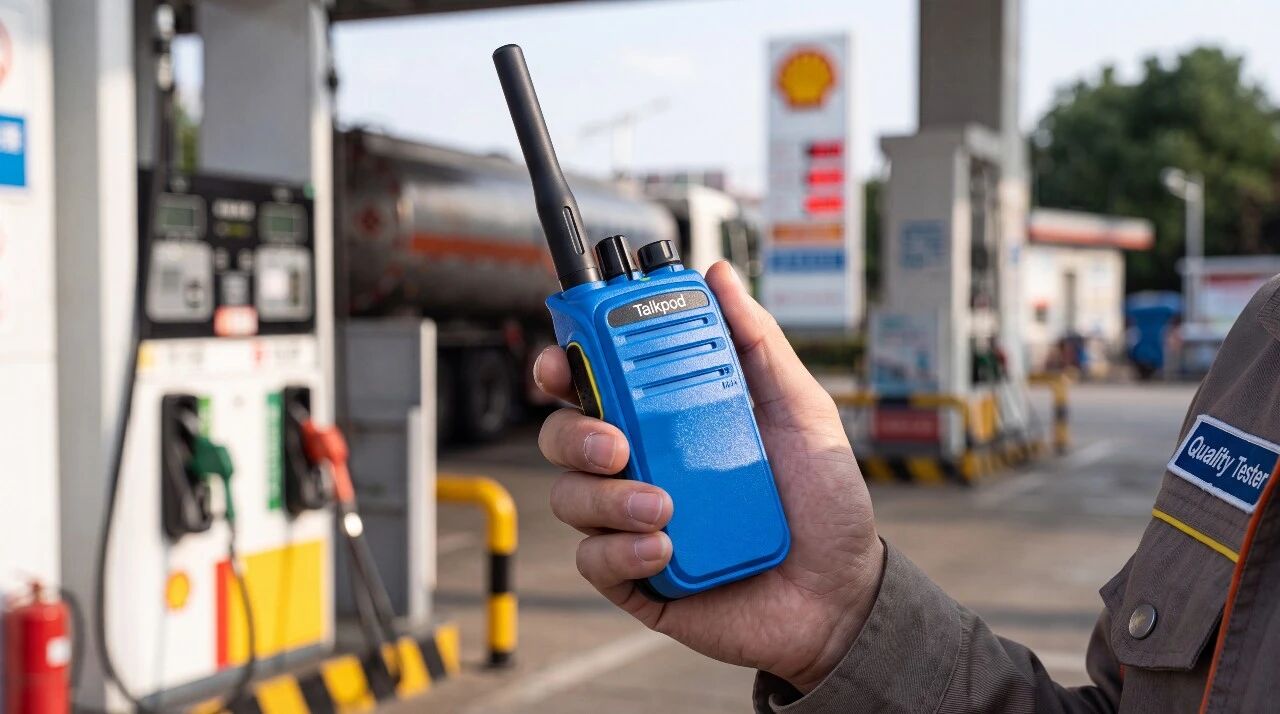
A fuel station is a familiar place built around an unusual risk.
Vehicles arrive throughout the day. Attendants work beside dispensers, cashiers manage the shop, and staff inspect storage and unloading areas. Yet petrol vapour and other flammable substances mean that electrical equipment used in certain parts of the site must be selected with considerably more care than it would be in an ordinary workplace.
Communication equipment is no exception.
The Talkpod D50Ex digital explosion-protected radio is designed for use in specified hazardous industrial environments, combining protected electrical design with digital voice communication, flexible calling functions and extended battery capacity.
For a fuel station, its value lies not simply in allowing staff to talk. It lies in providing a communication tool that can be incorporated into the station’s hazardous-area safety procedures when its certification matches the intended location.
Hazardous-area compliance around fuel storage
The storage and unloading areas of a fuel station require particular attention.
Fuel vapours may be present during unloading, maintenance or abnormal operating conditions. In classified hazardous areas, unsuitable electrical equipment can introduce potential ignition sources through sparks, electrical faults or excessive surface temperatures.
The D50Ex incorporates explosion-protection measures intended to limit these risks within the conditions specified by its certification.
That distinction matters. An “explosion-proof” radio should never be assumed to be suitable for every hazardous location simply because of its product name.
Before use, the station operator should verify the device’s exact explosion-protection marking, permitted gas group, temperature class, ambient operating range and hazardous-zone suitability against the site’s own classification.
Approved batteries and accessories are equally important. Unauthorised replacement batteries, chargers or damaged enclosures may compromise the protection concept on which certification depends.
The D50Ex can therefore form part of a compliant communications system. It does not remove the need for gas-control procedures, hazardous-area management or routine equipment inspection.
Keeping different parts of the station coordinated
During quiet periods, communication at a fuel station may appear simple. Peak traffic changes that quickly.
Several vehicles may arrive simultaneously. One attendant may need assistance at a pump while another is directing traffic. The cashier may need a colleague outside, while a customer at the convenience-service area requires support.
Relying on shouting or hand signals becomes increasingly inefficient as vehicle numbers rise.
The D50Ex supports group, individual and all-call communication, allowing stations to organise radio traffic around different operating needs. A supervisor can contact a particular employee for a specific task or address a wider team when several positions need to respond.
Programmable side keys can also provide quicker access to frequently used functions, reducing the number of steps required during busy periods.
The benefit is less about sophisticated technology than removing small delays. Staff can reposition sooner, information can be passed without leaving a post, and the forecourt can remain more orderly when demand is high.
Supporting communication during abnormal events
Fuel stations must also prepare for situations in which ordinary operations stop being ordinary.
A minor vehicle collision, suspected leak or abnormal condition around dispensing equipment may require several employees to act according to the station’s emergency procedures.
In such circumstances, staff need a quick way to report what they have observed and coordinate the next response.
The D50Ex uses a specialised antenna configuration intended to support reliable local radio communication across the operating site. Digital voice transmission can also make short operational messages easier to understand.
Actual coverage, however, will depend on distance, storage equipment, steel structures, building layout and local radio conditions. No handheld radio can guarantee uninterrupted communication in every part of a site.
Stations should therefore test radio performance around dispensers, storage areas, buildings and other important operating points before deployment.
More importantly, the radio should support—not replace—the station’s formal emergency systems. Emergency shutdown procedures, alarms, evacuation rules and fire-safety equipment retain their designated roles.
A radio helps the people carrying out those procedures stay coordinated.
Clearer digital communication for routine work
Communication at a fuel station is usually brief.
A pump needs attention. A delivery vehicle has arrived. Another employee is required outside. A supervisor needs to confirm that an inspection has been completed.
Digital radio can make this routine traffic easier to manage, particularly when several employees are communicating within the same site.
The D50Ex supports different calling modes so that not every message has to be broadcast to every user. Individual communication can remain targeted, while group calls can be used for teams and all-call functions reserved for wider instructions.
This helps reduce unnecessary channel traffic and makes it easier for employees to recognise which messages require their attention.
For safety-related information, however, radio communication should complement established reporting and documentation procedures rather than become their substitute.
Battery capacity for a 24-hour operation
Fuel stations do not close when an office shift ends.
Many operate around the clock, with radios passing from one team to another as shifts change. Battery management therefore becomes an operational issue rather than a matter of convenience.
The D50Ex is designed for extended working periods, helping reduce the frequency with which radios need to be removed from service for charging.
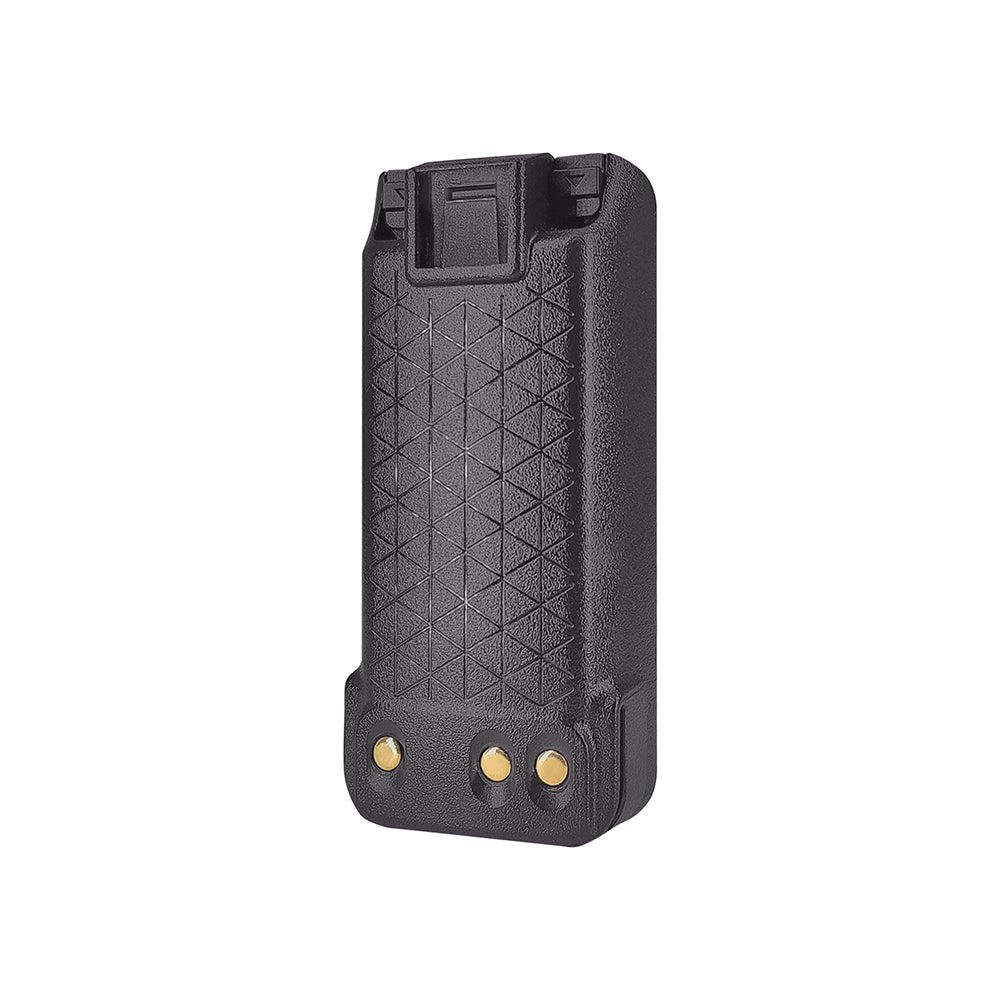
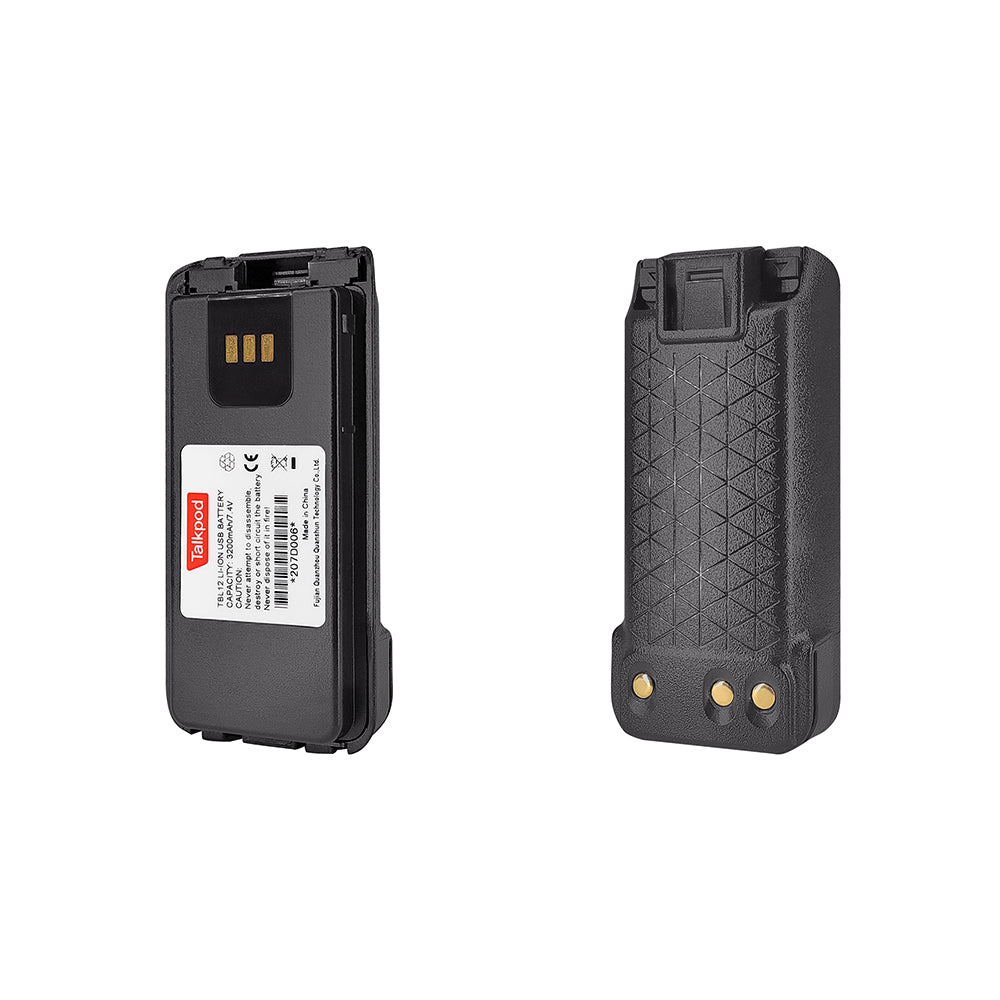
Actual endurance will depend on transmission frequency, audio volume, battery condition and environmental temperature. A 24-hour facility should therefore manage radios as a fleet, with charged units or approved spare batteries available for incoming shifts rather than relying on a single device to operate indefinitely.
Explosion-protected equipment also requires particular care during charging. Batteries and radios should be charged only in locations and under conditions permitted by the manufacturer and the station’s hazardous-area procedures.
Simple operation matters in an emergency
A radio used by fuel-station personnel should not require a complicated sequence of controls for routine communication.
The D50Ex is designed around straightforward push-to-talk operation, with programmable controls available for commonly used functions. This reduces training time for rotating staff and makes the device easier to operate when employees are wearing work gloves or concentrating on traffic and equipment around them.
That simplicity becomes more important during an abnormal event.
Under pressure, the best communication tool is often the one whose basic operation has already become routine.
Communication as one layer of fuel-station safety
The Talkpod D50Ex cannot prevent a fuel leak, stop an ignition source elsewhere on the site or replace the station’s emergency shutdown and fire-protection systems.
Nor does its explosion-protected design mean that it can automatically be carried into every classified area.
Its role is narrower—and more useful than such claims suggest.
When its certification matches the hazardous area, the D50Ex provides staff with a communication tool designed for that environment. Digital group calling helps coordinate busy shifts. Local radio communication supports routine inspections and abnormal-event response, while extended battery capacity suits continuous operations.
At a fuel station, reliable communication is part of a much larger safety system.
The most important feature of a radio in such an environment is therefore not that it can always be heard. It is that it can be used in the right place, by the right people, under the right safety conditions.

Leave a comment
All comments are moderated before being published.
This site is protected by hCaptcha and the hCaptcha Privacy Policy and Terms of Service apply.