
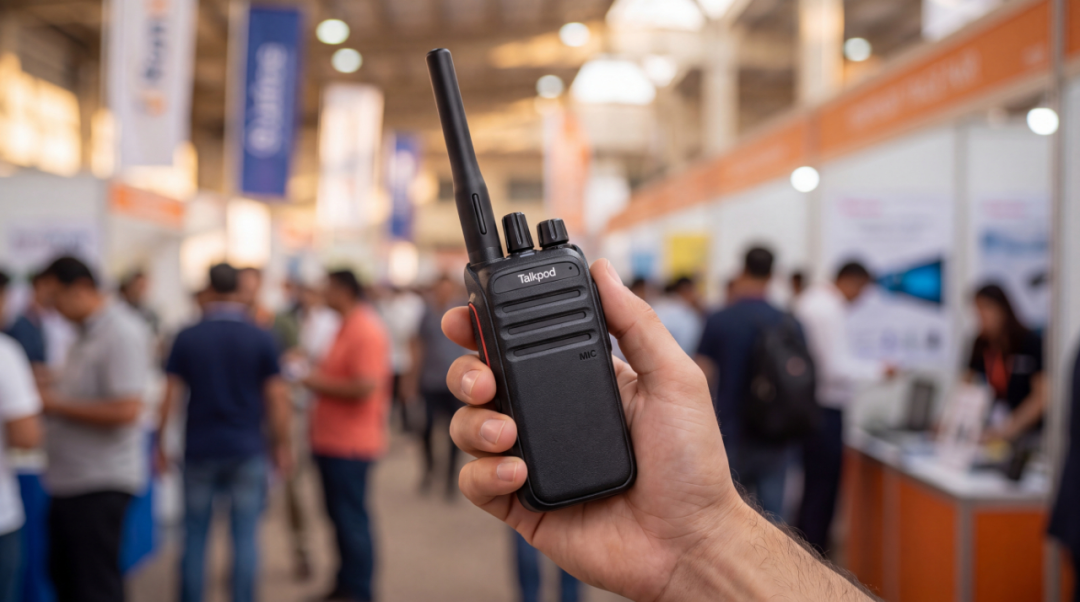
Temporary trade fairs move quickly.
A venue may be empty one day and filled with booths, temporary structures, merchandise, contractors and visitors the next. Setup crews, logistics teams, security personnel and exhibitor-service staff all begin working within a short period, often before they have had much time to learn one another's routines.
That makes communication equipment valuable only if it can be deployed quickly and used with minimal disruption.
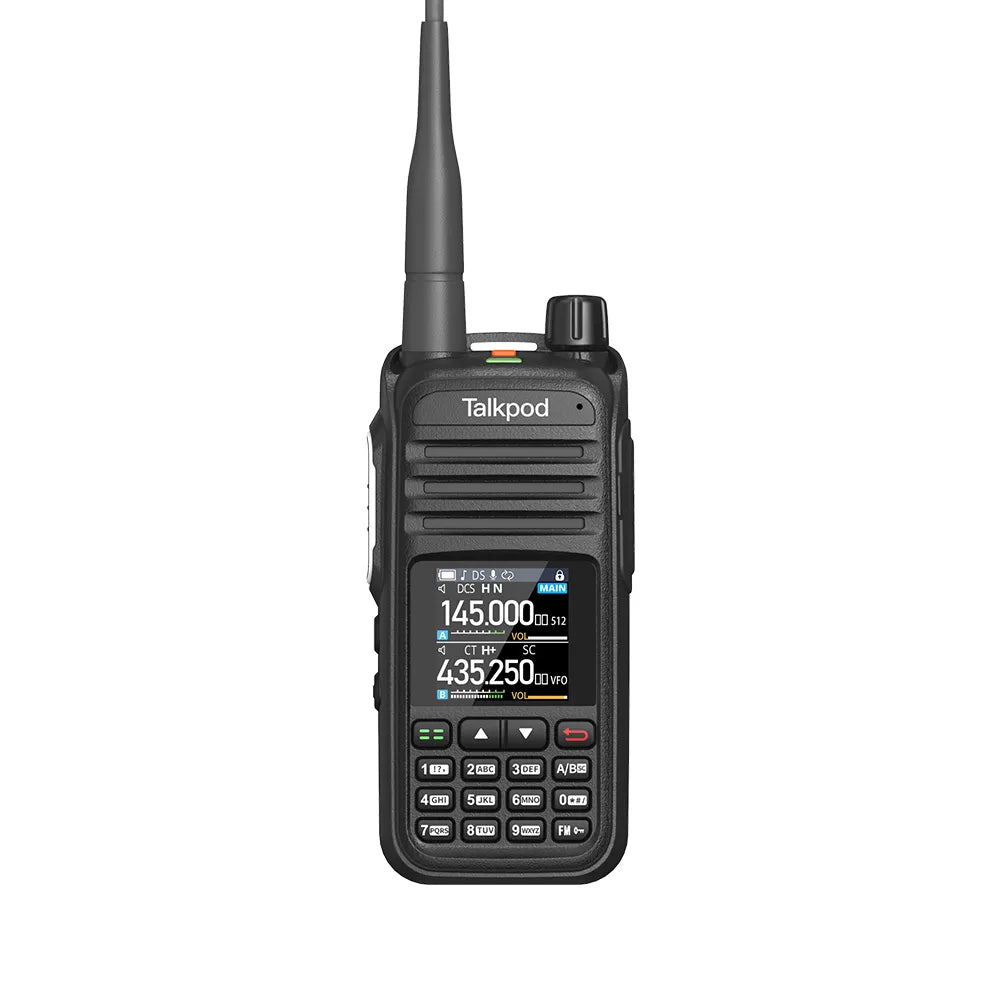
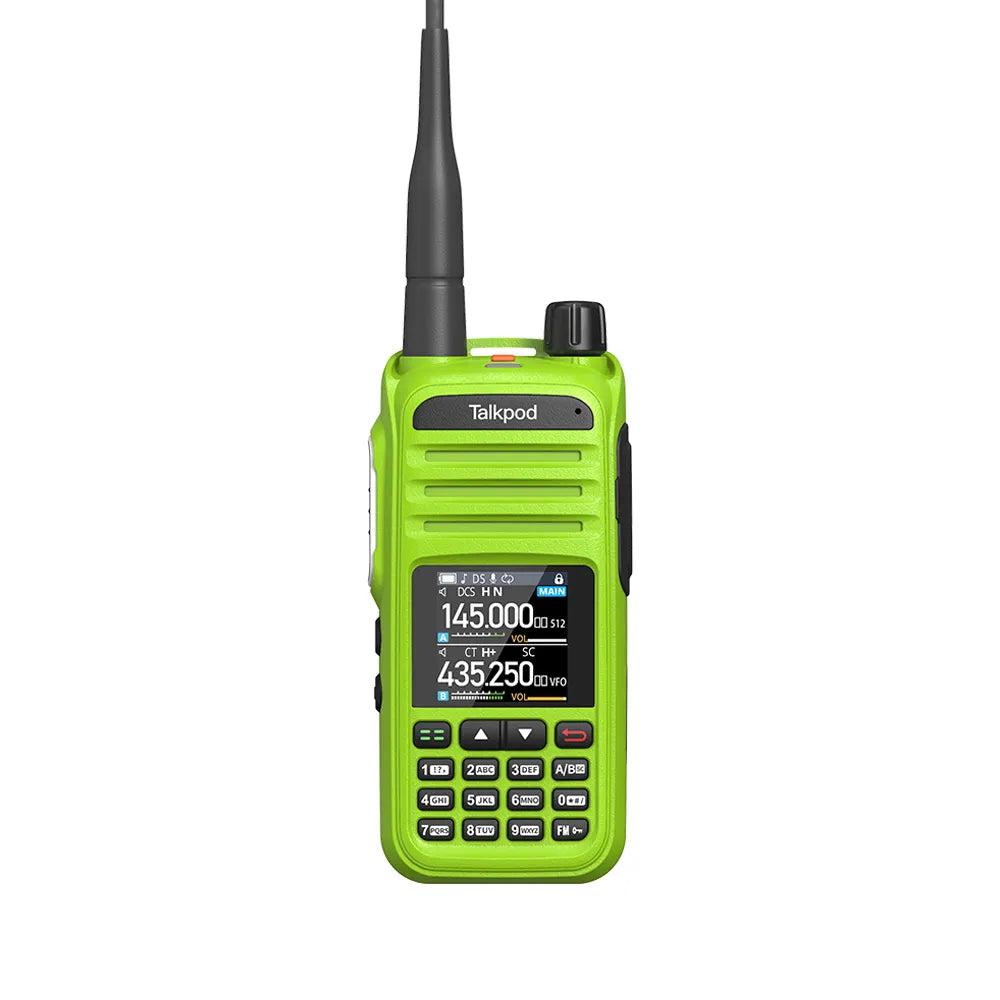
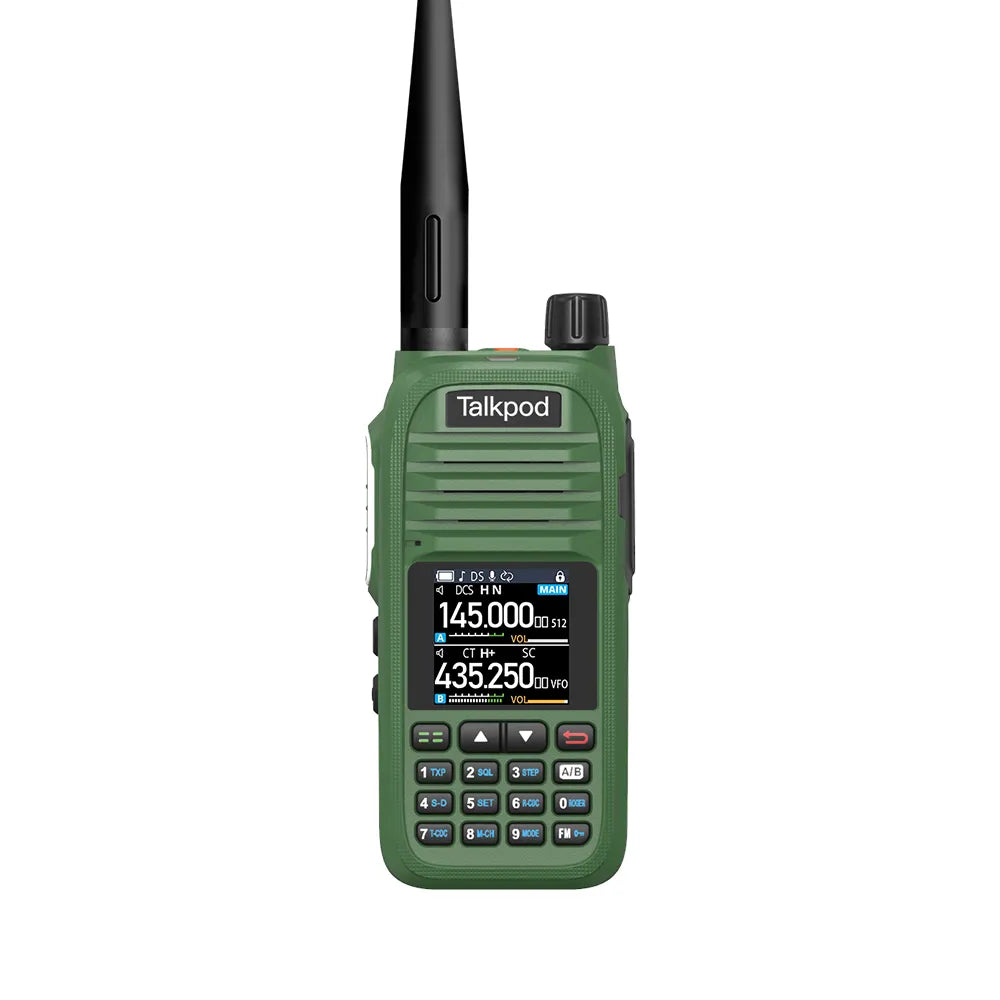
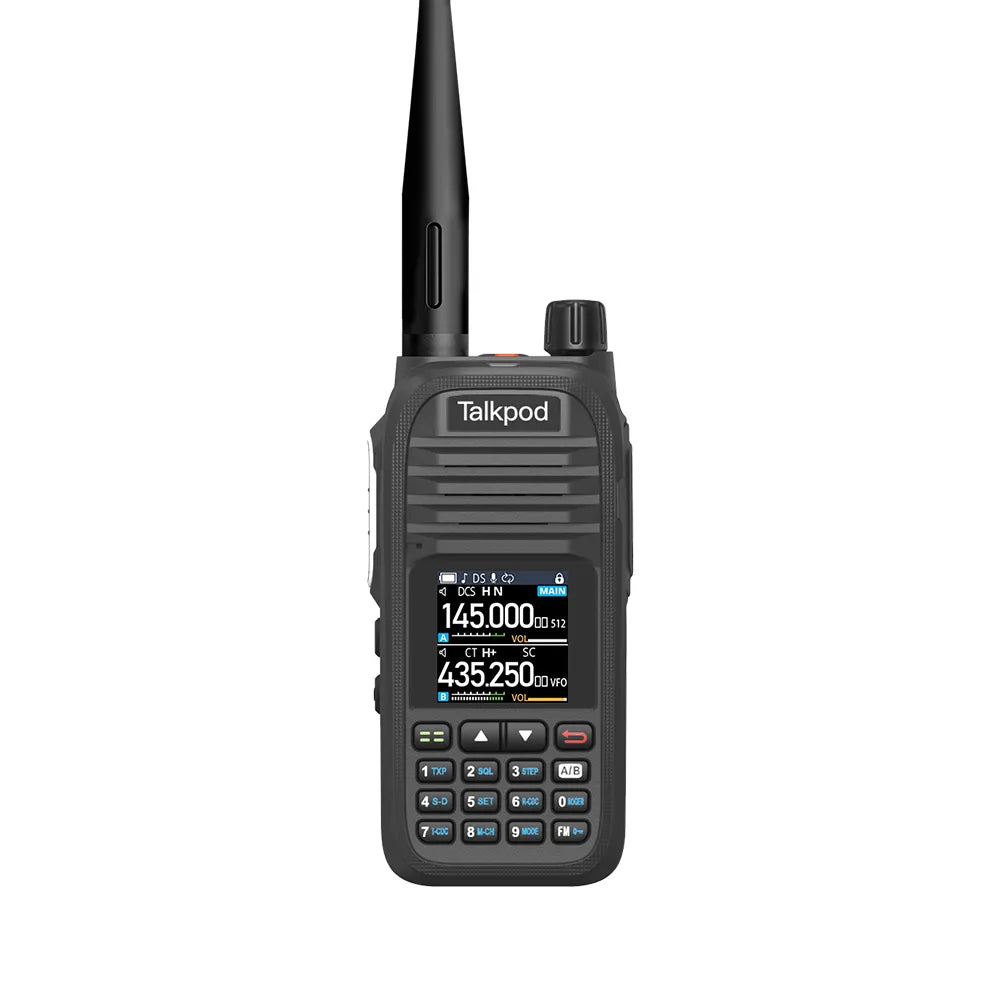
The Talkpod D30 digital radio combines analog and digital operating modes, 32 programmable channels, customizable scanning and direct radio operation for situations where repeater coverage is unavailable.
For temporary events, that flexibility can make it easier to build a workable local communication system without redesigning the entire fleet for every new venue.
Analog and digital operation can ease a gradual equipment transition
Many event operators already own older analog radios.
Replacing an entire fleet simply because newer digital equipment is being introduced may not make economic sense for a temporary event.
The D30 supports both analog and digital operating modes, allowing organizers to program some channels for conventional analog operation and others for compatible digital communication.
That can make a mixed-generation fleet easier to manage.
Older analog radios can continue to communicate with the D30 when both are configured to the same compatible analog frequency, bandwidth and signaling settings.
Newer D30 units can then use digital channels where the event operator wants the additional functions of a digital system.
This should not be described as analog and digital radios communicating seamlessly with one another in different modes.
Compatibility still depends on both devices using a matching communication format.
Reusing existing radios can reduce temporary-event costs
A trade fair may only run for several days.
That makes equipment investment very different from a permanent factory or hotel deployment.
If the organizer can retain usable analog radios for basic teams while introducing digital units for supervisors or newly equipped crews, the communication fleet can be expanded without necessarily replacing every device at once.
That can reduce both equipment cost and preparation time.
The actual setup still needs to be tested before opening.
Frequencies, channel bandwidths, signaling parameters and user assignments need to match across the devices that are expected to communicate.
“Dual mode” simplifies migration.
It does not eliminate radio programming and system planning.
[Image]
Thirty-two channels provide room for temporary team structures
The D30 supports 32 programmable channels.
For an event operator, that provides flexibility to create a simple radio plan for several functional teams.
Setup crews, logistics personnel, security staff and exhibitor-service teams can be assigned different channels where traffic volume justifies separation.
A supervisor can then keep the most important channels organized in a predictable order.
The objective should not be to use all 32 simply because they are available.
Too many channels can make a temporary workforce harder to manage, especially when some personnel are only working at the venue for a few days.
A smaller, clearly documented channel plan is usually more effective.
Custom scanning can help supervisors follow several teams
The source describes the D30 as supporting customizable channel scanning.
That can be useful for supervisors who need awareness of more than one operational group.
For example, a manager may configure a scan list containing the setup, security and logistics channels rather than manually switching between them throughout the day.
The radio then checks those programmed channels according to its scan behavior and can stop when activity is detected.
This can reduce the amount of manual channel switching.
But scanning is not the same as simultaneously listening to every team.
The radio checks channels sequentially, and depending on scan timing and traffic, very short transmissions can potentially be missed.
For urgent communication, a clearly defined priority or emergency channel remains preferable to relying solely on scan.
Busy radio traffic still needs operating discipline
Temporary events can become crowded on the air as well as on the floor.
If several teams speak at length or transmit at the same time, no scanning feature can make the channel plan orderly by itself.
Messages should be short.
Users should identify the team or person they are calling, wait for acknowledgement and avoid using radio channels for conversations that do not require operational coordination.
The more temporary the workforce, the more useful simple radio rules become.
A short briefing at the start of the event can prevent much of the confusion later.
Direct operation helps when repeater coverage is unavailable
The source also describes an off-network or direct-operation function intended for situations where radios are no longer using the main repeater path.
That can be useful when staff move outside the primary venue, such as during loading, temporary storage or transfer between nearby work areas.
When appropriately configured, compatible radios can communicate directly with one another rather than relying on a repeater.
This gives the team another local communication option.
But direct mode does not create unlimited coverage.
Once the repeater is removed from the path, range depends on the handheld radios themselves, including distance, terrain, buildings and antenna conditions.
A crew moving to another city or a distant venue should not expect the same radio group to remain connected simply because direct mode is available.
Transition between repeater and direct operation should be tested
The source describes the D30 as supporting operation when the main network or repeater is unavailable.
In practice, event operators should verify exactly how that function is configured before relying on it.
Depending on system programming, users may need to select the appropriate direct or talkaround mode rather than assuming the radio will always make the transition automatically.
That matters during venue changes.
Staff should know which channel or mode to use if they leave repeater coverage.
A feature is most useful when the operating procedure is understood before the signal disappears.
Temporary venues create unpredictable RF conditions
Trade fairs often use spaces that were not designed around the event's radio system.
Metal booth frames, temporary walls, exhibition structures, vehicles and dense crowds can all affect RF propagation.
A channel that performs well during an empty-venue setup may behave differently once the hall is filled with exhibitors and visitors.
For that reason, coverage should be checked again after major structures are installed.
Security posts, loading entrances, backstage areas, temporary warehouses and distant corners of the venue should all be tested.
Local digital radio is highly effective when the RF environment is understood.
It should not be assumed to work identically in every temporary venue.
IP54 offers defined protection for setup environments
The source specifies an IP54 rating for the D30.
That provides a defined level of protection against limited dust ingress and splashing water under the applicable test conditions.
For setup and teardown work, this can be useful when radios are exposed to ordinary construction dust or occasional water splashes.
It does not make the device dust-proof or waterproof.
IP54 does not establish suitability for immersion, heavy rain or unrestricted water exposure.
Staff should still keep the radio away from unnecessary water, wet storage areas and other conditions outside its documented protection level.
MIL-STD-related testing should be interpreted carefully
The source also describes environmental reliability testing associated with MIL-STD-810-series procedures.
That can provide useful evidence of product durability under specified test conditions.
It should not be simplified into a claim that the radio will survive every fall, impact or environmental exposure encountered during event setup.
MIL-STD-810 includes many different test methods, each with its own procedure and severity.
If resistance to a particular drop height, vibration level or environmental condition is important, the corresponding documented test should be checked directly.
A general MIL-STD reference does not automatically verify every possible environmental claim.
Drops during setup are still preventable equipment incidents
Trade-fair setup involves ladders, platforms, packaging materials and constant movement.
A radio can easily be knocked from a table or caught while an employee is moving equipment.
Ruggedized design may reduce the likelihood that ordinary handling immediately damages the device.
But radios should still be clipped or secured rather than treated as disposable tools.
This becomes even more important when staff are working above other people.
A falling radio can create a safety hazard even if the device itself survives the impact.
Durability protects the equipment.
Good worksite practice protects the people around it.
Communication supports setup safety rather than replacing it
During booth construction and teardown, teams may be moving large panels, electrical equipment or suspended materials.
The radio can help coordinate those activities.
It should not replace established lifting signals, electrical isolation procedures, work-at-height controls or other site-safety requirements.
If a task depends on a critical instruction, the person receiving it should acknowledge the message before the work proceeds.
The radio provides the communication path.
The event's work procedure determines whether the operation is safe.
A radio fleet that can adapt from setup to teardown
Temporary trade fairs demand flexibility because both the workforce and the physical environment change quickly.
The Talkpod D30 can support that model by allowing organizers to combine analog and digital operation, store up to 32 channels, build customized scan lists and use direct radio communication when repeater infrastructure is not available.
Its IP54 rating and referenced environmental testing also make it suitable for routine event work within the limits of the documented specifications.
Those capabilities should not be overstated.
Dual-mode operation does not make analog and digital communication automatically interchangeable. Scanning does not provide simultaneous monitoring of every team, and direct mode remains limited by local radio range.
Used with a simple channel plan, venue coverage testing and clear operating procedures, however, the D30 can give temporary event teams something more useful than a large feature list: a radio system that can be reconfigured quickly as the event moves from construction to opening day and finally to teardown.

Leave a comment
All comments are moderated before being published.
This site is protected by hCaptcha and the hCaptcha Privacy Policy and Terms of Service apply.