
A large residential community is a collection of very different operating spaces.
Property managers may be responding to residents in one building while security personnel patrol entrances and outdoor areas. Engineering teams may be working in equipment rooms, and cleaning staff can be spread across several towers and public spaces.
At Nanjing Kehai Longhu Yujing, those teams also need to cover surrounding commercial areas and underground parking facilities, creating a communication problem that conventional direct handheld radios may struggle to handle consistently.
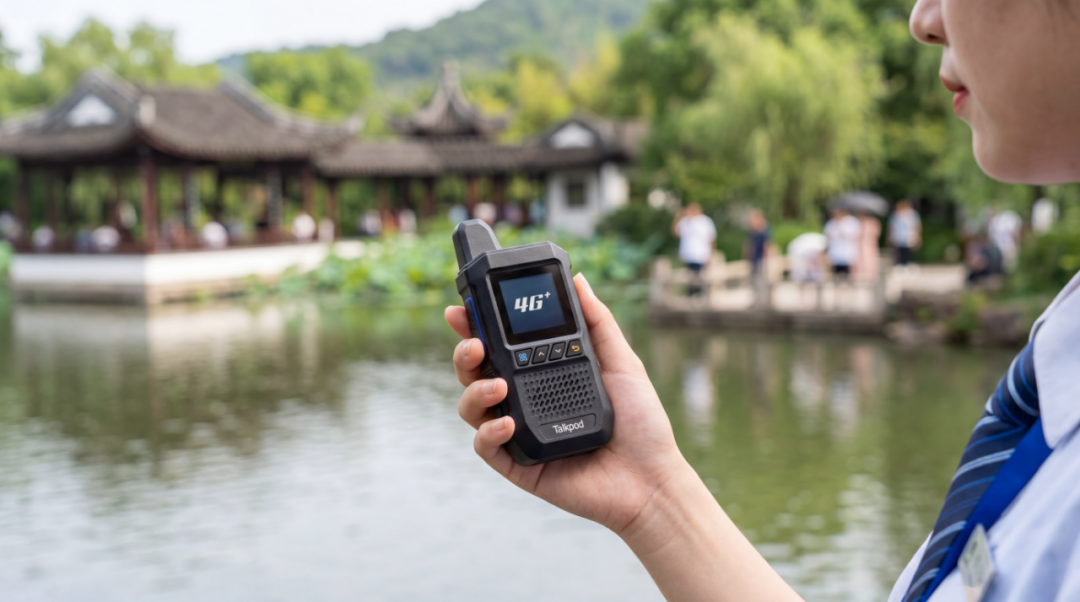
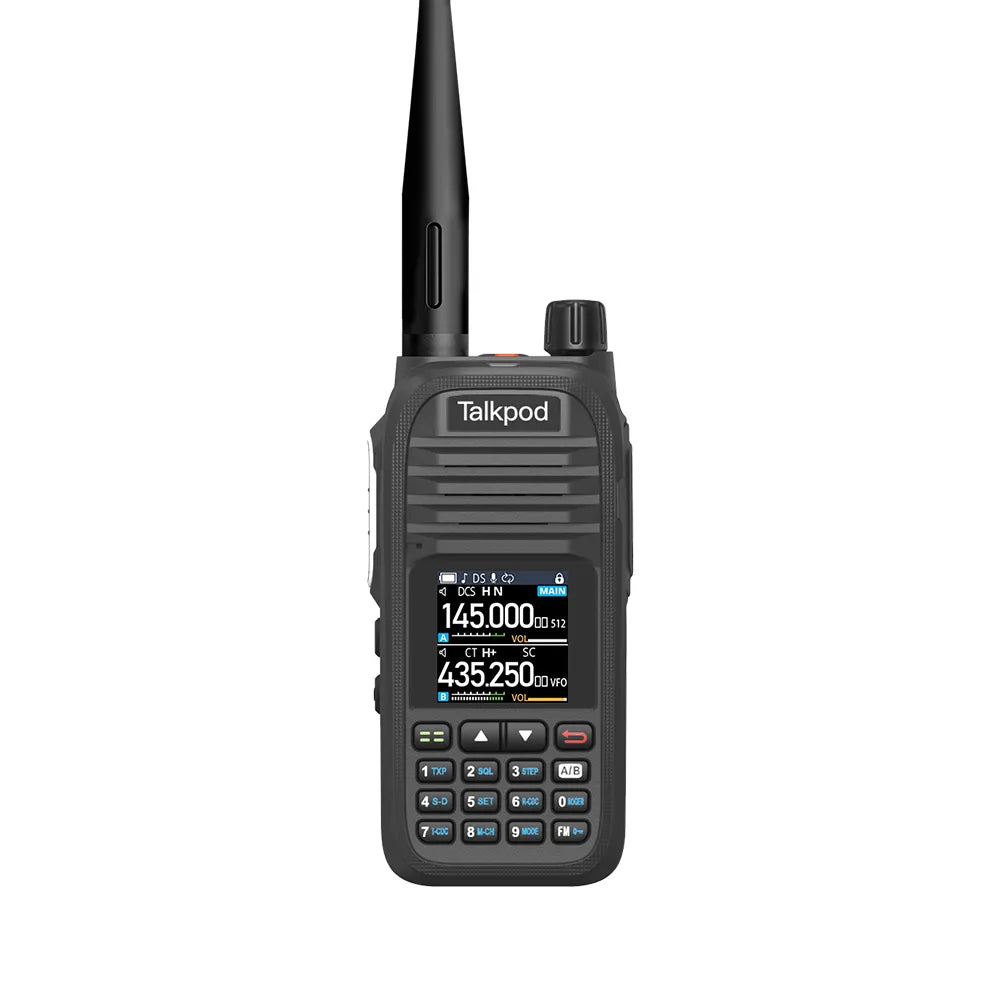
The Talkpod C11 public-network trunked radio uses compatible mobile networks to provide a wider-area push-to-talk layer, supported by centrally managed groups and backend dispatch.
Where suitable network coverage is available, it can help property managers, security, engineering and cleaning teams remain connected across physically separated parts of the community.
[Image]
High-rise communities create uneven communication conditions
A large residential estate contains many structures that affect local radio propagation.
Reinforced concrete walls, elevator shafts, basement parking, separate residential towers and commercial buildings can all weaken direct handheld-radio signals.
A conventional radio may work well around one building but become less predictable when personnel move into another tower or underground level.
The C11 approaches the problem through public-network communication.
Instead of requiring every user to remain within direct radio range, the device carries push-to-talk traffic through compatible mobile networks.
That can make it easier to coordinate teams spread across a larger property.
It should not be described as guaranteeing communication in every location.
Underground garages still need coverage testing
Public-network radios remain dependent on the cellular network beneath them.
Underground parking areas, enclosed plant rooms and heavily reinforced structures can still have weak or inconsistent reception.
For that reason, a residential deployment should include testing in the places where staff actually work.
Garage levels, security posts, lift lobbies, equipment areas, commercial streets and common spaces should all be checked.
If a weak area is found, the property operator can decide whether another communication method, network improvement or revised operating procedure is needed.
A reliable system begins by identifying weak points rather than assuming they do not exist.
Faster handoffs between property teams
Resident requests often pass through several departments.
A property manager may receive the initial call, while the actual response requires engineering, cleaning or security personnel.
Without a common communication layer, this can result in repeated phone calls or staff walking between buildings to find the right person.
With the C11, the manager can contact the relevant operational group directly.
That can reduce the time between receiving a request and assigning someone to respond.
For a large community, the cumulative effect can be significant.
The radio does not solve the service issue itself.
It shortens the path to the person who can.
Security, engineering and cleaning do not need the same traffic
A property operation becomes inefficient when every employee hears every message.
Security personnel may be handling patrol-related issues while engineering staff are dealing with a pump, elevator or lighting fault. Cleaning teams may be responding to an entirely different task.
The C11 platform can be configured with separate communication groups around those responsibilities.
That helps keep routine traffic focused.
When an issue crosses departments, an authorized manager can bring the relevant teams into the same response.
The objective is not to create as many groups as possible.
It is to reflect the way the property already works.
Group management improves organization, not absolute confidentiality
The source describes dedicated group arrangements for different positions and areas.
This can reduce unnecessary traffic and limit routine communication to the users who need it.
But communication groups should not be treated as completely isolated security domains.
Actual confidentiality depends on the platform architecture, account permissions, authentication, device management and any security functions that are properly configured.
Sensitive resident information should also be kept out of general radio traffic whenever possible.
The group structure improves operational discipline.
It does not by itself guarantee privacy.
Automatic contact synchronization reduces administrative work
The source also describes automatic synchronization of contacts across the deployed devices.
For a larger property fleet, this can simplify day-to-day administration.
When users or teams are added or reassigned, updated contact information can be managed centrally rather than entered manually on each handheld.
That can be useful where staff assignments change regularly.
A security supervisor, engineering manager or property manager can work from a more consistent contact structure across the fleet.
The benefit is straightforward: fewer individual devices to maintain separately.
Backend dispatch gives managers a central view of the radio fleet
The C11 can be managed through a centralized backend rather than treating each unit as an independent radio.
For the Longhu Yujing deployment, the source describes a dedicated dispatch environment along with long-term account maintenance and remote configuration support.
This can make it easier to organize users, communication groups and account status as the property operation changes.
Authorized managers can maintain the communication structure without physically collecting every device for reprogramming.
That can be particularly useful across several residential towers.
Centralized administration makes the fleet easier to manage.
It should not be described as unlimited monitoring of every aspect of property operations.
A compact body is useful for mobile property staff
Property personnel may carry a radio for most of the day.
Security staff patrol on foot, property managers move between buildings, and engineering teams often carry tools at the same time.
The C11 uses a compact body with a textured surface intended to make it easier to carry and handle during routine work.
That matters because a communication device is only useful if staff keep it with them.
A radio that is small enough to remain clipped or carried throughout a shift is more likely to be available when a request arrives.
Portability is not simply a design preference.
It affects operational use.
An illuminated PTT key can help in low-light areas
The C11 also features an illuminated PTT key.
That can make the primary transmit control easier to identify in darker environments such as evening patrol routes, underground parking or poorly lit service areas.
The benefit is modest but practical.
Users can locate the transmit control more easily without spending unnecessary time looking at the device.
As with any visual indicator, the usefulness depends on the work environment.
For ordinary property service, easier control identification can reduce operating friction.
Resident requests should stay concise over radio
Property-service communication can quickly involve personal information.
Resident names, phone numbers, access details or other sensitive data should not automatically be spoken over shared voice groups.
In many cases, a short operational message is sufficient.
A property manager can ask engineering to attend a building or floor without broadcasting the resident's full service record.
Detailed information should remain in the property's authorized service-management, CRM or work-order system whenever possible.
The radio should coordinate the people.
The property system should hold the record.
Fire and safety incidents require formal emergency procedures
The radio can also help when a staff member identifies smoke, a building fault or another potential safety issue.
Security, engineering and property management can be alerted quickly and coordinated through the appropriate group.
But the C11 should not replace building fire alarms, access-control systems, evacuation procedures or contact with emergency services.
If a genuine fire or other serious incident occurs, personnel should follow the property's formal emergency plan.
The radio helps connect the people carrying out that plan.
It does not replace the safety systems that trigger or govern the response.
Public-network communication needs a fallback
The C11 depends on both mobile-network availability and the push-to-talk platform.
If either becomes unavailable, communication may be interrupted.
Property operators should therefore define a fallback method for known weak-signal areas or temporary outages.
Routine service may fall back to phones or internal systems.
Security and emergency-related workflows should have alternatives appropriate to their importance.
A resilient property communication plan assumes that no single technology will work perfectly everywhere.
Making a large residential community easier to coordinate
The communication challenge at Nanjing Kehai Longhu Yujing comes from scale and separation.
Residential towers, commercial areas, underground parking and support facilities all require different teams to remain coordinated while working far apart.
Where suitable mobile-network coverage is available, the Talkpod C11 can provide a common push-to-talk layer across those locations.
Its compact body is practical for mobile property staff, the illuminated PTT control supports quick operation in darker areas, and centralized group, contact and account management can reduce the administrative burden of running a larger radio fleet.
Its value should not be expressed as perfect coverage or communication without any distance limitation.
A more useful measure is whether a property manager can reach the right team quickly when a resident, patrol officer or building system needs attention.
For a large residential community, that is often what turns communication technology into better day-to-day service.


Leave a comment
All comments are moderated before being published.
This site is protected by hCaptcha and the hCaptcha Privacy Policy and Terms of Service apply.