
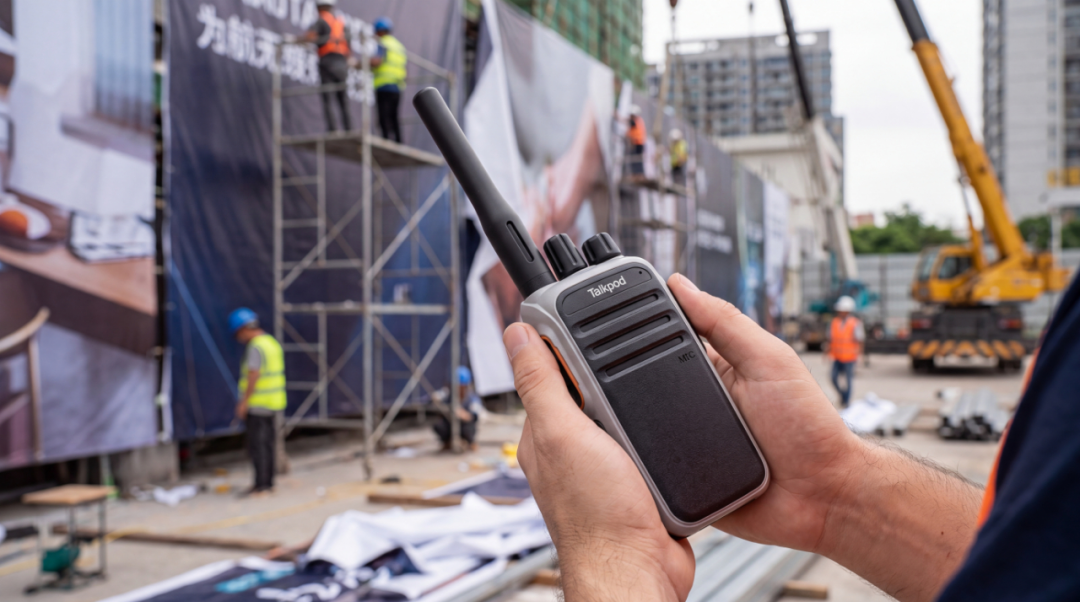
Advertising installation is a coordination problem as much as a construction task.
One worker may be positioning a sign while another controls tools or lifting equipment. A ground supervisor needs to see the overall alignment, while personnel at height may have only a limited view of what is happening below.
In shopping districts and construction environments, traffic, power tools and surrounding activity make ordinary spoken instructions easy to miss.
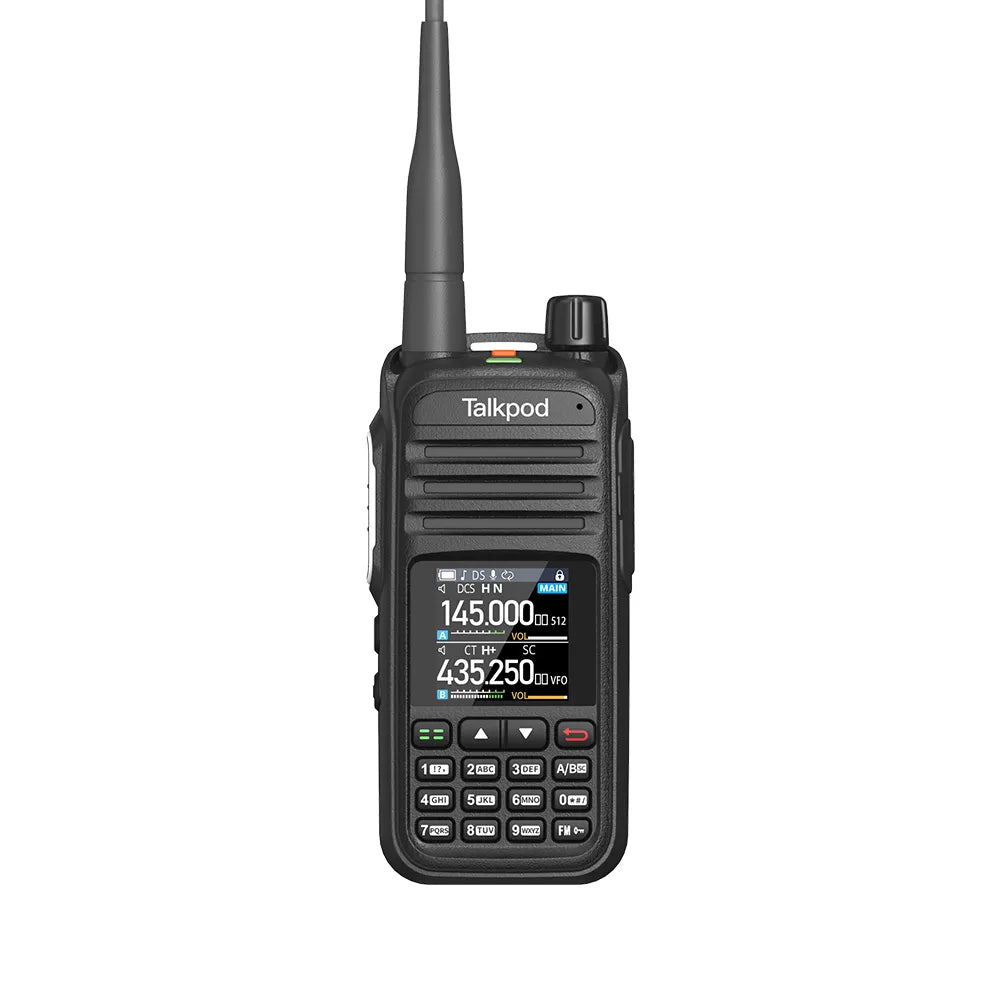
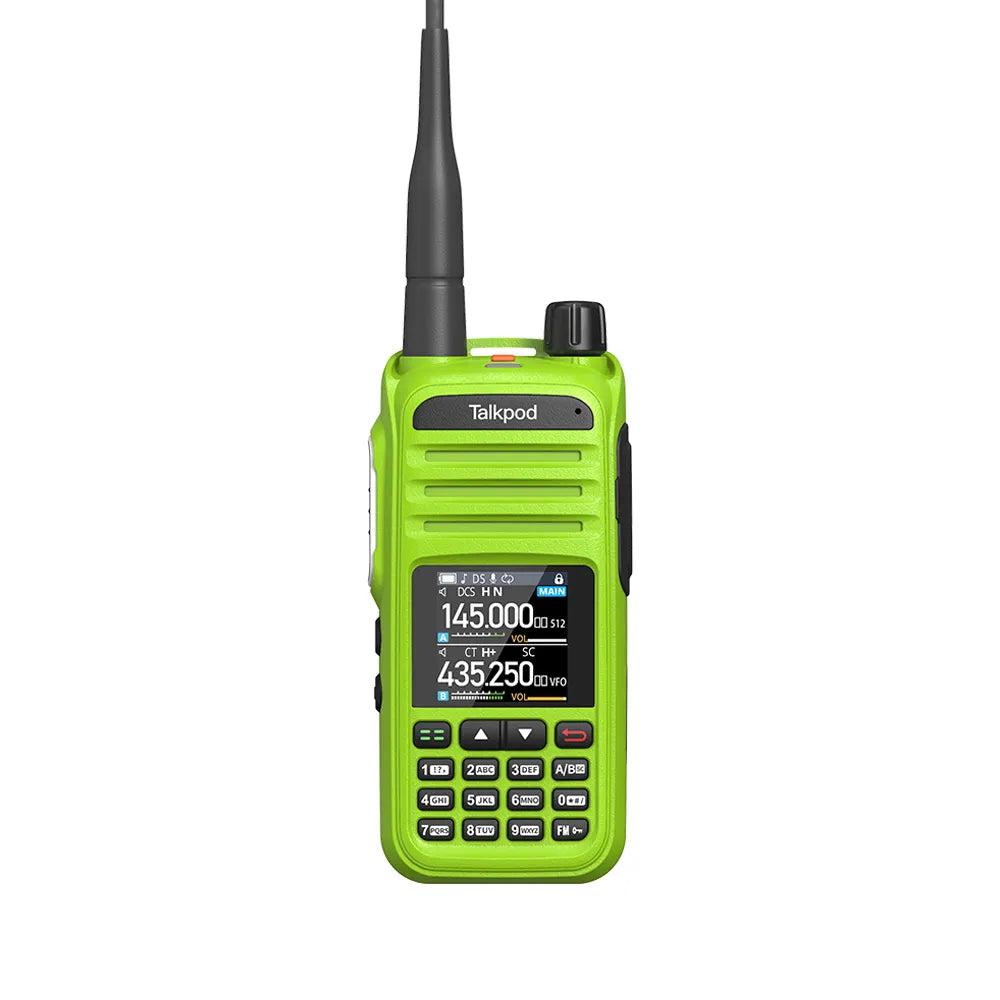
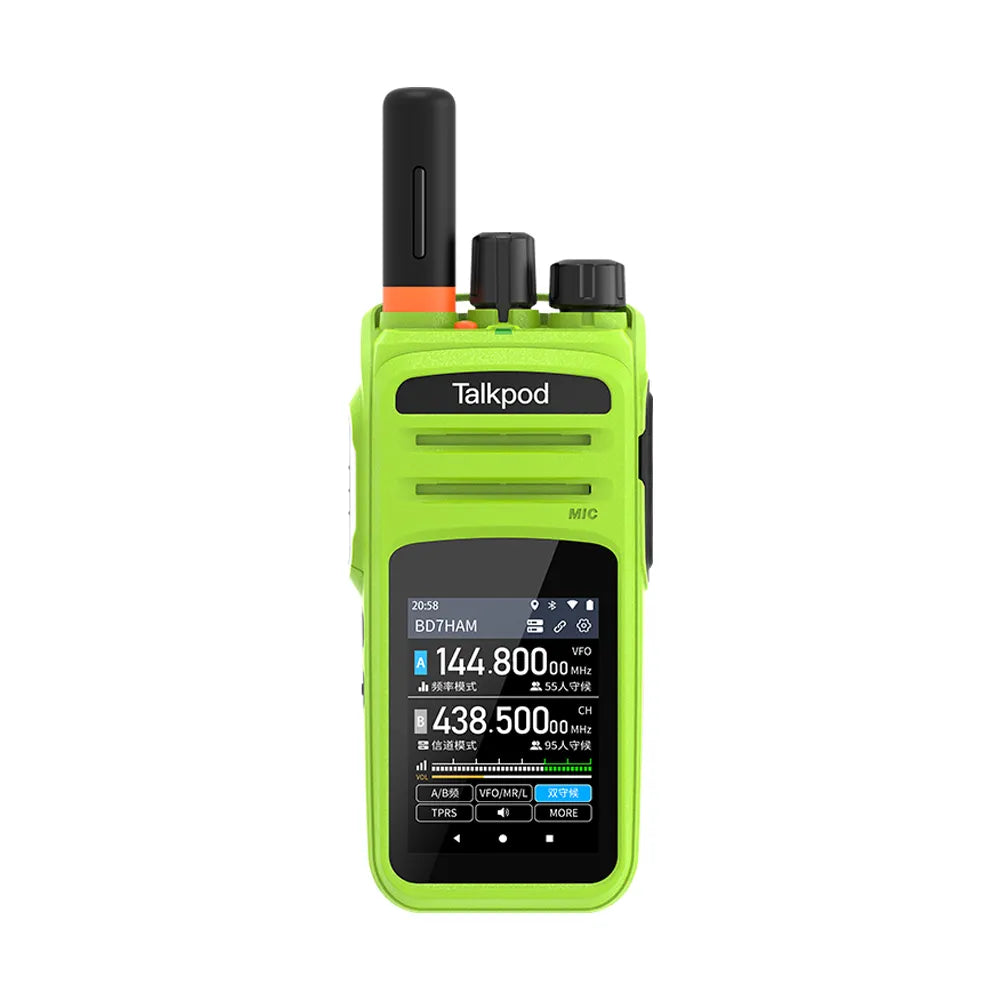
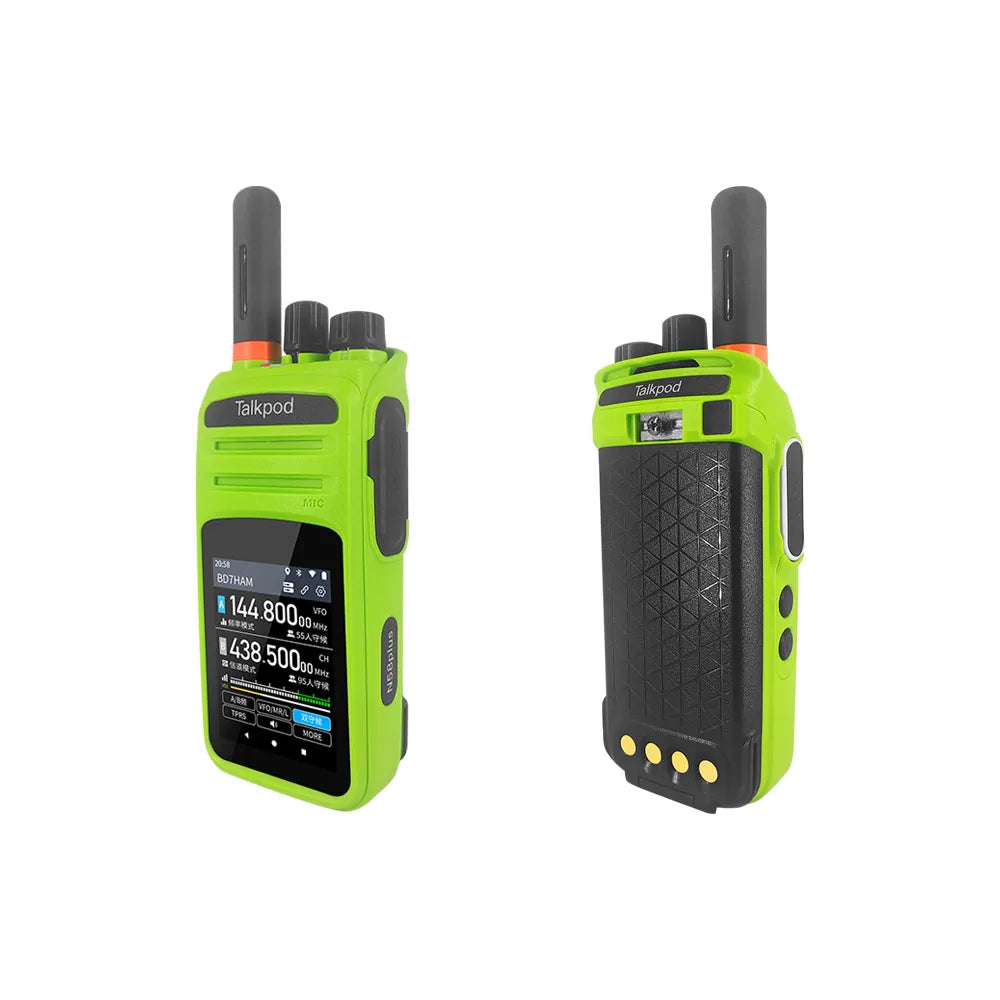
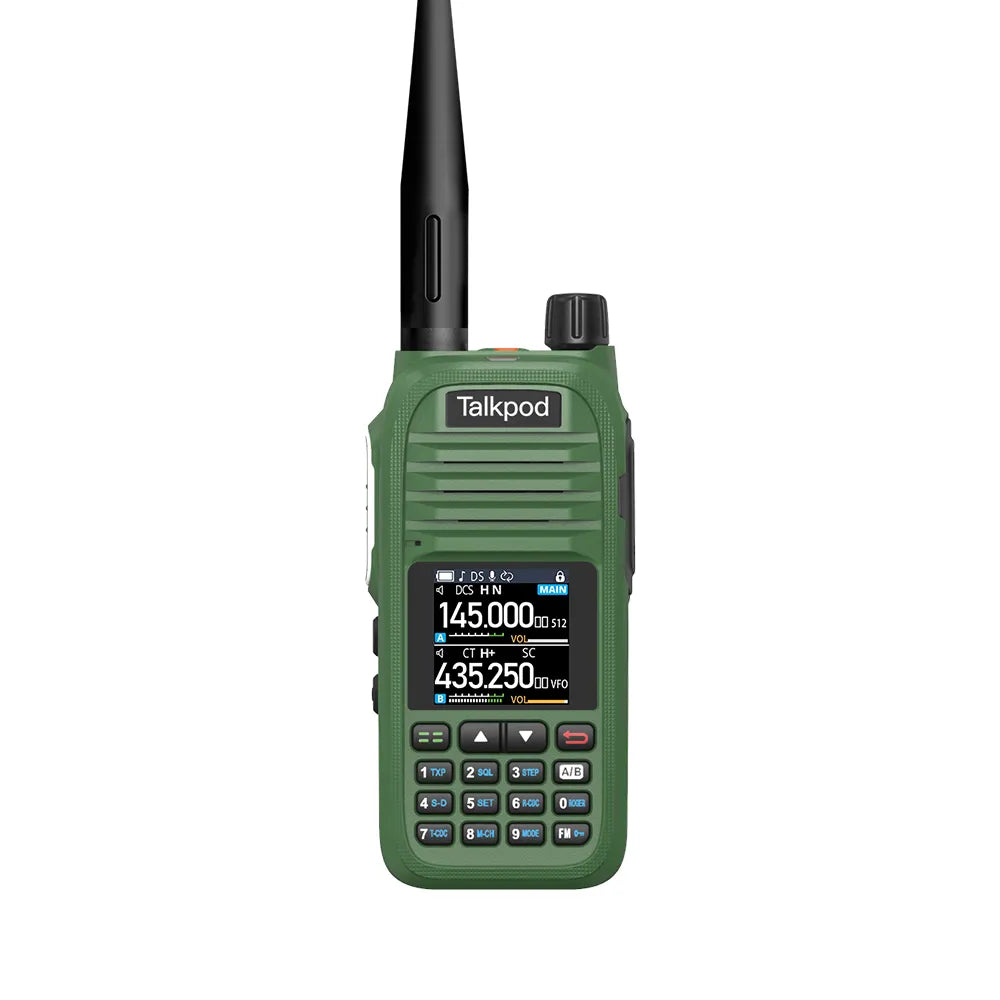
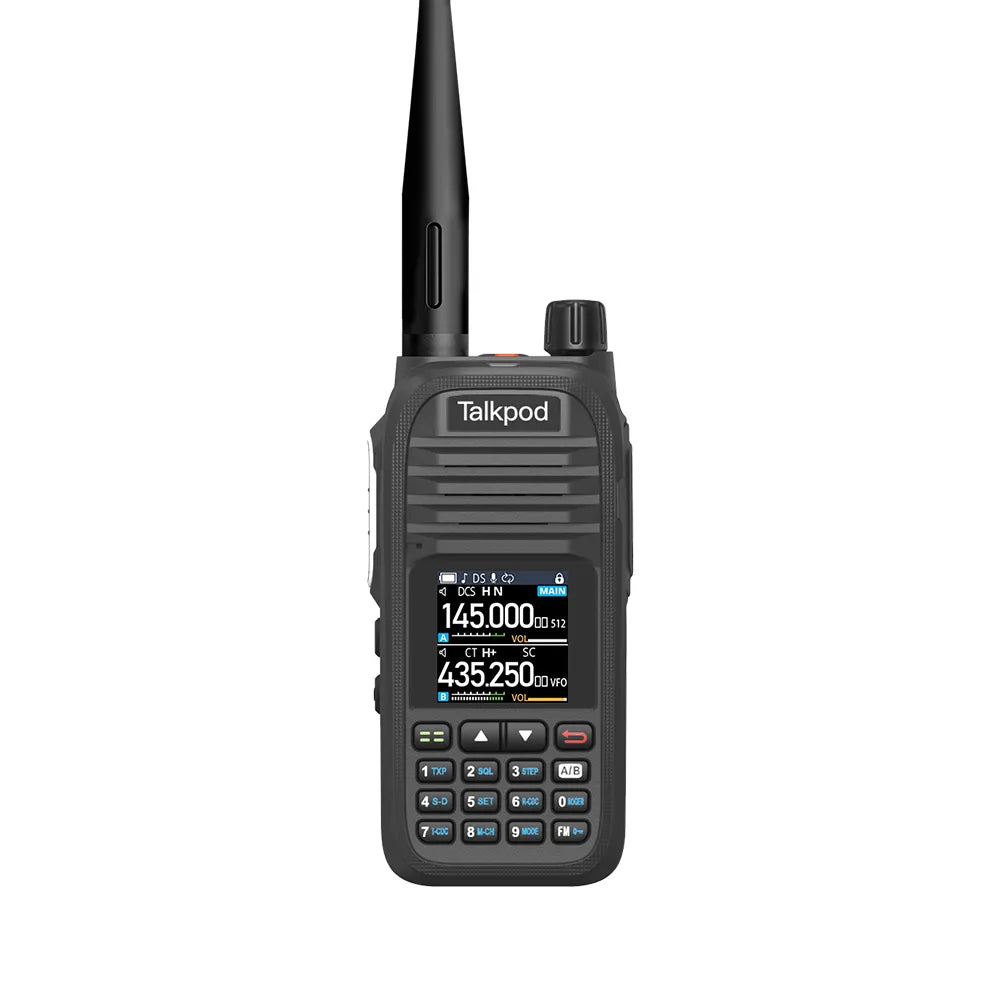
The Talkpod B30 analog radio provides a straightforward local communication layer for these teams, combining a 36 mm speaker, flexible channel functions, portable charging options and a compact body designed for frequent field use.
For installation crews, the practical value is simple: keeping short instructions moving between workers without requiring them to stop, climb down or rely on shouting across the worksite.
A 36 mm speaker helps in noisy installation environments
Advertising installation rarely takes place in silence.
Drills, traffic, generators and nearby construction activity can all compete with radio audio.
The B30 uses a 36 mm speaker rated at 1 W, intended to provide stronger voice output from a compact handheld device.
That can help workers hear short operational messages in busier environments without constantly moving the radio closer to the ear.
It does not guarantee perfect intelligibility.
Wind, machinery and hearing protection can still make radio traffic difficult to understand.
For critical instructions, crews should use short standardized phrases and require acknowledgement rather than assuming that a louder speaker means every message was heard correctly.
Radio communication can reduce unnecessary movement
Installation work often separates the person making a decision from the person carrying it out.
A supervisor standing at ground level may have the clearest view of sign alignment, while the installer is several meters above and focused on fastening or positioning.
Push-to-talk communication allows the supervisor to give short corrections without waiting for the worker to descend.
The same principle applies when teams are moving materials between vehicles, staging areas and installation points.
The radio reduces the need to physically carry routine information from one part of the worksite to another.
That can save time, but it does not replace a defined command structure.
High-risk lifting still requires formal signaling procedures
Large advertising structures may involve cranes, hoists or other lifting equipment.
In those situations, radio communication should support the lift plan rather than replace it.
The operation should still define who is authorized to direct the movement, what commands are used and what happens if communication is lost.
Workers should not improvise competing instructions over a shared radio channel.
Where hand signals, dedicated lifting communication or other procedures are required, those remain part of the operation.
The B30 helps carry the agreed instruction.
It does not determine whether the lift itself is safe.
Frequency hopping and sub-audio functions should not be described as encryption
The source describes the B30 as supporting frequency-hopping and sub-audio functions intended to reduce unwanted traffic and make casual monitoring more difficult.
Those functions can be useful for organizing communication in a busy RF environment.
But the terminology matters.
CTCSS or DCS-style sub-audio signaling is not encryption.
It helps a radio ignore transmissions that do not carry the expected signaling information, reducing the amount of unrelated traffic heard by users.
Frequency-hopping behavior may also complicate casual reception depending on implementation.
Neither should be described as guaranteeing confidential communication or making interception impossible.
If an installation team needs to protect genuinely sensitive information, it should use an appropriately designed secure communication system rather than treating analog signaling functions as equivalent to strong encryption.
Interference control is different from information security
Public installation sites may contain other radio users.
Nearby security teams, contractors or businesses can all be operating wireless equipment in the same general area.
Proper channel planning and signaling can reduce the amount of unrelated traffic heard by the crew.
That improves usability.
It does not create a private channel in the cryptographic sense.
For most advertising-installation work, that distinction may not matter because radio traffic usually consists of short operational instructions.
But teams should avoid sending unnecessary sensitive customer, access or site-security information over analog voice channels.
Portable charging helps crews moving between sites
Advertising installation teams often move from one job location to another during the same day.
A fixed desktop charging station is not always available.
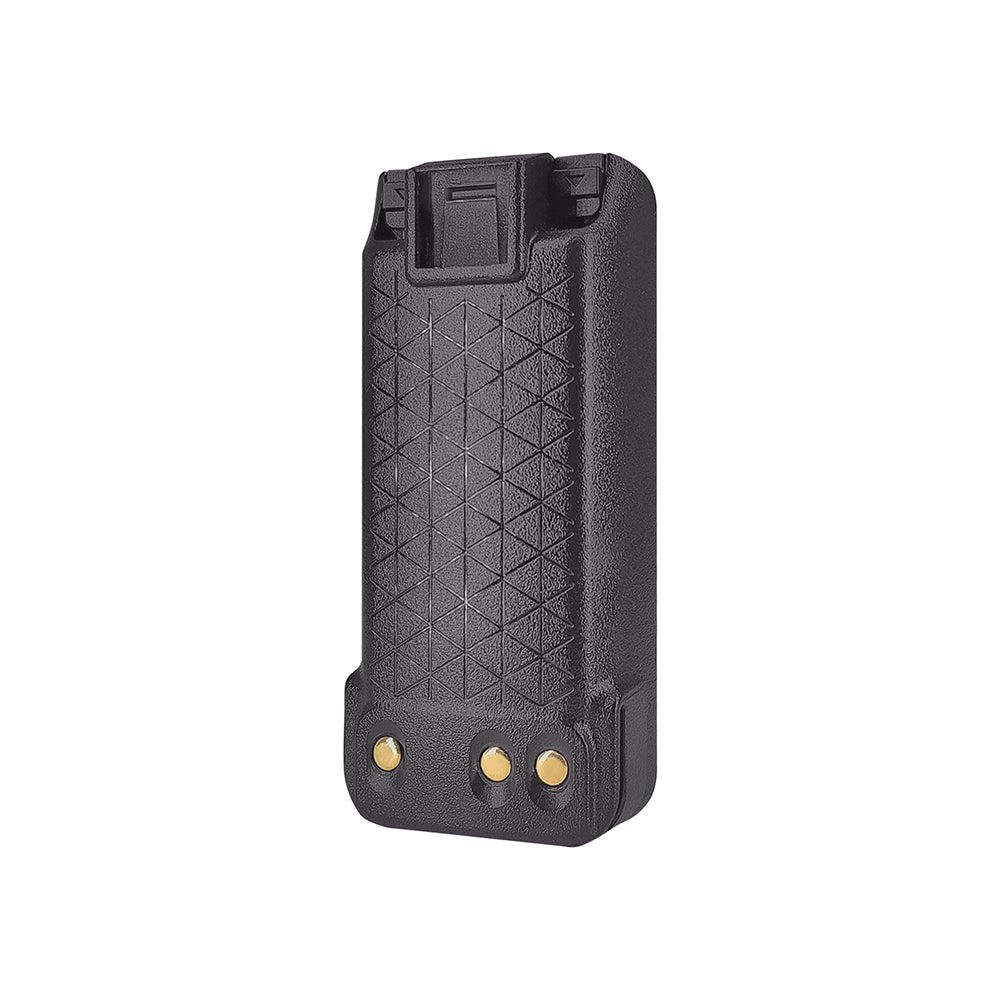
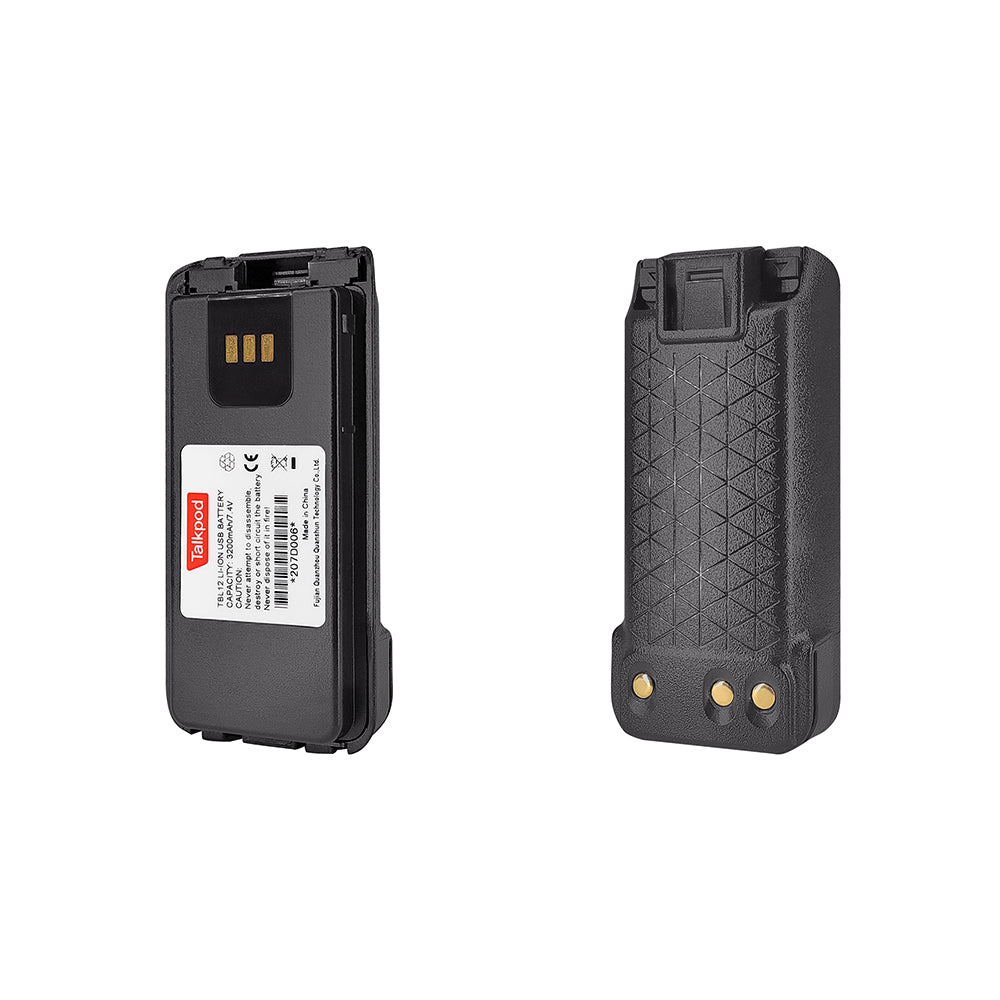
The source describes the B30 battery as providing a Micro-USB charging interface, allowing the radio to be charged from compatible 5 V power sources such as power banks, vehicle USB adapters or other suitable supplies.
That flexibility can be useful for mobile crews.
Charging can take place in a vehicle between jobs or from a portable power bank when a conventional charging station is unavailable.
The charging source should still meet the manufacturer's electrical requirements.
Convenient USB charging does not mean any available power source is automatically appropriate.
Battery figures depend heavily on duty cycle
The source lists a 7.4 V, 1500 mAh battery and makes extended-runtime claims under different power settings.
Those figures should be treated as reference conditions rather than guaranteed field endurance.
Actual runtime depends on how often the radio transmits, selected transmit power, audio volume, battery age, temperature and charging condition.
High-power transmissions consume substantially more energy than standby or receive operation.
A crew planning a long installation day should therefore not rely only on a headline endurance figure.
Radios should be fully charged before deployment, and spare charged equipment or an appropriate charging method should be available for extended work.
IP54 provides useful—but limited—environmental protection
Outdoor installation means exposure to dust and changing weather.
The source specifies an IP54 rating for the B30.
That indicates a defined level of protection against dust ingress and splashing water under the applicable test conditions.
For advertising crews, this can provide useful protection against ordinary dust and occasional light weather exposure.
It does not make the radio waterproof.
IP54 does not establish suitability for immersion, sustained heavy rain or unrestricted exposure to water jets.
If severe weather develops, equipment and workers should be protected according to the site's safety procedures rather than relying on the radio's ingress rating.
[Image]
MIL-STD-related testing should be interpreted by the individual test
The source also refers to environmental reliability testing associated with MIL-STD-810-series procedures.
Such testing can provide useful evidence about product durability under specified laboratory conditions.
But “MIL-STD tested” should not be interpreted as meaning the radio is immune to every drop, vibration, temperature or weather condition encountered on a jobsite.
Each test method has its own severity and limits.
If resistance to a particular condition matters to the project, the relevant test documentation should be checked directly.
Field reliability is always a combination of product design, operating conditions and equipment care.
A 210 g radio is easier to carry at height
The source lists the B30 at approximately 210 g with the standard battery.
That relatively light weight can matter when installers already carry tools, harness equipment and other hardware.
A compact radio can remain clipped to workwear without adding significant bulk.
The main advantage is accessibility.
A radio that stays attached to the worker is more useful than one left on a platform or in a vehicle because it is uncomfortable to carry.
At height, however, the radio itself should also be secured appropriately so that it does not become a dropped-object hazard.
Communication should support fall protection, not distract from it
Working at height introduces risks that no radio feature can solve.
Harnesses, anchors, guardrails, access equipment and other fall-protection procedures remain primary.
Workers should not handle a radio in a way that compromises their grip, balance or attachment to the structure.
If a task requires both hands, an appropriate accessory or a planned pause may be preferable to manipulating the handheld radio during the movement.
Communication improves coordination only when it does not introduce a new distraction.
Simple channel discipline improves installation work
A crew rarely needs a complicated radio plan.
One clearly defined operational channel may be enough for a small team.
A larger project may benefit from separating installation, logistics or other functions where traffic volume justifies it.
Whatever the structure, workers should know who gives the instruction, who acknowledges it and what words are used for critical movements.
A technically capable radio cannot compensate for several people speaking at once or using ambiguous commands.
Good radio discipline is often more valuable than another feature.
A practical tool for a mobile installation crew
The Talkpod B30 fits advertising installation because the job combines mobility, noise and short-distance coordination.
Its 36 mm, 1 W speaker can support clearer reception in busy environments, while flexible channel and signaling functions can help teams manage local radio traffic. Portable USB charging is useful for crews moving between jobs, and the IP54-rated, approximately 210 g body is suited to routine field use within its documented limits.
Those capabilities should not be overstated.
Analog signaling is not the same as secure encryption. IP54 is not heavy-rain protection, and a high-power radio does not guarantee communication through every structure.
The more useful measure is whether the crew can pass a clear instruction from the person who sees the whole installation to the person who needs to act on it.
For advertising work, that can mean fewer repeated instructions, less unnecessary movement and a more orderly installation process.


Leave a comment
All comments are moderated before being published.
This site is protected by hCaptcha and the hCaptcha Privacy Policy and Terms of Service apply.