

A guesthouse may look small from the outside, but its daily operation can be surprisingly distributed.
Reception staff may be handling arrivals while housekeeping moves between separate rooms or buildings. Kitchen personnel work in another part of the property, and security or maintenance staff may be covering outdoor areas, courtyards or parking spaces.
For larger boutique guesthouses and resort-style properties, these small distances add up.
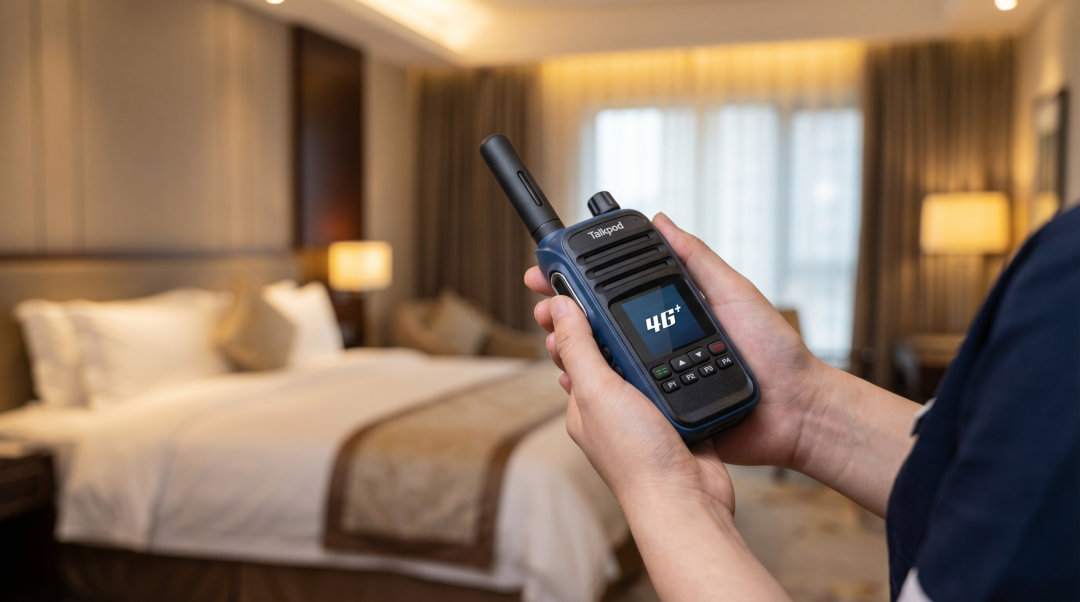
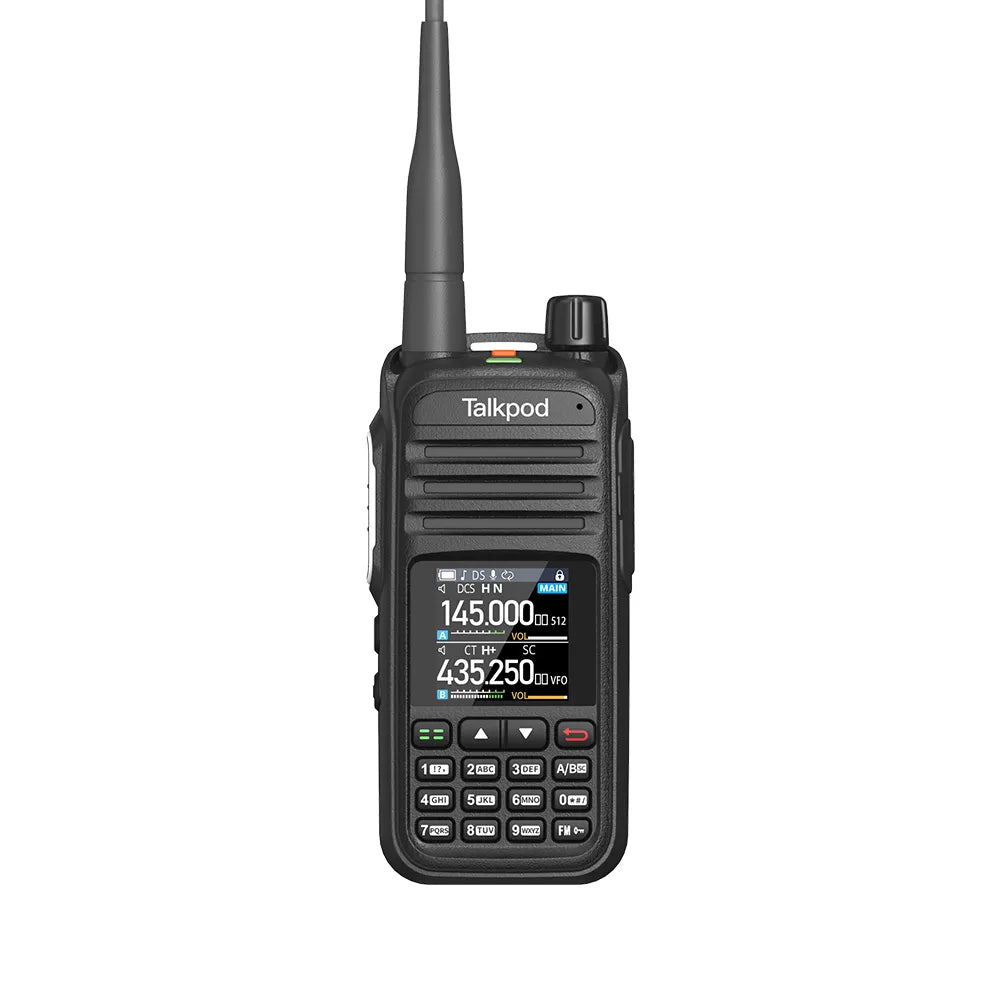
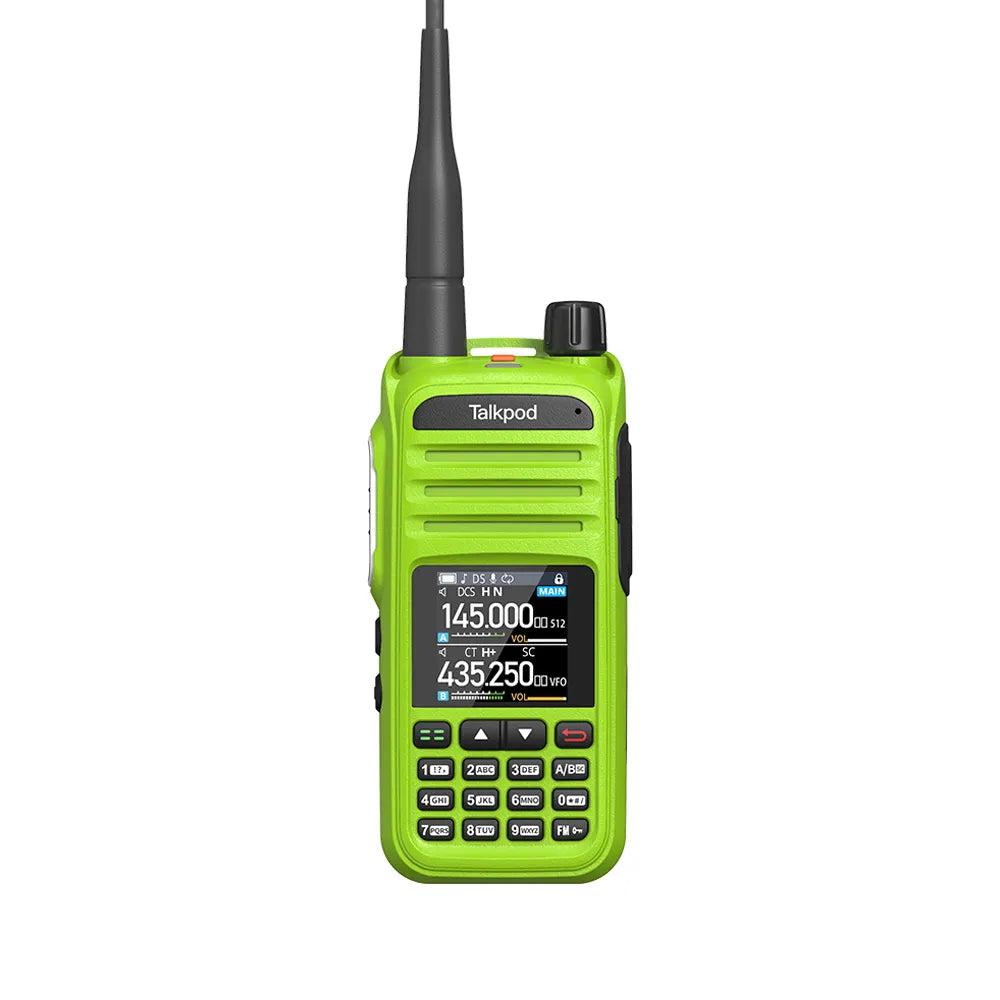
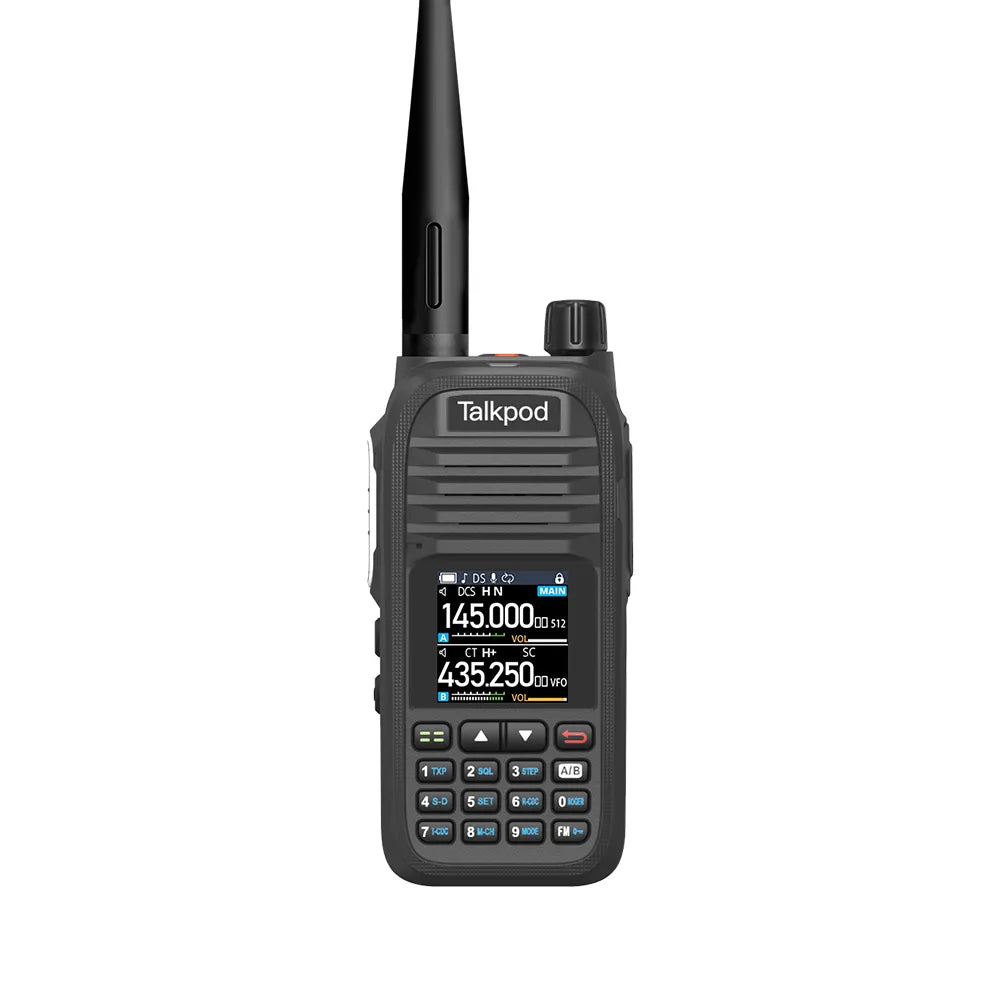
The Talkpod B30 analog radio provides a straightforward local communication tool for these teams, combining continuously adjustable volume, selectable wide- and narrow-band operation, multilingual voice prompts and a configurable transmit time-out timer.
The value is not complicated technology.
It is giving frontline staff a quick way to reach one another without repeatedly walking back to reception or relying on individual phone calls.
Continuous volume adjustment suits different guest areas
Hospitality communication needs to be audible without becoming intrusive.
A radio that is appropriate in a busy kitchen may be too loud in a quiet guest corridor.
The B30 uses a continuously adjustable volume control, allowing staff to set the listening level more precisely for the environment around them.
In a guest-room corridor, an employee can keep the volume lower and listen more discreetly.
In an outdoor courtyard, service area or kitchen, the level can be increased so that short operational messages remain easier to hear over surrounding activity.
That flexibility is useful because hospitality does not have one standard noise environment.
The objective is not maximum volume.
It is making the radio audible to the employee without unnecessarily becoming part of the guest experience.
Local radio coverage still depends on the property layout
A small urban guesthouse and a resort spread across several buildings have very different RF environments.
Walls, reinforced concrete, landscaping, elevation changes and separate structures can all affect the usable range of an analog handheld radio.
For this reason, the B30 should not be described as automatically providing full-property coverage simply because it can be configured for different bandwidths.
The most reliable approach is to test the actual work areas.
Reception, guest corridors, kitchens, outdoor spaces, storage rooms and separate accommodation buildings should all be checked before the radio plan is finalized.
If a distant building or lower floor remains weak, that should be addressed through radio planning or appropriate infrastructure rather than by assuming one setting will solve every coverage problem.
[Image]
Wide- and narrow-band modes serve different channel plans
The B30 supports selectable 12.5 kHz narrow-band and 25 kHz wide-band operation.
That flexibility can be useful when radios need to match an existing analog system or a particular channel plan.
Narrow-band operation uses less spectrum and can allow more efficient use of available frequency resources.
Wide-band operation can provide different audio characteristics in systems where that bandwidth is permitted and supported.
But bandwidth selection should not be simplified into “small property equals narrow band” and “large property equals wide band.”
A 25 kHz channel does not inherently provide longer range, and a 12.5 kHz channel does not automatically prevent neighboring businesses from being heard.
All radios in the group should be programmed consistently, and the selected bandwidth should comply with the frequencies and regulations applicable to the deployment.
Multilingual voice prompts can simplify staff onboarding
Hospitality teams may include employees with different language backgrounds and different levels of experience with radio equipment.
The B30 supports multiple language options and voice channel announcements.
When a user changes channel or performs a supported operation, the radio can announce the selected channel in the configured language.
That can reduce the need to look closely at the device during a busy shift.
It also makes basic radio use easier to explain to new or temporary staff.
A housekeeper or kitchen employee does not need to understand radio terminology in detail.
They need to know which channel to use, how to transmit and how to recognize that the radio is on the correct setting.
Voice prompts can make that learning process more straightforward.
Simpler controls support a mixed-experience workforce
Guesthouses often rely on rotating staff, part-time employees or seasonal workers.
That makes complex radio procedures undesirable.
The most effective configuration is usually a small number of clearly assigned channels with simple operating rules.
Reception may use one agreed channel for general service coordination, while larger properties can separate housekeeping, security or other functions when traffic volume justifies it.
Multilingual voice prompts can reinforce those settings without requiring every employee to study a detailed radio guide.
The objective is not to expose every feature.
It is to make correct daily operation difficult to get wrong.
The transmit time-out timer prevents accidental long transmissions
One common problem in shared radio systems is an accidentally held PTT button.
A radio can be placed in a pocket, pressed against equipment or simply held too long during a conversation.
When that happens, the channel remains occupied and other staff cannot transmit.
The B30 supports a configurable Transmit Time-Out Timer (TOT) that automatically stops a transmission after the preset maximum duration is reached.
That prevents one radio from occupying the channel indefinitely because of an accidental or unnecessarily long transmission.
For a hospitality team, this can help keep the channel available during busy service periods.
TOT does not guarantee that urgent traffic will always get through immediately.
Several employees can still attempt to use the same channel at once.
But it provides a useful safeguard against one avoidable source of prolonged congestion.
[Image]
Faster service depends on small handoffs
Most guesthouse radio traffic is routine.
A room needs extra towels. A guest has requested another amenity. The kitchen needs to know that a table is ready. Maintenance needs to check a light or air-conditioning unit.
These are small tasks, but they happen continuously.
With the B30, reception can contact the relevant staff member directly instead of asking someone to walk through the property looking for them.
Housekeeping can report that a room is ready while remaining on the floor.
Kitchen and service staff can coordinate timing without leaving their work area.
The cumulative effect is less unnecessary movement and a shorter path between a guest request and the person who can respond.
Keep guest information off general radio traffic
Convenient voice communication can encourage staff to share more information than necessary.
Guest names, phone numbers, payment details or other sensitive information should not automatically be spoken over a shared radio channel.
A short operational message is usually sufficient.
For example, reception can ask a staff member to attend a room or service area without broadcasting unnecessary personal details.
Booking information and guest records should remain in the property's authorized management systems whenever possible.
The radio coordinates the service task.
It does not need to carry the complete guest record.
Battery management still belongs in the daily routine
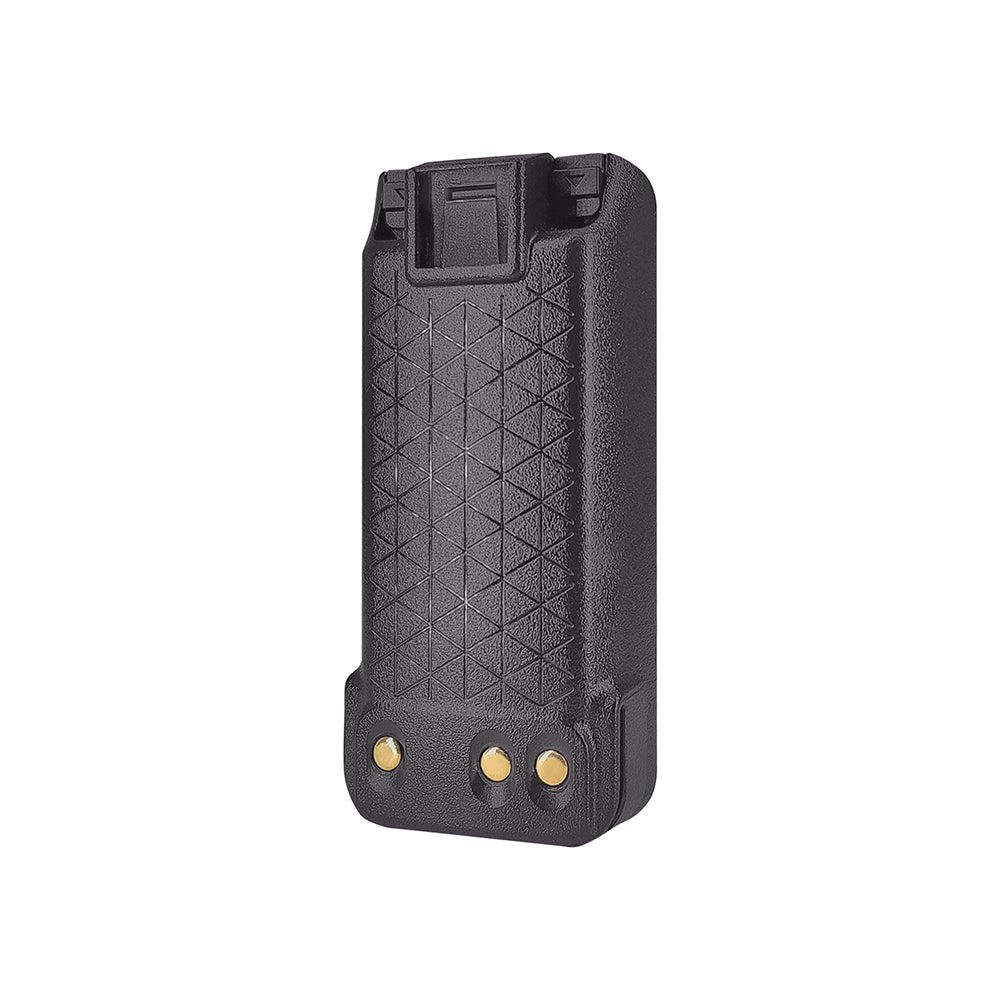
Hospitality businesses often operate for long hours, and radio reliability depends on equipment being ready at the beginning of each shift.
Even when a device provides extended operating time, battery condition should still be managed systematically.
Radios should be charged according to a defined routine, checked before peak periods and rotated if the property operates across long shifts.
A spare charged unit can also prevent a small battery problem from becoming a communication problem during a busy evening.
The most dependable radio fleet is one that is maintained before staff notice something is wrong.
A simple communication layer for hospitality operations
The Talkpod B30 fits boutique hospitality because its most useful features address everyday operating details.
Continuous volume adjustment helps staff use the radio in both quiet guest corridors and noisier work areas. Wide- and narrow-band options provide flexibility when matching an appropriate analog channel plan. Multilingual voice prompts can reduce training friction, while the transmit time-out timer prevents accidental long transmissions from occupying the channel indefinitely.
None of these features eliminates the limits of local radio communication.
Walls and separate buildings still affect coverage. Bandwidth selection does not determine range by itself, and a shared channel can still become busy during peak periods.
Used with sensible programming and real coverage testing, however, the B30 can give reception, housekeeping, kitchen and support personnel a faster way to coordinate the small tasks that shape a guest's stay.
In hospitality, those communications are most successful when the guest never has to notice them.

Leave a comment
All comments are moderated before being published.
This site is protected by hCaptcha and the hCaptcha Privacy Policy and Terms of Service apply.