
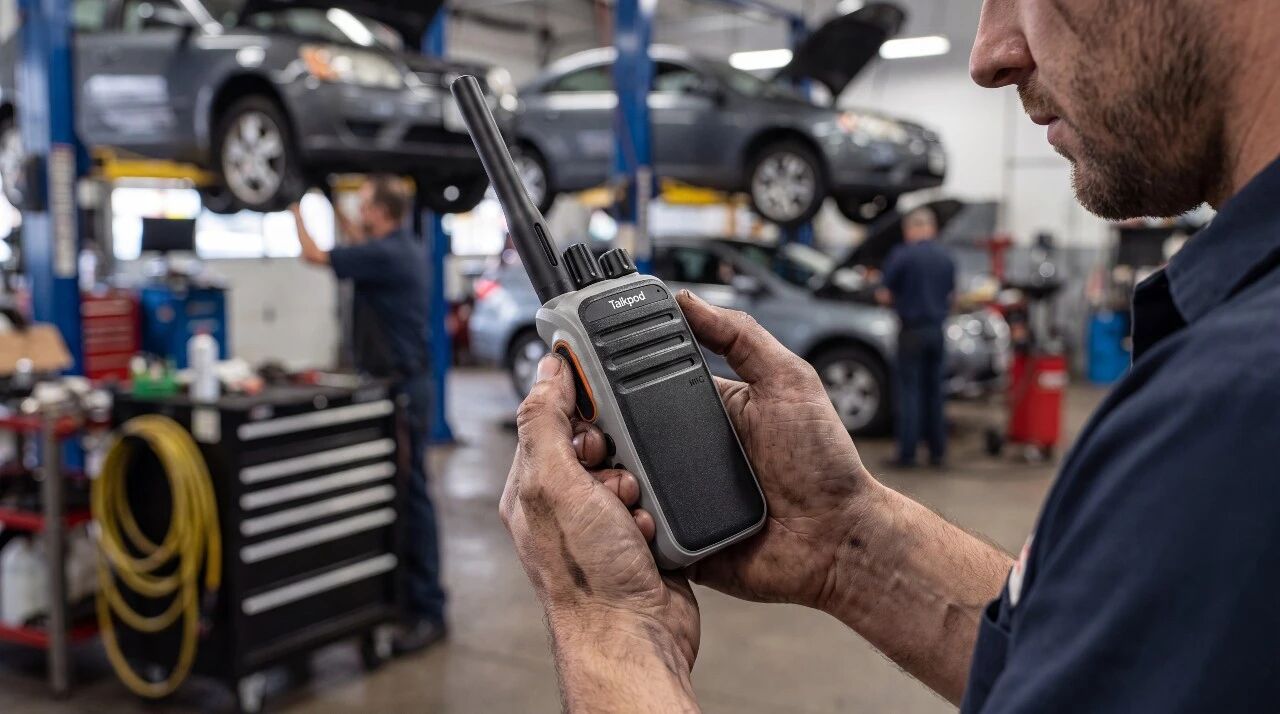
An automotive workshop is divided by task. Mechanics work beneath vehicle lifts, body technicians operate among welding and repair equipment, parts staff manage the storeroom, and service advisers monitor vehicles waiting for collection.
These teams may be under the same roof, yet communication between them is not always straightforward. Metal structures, machinery and workshop partitions can weaken radio signals. At the same time, pneumatic tools, engines and ventilation systems make ordinary speech difficult to hear.
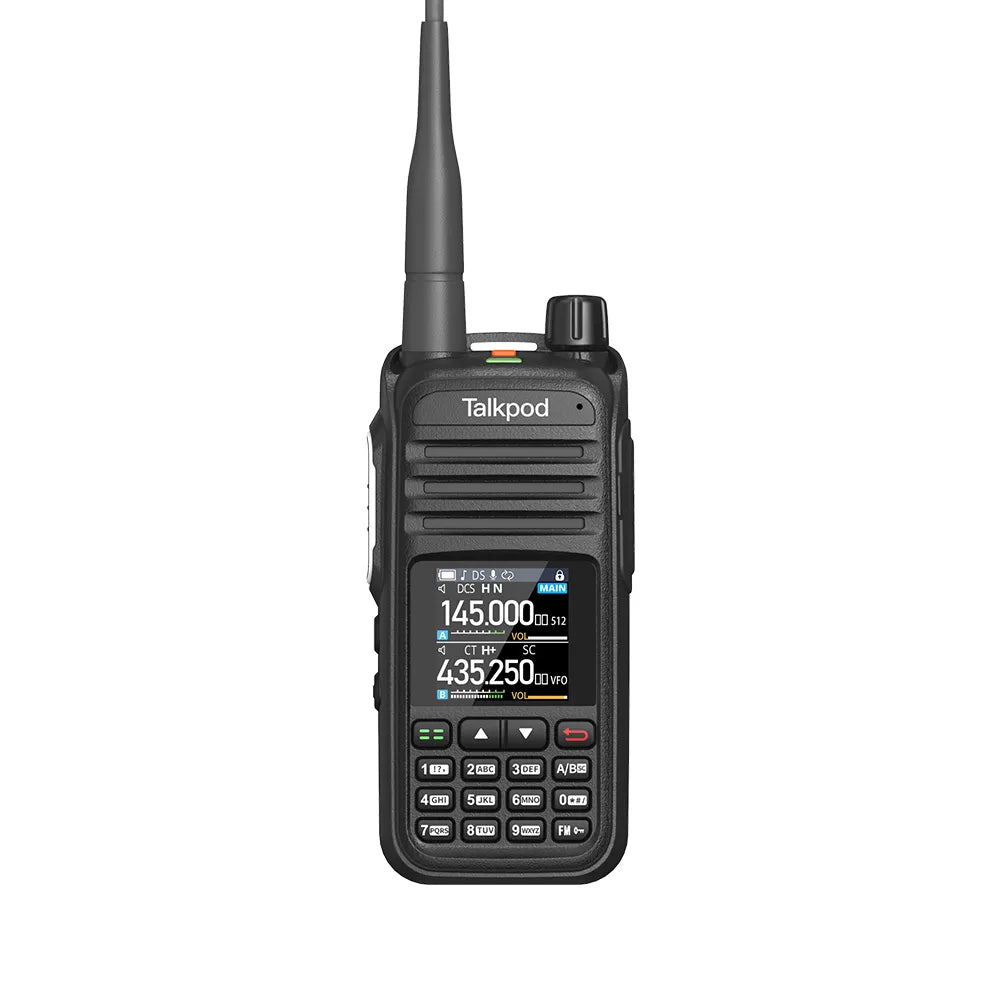
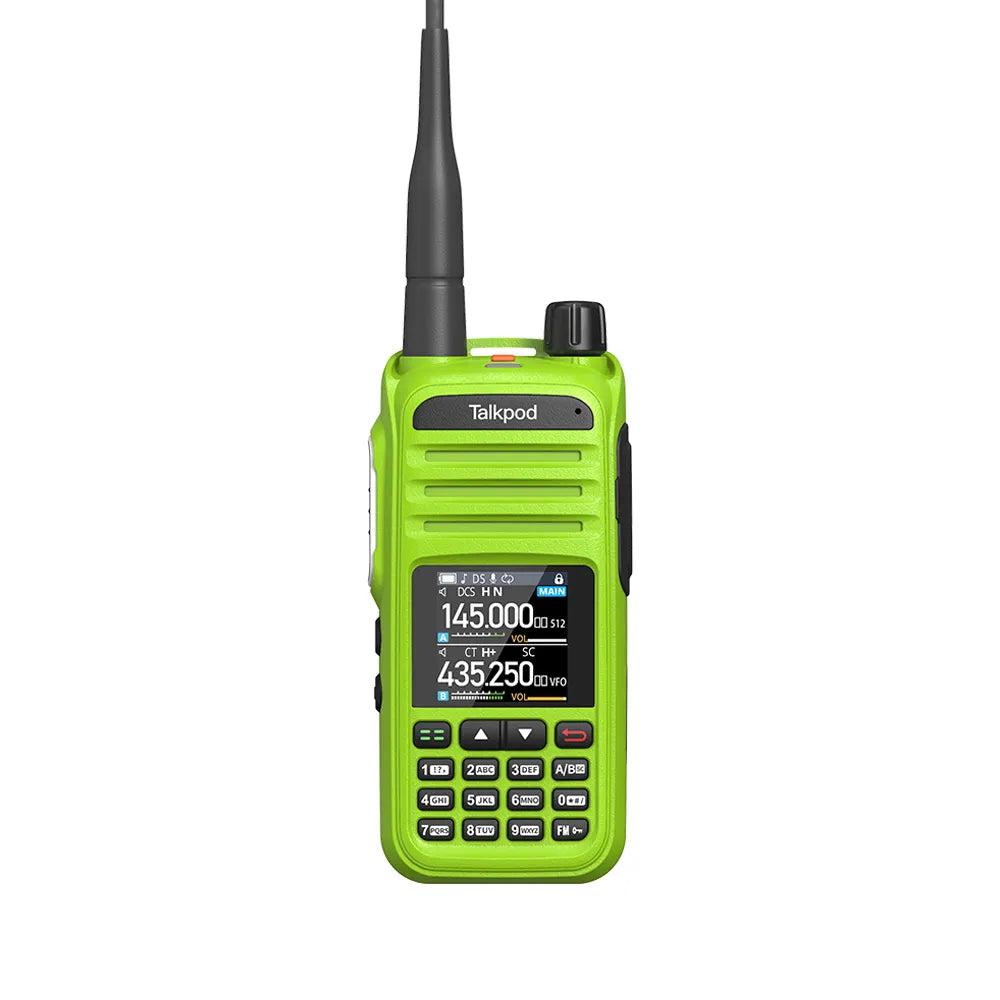
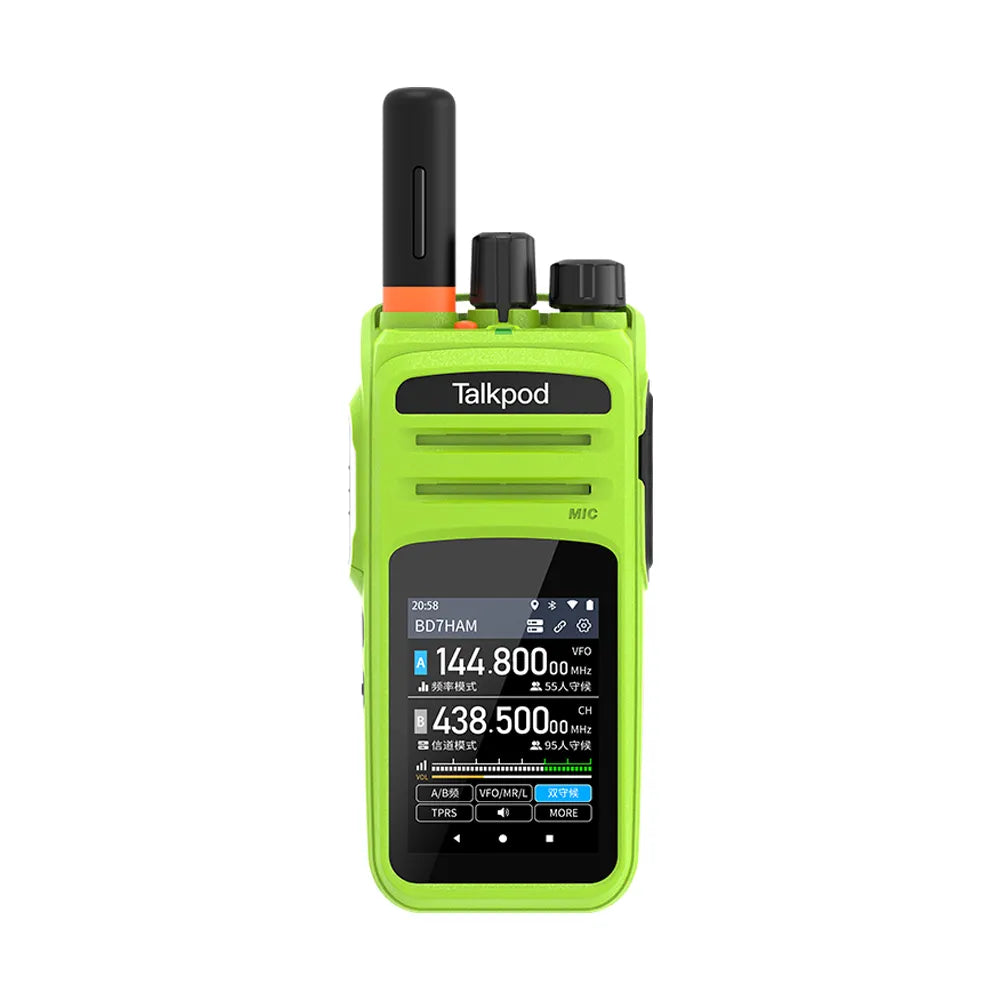
The Talkpod B30 commercial analog radio provides technicians with a simple, direct communication link for coordinating repairs, requesting parts and reporting progress across the workshop.
[Image]
Connecting separate work areas
Vehicle workshops contain many obstacles to radio communication. Steel columns, body panels, lifting equipment and enclosed storage rooms can all affect a direct signal.
Within its effective operating range, the B30 helps connect mechanics working in service bays with body-repair teams, parts personnel and supervisors elsewhere on the site. A technician can request a component without leaving the vehicle, while a workshop manager can check the status of several repairs without walking from bay to bay.
Actual performance will depend on the size of the facility, its construction and the amount of metal equipment between users. A properly planned channel setup can nevertheless reduce the time employees spend moving around the workshop simply to pass information.
For a repair business, these small savings accumulate. Less walking means more time spent diagnosing faults and completing work.
Making instructions heard above workshop noise
Automotive workshops are rarely quiet. Air tools, vehicle engines, compressors and lifting equipment may all operate at once.
The B30 uses a large, high-output speaker with an optimised acoustic chamber to provide louder and clearer voice communication. This helps technicians understand brief updates such as whether a part has arrived, whether a vehicle is ready for testing or whether another employee is required at a particular bay.
Clearer audio reduces repeated calls and misunderstandings. That matters when a message includes a part number, vehicle reference or safety warning.
The radio cannot remove background noise, but it can make important instructions easier to distinguish from it.
Keeping team communication orderly
Several repair teams may work on different customer vehicles at the same time. If every employee shares one busy channel—or if nearby radio users operate on similar settings—unwanted transmissions can interrupt normal work.
The B30 supports channel and sub-audio configurations that can help separate teams and reduce irrelevant traffic. Frequency-hopping-related settings may also make casual channel matching more difficult.
These functions can improve communication privacy and reduce interference, but they should not be described as secure end-to-end encryption. Sensitive customer data should still be handled through the workshop’s approved information systems and procedures.
For daily repair work, the benefit is practical: technicians hear fewer unrelated calls and can concentrate on the vehicles assigned to their team.
Built for oil, dust and daily handling
A workshop radio must tolerate conditions that would quickly damage an ordinary consumer device.
Technicians may handle it while wearing oily gloves. The radio may be placed on a tool trolley, dropped onto the floor or exposed to dust and water spray near a washing bay.
The B30 uses a sealed, wear-resistant housing designed for commercial environments. Its textured surface provides a more secure grip, while the dual-material body helps protect it against the knocks and abrasion of daily workshop use.
Care should still be taken around solvents, fuel and strong cleaning chemicals, which may damage electronic equipment or housing materials.
Battery life for long repair shifts
Repair work may begin early and continue through several shifts, particularly when a vehicle must be completed urgently.
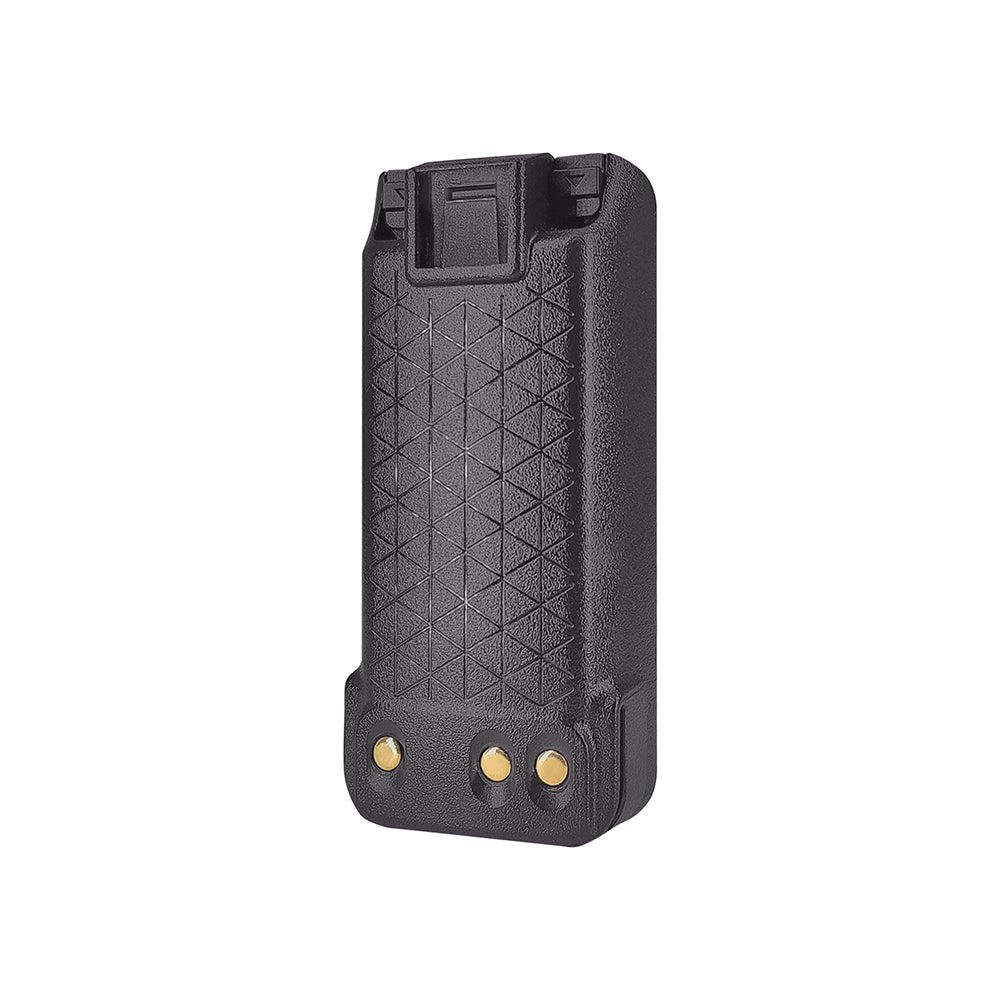
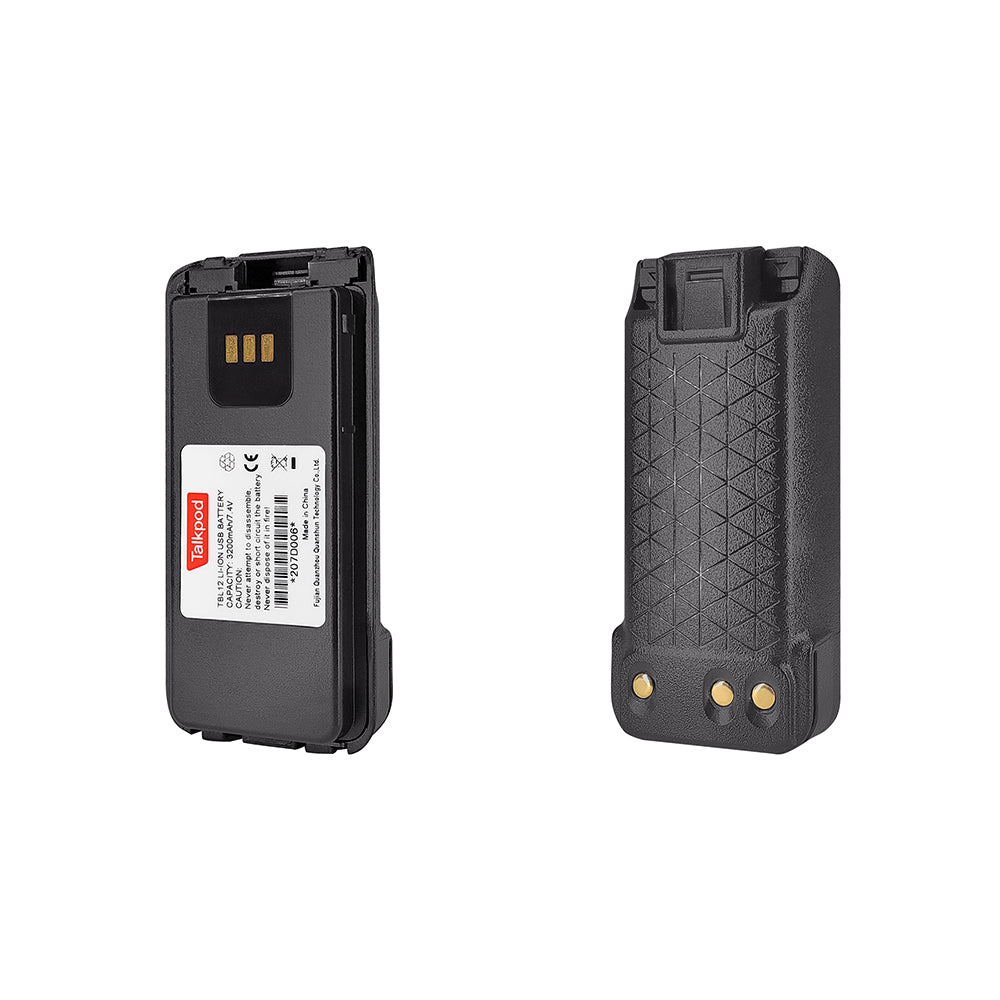
The B30 is designed for extended operation, reducing the need to remove radios from service for frequent charging. USB charging also allows staff to restore power using commonly available compatible equipment during breaks or shift changes.
Actual battery life will vary according to transmission frequency, audio volume and working conditions. Even so, flexible charging and extended endurance make the device easier to manage in workshops where radios are shared between employees or used throughout the day.
[Image]
Simple operation for hands-on work
A mechanic should not need to remove gloves and navigate several menus before making a call.
The B30 has a compact, lightweight body and straightforward controls suited to frequent use. Its ergonomic design makes it easier to carry while moving around vehicles, operating tools or checking components.
New employees can learn the basic calling procedure quickly, making the radio practical for workshops with several teams, changing shifts or temporary staff.
A communication tool that keeps work moving
The Talkpod B30 does not diagnose a fault, locate a missing part or repair a vehicle. It connects the people responsible for doing those things.
Clear audio helps instructions rise above machinery. A direct radio link reduces unnecessary movement between work areas. Configurable channels keep team communication more orderly, while rugged construction and flexible charging suit the demands of everyday workshop use.
For the customer, the radio remains out of sight. Its effect appears in a repair process that moves with fewer delays, better-informed staff and smoother handovers between diagnosis, parts supply and final inspection.
In a busy automotive workshop, efficiency often depends on one simple question reaching the right colleague at the right moment.

Leave a comment
All comments are moderated before being published.
This site is protected by hCaptcha and the hCaptcha Privacy Policy and Terms of Service apply.