

What is a POC Radio?
PoC, or Push-to-Talk over Cellular, provides group voice communication over compatible cellular data networks and a communication service. It can connect users across wide areas without a direct RF link between their handhelds. Actual access depends on device compatibility, network coverage, an active data plan and platform availability.
How Do POC Radios Work?
POC radios function by utilizing cellular networks to transmit and receive communications:
- Transmission: The user presses the talk button to send a message over the cellular network.
- Reception: The message is received by other POC radios within the network, using the cellular data network and the communication platform rather than a direct radio-frequency relay between handhelds.
Advantages of POC Radios
- Wide Coverage: POC radios can offer extensive coverage wherever there is a cellular signal.
- Ease of Use: Many PoC radios can be configured with user accounts and talkgroups, making group selection straightforward. These are network-based groups, not preprogrammed analog operating frequencies.
- Wi-Fi Compatibility: Some POC radios can also operate over Wi-Fi, allowing for communication in areas with poor cellular coverage as long as Wi-Fi is available.
Limitations of POC Radios
- Dependence on Cellular Networks: PoC requires a working data connection and access to its platform. A model that explicitly supports Wi-Fi may use working Wi-Fi internet when cellular access is unavailable; do not assume every PoC device supports this.
- Not Truly Off-Grid: Unlike traditional radios that can operate independently of any infrastructure, POC radios are not suitable for off-grid communication.
- Potential Service Interruptions: Network outages or prioritization of services during emergencies can affect the availability and reliability of POC radios.
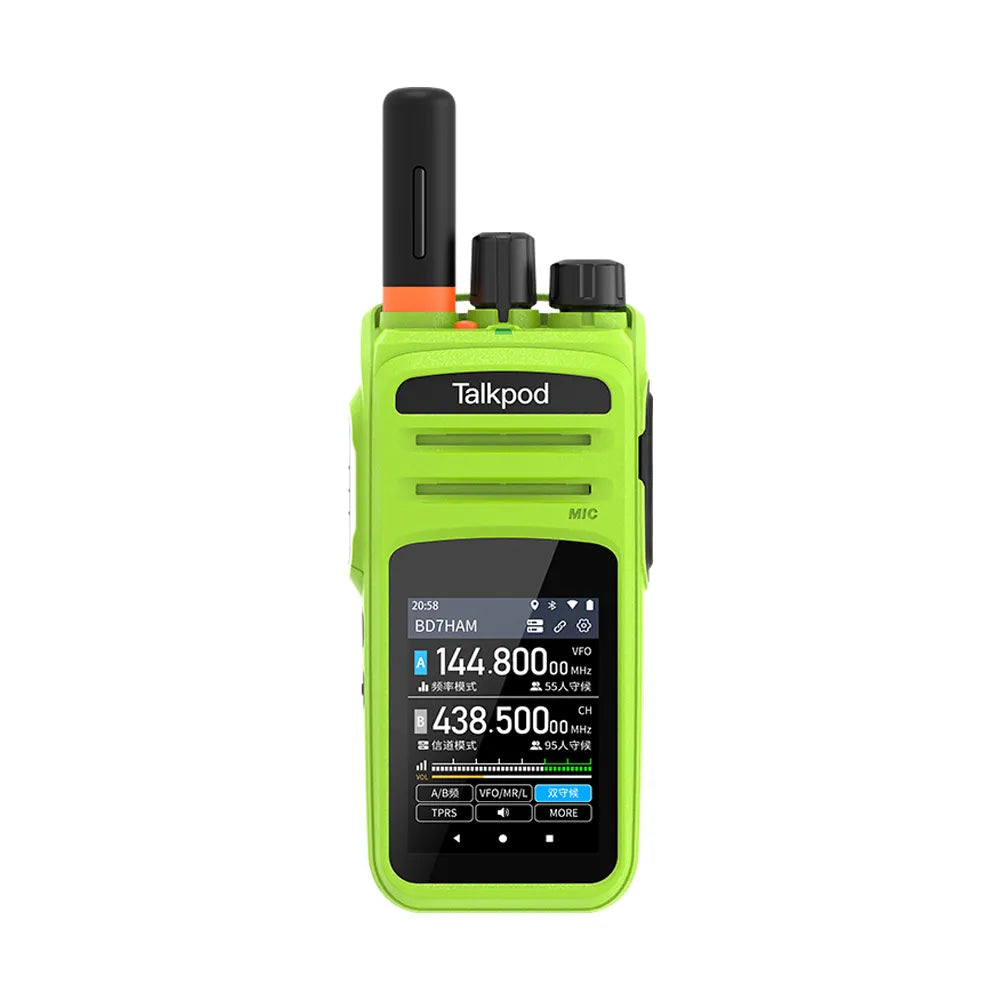
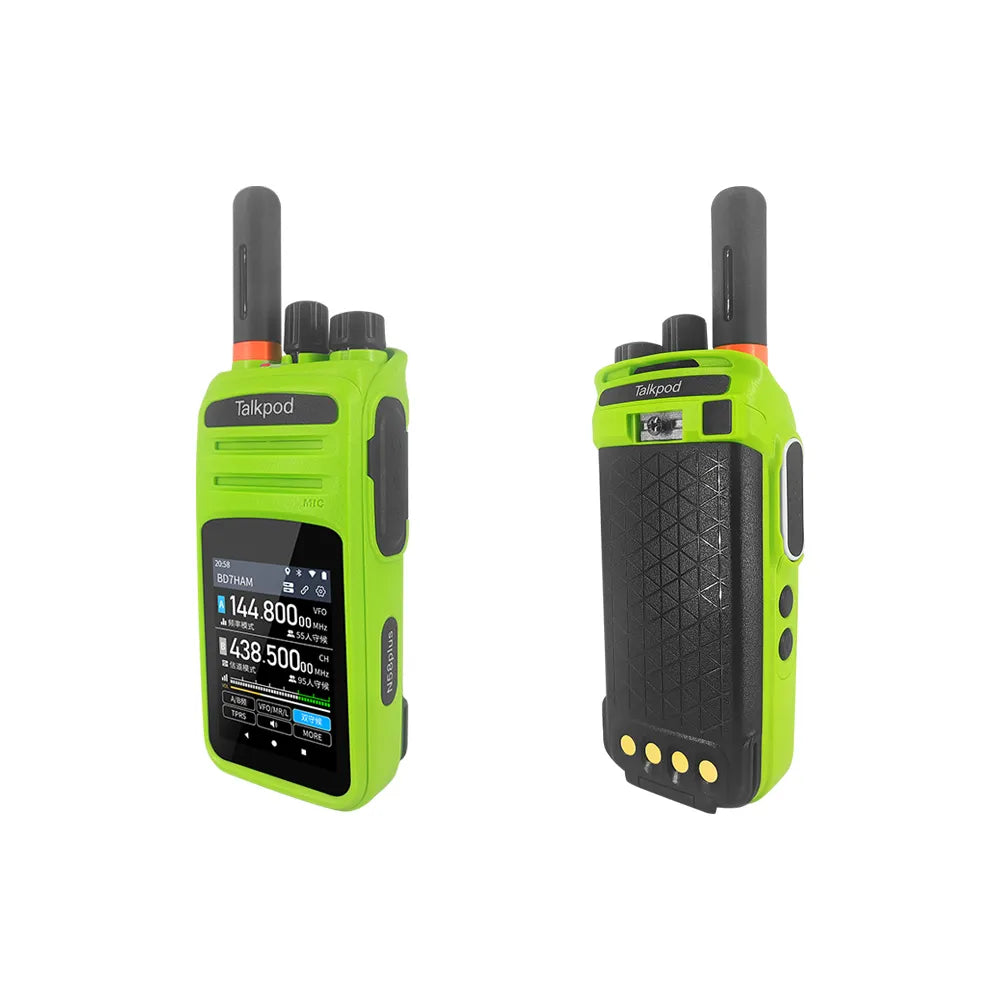
Introducing the Talkpod N58plus
The Talkpod N58plus is an Android-based LTE handheld with a touchscreen and support for compatible communication apps. Its app-based calls use network connectivity; the device's radio-style controls do not establish a direct analog RF mode.
- Touchscreen Interface: The N58plus boasts a 2.4-inch touchscreen that is both scratch-resistant and impact-resistant, enhancing user interaction with GPS map visualization and video calling functionalities.
- Battery and Charging: Equipped with a high-capacity battery and rapid charging technology, this device ensures extended use and durability.
- Virtual Amateur Apps: Request the Virtual Amateur app to be pre-installed when ordering the N58plus, and confirm compatibility with the current service. Virtual numbers such as 438500 identify app groups; they are not physical RF frequencies. Participants need compatible software, the same group settings and an active data connection. Supported app functions can include voice, text and image sharing. Software access does not eliminate cellular data-plan charges or guarantee compatibility across all devices. It also features dual-frequency monitoring and touch-screen frequency switching.
- Zello Apps: The N58plus is officially supported by Zello, ensuring compatibility with all standard Zello features. The device includes a 360-degree channel knob for rapid group switching, enhancing communication efficiency and ease of use.
Choosing the Right POC Radio
When choosing a PoC radio, check its supported cellular bands, carrier and SIM compatibility, communication-platform access and any ongoing charges. Features differ between models; Wi-Fi, direct RF modes and emergency functions must be confirmed in the exact product documentation.
- Coverage Needs: Ensure the radio can connect to the necessary cellular networks (AT&T, Verizon, T-Mobile) in your area.
- Functionality: If direct RF operation is required, choose a model explicitly documented to include that hardware and the needed radio protocol. A dual virtual-channel display does not establish dual-band analog capability.
- Cost: Be aware of any ongoing costs, such as SIM card fees or network access fees.
Conclusion
POC radios offer a modern solution for wide-area communication by leveraging cellular networks. However, they are not a replacement for off-grid communication systems like ham radios, which do not rely on external infrastructure. Understanding the strengths and limitations of POC radios is crucial for selecting the right communication tool for your needs.



1 comment
Moe
Did POC radios work in February in Florida when there was a interrupted service on AT&T?
Leave a comment
All comments are moderated before being published.
This site is protected by hCaptcha and the hCaptcha Privacy Policy and Terms of Service apply.