
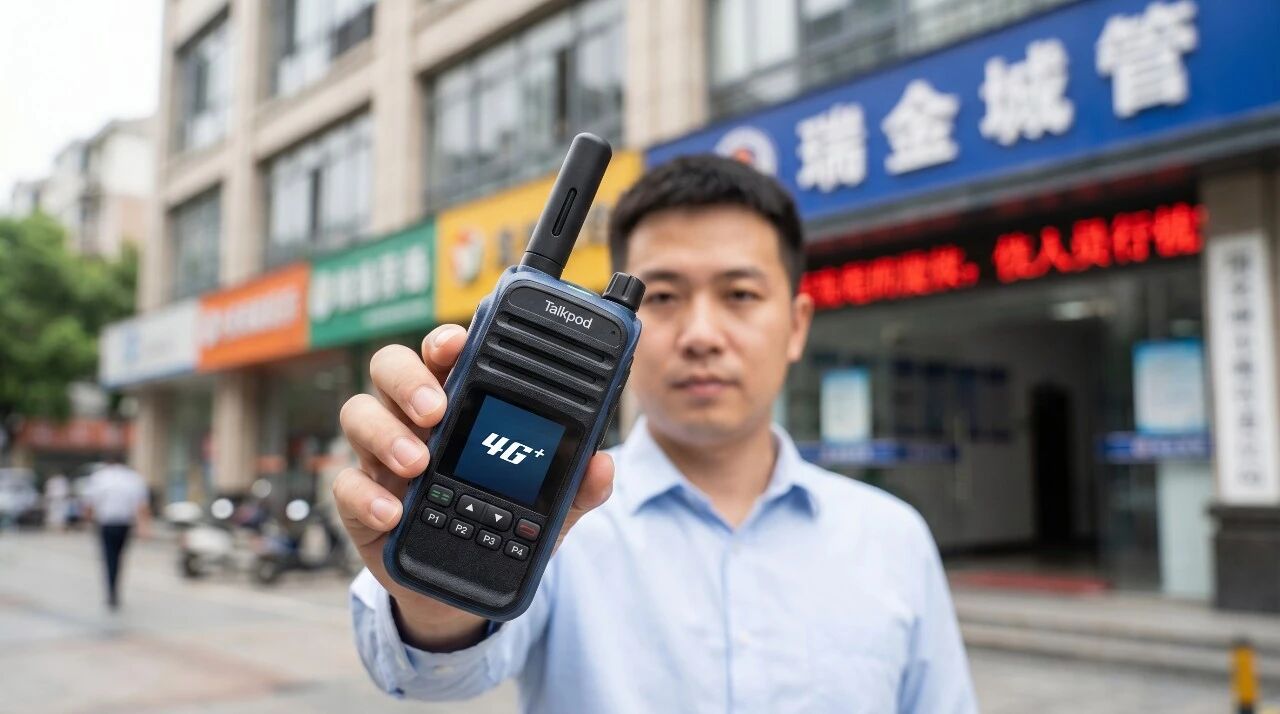
Urban management is a dispersed business. Officers may be inspecting streets, responding to complaints, managing mobile vendors or restoring order in busy public areas—all at the same time and in different parts of the city.
For Ruijin’s city-management department, this created a communication problem. Patrol areas were extensive, personnel were distributed across several districts, and conventional radios could be affected by dense buildings and uneven signal coverage. Supervisors also lacked an efficient way to locate teams, organise group communication and coordinate incidents across different areas.
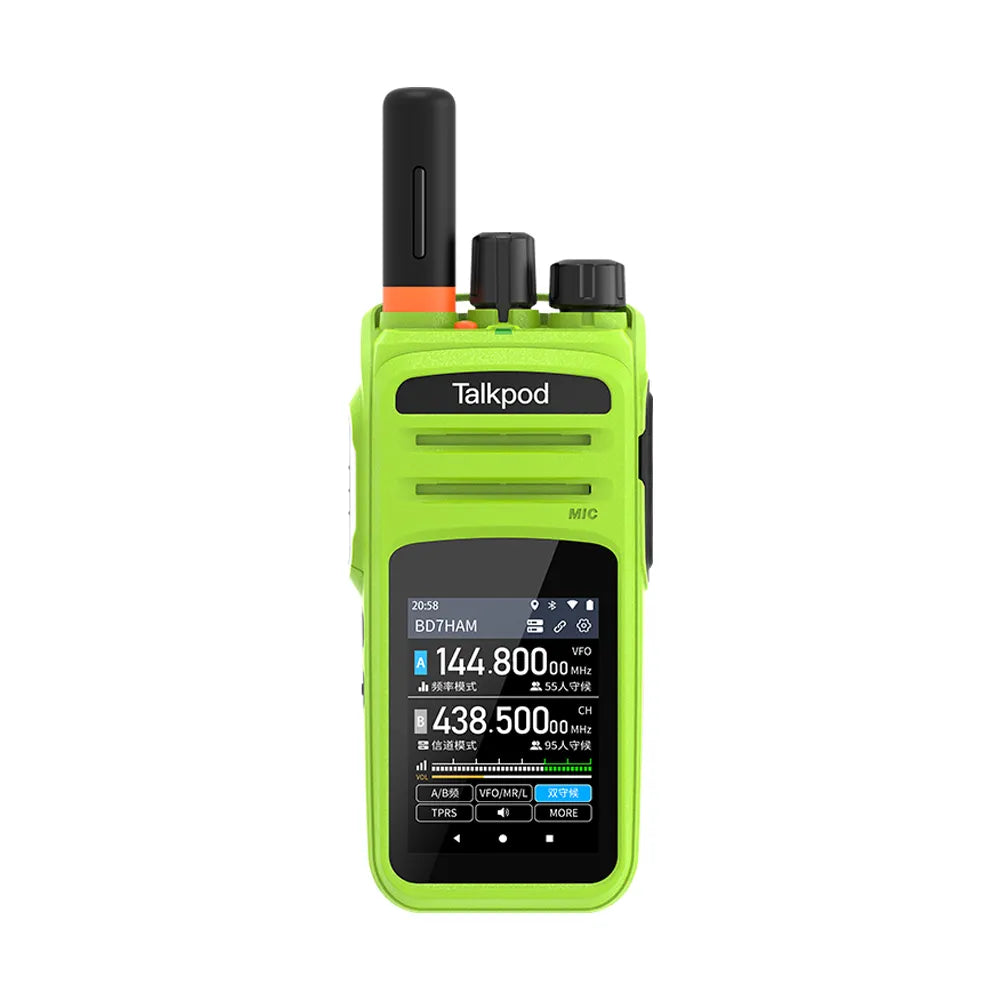
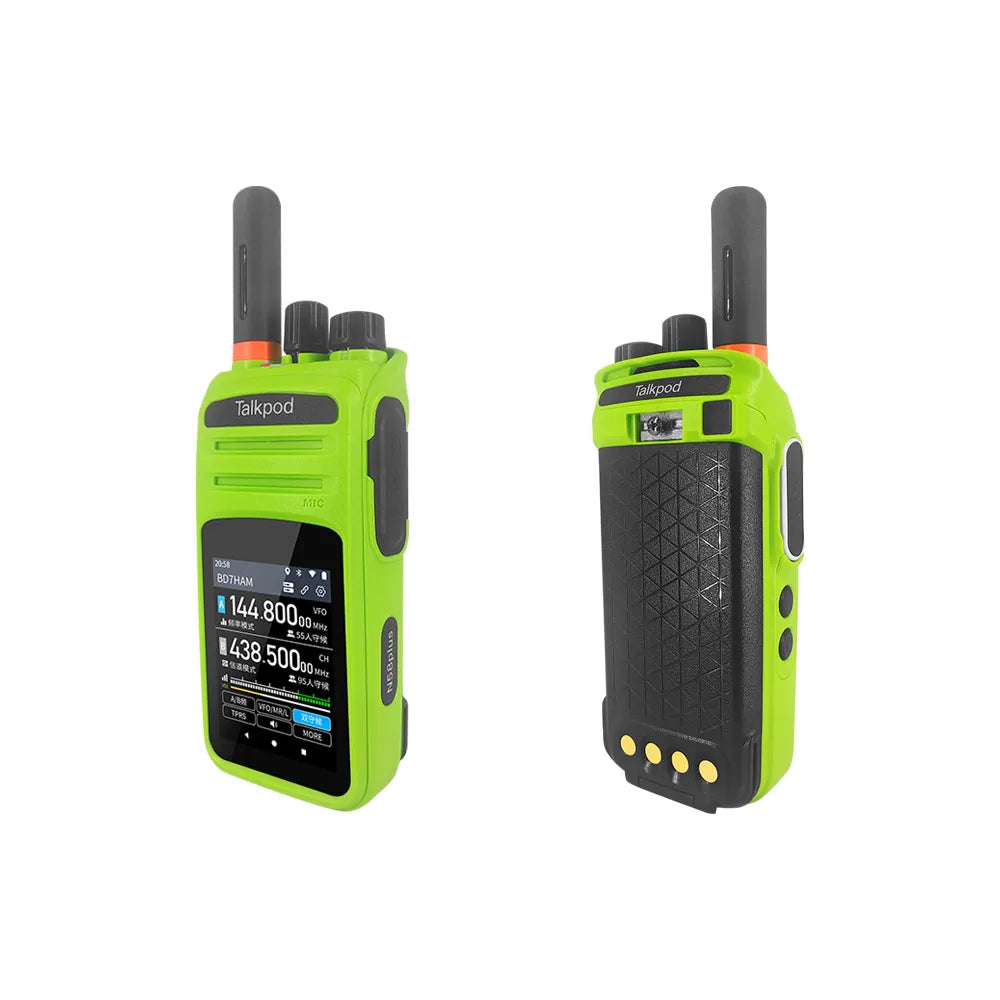
The Talkpod N37 public-network radio was introduced to support a more connected approach. Using public mobile networks, it enables wide-area push-to-talk communication wherever compatible coverage is available. Combined with GPS positioning and a back-end dispatch platform, the N37 helps connect patrol personnel, local teams and supervisors within a more visible communication system.
Connecting patrol teams across the city
Street-management work changes from hour to hour. A routine patrol may become a crowd-control task. A complaint about a mobile vendor may require support from another district. A public-space incident may need several teams to respond at once.
With the N37, officers can contact specific groups through programmable shortcut keys and share operational updates in real time. This reduces the need to relay instructions through several people and allows information to move more directly between the command point and frontline personnel.
Because communication runs through public mobile networks, teams can remain connected across wider operating areas without depending solely on the limited range of a conventional local radio system.
Better visibility over field operations
Voice communication explains what is happening. Location information helps commanders understand where it is happening.
GPS positioning and route-history functions allow supervisors to view the location and movement of patrol personnel through the dispatch platform. This can support faster deployment, reduce duplicated patrol coverage and help the department identify which team is closest to an incident.
For routine management, the same information can also provide a clearer record of patrol activity and area coverage.
More precise group and priority management
A city-management organisation may include district patrol teams, mobile-vendor units, public-space officers, supervisors and temporary task groups. They do not all need access to the same communication channels.
Talkpod developed a layered group-permission structure for Ruijin’s urban-management operations. Communication access could be organised according to role, district and level of responsibility, helping keep routine traffic within the appropriate team.
A priority mechanism was also configured for urgent calls. This allows important instructions or emergency reports to take precedence when normal communication traffic is high.
Supporting supervision and record-keeping
The N37 also supports authorised remote call recording, providing a communication record for incident reporting, supervisory review and operational follow-up.
For city-management departments, this is useful not only during disputes or urgent incidents. It can also help standardise reporting, strengthen accountability and improve the review of how instructions were handled in the field.
Talkpod provided on-site deployment and operating training to help staff understand the group structure, permissions and dispatch functions. This reduced the difficulty of adopting a more complex system and helped ensure that the platform matched the department’s daily working practices.
From separate patrols to coordinated management
The result is a more structured approach to city appearance and public-space management. Patrol teams can be reached more quickly. Supervisors have better visibility over field activity. Resources can be moved between districts with less delay.
The Talkpod N37 does not change the nature of urban-management work. Officers must still patrol streets, resolve disputes and respond to problems as they arise. Its value lies in making those separate activities easier to coordinate.
For Ruijin, that means a city-management system that is more connected, more precise and easier to supervise—one in which communication supports not only faster responses, but better everyday governance.

Leave a comment
All comments are moderated before being published.
This site is protected by hCaptcha and the hCaptcha Privacy Policy and Terms of Service apply.