
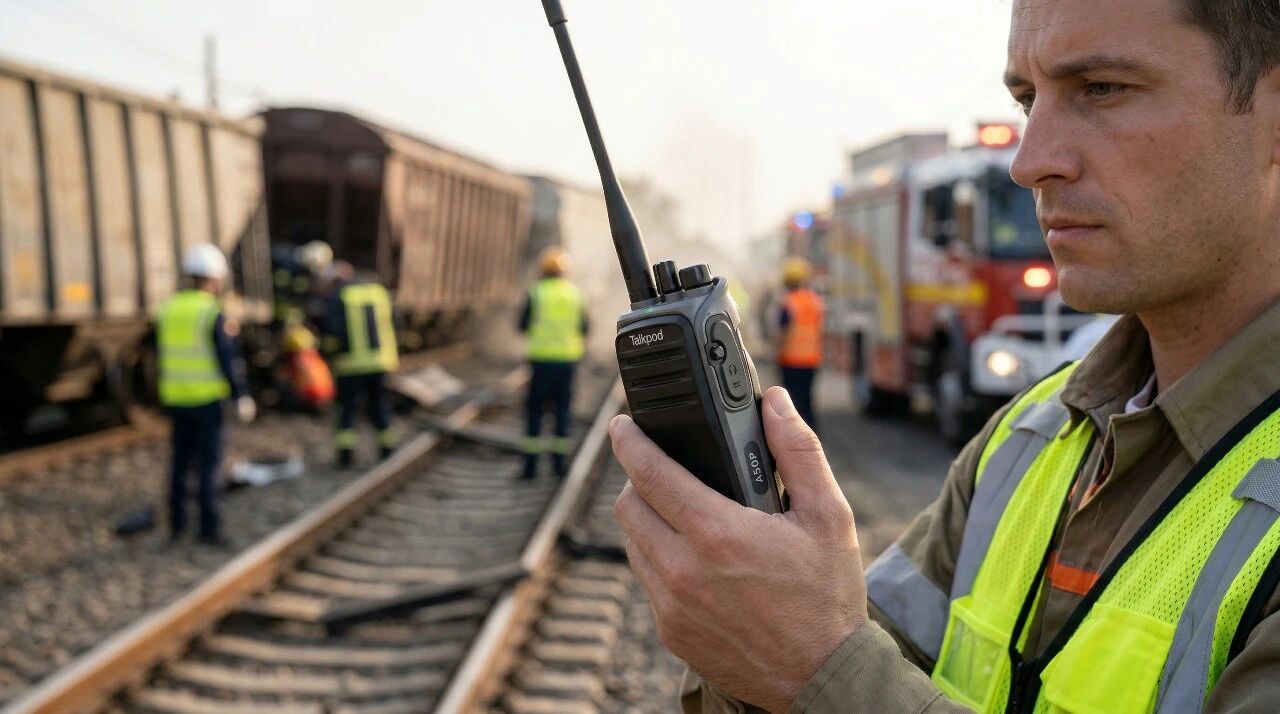
Railway accident rescue is a race against time, terrain and disorder. Dispatch safety officers sit at the centre of that race. They must coordinate rescue teams, maintain site order and ensure that instructions reach the right people before conditions change. Yet railway accident sites are often among the hardest places to communicate: tunnels, bridges, culverts and trackside terrain can block signals, weaken public networks and make conventional communication unreliable.
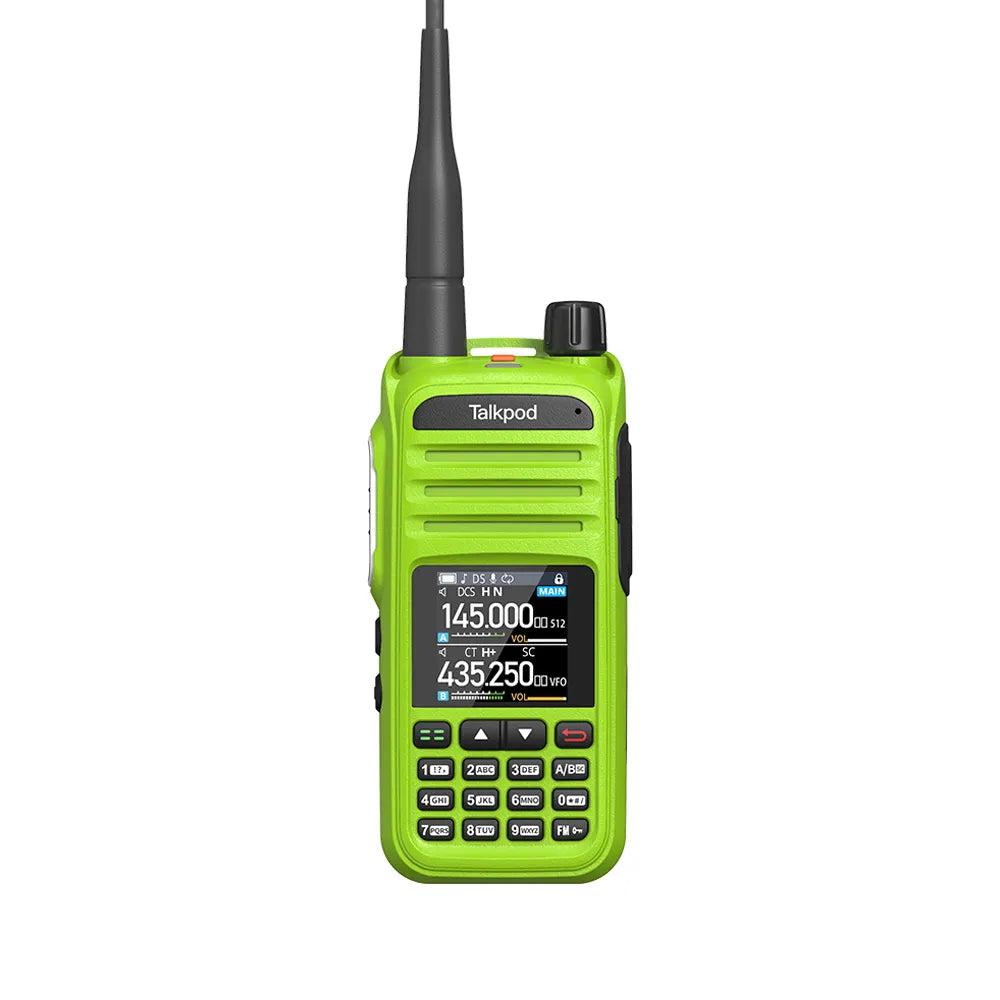
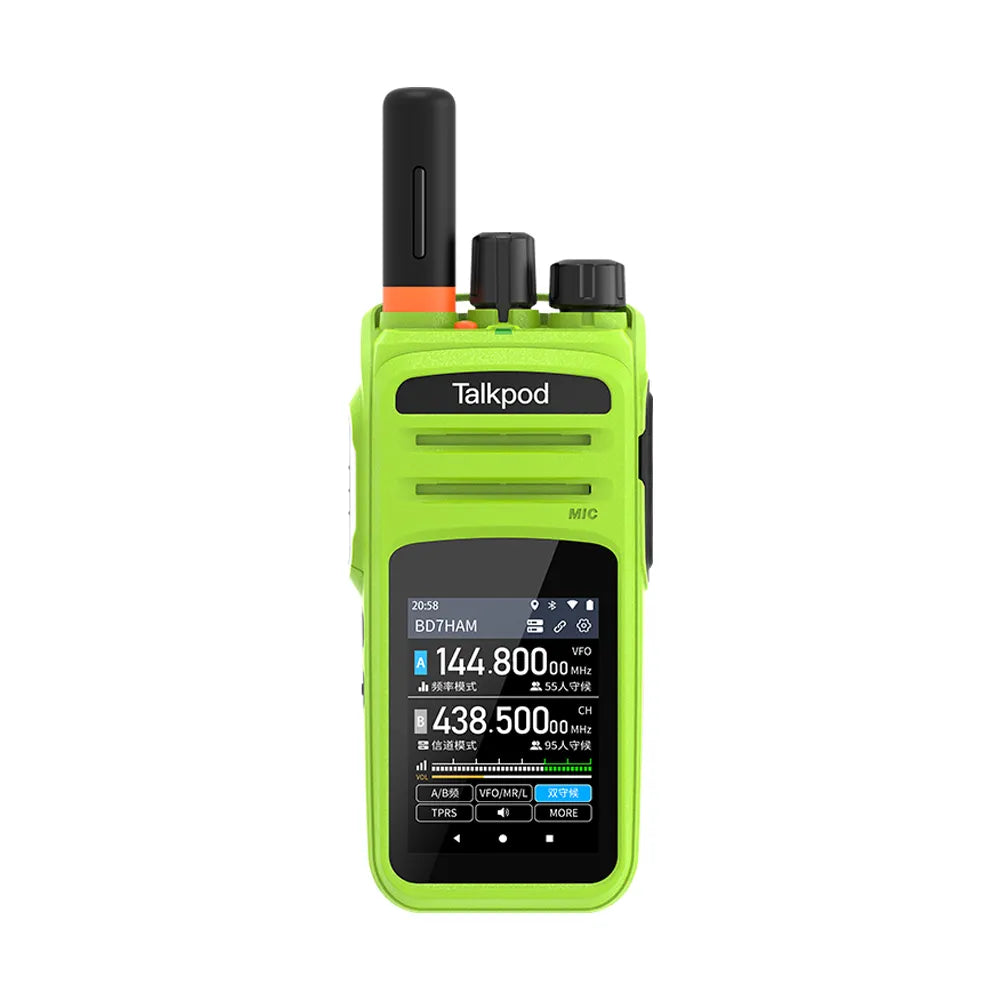
The Talkpod A50P ad hoc-network radio is built for precisely this kind of failure. With automatic networking, rugged all-weather protection and long battery life, it gives dispatch safety officers a more dependable communication tool when ordinary channels begin to break down.
A network where the railway signal disappears
Railway accidents may occur in enclosed or semi-enclosed spaces such as tunnels, bridges and culverts, where public mobile signals can be heavily shielded. The A50P uses same-frequency communication and wireless interconnection technology to form a network automatically once powered on. It supports chain, mesh and tree-style networking, with flexible multi-level cascading.
For dispatch safety officers, this means a communication network can be built quickly at the accident site without relying on public base stations. With several A50P units deployed across key positions, the command post, rescue teams and safety-control points can remain connected even in difficult terrain.
Built for long shifts in harsh railway environments
Railway rescue often continues through rain, mud, darkness and fatigue. Dispatch safety officers may need to stay beside tracks, embankments or temporary command points for long periods. The A50P is rated IP67 for dust and water resistance, with multiple sealing rings across the body and a screw-fastened earphone cover to protect vulnerable openings.
It has also passed demanding tests for drops, high and low temperatures, vibration and other harsh conditions. In an accident scene where equipment may be exposed to weather, impact and rough handling, durability becomes part of operational reliability.
Long endurance for uninterrupted dispatch
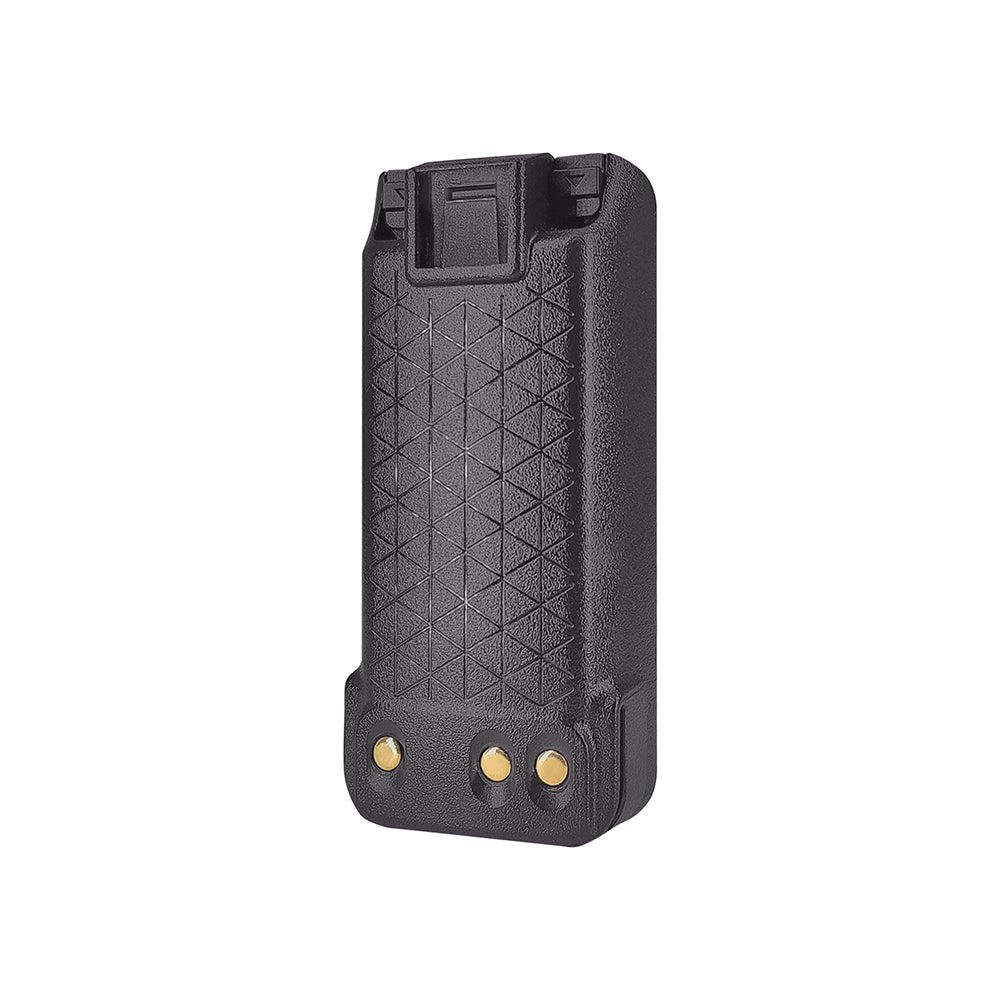
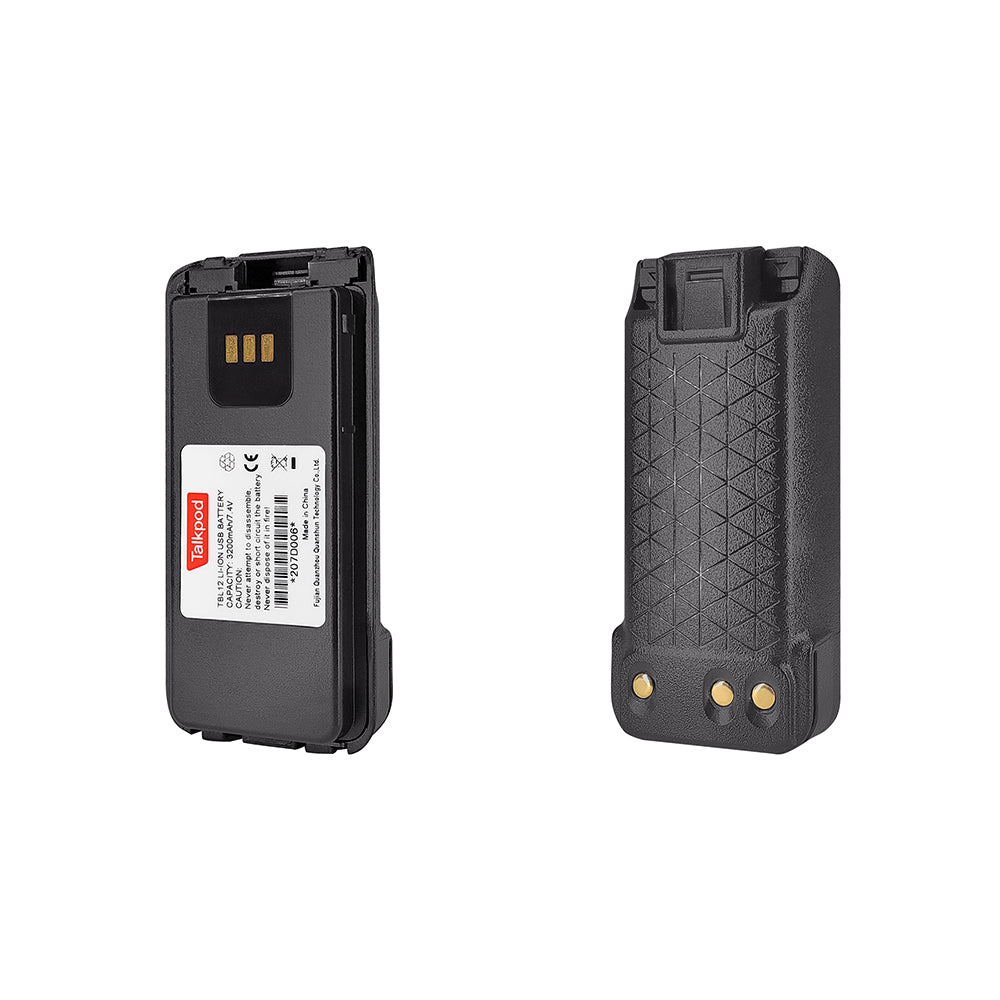
Rescue operations can stretch across many hours, and sometimes days. A communication device that fails midway through an operation can weaken the entire command chain. The A50P comes with a high-capacity battery, supporting up to 36 hours of working time and up to six days of standby time. It also supports USB charging, making it easier to recharge from vehicles, portable power sources or emergency power supplies.
For dispatch safety officers, this endurance helps keep the communication link open from the first response to the final clearance. Every instruction can be sent on time; every update can be received without worrying that the radio will be the first thing to give out.
Clearer instructions in a noisy accident site
Railway accident scenes are rarely quiet. Trains, rescue machinery, generators, rain and crowds can all compete with radio traffic. The A50P uses a digital voice protocol and built-in digital noise-reduction algorithms to filter background noise and suppress feedback. With a high-power speaker, it helps ensure that dispatch instructions remain clear and audible.
That clarity matters. A missed warning, a misheard location or a delayed order can disrupt coordination at the worst possible moment. In rescue work, communication must be heard before it can be followed.
Flexible grouping for multi-point rescue
Railway accident rescue often involves several working areas and multiple rescue teams operating at once. The A50P supports flexible switching between individual calls and group calls, with up to 254 group-call IDs. Dispatch safety officers can organise teams by area, task or response priority, then reach the right group with a single call.
This helps make multi-point rescue more orderly. Site control, medical support, equipment recovery and track clearance can each have their own communication structure, while command remains able to coordinate the whole operation.
Railway rescue leaves little room for hesitation. The Talkpod A50P combines automatic ad hoc networking, all-weather ruggedness, long endurance and clearer digital voice to help dispatch safety officers maintain the communication line in complex accident environments.
When signals fade in tunnels and chaos gathers along the tracks, command must not fall silent. The A50P helps keep every dispatch precise, every team connected and every rescue operation safer and more orderly.

Leave a comment
All comments are moderated before being published.
This site is protected by hCaptcha and the hCaptcha Privacy Policy and Terms of Service apply.